Showing posts with label Ann Sheridan. Show all posts

Thursday, July 18, 2024

Ann Sheridan: New Biography Looks at Hollywood’s Classic Era Star

Annie gets her due--at last!--with the first Ann Sheridan biography.


It's noteworthy that Ann Sheridan, from Hollywood’s golden era, is getting her first biography some 57 years after her death in 1967. How fortunate that Sheridan has admirer Michael D. Rinella as her biographer. His book is a meticulous, empathetic, and honest account of the film actress. Ann Sheridan: The Life and Career of Hollywood’s Oomph Girl by Michael D. Rinella is out now.

Ann Sheridan in her Warner Brothers heyday.

Other ‘40s film sex symbols have gotten their star bios: Grable, Turner, Hayworth, etc. The big difference is that Ann Sheridan was a popular star in her time, but Ann’s career soon evaporated after she left Warner Brothers. While her personal life was lively, it was not as legendary as those of Crawford, Turner, or Hayworth. The most significant reason she faded in the public's mind was that she died at 51 in 1967. Biographer Rinella remedies all this with a book that thoroughly and engagingly shows where Clara Lou Sheridan came from (Texas) and her rise to Hollywood stardom at Warner Brothers.

One of Ann Sheridan's first good roles was in 1938's "Angels with Dirty Faces,"
with James Cagney and Pat O'Brien.

Thanks to the enduring magic of classic films and later TCM, Ann Sheridan began getting her due as a versatile, charismatic performer: Ann had a flair for comedy, was natural as a dramatic actress, and could also sing. She was also a natural redhead who looked like a cross between contemporaries Rita Hayworth and Lucille Ball. Sheridan’s natural pizzazz inspired WB’s publicity to dub her "The Oomph Girl."

Ann Sheridan mixed glamour with tongue in cheek humor.

What's beneficial to the reader is that author Rinella uses many quotes from interviews by Sheridan herself. Lucky for Rinella that Sheridan was plain-spoken, especially for the era. Sheridan reminded me of the late great Carole Lombard, also very candid. Ann was self-aware, with a self-deprecating sense of humor. 

Ann Sheridan finally got a lead where she could shine,
in 1940's "It All Came True."

Some stars are born with their first Hollywood film, like Greer Garson, Katharine Hepburn, or Lauren Bacall. For others, the ascent is arduous, as with Marilyn Monroe, Betty Grable, or Ann Sheridan. It doesn't always have to do with talent, but with studio promotion or just plain luck. It helps to have a studio head, producer, or director in an actor’s corner. With certain starlets, even if the public showed interest, sometimes the moguls or execs still looked down on them. L.B. Mayer much preferred his great ladies like Garbo, Shearer, etc. over brassy Jean Harlow, who Sheridan was compared to later. Monroe, Grable, and Sheridan were starlets for a long spell, before going on to another studio and achieving stardom.

Once Betty Grable hit at 20th Century Fox, she got the star treatment. Monroe and Sheridan were underpaid despite their popularity—Monroe with her second try at Fox, Sheridan from Paramount to WB. Both legally fought their respective moguls, Darryl Zanuck and Jack Warner. The difference was Sheridan had self-confidence, was pragmatic, and well-liked by studio folk; Monroe was often treated like the red-headed step-child at Fox, and it got under her skin.

This time, Ann Sheridan was front and center with Cagney & O'Brien
in 1940's "Torrid Zone."

Rinella does a fine job offering background info on significant people in Sheridan's life. It helps clarify Annie’s life and career decisions. As for her Ann herself, while Rinella is a Sheridan fan, he is clear-eyed in depicting shortcomings regarding personal and professional traits that hindered her career.
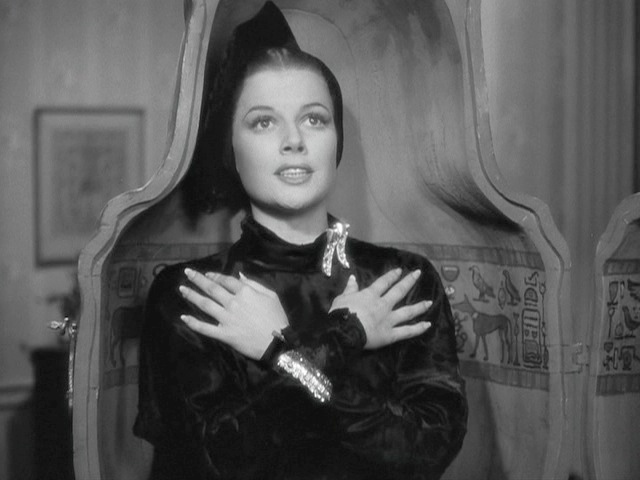
Forget "The Man Who Came to Dinner" himself, it was Ann Sheridan as vain star
 Lorraine Sheldon who stole the show!

Like most stars, while Ann wanted to demonstrate her talents, she also fell into the traps common among the era's stars. She turned down the role as The Strawberry Blonde, because while it was the title character, it was a secondary role. Yet, it was one that helped Rita Hayworth become a star. She was one of many who turned down Mildred Pierce, rightfully here, as she was only 30. Ann turned down To Have and Have Not, though she loved Bogie, perhaps because it was a lot like the role in Torrid Zone. Warner wanted her for a role in Caged, but Sheridan might have suggested herself for the warden role, played by Agnes Moorehead. But Annie didn't see herself in character roles. Thus, her Kings Row co-star Betty Field, who looked like a sourpuss version of Sheridan, ended up in juicy later roles in huge hits Picnic, Bus Stop, Peyton Place, and BUtterfield 8. Ann’s professional pride in maintaining her leading lady status was intact, but what good is being a star if you have no place to shine?

One of Ann Sheridan's first movies after WB was 1950's nifty noir, "Woman on the Run." Unfortunately, it was considered just another thriller then and Ann was already showing her age at just 35, due to her drinking and chain-smoking.

In Sheridan’s personal life—the night life, drinking, and chain-smoking—all took its toll on the star's good looks. This was not an unusual problem for both male and female stars of the golden era. The biggest stars that still drew audiences were given extra attention with their makeup, hair, and lighting. Lana Turner, Joan Crawford, and Lucille Ball come to mind. So do Rita, Ava, and later, Elizabeth Taylor. The stars who were no longer a draw, like Sheridan and Joan Blondell—not so much. 

Admirably, Sheridan did try to advance her own post-studio career, pushing independent film properties, trying television, and later the stage. This is where luck comes in, too. For aging stars, especially women, the 50's and 60's were pretty slim pickings as there were so many stars in the same boat.

Rinella gives great details of Ann's uphill battle to film stardom and how often she was unlucky or foolhardy in love. I always thought George Brent was an odd choice as a Sheridan spouse. Ann was so lively and George was such a dullard on film. Turns out Brent was moody and anti-social, also very un-Ann Sheridan! I asked the author why Sheridan never had children. While Rinella is an extremely thorough researcher, he could not come up with any definitive info on that subject, but I bet that it affected her personal outlook, too. 

Rinella writes a most touching look at Sheridan's last years, as she worked more in television and onstage, with varying results. Ann also had some cosmetic procedures that bolstered her last appearances, like the CBS western spoof, Pistols ‘n’ Petticoats. But sadly, it was then that Sheridan found out she had throat cancer. She declined rapidly and died January 21, 1967, exactly a month before her 52nd birthday. Fortunately, Sheridan had found happiness with actor Scott McKay, her last husband.

Ann Sheridan's last role was in CBS's western spoof,
"Pistols 'n' Petticoats." Cancer was already taking its toll.

While Ann's talents have become reassessed, it's still slow compared to some other actors who have been rediscovered. Ann Sheridan's gift for mixing comedy and drama reminds me a lot of Carole Lombard. Sheridan also had that brash side like Harlow when she became an able comic actor. And Annie's acerbic way with a one-liner was equal to the great Eve Arden. 

Ann Sheridan starred with Bogie& George Raft in 1940's "They Drive By Night."
Ida Lupino went big as the bad girl, but Ann held her own as a good-hearted waitress.

For those who want to watch more Ann Sheridan, she's good in urban melodramas Angels with Dirty Faces, City of Conquest, and They Drive by Night. Sheridan outshines the entire young cast with her warm performance as Randy Monaghan in Kings Row. Later, Sheridan did well in romantic noirs like Nora Prentiss, The Unfaithful, and Woman on the Run. And Annie was aces in comedies: It All Came True, Torrid Zone, The Man Who Came to Dinner, The Doughgirls, George Washington Slept Here, and I Was a Male War Bride. Not a bad legacy for Ann Sheridan, an actress not often given the star treatment. 

Ann Sheridan & Cary Grant were a hoot together in Howard Hawk's
1948 screwball comedy, "I Was a Male War Bride."
Annie should have worked with Hawks more!

Cher once described her own acting range as being great at playing "tarts with a heart." The same was true of Ann Sheridan, memorable as working class girls with a heart of gold. Sheridan had oomph, a phrase she hated, but also authenticity as an honest actress within her range.

Ann Sheridan played many of these kind of girls in her movie glory days!

Michael D. Rinella puts Ann Sheridan back in the limelight, with a most knowledgeable, readable, and thoughtful biography that depicts her life and career with honesty.

See the link below to find out more or
to order this new Ann Sheridan biography.

Here’s Amazon’s link to Ann Sheridan: The Life and Career of Hollywood’s Oomph Girl: https://www.amazon.com/Ann-Sheridan-Career-Hollywoods-Oomph/dp/1476694184

Ann Sheridan as "Nora Prentiss,"
the nicest film noir femme fatale ever!

My look at Ann Sheridan in her film noir phase, as Nora Prentiss: https://ricksrealreel.blogspot.com/2019/02/ann-sheridans-glamour-brightens-gloomy.html

Ann Sheridan in her best role,
as Randy in 1942's "Kings Row."

My take on Ann in her best film role, as Randy in 1942’s Kings Row: https://ricksrealreel.blogspot.com/2017/01/kings-row-is-much-more-than-reagans.html


Tuesday, February 20, 2024

Ann Sheridan a ‘Woman on the Run’ 1950


Ann Sheridan in 1950's "Woman on the Run," her first post-WB film.


Upon its release, Woman on the Run was likely considered a B+ vehicle for veteran glamour girl Ann Sheridan. Facing the ‘50s as an independent star, Sheridan was only 35, but she had been in the movies since the early ‘30s. 

Notable was that Sheridan was a producer (uncredited) on this film, in an attempt to find better roles than she had of late at WB. In that sense, Ann’s instincts were good. Woman on the Run was an adult, gritty, little film noir with Sheridan playing a realistic role. At the time, Woman felt like a step down, even though she was actively involved with getting it made. Woman on the Run is now considered a rediscovered film noir gem.

The title's a misnomer, as it's Sheridan's hubby who is on the run, and she is running after him, trying to track him down. (The original short story was called Man on the Run.) The couple has drifted apart, though they live together still, out of financial need. He witnesses a murder and flees, with the bad guy, cops, and Sheridan’s wife after him. 

Actually, it's the husband who's on the lam in 1950's "Woman on the Run,"
played by Ross Elliot.


Sheridan's character, Eleanor Johnson, is bitter about her husband Frank (Ross Elliot), and offers brittle wisecracks in response to the cops’ questions about him. With a reporter she can't shake—Dennis O’Keefe as Dan Legget, the wife seeks out her hubby at his various haunts. Along the way she finds out aspects to his character that she didn't know and begins to see their marriage in a different light. On top of this, the cops and wife have learned that the husband has a heart condition and needs his medication.

Ann Sheridan's wife sardonically shows off hubby's art work to Robert Keith's
 detective in 1950's "Woman on the Run."

The story is set in San Francisco and extensive location shooting was done there, adding authenticity to the moody atmosphere as well as a look at 1950 San Fran. The setting feels realistically working class:  the couple's apartment is sparse, Sheridan’s clothes are simple, and you get a real feel for a struggling couple in post-war USA.

The cast of veteran actors are great, with zingy dialogue, but it’s all about Ann Sheridan, who plays the ultimate tough cookie that may still be a little soft in the center—circa her heart. Sadly, like many golden era stars, Ann suddenly started to look a bit worse for the wear after leaving the big studios. Only 35, yet she looks older—though care is given in her close-ups. Sheridan was famous for chain smoking, which she does throughout Woman on the Run. Sadly, lung cancer cost Annie her life, just a month before her 52nd birthday in 1967.

With her post-war short 'do, Ann Sheridan reminds me a dour version of another redhead, Lucille Ball in her "I Love Lucy" era! From 1950's "Woman on the Run."

Sheridan's performance is tough, funny, melancholy, and natural. Ann’s wisecracking expertise was right up there with Eve Arden; she was also looking a bit like that soon to be #1 redhead, Lucille Ball. In all fairness, the post-war short-curled coiffures did no film diva any favors! Ann Sheridan gets soft close-ups but is otherwise photographed realistically, not swathed in deep noir shadows, or finding any excuse to change costumes, like other veteran divas who swanned their way through ‘50s vehicles.

Ann Sheridan was one of Hollywood's super-smokers. Sadly, she died of lung cancer
at just shy of 52 years in 1967. A key scene from 1950's "Woman on the Run."

***Spoiler alert ahead, though revealed half way through the film***

Dennis O’Keefe is fine as the fast-talking reporter, Legget. He totally holds his own with rapid-fire repartee with Sheridan and it’s a shame that he’s revealed as the villain, given their chemistry. Robert Keith also makes a fine foil as detective to Sheridan’s sarcastic wife, both exchanging barbs constantly. I was surprised that this familiar film face was actor Brian Keith’s father! Ross Elliot as Frank Johnson appears in the film’s opening and closing scenes, but the character is talked about throughout. Elliot was a popular movie and TV “everyman” type for decades. One memorable career moment was when Elliot played the director of Lucy Ricardo’s classic Vitameatavegamin commercial.

Dennis O'Keefe as the reporter who's looking for more than a scoop, in 1950's "Woman on the Run."

Ross Elliot as Sheridan's hubby, Frank Johnson, in 1950's "Woman on the Run."

Director Norman Foster had quite a life and career, which I was pleasantly surprised to find out. Handsome Foster first started in Hollywood as an actor and was first husband to film icon Claudette Colbert. In the mid-30s Foster segued into directing and screenwriting. When Foster’s film directing career faded, he moved into television. Along the way, Foster remarried, to Loretta Young’s sister, Sally Blane.

Director Norman Foster was once a handsome actor.

Hal Mohr’s cinematography in Woman on the Run is a classic in film noir visuals. Striking angles, shadows, and a beautifully shot amusement park finale give this film much dramatic punch. Mohr won two Oscars for cinematography. The first was in a write-in campaign for 1935’s B&W A Midsummer’s Night Dream. The second was for Best Color Cinematography for 1943’s The Phantom of the Opera. Off-camera, Mohr was married to actress Evelyn Venable 40 years until he died in 1974.

The rollercoaster scene with Ann Sheridan in 1950's "Woman on the Run" is intense!

Alan Campbell, husband of great wit Dorothy Parker, wrote the screenplay for Woman on the Run. And star Sheridan’s pal, future super-producer Ross Hunter, wrote additional dialogue.

It’s notable that film noir expert Eddie Muller mounted a campaign to get Woman on the Run restored, as it had been considered lost. It took time and money, but restoration was done, and the film received to belated acclaim. Now, the film is a favorite on TCM!

While Woman on the Run has some typical film noir twists, they’re enjoyable. But what makes this movie stand out is the realistic writing and performances, which keeps viewers totally engaged.

Here’s my look at Ann Sheridan’s 1947 WB vehicle, Nora Prentiss: https://ricksrealreel.blogspot.com/2019/02/ann-sheridans-glamour-brightens-gloomy.html


Ann Sheridan & Dennis O'Keefe make a fine film duo in 1950's "Woman on the Run."


Wednesday, March 4, 2020

Can Benny & Sheridan Wake Up ‘George Washington Slept Here’? 1942

No, Jack Benny & Ann Sheridan aren't being shown the script here!

  
A classic ‘fish out of water’ comedy plot is when uppity city slickers flounder down on the farm. Broadway’s legendary George S. Kaufman and Moss Hart may have written the first, George Washington Slept Here, which ran a modest 147 performances. Compare that to their The Man Who Came to Dinner, which played 739 shows in its Broadway run. Still, WB snapped up both, with Washington as a vehicle in their try to make Jack Benny a movie star. Paired with Benny was Warner’s ‘Oomph Girl,’ Ann Sheridan, who appeared in both movie versions. WB studio director William Keighley directed both film adaptations competently, but without much comedic flair.
Despite the poster's claims, there's not much fun in this film!

Despite Jack and Annie’s natural comedic talents, there isn’t much oomph—or laughs—in the movie version of George Washington Slept Here. While the plot has been reinvented many times since—Mr. Blandings Builds His Dream House, Green Acres, The Money Pit, to name a few—George Washington is filled with slapstick, but lacking any true wit or laugh lines. If your idea of a knee slapper is watching Jack Benny fall through floors, dry wells, or loose boards walloping him in the face, you’re in for a treat.
Jack and Annie are Big Apple folks about to move to the country. With Hattie McDaniel.

What sets the plot in motion is so inane, that it’s a red flag for the rest of the film’s pinhead plotting. Jack and Ann, as New Yorkers Bill and Connie, have moved three times in the last year because of their misbehaving dog. I love dogs, but come on. After the last incident with the rug chewing pooch, they’re out. Connie also harbors a yen to buy a country home. So, she buys a fixer upper in Pennsylvania, without telling fuss budget, cheap skate Bill. Like that happens, either! When chipper Connie brings humbug Bill out to the country, she tries to sell him on the place. But the house tour is a total disaster. Then the wife has to break the news. The rest of the movie is literally non-stop bad news about the ramshackle house. The city slickers almost lose the home to a greedy neighbor, but luck and an old document from the father of our country save the day.
Along with the comedy, the sets and situations are totally over the top.

George S. Kauffman was famed for his wit, but it’s not on display here. I didn’t even smile once, much less laugh, until near the movie’s end, where the couple break open the ‘cider’ handyman Percy Kilbride brings over. Obviously, the humor is dated, but I still laugh watching I Love Lucy or The Carol Burnett Show. The humor here reminded me of Bob Hope’s later, tired TV specials.
Jack Benny insisted that Percy Kilbride (L) recreate his stage role as the deadpan handyman.

The main reason for watching George Washington Slept Here is for the comedic charisma of Jack Benny and Ann Sheridan, plus the talented cast that tries to put this tired humor over. I don’t know if Jack had what it took to become a movie star. After all, Bob Hope started in radio and made a huge splash in movies. While Bob was the wisecracking coward, Jack was the comedic cheapskate/complainer. Benny plays the part expertly, but it’s hard to critique his performance as the wisecracks he’s given are so unfunny. As for Ann Sheridan, she’s so likable that you can almost overlook that she’s playing a nitwit. Sheridan’s hallmark was sassy common sense. Here, as Connie, her character is nonsense, buying this ruin of a house, no questions asked. Even in such a preposterous premise, there has to be some basic believability. There’s not one drop, just like the couple’s well. Still, it’s fun to listen to Benny’s classic intonations and watch Sheridan, lovely and warm, as always. They make a good team, too bad the material lets them down.
Comic pros Jack Benny & Ann Sheridan make an appealing film couple.
But this script would drive anyone to drink!

A great supporting cast, from the WB repertory, milks what few laughs there are from this rural comedy. Hattie McDonald is Hester, the exasperated maid who gets dragged to the dump of a farm, is reliably funny. Percy Kilbride was brought out to WB to recreate his role of the local handyman, Mr. Kimber, who continually gives the new homeowners bad news and a bill. He was such a scene stealer that he later played Pa Kettle in another rural comedy, The Egg and I, which set off his career. Charles Coburn, always great as crusty codgers, plays one again—but this time with a twist. Lee Patrick has a small part as the daft theater actress. Rommy, the rascal of a terrier, was immortalized as Toto in The Wizard of Oz!
Charles Coburn gets to put a clever spin on his irascible persona as the uncle.

WB was never my favorite studio when it came to comedies. Even the Broadway hits they snapped up all seem the same: frantic instead of funny, slapstick instead of witty, and usually flat film versions of theatrical hits. George Washington Slept Here is worthwhile for star watching, but as a comedy, it’s a snooze.


FYI: I put all the movie overflow on my public FB  movie page.
Allegedly, this is the same dog who played Toto in 'The Wizard of Oz.'
Apparently, he got a dye job with his makeover in Oz!


Wednesday, February 20, 2019

Ann Sheridan's Glamour Brightens Gloomy Noir 'Nora Prentiss' 1947

Ann Sheridan is top-billed and the title character, but plays second fiddle to WB's resident wimp, Kent Smith!


Ann Sheridan, one of the '40s most appealing actresses, had her last hurrah with WB in 1947-48. The Unfaithful was a San Fran transplant of The Letter and Nora Prentiss was a domestic drama turned film noir. Sheridan teamed with Errol Flynn in ’48 for the Raoul Walsh western, Silver River. Ann then appeared in Leo McCarey's Good Sam with Gary Cooper. Though the comedy disappointed critics and audiences, Sheridan and Cooper’s appeal still helped make it a box office success. None of these movies are classics, but overall, were popular at the time.
After leaving WB, Ann starred in Howard Hawks 1949's I Was a Male War Bride with Cary Grant. Sheridan was sparkling in this smash screwball comedy, with Hawks' showcasing Ann’s comic flair as he did with Carole Lombard in Twentieth Century.
Ann Sheridan in a publicity pose as 'Nora Prentiss.' Though hyped as a femme fatale, Ann's singer is sympathetic.

With all this, Sheridan’s box office standing seemed in better shape than most veteran female stars. Yet, the bottom dropped out of Ann Sheridan’s career in 1950. Was it because Sheridan turned 35? Back then, that was the point of no return for an actress. Was it that Sheridan never had a signature movie role? Say, a role or film that could take Ann to the next level, of a Carole Lombard, Jean Arthur, or Rosalind Russell? Even as Randy Monaghan in Kings Row, Sheridan didn’t appear till nearly half way through the picture. Was it because she wasn’t a careerist, like Crawford, Davis, and Hepburn? I think that Sheridan was a bit like Joan Blondell, someone who was considered a great broad that could do a little of everything, but not a so-called great actress, like Norma Shearer or Greer Garson.
What a shame, since Ann Sheridan had one of film’s most distinctive personalities, full of warmth and good humor. Not only was Sheridan a terrific wisecracking comedienne, but also a natural dramatic actress, much like Lombard. Ann also had an appealing singing voice, unlike many dubbed movie divas. Sheridan looked like a more “down to earth” version of Rita Hayworth, and wasn't called 'The Oomph Girl' for nothing! With all of this going for her, why did Ann Sheridan’s star fall so far after 1950?
I preferred the first half of 'Nora Prentiss,' where the good doc is torn between family and Sheridan's sassy singer.

In retrospect, 1947’s Nora Prentiss seems like a sign of things to come. As the title character and top billed star, Ann Sheridan somehow plays second fiddle to Kent Smith. Yes, the Kent Smith. The actor arrived at WB after WWII, and Smith quickly became typecast as the milquetoast male for the leading lady or the bad guy to walk all over. Smith was certainly a capable performer, and after he left WB, became a reliable character actor. Kent Smith just wasn't dynamic enough to become a top rank star. In fact, WB never really had a breakout male superstar after John Garfield. There were middling male stars like Ronald Reagan, Dane Clark, and Harry Guardino—or worse, Steve Cochran and David Brian! How ironic that mild-mannered Kent Smith's big starring role came at the expense of Ann Sheridan, who was about to walk out the WB door, like so many of her fellow stars, over money and scripts.
 Ann Sheridan on the set of 'Nora Prentiss' with co-star Kent Smith. Does he measure up?

Nora Prentiss is a sassy night club singer who is the catalyst for dull doctor Richard Talbot to leave his wife and family. The first half of the movie is a romantic triangle, with Talbot increasingly drawn to Nora, yet guilt-ridden for wanting to leave his family. Sheridan and Smith’s first scenes together, when Nora is tended to by the doc after a minor accident, showcase Ann’s snappy delivery. Sheridan later sings two numbers, sounding especially lovely on “Who Cares What People Say?”
Ann Sheridan is a more than capable chanteuse as 'Nora Prentiss.' 

Their romance is reaching dead end when an improbable opportunity presents itself. Talbot takes it, and from then on he hijacks the movie to the road of abject misery and absurd twists. The WB ads play up Nora as a femme fatale, which she isn't. None of the events are Nora's fault, and she tries to leave him several times, so he can salvage his life. I won't give away the major plot spoiler, but what happens to make the doctor’s new life possible is so ridiculous, even before the DNA era, is patently phony. Eventually, Talbot pays an extreme price.
Smith's respectable doctor goes on the skids in record time over Sheridan's nightclub chanteuse.

Aside from unbelievable, I found the last half of Nora Prentiss tiresome and depressing. The domestic drama was more real and heartfelt to me. The story seemed familiar, then I read a few comments on how similar Nora Prentiss was to Dreiser's Sister Carrie: A respectable businessman with a solid but dull life and dominating wife, throws it all away for a captivating small-time performer. Bingo! What's strange is that a film version, titled Carrie, was made five years later with Laurence Olivier—and Larry and Kent Smith bear more than a passing resemblance to each other—the basset hound eyes, set jaw line, and pencil mustache. However, unlike Olivier, Kent Smith's doctor declines in record time; it's like watching Dr. Jekyll turn into Mr. Hyde!
Laurence Olivier in 'Carrie.'
Kent Smith in 'Nora Prentiss.'


Nora Prentiss has a stellar supporting WB cast. Yet it is typical how up and coming WB actors got thrown into thankless roles. Just a couple years earlier, Robert Alda made his WB film debut as George Gershwin and he played several starring roles shortly after. Alda was a nasty night club owner in The Man I Love. Here in Nora Prentiss, he's a nice night club owner. It's very hard to believe that tall, dark, and handsome Alda, whose character owns a nightclub and wants to marry singer Nora, would seem like a no-brainer, right? Sheridan’s Nora laments to Smith’s married doctor at the movie’s beginning that she can’t meet a good guy, only bums…yet takes a pass on Alda’s Phil.
Bruce Bennett, who was relegated to one scene in Bette Davis' A Stolen Life in ’46, hadn't made much progress since playing Bert Pierce opposite Joan's title character the year before. In Nora Prentiss, he's Smith’s fellow partner, who's there to pick up the pieces and find clues. Like Kent Smith, Bennett was a rather dull actor, but he was solid enough and attractive, but is stuck in a totally nothing role. It seems like WB filled out the background characters with anybody on the lot who wasn't working!
Vincent Sherman took over the helm from Edmund Goulding and Irving Rapper as WB’s top director of women. Combine all the Bette and Joan movies Sherman helmed, he should have gotten, if not an Oscar, perhaps a Purple Heart! Sherman was a solid, smooth, if not groundbreaking director, and he keeps spinning this tale skillfully before you have enough time to think about it.
Director Vincent Sherman, a bit of a ladies man, seems to be enjoying the charismatic Ann Sheridan.

Film noir fans will probably enjoy Nora Prentiss most, as will Sheridan admirers. I just wished it was truly an Ann Sheridan film.
As for Ann Sheridan’s career, while she is well-liked, you don’t see classic film historians and fans fawning over her or trying to elevate Sheridan’s legacy, like certain other “underrated” actresses who have become overrated by revisionism. Ultimately, a star’s work is their legacy, and as Ann Sheridan tearfully sings as Nora Prentiss, who cares what people say?
Ann Sheridan is the song bird in the gilded hotel cage for the last half of 'Nora Prentiss!'