Showing posts with label Paramount Pictures. Show all posts

Tuesday, October 3, 2023

Fright “B” Flick Classic ‘Among the Living’ 1941

Albert Dekker, here as the crazy one of twin brothers, and starlet Susan Hayward,
in 1941's "Among the Living."


A Southern gothic “B” thriller, Paramount’s 1941 Among the Living is taut and tense, with a fascinating cast, for reasons both on-screen and off. This movie reminds me of a cross between Kings Row, the TV version of Peyton Place, and Dark Shadows. 

Albert Dekker as twins Paul & John Raden, one good and one bad, natch!
1941's "Among the Living," with Frances Farmer and Susan Hayward.

Stuart Heisler went on to direct gritty little gems like Smash-Up, Storm Warning and The Star, with Susan Hayward, Ginger Rogers, and Bette Davis, respectively. Among the Living was among Heisler’s first directorial efforts after editing over 30 films, dating back to the silent era.

Paramount's 1941 "Among the Living" has gained a cult following over the years,
for it's stylish "B" movie storytelling and the eclectic cast.

Albert Dekker is terrific in a dual role of John and Paul Raden, the former is the brother who comes home for his tycoon/tyrant father's funeral. The latter is a brother thought to be dead, but is deranged and kept prisoner in the decaying family manse. After the funeral, the insane brother escapes his keeper, set off by the thought of his vicious father buried next to his victim mother.

Albert Dekker as normal twin John Raden, with his wife, played by Frances Farmer
in 1941's "Among the Living." Here, they attend his father's funeral.

It's been noted that there is a bit of Frankenstein's monster story regarding insane brother Paul. He was traumatized at a young age by his late hateful, violent father, and now acts out under certain triggers, like a woman’s scream. Others have noted Of Mice and Men's Lenny in Paul’s child-like demeanor. Dekker gives both characters full-blooded portrayals and did not to resort to hamming as the deranged Paul, which makes the performance powerful. Ironically, Dekker played a head doc at a southern sanitarium, urging new hire Montgomery Clift to perform a lobotomy on Elizabeth Taylor’s character in Suddenly, Last Summer, with a huge donation dangled by her auntie, played by Katharine Hepburn. In Among the Living, Harry Carey is the doctor bought off with a new hospital, by the Paul Raden’s father, to fake his son’s death and keep his existence secret.

Albert Dekker as mentally unbalanced Paul Raden, in 1941's "Among the Living."


Off-screen, Dekker had some big ups and downs. He was successful in California politics, though his going up against Joe McCarthy may have slowed down his film career, with “greylisting.” He kept his foot in the door of Broadway to fill in the downtimes. Later, Dekker’s son accidentally shot himself as a teen. Dekker had some issues himself, with a kinky sex life that led him to being found dead of apparent auto asphyxiation. Let's just say what was found wasn't pretty. For more on Albert Dekker: https://en.wikipedia.org/wiki/Albert_Dekker

Frances Farmer as the concerned wife of Albert Dekker's John Raden,
in 1941's "Among the Living."


The vagaries of show biz are demonstrated in Among the Living with the two female stars, Frances Farmer and Susan Hayward. Only six years earlier, Frances Farmer was swiftly heralded as the next big thing in Hollywood. She made a commercial hit with Bing Crosby in Rhythm on the Range and a substantial dual role in Come and Get It had her poised for major stardom. But a reputation as "difficult" and Farmer’s increasing emotional problems swiftly reduced her roles to “B's” and less screen time. This was her last film for Paramount and she was fourth billed, with a handful of scenes as the wife of the sane brother. Frances looks lovely as always and is competent in the cardboard role.

Susan Hayward as Millie, small town girl on the make, in 1941's "Among the Living."

Susan Hayward, who had just arrived at Paramount two years prior, was on her way up. She plays Millie, the small town vixen who unknowingly gets mixed up with the insane brother. And while her character is a gold digger, she also seems to be relatable. And Susie plays her part with spark and surely got noticed by the studio and movie fans. Frances was just four years older than Susan and just about finished in Hollywood. Ironically, both women were heavy smokers and died of cancer prematurely, Frances in 1970 and Susan in 1975. Both were 57.

Watch for Jean Phillips, Ginger Rogers one-time stand-in, as the bar girl who runs afoul with Dekker’s deranged brother, Paul. The climax of their scene is vividly suspenseful.

Jean Phillips as an unfortunate victim of Albert Dekker's deranged Paul Raden,
in 1941's "Among the Living."

The action of this movie is very well-staged and that is likely due to Heisler. His scenes of the KKK in action with 1950’s Storm Warning are skillful, too.

If you accept the construct of the story in Among the Living within the “B” movie thriller, it actually goes above and beyond: flesh and blood characters, good acting, underlying class issues, and an atmospheric style that is haunting.

Albert Dekker's Raden brothers, at their mother's grave, in "Among the Living."

Here’s my look at the controversial life of Frances Farmer: https://ricksrealreel.blogspot.com/2018/02/finding-frances-farmer-fact-versus.html

And here’s my take on Susan Hayward, in one of her first substantial roles: https://ricksrealreel.blogspot.com/2020/08/house-of-strangers-1949.html


Friday, July 31, 2020

Frances Farmer Still Fascinates

Frances Farmer, whose myth and reality still compete 50 years after her death.


When I watch the real Frances Farmer on 1958’s This is Your Life versus Jessica Lange as a lobotomy-dazed Frances from 1982, it sums up for me the dichotomy between the real woman and the misery myth that’s been sold for five decades. Just type ‘Frances Farmer’ in a You Tube search and see what comes up. At least half the results are the most sensationalistic clips from the ’82 film bio or “tributes” that focus on the negative facts and fictions of Farmer’s life.
The infamous episode of 'This is Your Life.' At least Frances Farmer showed class & dignity!

Frances’ appearance on This is Your Life is composed, considering all that she had gone through, and then obliged to relive it in front of a TV audience. Frances Farmer comes across as articulate, thoughtful, and responsive—not the spooky zombie Jessica Lange portrays her as in the final scenes of Frances. And considering her rough ride in life thus far, Farmer looked lovely at 45.
Jessica Lange as a ghostly 'Frances,' after appearing on 'This Is Your Life.'

Frances Farmer died of esophageal cancer at age 57 in 1970. From then through 1982, Farmer’s life was the subject of a memoir that was completed by a friend, a later biography that made even more sensational claims, and finally, the nearly-total fiction film bio that launched Jessica Lange as a dramatic actress. The cherry on top of this showbiz soap opera sundae was when another misunderstood Washington-born artist, Kurt Cobain wrote the myth-inspired song, “Frances Farmer Will Have Her Revenge on Seattle.” An eerie coincidence is that the Frances film bio came out a year after another movie myth buster, Mommie Dearest—a film that also buried and cemented a movie star image for decades to come. And Joan Crawford’s “horror” myth also inspired a rock tune, Blue Oyster Cult’s “Joan Crawford Has Risen from the Grave.”
Paramount found Frances Farmer's "difficult" personality problematic.

For me, the big question regarding the career of Frances Farmer is this: Did she get written off merely because she was “difficult?” I’m not talking about when she hit bottom in the early ‘40s, I’m referring to the late’30s, after Come and Get It. Bette Davis and Katharine Hepburn faced similar battles with their respective studios—pushing back on foisted upon images, fighting for good roles and fending off bad ones, resisting inane publicity stunts, etc. During that same time, Davis sued Warner Brothers and Hepburn, labeled box office poison, fought to go back to Broadway, too. Yet, Bette and Kate persevered, and eventually prevailed. Frances often fought these battles, but didn’t emerge the ultimate victor because she didn’t have the stability or steel-willed self-confidence of Davis and Hepburn.
Frances Farmer, whose great beauty shown more when Paramount's
hair & makeup department work was subtle and not slathered on.

Frances Farmer certainly had all the gifts to be a great movie star. Frances had the similar beauty of fellow Paramount star Carole Lombard, the husky voice of a Dietrich, talent and intensity, and she could sing, to boot. And Farmer was very serious about her career as an actress. So what if she was “difficult” over her career and image? That didn’t stop a lot of other actors who went on to great careers. It seems strange to me one aspect of a Farmer negated all the good things about her. Perhaps the problem was like this quote made about Elizabeth Taylor, in terms of ET surviving stardom: A fighter when she had to be, a diplomat when it paid to be. With Farmer, it was certainly the latter that was problematic.
Frances Farmer in college, looked very contemporary & natural.

I remember a Hollywood anecdote, when news of Marilyn Monroe’s firing and subsequent death rocked the movie biz. If memory serves, it was Walter Wanger who recalled at Paramount, when B.P. Schulberg had fired fragile Clara Bow from a film, and never forgot studio boss Adolph Zukor’s reaction: “Our job is to make stars, not fire them.”
This led me to do some research on Paramount and Clara Bow. Paramount had just gone through great turmoil with Bow, one of their greatest female stars. Despite her huge audience, Clara’s emotional stability, dramas, and scandals came at a time when Paramount itself was in dire financial straits. The studio survived, Clara was fired and soon retired, but I wonder if studio head Zukor and the ‘suits’ just didn’t want to go through all that drama again with Frances Farmer.
Frances Farmer became a hit in her second movie, as leading lady
to Bing Crosby, in 1936's 'Rhythm on the Range.'

What’s interesting is that Farmer scored with flying colors as a lovely leading lady to Bing Crosby in Rhythm on the Range. Then Frances made a strong dramatic impression with Edna Ferber’s Come and Get It, in a dual role, as the tart with a heart mother and the good daughter. Howard Hawks adored working with Frances, but left the film in a dispute with Sam Goldwyn, and was replaced by William Wyler. Both were great directors, but whose styles were like night and day. Hawks worked fast and had a loose improvisational style, a bit like the later Robert Altman. Wyler on the other hand was painstaking and meticulous, like George Stevens. Willie was also inarticulate if he didn’t get what he wanted, calling for dozens of takes, to the frustration of his actors. Frances clashed with him, but so what? He wasn’t a Paramount director.
Frances in her breakout dual role, in 'Come and Get It.' Here she is, as the barroom mama.
And Farmer later, as the good daughter in 'Come and Get It,' with Joel McCrea.


With Cary Grant in 1937's 'The Toast of New York.'

After The Toast of New York with Cary Grant and Edward Arnold, why was Frances stuck in so many junky genre pictures? Some folks have pointed to the disappointment of costly Toast for Farmer’s career stalling. I don’t buy it, since co-star Grant had been kicking around in movies for five years, yet hadn’t broken out as a star, and nobody held it against him. Why didn’t Frances get to work with Paramount’s Mitchell Leisen or Preston Sturges or get scripts by Billy Wilder, like later Paramount girls Paulette Goddard and Veronica Lake? Both women had their charms and they had to do junk, too. But Paulette and Veronica got far better star-making material, and even together, they didn’t have half the star potential that Frances possessed.
With Fred MacMurray in 1937's 'Exclusive.'

Ironically, Frances and Veronica had very similar career trajectories. Though Veronica was a decade younger, she swiftly took off as Frances did, with Lake barely past 20, as well. Like Frances, initial solid film work, Lake got stuck in genre garbage, and in less than a decade, her career was quickly over. Veronica, too, experienced pretty messy emotional ups and downs, and a drinking problem. Farmer died in ’70 at 56 and Lake passed at 50 in ’73.
With Tyrone Power in 1942's 'Son of Fury.'
This was Frances Farmer's last major motion picture.

A book could be written about the “what ifs” of the life and career of Frances Farmer. What if Frances had the wherewithal and opportunity to freelance like Barbara Stanwyck did? Barbara signed short-term contracts at Paramount as well as Warner Brothers. Yet, Stanwyck also did much of her best work freelancing. Carole Lombard left Paramount in 1937 to pursue dramatic roles, so there seemed to be paucity in the dramatic department at Paramount.
I can think of many movies that Frances Farmer might have given fine performances in. Disclaimer: the movies and roles I’m about to mention is not a knock on the actors who actually played the roles, but offering as examples of what Frances was capable was as an actress. Don’t light up your Internet torches, please!
Frances Farmer with Luther Adler in 'Golden Boy.'
WHY didn't Paramount option this property for their star?
It would have been good business sense and created good will with their star.

For instance, after Frances fought to go back to the stage and appear in Golden Boy, which was a hit and she received good reviews. Why didn’t Paramount buy the property for her? Imagine if Zukor had bought the property and borrowed new WB star John Garfield, in the lead role he longed to play? Instead they got stuck doing Flowing Gold a few years later at WB.
John Garfield, who amazingly lost the role of 'Golden Boy' to Luther Adler,
would have been perfect with Farmer in a screen version.
Instead they got teamed in 'Flowing Gold!'

I think Frances might have played a number of Barbara Stanwyck roles quite well, such as Double Indemnity, or The Strange Love of Martha Ivers. Farmer, with her husky voice, would have made a fine film noir fatale, such as Joan Bennett’s roles in The Woman in the Window or Scarlet Street. How about Frances as a '40s Hitchcock blonde? Or how about Farmer in some of Dorothy McGuire’s more serious roles, like A Tree Grows in Brooklyn or Gentleman’s Agreement? Frances Farmer was just three years older than McGuire and had that intelligence and strength that Dorothy possessed.
Though Frances Farmer was heralded as major talent by the likes of
  Cecil B. DeMille and Howard Hawks, Paramount shackled Frances
to either glorified B-movies or merely decorative roles.

I can see Frances in the career women type roles that Rosalind Russell, Joan Crawford, and Katharine Hepburn played. Frances also had the rare quality of being physically beautiful but also intelligent and would have been quite believable as a professional or an artist type. And as Frances reached her 40’s in the ‘50s, Farmer could have played many roles in Tennessee Williams and William Inge film adaptations. And Frances, who preferred realism over glamour, could have fared quite well in the ‘60s and ‘70s as a character actress. I can totally see Frances working with Robert Altman, or like Kate Hepburn, going back to the stage while holding out for the occasionally good older woman roles in post-studio era Hollywood.
I was struck by this 1958 TV publicity photo of Frances Farmer. Despite decades
of hardships, 20 years later, Frances' strong beauty was still with her at 45.

As it stands, there are glimpses of what might have been in the brief list of Frances Farmer movies.  Frances is animated in Rhythm on the Range, versatile in Come and Get It, strong-willed in Flowing Gold, and gorgeous in The Toast of New York and Son of Fury. There are others, too, like Exclusive and Ebb Tide, and glimmers amidst the genre junk.
It's startling to see Frances, '40s-style, as most of her work was from the '30s.
What a great film noir fatale Farmer would have made.

Frances Farmer is almost always worth watching. Even in certain studio stills, Farmer’s eyes are alive with intelligence and intensity. As a person, like Monroe, Garland, and Clift, Frances Farmer struggled with emotional and substance issues in an era not yet empathetic or equipped to deal with them. As an actor, the great tragedy of Frances Farmer was that she was a modern star, trapped in Hollywood’s “golden” era.
The myths and what ifs of the life of Frances Farmer still intrigue movie lovers today.
FYI: I put all the movie overflow on my public FB  movie page. 


Monday, December 9, 2019

‘White Christmas’ Still a Stellar Crowd Pleaser 1954

1954’s White Christmas, while not a classic, is still a pleasant holiday perennial, 65 years later.

FYI: I put all the movie overflow on my public FB  movie page. 
Check it out & join!  https://www.facebook.com/groups/178488909366865/
White Christmas is the holiday movie version of a fruitcake, a treat to some, indigestible to others, but for the majority, the idea of the movie is a satisfying enough experience. I find fruitcake and White Christmas one and the same—picking out the icky stuff—whether it’s neon candies in the cake or fast-forwarding anything that involves unappetizing Danny Kaye in the flick. I focus on what’s tasty, and I do like an old-fashioned cake, which White Christmas resembles: Bing Crosby and Rosemary Clooney’s smooth singing, Vera-Ellen’s excellent dancing, mostly great Irving Berlin Songs, a fine supporting cast, and lavish production values—all delightfully delicious.
The "boys" perform for the troops at the opening of "White Christmas."

The plot of White Christmas is as slim as Vera-Ellen’s figure: WWII soldiers Bob Wallace and Phil Davis (Bing Crosby and Danny Kaye) bond during war time and also revere their general, Tom Waverly (Dean Jagger.) Post-war, the duo becomes show biz dynamite, later producing their smash hit shows. They meet a sister act, Betty and Judy Haynes, (Rosemary Clooney and Vera-Ellen), and the sparks soon fly, i.e. Crosby and Clooney, and Kaye and V-E. They follow the sisters to Vermont for a gig, only to find their old general is running a white elephant of an inn, which likely won’t see a white Christmas! The guys brainstorm to bring their show to the inn and Bob/Bing goes on “The Ed Harrison Show” to promote the event. Clooney’s Betty thinks they are just exploiting the General, which causes the only dramatic tension in the film, a silly misunderstanding. By showtime, at the now snow-covered inn, all is resolved.
Crosby, Clooney, Kaye, and Vera-Ellen perform "Snow," charmingly staged.

White Christmas was a top-grossing film of 1954 and made multiple fortunes for Paramount ever since, as the movie became a perennial favorite. This movie-movie was old-fashioned, even in ’54, and that’s part of its charm. Still, had White Christmas been made even a half dozen years later, I doubt if it would have been such a mammoth hit. This film was one of the last hurrahs for studio era Hollywood, when Bing and Danny were at the peak of their movie stardom, and nearly the last movie appearances of Rosemary Clooney and Vera-Ellen. The film was the biggest hit that long-time director Michael Curtiz ever had—and this is the guy who made Casablanca and Mildred Pierce! Interestingly, 20th Century Fox put out their own all-star Irving Berlin extravaganza in ‘54, There’s No Business Like Show Business. While it too was a commercial success, White Christmas made more than twice as much, at half the cost, than Show Business.
One of two all-star Irving Berlin musicals in '54, the other was Fox's "There's No Business Like Show Business." 

Throughout White Christmas, you have to not just suspend disbelief, but take your lumps of coal along with the gems. The film opens in ’44, with Bing and Danny as soldiers, performing for the boys. Overlook that Crosby was over 50 and Kaye was 43, and then Bing soothingly launches into his signature song “White Christmas,” with soldiers thinking longingly of home, a touching moment.
Bob Wallace and Phil Davis' rocket ride to fame, in 'White Christmas!'

After the war, Wallace and Davis launch into a warp speed rise to stardom, in one of those movie montages that always make me smile. In White Christmas’ case, especially so, since it reminded me of the old Bugs Bunny spoof, “We’re the Boys of Chorus.” When the “boys” meet the girls, we are treated to the classic duet “Sisters,” which is then spoofed by Bing and Kaye, with Danny especially having a delightful time camping it up.
'White Christmas' montage to fame reminds me of this!

Soon, the guys are tagging along with the gals to Pine Tree, Vermont, where they reunited with General Waverly, who is now an innkeeper. His hired help seems to consist mostly of the delightful Mary Wickes, a welcome presence in any film. Along with no snow, there are practically no guests. The duo decides to bring their latest show to the inn, with the help of the ladies. The “Let’s put on a show!” cliché is pretty irresistible to me, too!
Luckily, the "Minstrel Show/Mr. Bones" number segues into Vera-Ellen's "Mandy."

Unfortunately, the first number up is “I’d Rather See a Minstrel Show/Mr. Bones.” At least it wasn’t done in blackface, but it still feels mighty dated. But then comes the zingy finish, “Mandy,” a wonderful, upbeat tune that becomes a wow with the dazzling, energetic dancing of Vera-Ellen and John Brascia. Bing and Danny perform nimbly with the accomplished V-E, but when Brascia takes over, wowza! Brascia looks like a dark Richard Egan and is obviously having a great time as he struts his stuff. He also had the distinction of dancing the previous year with Joan Crawford, in Torch Song’s infamous “Two-Faced Woman,” which WAS filmed in blackface.
Even better is when sizzling John Brascia takes over the dancing with Vera-Ellen!

Bing and Rosie have a great rapport when their characters aren’t bickering. A sweet number is “Count Your Blessings (Instead of Sheep).” This is intimately performed when the duo are having a late night snack at the inn. I have never cared for Bing Crosby as a person, but as a performer, Bing’s laid back presence was great in both comedy and drama, and his natural style has aged well. Of course, Bing was blessed with a beautiful voice that served him well for many decades.
Rosemary Clooney & Bing Crosby bring their warm, mellow personas to 'White Christmas.'

Clooney didn’t make a lot of movies, they probably weren’t her forte. Plus, the singer’s natural looks and figure were at odds when beauty and glamour were still everything for a film actress of this era. But I enjoy Rosie’s relaxed style in White Christmas, and her singing is top notch, especially in her big torch number, “Love, You Didn’t Do Right By Me.”
Rosemary Clooney's torch number, "Love, You Didn't Do Right By Me," with gorgeous 20-year-old George Chakiris.

The film’s worst number comes with “Choreography.” Some folks adore Danny Kaye, but I find him insufferable. Kaye’s constant “on” demeanor makes Mickey Rooney look subdued. I find Kaye to be the male equivalent of Betty Hutton, practically begging the audience for adoration. “Choreography” is one of those reactionary ‘50’s musical numbers mocking current trends—here, modern dance and beatniks! Danny and the chorus girls are all done up in black, complete with Kaye in a beret and guy-liner. This reminds me of those “rock and roll” spoof numbers from other ‘50s musicals—also very lame. Director Curtiz too often lets Kaye go into his shtick, and it’s like watching Seinfeld’s “Kramer” go off on a fey tangent. To give Danny his due, Kaye is an agile, energetic performer, and he gets on with Bing quite well.
A little bit of Danny Kaye goes a long way. Above, Kaye camps it up in "Choreography."

The best tunes in White Christmas are the simply staged songs: Bing’s title tune for the boys; Danny and V-E’s nimble The Best Things Happen When You’re Dancing; the quartet harmonizing on Snow, charmingly performed in a train car; John Brascia and Vera-Ellen dancing like dervishes to Abraham; even Rosemary’s Love number is subtly staged, with young George Chakiris getting some face time as one of the male dancers. The showstopper numbers are fun, but the gaudy Fab Fifties colors are nearly nauseating!
Dean Jagger as General Waverly is the heart of "White Christmas."

Dean Jagger is a strong presence as General Waverly, with those brilliant blue eyes, radiating warmth and strength. Jagger provides the substance amidst the blizzard of sentiment in White Christmas. His two big bookend scenes at the beginning and finale of the film provide genuine feeling amidst the fluff. Dean is dynamic.
Vera-Ellen, right, performs "Sisters" with on-screen sister Rosemary Clooney.

Vera-Ellen performs well enough within the conventions of this kind of musical, but she really comes alive in the dance numbers. Plus, V-E looks lovely in her Edith Head costumes, showing off her whippet slim figure. Watching White Christmas hit me that Vera looked a good deal like Mitzi Gaynor, also a dancer at the tail end of the musical era. Another coincidence is that Mitzi was the second female lead of her Irving Berlin movie, There’s No Business Like Show Business.
Vera-Ellen look-a-like Mitzi Gaynor with The Merm in her Berlin bonanza,
'There's No Business Like Show Business.'

Although this semi-remake of 1942’s Holiday Inn was bookmarked for a Bing Crosby-Fred Astaire reunion, it wasn’t meant to be. Fred backed out, then Donald O’Conner got sick, that’s when Danny Kaye took over. I’m surprised frequent Crosby co-star Bob Hope wasn’t considered, or that Paramount didn’t go with their younger musical-comedy team, Martin and Lewis. However, Bing and Danny were at the zenith of their movie stardom in ’54.
Mary Wickes is wonderful as always, with Rosemary Clooney, in 'White Christmas.'

Age is a bit absurd in White Christmas. Jagger refers to Crosby as “son” when they are the same age. Par for the era’s course is the 25 year age difference between Crosby and Clooney. And Kaye’s “boyish” antics are a bit hard to take at age 43. Clooney is the older “mother hen” sister, when she was 7 years younger than Vera-Ellen.
If 'White Christmas' deleted dated numbers like "Gee, I Wish I Was Back in the Army," "I'd Rather See a Minstrel Show," & "Choreography," the result would be a near-perfect 1 hour and 45 minute movie! 

The finale is a fitting wow, though I winced at the lyrics of “Gee, I Wish I Was Back in the Army.” When Clooney sees Bing appeal to his former soldiers on “The Ed Harrison Show,” she realizes Crosby is on the level. Everyone reunites at the inn for the big tribute to the General. While it’s sentimental, Jagger and the cast put it over, with a reprise of White Christmas as the camera pulls away in a dazzling shot of the snow falling outside, the stage show, and the audience. White Christmas has its highs and lows, but ends on a lovely high note.

The fabulous closing shot of 'White Christmas.'


Sunday, April 22, 2018

'Shane' Still a Stunner 1953

'Shane' and 'High Noon' were Hollywood's first modern westerns.
I never watched 1953’s Shane all these years because I thought it was just a typical Hollywood western. Well, George Stevens’ Shane is “just a western” about as much as his A Place in the Sun is just a romance or Giant is just another epic. Director Stevens gave depth to movie genres in his honest look at the American way of life.
I just saw Shane for the first time during a snowy spring break in Upper Michigan. My Mom couldn’t believe I’d never seen one of movie’s most famous westerns, so we watched Shane together. I was knocked out the imaginative storytelling, memorable scenes, stellar cast, authentic location shooting, and the realistic attitude about how the west was really won.
Joey: Why don't you ever wear your six-shooter, Shane?
Shane: Well, I guess I don't see as many bad men as you do.
Alan Ladd in his signature role as the reluctant gunslinger, Shane.

The simple story, but with complex storytelling, was inspired by the infamous Johnson County War in 1892, when rich ranchers tried to run off homesteaders with the help of guns for hire. Adapted from Jack Schaefer’s popular novel, Shane is a gunfighter trying to escape his past. He comes upon the Starretts, a farming family who could use a hired hand. Not only are there chores to be done, a domineering cattle rancher named Rufus Ryker wants the Starretts and other homesteaders out of his way. Joe Starrett staunchly believes that he and his fellow farmers have a right to their claims. Starrett soon admires the strong, silent Shane, as does his wife Marian, and son Joey. Shane goes out of his way not to be goaded into fighting, but as the Ryker clan escalates their efforts to drive out the farmers, this inevitably leads to the climatic gunfight.
The Starret family live up to their name, while Shane strikes a pose.

Joe Starrett: Who is Ruf Ryker or anyone else to run us away from our own homes? He only wants to grow his beef and what we want to grow up is families, to grow 'em good and grow 'em, grow 'em up strong, the way they was meant to be grown. God didn't make all this country just for one man like Ryker.
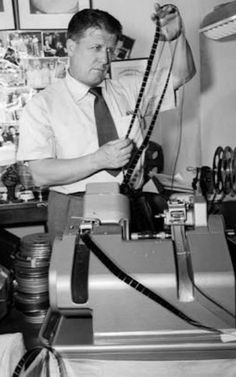
Methodical director George Stevens with his reams of film footage.

The myth that a financially fragile Paramount Pictures nearly shelved director Stevens’ Shane is absurd. Even George Stevens, Jr. has repeated this anecdote, but then, Hollywood loves these ironic anecdotes. According to Ultimate Movie Rankings, Paramount Pictures had 8 of the top 20 grossing movies of 1952, what with their comic goldmines Martin and Lewis, and the still popular Hope and Crosby. Not to mention Paramount had the #1 blockbuster of ’52, The Greatest Show on Earth. Here are Paramount’s top 20 domestic box office figures for ‘52: The Greatest Show on Earth, 32.9 million; Sailors Beware, 11.9; Jumping Jacks, 11.1; The Stooge, 9.7; Come Back Little Sheba, 9.7; Son of Paleface, 9.4; Road to Bali, 8.3; and Just for You, 8.3. Adjusted for today's dollars, this would total well over a billion dollars in grosses, not including foreign grosses. 
While Shane was shooting in the fall of ‘51, the same studio released Stevens' A Place in the Sun, a critical and commercial smash. While he was up to his elbows in pruning the fruits of his four month Shane shoot in early 1952, George Stevens won his first best director Oscar for Sun. It's highly unlikely that Paramount would then shelve their golden boy's latest movie. Stevens was famous for his long filming schedules, with footage shot from every conceivable angle, which would then take him anywhere from one to two years to edit. George Stevens Junior once said that his father’s movies were really made in the editing room.
Another hold up was when Paramount decided that Shane would be their first widescreen film, though it was filmed in the standard smaller screen ratio. Then they decided to add Stereophonic sound to complement the big screen ratio. There was no way they were going to sit on or dump Shane. “Did you know Shane was shelved at first?” makes a good Hollywood story. Just as how The Wizard of Oz and It’s a Wonderful Life were supposedly flops when first released, these stories take on a life of their own.
Alan Ladd's Shane has had just about enough of bad guy Ben Johnson!

Ed Howells: This Wilson, would you know him, Shane? If you saw him?
Shane: Maybe. If it is Wilson, he's fast on the draw, so be careful.
Howells: You seem to know a lot about this kind of business, Shane. I don't want no part of gunslinging. Murder's a better name.
Shane manages to be naturalistic and mythic at the same time—and this fits the talents of Alan Ladd perfectly. I had never seen any Ladd films prior, except for his last film, The Carpetbaggers. As world weary cowboy star Nevada Smith, Alan Ladd was the best thing about the shallow Hollywood soap opera. 
As Shane, Alan Ladd is low-key but strong, never overacting or falling back on mannerisms. The Paramount star, in his last film under contract, is totally natural and magnetic. Alan Ladd also possessed a wonderfully resonant speaking voice, like other iconic actors of the time: Gregory Peck, William Holden, Rock Hudson, etc.
Alan Ladd was a contemporary of Tyrone Power, they were a year apart. While 20th Century Fox treated Ty like a prince in comparison to Paramount and Ladd, Power also felt insecure that he was regarded as just a pretty face. While neither were Laurence Olivier, I think both Ladd and Power were underrated by critics of the era. With Shane, you see what Ladd could do, with great material and director.
Shane: Yeah, you've lived too long. Your kind of days are over.
Ryker: My days! What about yours, gunfighter?
Shane: The difference is I know it.
Shane, the gunslinger who tried to go straight.

Much has been made of the fact that Alan Ladd was short, especially opposite tall leading ladies or villains. Well, you know what? A lot of actors were short back then—and still are today! Back in Alan Ladd's era, three of the shortest male stars had larger than life personas at Warner Brothers: Bogart, Cagney and Edward G. Robinson. The difference was these guys were not your typical movie stars, yet comfortable in their own skins. Later, Dustin Hoffman and Al Pacino continued that tradition. Short action heroes Cruise and Stallone came later. When Robert Redford broke through in the ‘70s, his height was actually the basis of a magazine article! And Patrick Swayze, who plays sort of a bouncer version of Shane in Roadhouse, takes a lot of wisecracks for his short, slim appearance from the small town’s bad guys.
Ladd was 5'5", as if that made him less masculine. My Dad was also 5’5”—and he was not to be messed with. When I was in 7th grade, an older boy walked up to me one lunch hour. He asked if Dick Gould was my old man. I nodded yes.
The clean-cut kid smirked and said, “I’ve seen him around. He’s just a sawed-off cowboy, isn’t he?”
My dad and his equally short brothers’ reputations were pretty well-known in my hometown, so I boldly replied, “The next time you see him, why don’t you tell him that?”
The boy stared at me a moment, then walked away!
I guess that generalization makes Ladd a sawed-off cowboy, too. Yet, with his almost animal-like stare and stillness, Ladd’s totally believable as a bad ass in Shane.
Alan Ladd may have been slight in build, but still every inch the star!

Joe Starrett (to rancher Ryker): I'm not belittlin' what you and the others did. At the same time, you didn't find this country. There were trappers here and Indian traders long before you showed up and they tamed this country more than you did.
Ryker: They weren't ranchers.
Joe: You talk about rights. You think you've got the right to say that nobody else has got any. Well, that ain't the way the government looks at it.
Van Heflin, the perfect everyman, as the simple farmer who stands up to the cattlemen.

Van Heflin, that great star character actor, is likeable and believable as the decent farmer family man. Heflin’s Starrett is ahead of his time as a movie male who is secure with his wife’s crush on the hero. Jean Arthur was one of director Stevens favorite actresses, so he chose her as the farmer’s wife, Marion. Arthur is one of film's all-time delightful comediennes, who could also play drama. However, Arthur’s uniquely squeaky voice, especially during the film’s climatic moments, undercuts her credibility in trying to stop the impending violence. Also, Arthur at 50 and Heflin, 43, are bit long in the tooth as a pioneer couple with a small boy, and celebrating their 10th wedding anniversary. As their son, Joey, movie fans seem to either love or loathe Brandon De Wilde’s performance. I found De Wilde better than most child actors of the era, though I think his Joey is used to telegraph the film’s underlying story a bit too much.
Jean Arthur, as the farmer's wife, Marion, who hates violence and loves Shane.

Marion: Guns aren't going to be my boy's life.
Shane: A gun is a tool, Marion. No better and no worse than any other tool—an axe, a shovel, or anything. A gun is as good or as bad as the man using it. Remember that.
Marion: We'd all be much better off if there wasn't a single gun left in this valley—including yours.
Jack Palance, the man whose mug launched a 1,000 nightmares, as Wilson, the gunslinger with an evil grin.

Shane has a stellar supporting cast. Jack Palance has a small but vivid role as the ranchers' smiling gunslinger, Jack Wilson. A young Ben Johnson is intense as Chris Calloway, one of Ryker’s ranch hands. This is a rare bad guy role for Johnson—though Chris redeems himself near the film’s climax. Also, did you know that Johnson was originally a rodeo cowboy and stunt man? Emile Meyer is memorable as the firebrand ranch baron, fierce and pathetic at the same time. Elisha Cook, Jr. was born to play Stonewall, the spooked would-be tough guy.
Shane happens to feature some of TV’s future classic familiar faces, like Ellen Corby (Grandma Walton!), Nancy Kulp (Jane Hathaway!), and Edgar Buchanan (Uncle Joe!).
Alan Ladd and Van Heflin as the gunfighter and the homesteader in 'Shane.'

The extensive location shooting in Jackson Hole, Wyoming is superb, with the Grand Tetons prominent in the background. Cinematographer Loyal Griggs couldn’t have been thrilled to see his work shaved from the top and bottom to appear widescreen. Perhaps the Oscar he won for Shane helped ease the pain. Today, revivals and DVDs of Shane are rightfully shown in its original ratio.
Director Stevens didn’t want the typical backlot/soundstage western look for Shane. Stevens had the characters’ homes and makeshift town constructed on location and the characters looked more sweaty than spiffy. That same realistic attitude is true with the film’s attitude toward bar brawls and gun violence. People are left with bruises after fights and lost lives leave bereaved family members bereft.
Shane: I gotta be goin' on.
Joey: Why, Shane?
Shane: A man has to be what he is, Joey. You can't break the mold. I tried it and it didn't work for me.
Joey: We want you, Shane.
Shane: Joey, there's no living with, with a killing. There's no going back from it. Right or wrong, it's a brand, a brand that sticks. There's no going back. Now you run on home to your mother and tell her, tell her everything's alright, and there aren't any more guns in the valley.
Don't believe the bullshit stories that 'Shane' was shelved. This was director
George Stevens' follow-up to 'A Place in the Sun.' 

George Stevens, always a socially conscious movie maker, was changed by his time in WWII. Stevens’ film unit captured the landing at Normandy, the liberation of Paris, and freeing the Dachau concentration camp. Stevens didn’t come back to Hollywood, just looking for a hit to put him back on top. George Stevens made several war documentaries, some of which were used at the Nuremberg trials. And when he did return to commercial filmmaking, George Stevens was more interested in what was going on in the world than just recycling Hollywood clichés. Even when working in the western genre, Stevens’ big fight scene were punctuated by huge close ups and excruciatingly timed punches, so audiences felt beaten and weary by the fight, too. The gunfight scenes were one of the first in film to use wires to jerk the performers back, mimicking the impact of a gunshot. Stevens wanted to show the effects of violence as well as the dilemma over the use of force.
George Stevens was a masterful storyteller, using powerful imagery and truth in his films. I knew of Shane’s famous ending, but I was overwhelmed when I watched for the first time. The finale is truly memorable, and Shane is still a classic.
Shane says his goodbyes to Little Joey.

Joey: Shane, you’re hurt!
Shane: I'm alright, Joey. You go home to your mother and your father. And grow up to be strong and straight. And Joey, take care of them, both of them.
Joey: Yes, Shane. [Tears well up in Joey's eyes] He'd never have been able to shoot you - if you'd have seen him.
Shane: Bye, little Joe.
Joey: He never even would have cleared the holster, would he, Shane? [calls after him] Pa's got things for you to do, and Mother wants you. I know she does. Shane! Shane! Come back!

Shane! Shane! Come back! Better have a few tissues handy!