 |
| Gene Kelly and Judy Garland teamed for the first time in "For Me and My Gal." |
MGM’s
For Me and My Gal boasts two firsts:
This was Gene Kelly’s film debut and Judy Garland’s bow in getting billed above
the title. The 1942 musical drama may not be as well-remembered as some of Gene
and Judy’s best efforts. For Me and My
Gal was a big hit on a modest budget, which is always the best bottom line
in Hollywood’s book. Gene was given the lead over George Murphy at the last
minute, and when Kelly scored, he began a long association with MGM. For Judy, to
carry this film meant that Metro’s faith in her was justified.
 |
| Judy Garland & Gene Kelly rehearsing in "For Me and My Gal." |
Gene
Kelly and Judy Garland were on the cusp of 30 and 20 when they filmed For Me and My Gal. Male stars enjoyed a
longer shelf life in Hollywood than their female counterparts. Imagine if Metro
starred Judy in her first film at age 30—no way. Kelly had done some work on
stage, including Pal Joey. Gene’s
Irish good looks, athletic build, charm, decent acting ability, and great
dancing—all made him a versatile and valued performer. Personally, my only pet
peeve with Gene Kelly was his tendency to preen, as if “Look at me!” He didn’t
need to.
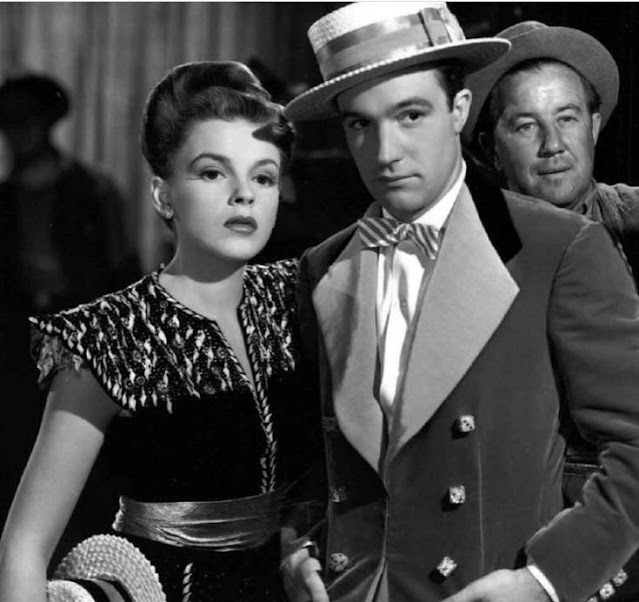 |
| Judy Garland spars romantically with Gene Kelly in "For Me and My Gal." |
Judy
Garland truly warrants her name above the title as Jo Hayden. Judy is in youthful
voice and good humor, a nimble dancer and a natural in her dramatic scenes. The
star is so strong in all the major categories of performing, it’s no wonder MGM
considered her their greatest asset. Though some Judy Garland’s films may seem
slight by today’s standards, looking over her filmography, Judy’s box office
was mighty strong. Only a few of Garland’s first and last films failed to
perform, the rest made mountains of money for MGM. This goes a long way to
explain why they put up with her problems for so long.
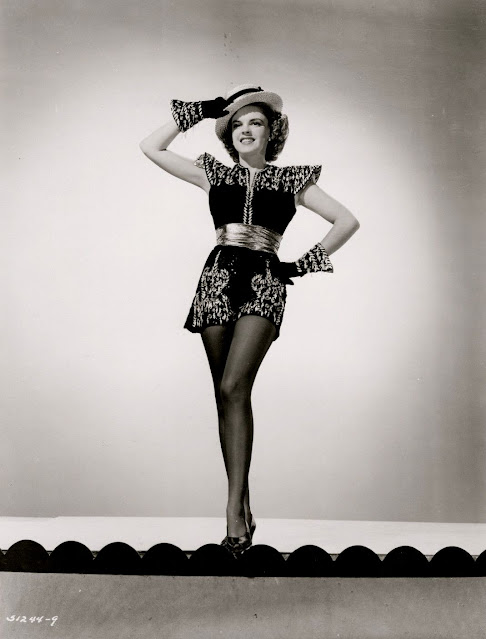 |
| Judy Garland got her name above the title for the first time in "For Me and My Gal." |
For Me and My Gal
has a major flaw: the story is a clichéd soap opera, set to music. Every time
something good happens to Gene and Judy’s vaudeville performers, you just know
heartbreak lurks in the next scene. But the two stars ably handle the
tear-jerking as well as the song and dance numbers.
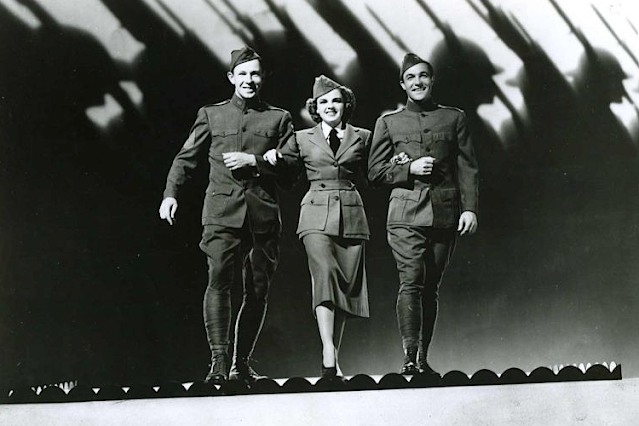 |
| Judy Garland, flanked by George Murphy & Gene Kelly in "For Me & My Gal." |
This
story makes Ziegfeld Girl look like a
hard-hitting documentary. Since For Me
and My Gal was filmed in the first half of ’42, it looks like this musical morphed
into a wartime story, as well. The film’s characters all go off to WWI in
gung-ho fashion, to promote patriotic spirit in audiences for the U.S. entry
into WWII. The climactic scenes, when Gene’s Harry Palmer redeems himself on
the war front, feels especially tacked on. The latter half of the film has
plenty of nostalgic WWI-era songs, beautifully sung by Garland and company. MGM
was now in full war time propaganda mode, at the behest of FDR. When Judy
appears in the finale in uniform, it’s a distinctly World War Two uniform! There’s even a tagline at
the finale to buy war bonds.
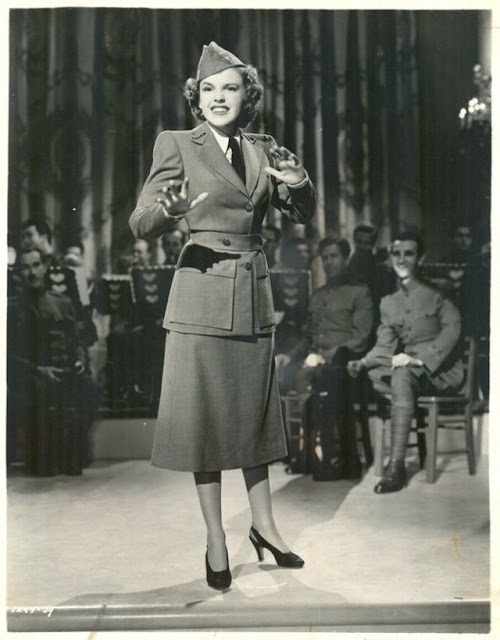 |
| Judy Garland's "WWI" uniform in "For Me and My Gal." |
The
most important aspect of For Me and My
Gal is to just enjoy great talents Gene Kelly and Judy Garland, at the
height of their youthful energy and appeal. Watching “Ballin’ The Jack,” I was
amazed by Gene’s high-energy performing, but also admired how nimble Judy was
as a dancer, as well. Judy’s great number “After You’re Gone,” is just stunning
for this young star.
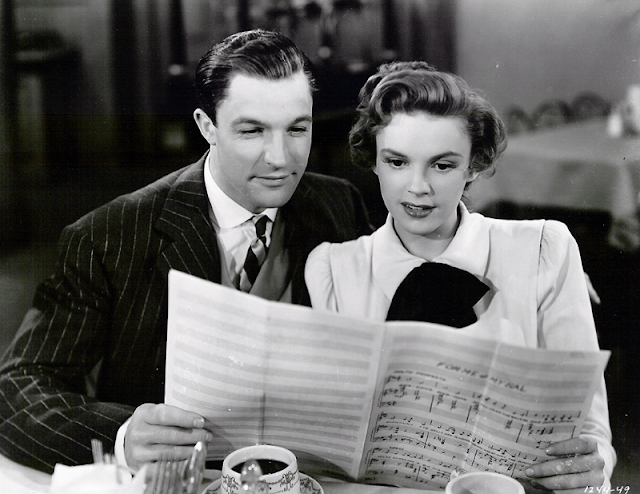 |
| Gene Kelly & Judy Garland make beautiful music together in "For Me & My Gal." |
Interestingly,
two show biz up and comers have significant but unbilled performances: future
director Richard Quine as Judy’s kid brother and Keenan Wynn as the couple’s
tough agent. Wynn would soon become one of MGM’s great character actors.
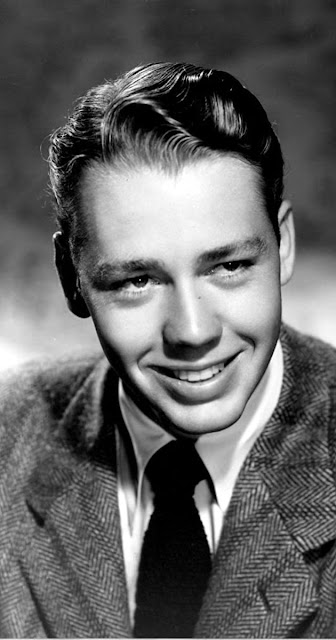 |
| Richard Quine is unbilled as Judy's kid brother who goes off to war. Quine later became a director with a knack for romance and comedy. |
Busby
Berkeley was a rather odd choice as director. He usually helmed splashy
musicals, filmed in ‘40s Technicolor. Here, Busby is directing a modestly
budgeted dramatic musical in black and white. The dance numbers, which he
didn’t even direct, are filmed in straightforward vaudeville style. No busy Busby
stunts here!
The
supporting cast is fine, save for a very annoying opera singer, who is Judy’s
love rival. Why, you ask? MGM honcho L.B. Mayer was obsessed with “class” and
was forever overcompensating with his Anglophile fantasies. This opera singer
is shrill and looks old enough to be Judy’s mother! It’s the same mentality
that gave us Kitty Carlisle and Allan Jones disrupting A Night at the Opera or the semi-operatic ingénues in Mickey and
Judy movies. Metro also created the short-termed opera craze with Jeannette
MacDonald and Nelson Eddy.
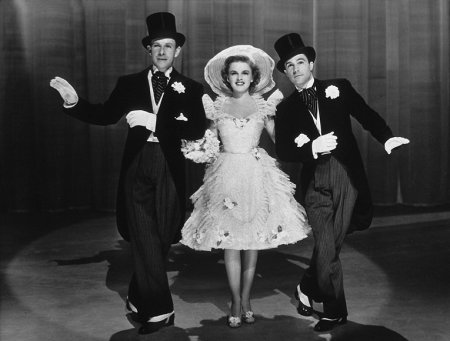 |
| George Murphy, Judy Garland, and Gene Kelly in 1942's "For Me and My Gal." |
If
you can suspend disbelief with the ‘40s MGM sentiment, you will enjoy Gene and
Judy, in all their youthful exuberance and talented glory in For Me and My Gal.
Here’s
a much more elaborate musical starring Judy Garland, with Lana Turner and Hedy
Lamarr! My look at 1941’s Ziegfeld Girl:
https://ricksrealreel.blogspot.com/2021/02/ziegfeld-girl-1941.html
FYI: I put my movie overflow on my FB movie page. Check
it out & join!
https://www.facebook.com/groups/178488909366865/
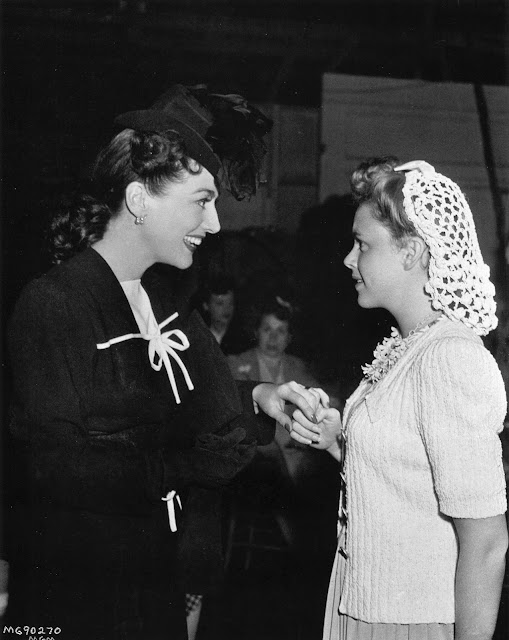 |
| Is this the secret MGM handshake? Joan visits Judy on the "For Me and My Gal" set. |

