Showing posts with label Ross Hunter. Show all posts

Monday, April 3, 2023

Doris Day Emotes Mightily in ‘Midnight Lace’ 1960

Doris Day is stalked by an unseen villain in 1960's suspense film "Midnight Lace."


Midnight Lace is one of those film perennials, the "woman in jeopardy" movie genre. Doris Day has made several, Julie, The Man Who Knew Too Much, and Midnight Lace.

As far as Doris Day’s performance is concerned, Midnight Lace falls in the middle. Some critics and fans have raved over her performance, citing that Day should have been Oscar-nominated. Others have cited that her hysteria was over the top, like her turn as Julie. While Doris could have been reigned in a bit as the hysterical heiress, there are several striking scenes where Day is most effective.

In case you're wondering what the title of "Midnight Lace" means!
Doris dons this ensemble at a rather odd point in this 1960 thriller.

This is one of those movies where you turn off your brain and just enjoy the thrills. The story is filled with more red herrings than a smokehouse. Nearly every supporting character has a seemingly sinister moment that makes them a suspect. 

Some of the 1960 "modern" attitudes toward the crank caller feel more than archaic, even for the time. It's eye-rolling how the other characters, including the detective, who all seem to want to brush it off as a prank or the imagination of Day's Kit. My two hurdles with this film: Why does Kit hang on the line while she's being threatened and degraded, instead of just hanging up? It's over 30 minutes into this movie before the detective has the bright idea for the couple to get a new phone number. The other is the caller's voice, which we occasionally hear, that is high-pitched and disembodied. Unfortunately, it inspires hilarity instead of hysteria, since the voice sounds like Pee Wee Herman acting villainous!

Why doesn't Doris Day's tormented heroine just say, "Sorry, wrong number?"

Doris Day plays an heiress who has been married three months to a wealthy business man, Tony Preston (Rex Harrison). She seems to have no purpose but to shop and feel neglected, but is kind and pleasant. Tony's a hard working business man who is always begging off personal plans to take meetings. The contrived plot only has Kit picking up the phone when the crank caller rings. Kit also experiences various near-miss physical mishaps—construction beams crashing, elevators stalling, shoved in front of a bus, etc. By the last act of the film Doris' Kit is a movie diva mess.

It's worth nearly getting clobbered by a construction beam if you get to meet
John Gavin! Doris Day in 1960's "Midnight Lace."

Even the best of this genre can be contrived, and depend on a suspension of disbelief. Without giving away the story, the villain seems rather obvious, and the red herrings more than a bit fishy! It’s best to enjoy the excellent cast of pros, the atmosphere, and lavish settings. While not as cheesy as Ross Hunter's same year Portrait in Black, the story doesn't withstand scrutiny.

Doris Day & Rex Harrison play newlyweds whose bliss is being blown by a
threatening caller to the usually sunny Day, in 1960's "Midnight Lace."

Rex Harrison as the husband is smoothly professional, but it's hard to understand why Day's heiress would marry this man 15 years her senior, when he's not particularly attentive. And Day's reactions to her situation seem a bit naive for a woman nearly 40. Doris must once again be playing younger, as she's referenced that way a couple of times. Also sexist and eye-rolling is when Day's Auntie Mame-ish Myrna Loy makes a number of self-deprecating cracks about aging, when she's just three years older than Rex Harrison. So, what else is new in Hollywood?!

"Rex, if you're only 3 years younger than me, why am I getting all the 'old' lines?"

Myrna Loy plays Doris Day's aunt in 1960's suspense drama "Midnight Lace."

The same is true for Kit's neighbor friend Peg, played by Natasha Parry. She's 30ish and attractive in a Dana Wynter way. And who turns out to be her mostly off-camera sailor husband? Anthony Dawson, also 15 years older, who looks like Trevor Howard's corpse!

Anthony Dawson plays much-talked about, seldom-seen neighbor Peg's sailor hubby.
Odd couple, since she is played by lovely Natasha Parry, in "Midnight Lace."

On the other hand, there's John Gavin, at the height of his hunkiness as the construction manager next door. He's also rather dull, like a male Kim Novak.

John Gavin's construction manager seems taken with Doris Day's harried heiress
in 1960's thriller "Midnight Lace."

And what would a Britain-set mystery be without a pipe smoking detective played by John Williams? At 70, Herbert Marshall seems feeble as a business associate with spending issues, and who would die six years later. Roddy McDowall is once again the unctuous underling who oozes smarmy charm and snide threats. Hermione Baddeley plays the gabby pub maid, of course! There are many familiar faces in this film, which makes it more fun to watch.

John Williams as the British detective with the pipe, natch, in "Midnight Lace."

Doris Day gets the beauty treatment by Ross Hunter's fave cinematographer Russell Metty. Day's costumes, always a star in her movies from Pillow Talk on, are by Irene, one of the more subtle designers in Hollywood. Day’s clothes look sleek and classy. And the hats? Well, they are a product of their time.

There's some location shooting in London, but this hothouse thriller was filmed at Universal. David Miller, a solid studio director, does the best he can with the material.

This scene has a Hitchcock quality, where the blonde heroine senses imminent danger.
Doris Day as the heiress in distress, in 1960's "Midnight Lace."

As for Day, she resisted this role after Julie caused her great stress. But her producer husband Martin Melcher persisted. Day used her trauma from a physically abusive first marriage for her hysteria scenes. While some feel over the top, like the elevator scene where she has a moment that rivals “I’ll have what she’s having” from When Harry Met Sally, the rest feel realistic, like her final meltdown on the staircase. Some critics have accused her of being shrill, like Elizabeth Taylor in some of her more emotional roles. My thought: Is anger or hysteria supposed to sound pretty?

Is Doris Day's heiress off her beam or is she being harassed? Watch "Midnight Lace!"

Doris Day was a pro, but didn't enjoy this type of role, and never did again. Perhaps her fans agreed. While this film was moderately successful, Day's comedies before and after did far better at the box office. Still, Midnight Lace is mindlessly entertaining popcorn movie, and a glam treat for Day fans.

Here’s my tribute essay to Doris Day here: https://ricksrealreel.blogspot.com/2017/04/a-latter-day-doris-day-fan-fesses-up.html

Doris Day unnerved but unbowed, in the final moment of 1960's "Midnight Lace."


Tuesday, March 21, 2023

‘Thoroughly Modern Millie’ Silly Fun 1967

"Thoroughly Modern Millie," a '20s musical with the '60s biggest singing movie star!


That Thoroughly Modern Millie, a puffed up piece of fluff, was a huge hit in 1967 was rather amazing. Millie wasn’t from a hit Broadway musical, as often was the case in the 1960s. Perhaps audiences who wanted something more mainstream than Bonnie and Clyde and other ’67 gritty films flocked to Millie.

Julie Andrews is Millie, here before she gets her modern makeover.

Producer Ross Hunter couldn’t get the rights to Julie Andrews’ old Broadway hit The Boyfriend. So Hunter hired talent to cook up Thoroughly Modern Millie.  Ironically, wholesome Millie was Julie's last hit movie until a dozen years later, with husband Blake Edwards’ racy 10.

Thoroughly Modern Millie stars a diverse trio of leading ladies: Julie Andrews, at the height of her film stardom; Carol Channing, the toast of Broadway in the megahit Hello, Dolly; and Mary Tyler Moore, who just finished her run as the perfect TV wife on The Dick Van Dyke Show.

Mary Tyler Moore is Miss Dorothy, the latest boarder at the women's hotel.
She becomes besties with Julie Andrews' Millie in "Thoroughly Modern Millie."

Though Julie Andrews and Mary Tyler Moore are more than a tad past the age of playing ingénues, the leading ladies are both appealing, especially Julie in the title role. Julie is high-spirited and fun, in great voice and a game dancer. Moore plays the role of Miss Dorothy, the pampered princess, who arrives at the ladies’ hotel. Mary may seem stilted in the role, but apparently she wanted to gently spoof the sweet young thing role. There are some fun numbers, like Julie's opening title number that shows her transformation from goody girl to flaming flapper. The tap dance scene with Julie and Mary, to make the creaky hotel elevator run, is charming.

Bea Lillie as Mrs. Meers, who runs a women's hotel & white slavery ring.
She's flanked by henchman Pat Morita & Jack Soo, who would find fame in the '70s.

In another galaxy, there’s Carol Channing as the outrageous ex-showgirl, now-rich Muzzie Van Hossmere. Even though Carol’s only in a handful of scenes, with two numbers, her outrageous persona is at full tilt and the Academy saw fit to give her a Best Supporting Actress Nomination for 1967. While I've always had a low tolerance for Carol Channing’s charms, her “Jazz Baby” is an over the top camp classic. It’s as if Baby Jane Hudson made her comeback and was a smash.

I half expected to hear Carol Channing caterwaul "I've Written a Letter to Daddy!" 
But she sings "Jazzy Baby" and prances all over the set. Must be seen to be believed!

Finally, there’s British icon Beatrice Lillie, who plays the comic villain Mrs. Meers. She’s dryly amusing, as the henchwoman who runs a white slavery ring as well as the women’s hotel.

John Gavin spoofs his square-jawed looks good-naturedly as Trevor Graydon. The tall, dark, and handsome star really fills the bill here and then some! Gavin has gotten much criticism as acting wooden in Millie. Well, Gavin wasn’t the world’s most relaxed actor, but I’m surprised that people don’t get that his hero is supposed to be deliberately stiff, like Mr. Peterman on Seinfeld.

John Gavin's a good sport as the square-jawed hero in "Thoroughly Modern Millie."

James Fox is the surprise here as Jimmy Smith, who longs for Millie. I've only seen Fox in intense dramatic roles like The Servant, King Rat and Performance. Imagine my surprise when I saw he is not only dashing and adorable, but a most pleasant singer and dancer, to boot. Okay, so his singing was dubbed by Jimmy Bryant, who also provided the voice for Richard Beymer in West Side Story. But Fox looks like he’s having great fun. He really captures the high-spirited male ingénues of the early part of the 20th century show biz.

James Fox is a total charmer as Jimmy, the free spirit in "Thoroughly Modern Millie."

The film merrily mixes fun song and dance styles, and movie conventions from the era. But at two and half hours long, there’s so much padding that could have been cut. Apparently, Ross Hunter can be thanked for this. The producer liked to think big, while director George Roy Hill thought this was a light musical comedy. Hence, the superfluous numbers and Hunter’s insistence on an overture and intermission made Millie a “road show” event instead of a two hour film.

In "Thoroughly Modern Millie," our heroine mulls over her attraction to both 
John Gavin's dashing boss or James Fox's darling Jimmy.

For instance, Andrews’ Millie singing the “Trinkt Le Chaim” number at a friend’s Jewish wedding—which has nothing to do with the rest of the film. As sweet as “The Tapioca” may be, introducing Jimmy’s character and Mrs. Meers’ antics, goes on much too long. The later Harold Lloyd-type physical comedy scene with Andrews and Fox, while game, is also lengthy.

Bea Lillie as the comic villain Mrs. Meers. This is about how serious 1967's "Thoroughly Modern Millie" gets.

Some viewers will be sensitive and object to the subplot of a white slavery ring run by Chinese villains as rightly racist—who weren’t even played by Chinese actors, to add insult to injury. I took it as cartoonish camp and spoofing old movie serial tropes. Also, Julie's Millie gives up goals of independence to be an old-fashioned wife to rich Jimmy! However, I doubt high-spirited and outspoken Millie would remain demure for long.

As Miss Dorothy, Mary Tyler Moore when she first sees John Gavin's Trevor,
in "Thoroughly Modern Millie."

George Roy Hill, who loved period movies, directed Thoroughly Modern Millie. He brought a lot of research, skill, and style in his vision of this earlier era, much as he did with 1973’s The Sting. Unlike the film’s producer, the director thought of this movie has light, clever fun—which comes off well. Hill had just directed Julie in a commercially successful epic, Hawaii, so they worked well together, and it shows.

Julie Andrews has great fun as "Thoroughly Modern Millie," comically vamping here.

The mix of old and new songs blend together smoothly; costumes by classy Jean Louis are sleek and at times comical, as with Channing’s glitzy glamour. The new songs are by Jimmy Van Heusen and Sammy Cahn, plus “Jimmy” by Jay Thompson. Elmer Bernstein was bemused to have won an Oscar for his non-musical score—it was shoehorned in between all the songs, plus meddling producer Ross Hunter had arranger Andre Previn goose up Bernstein’s more era-appropriate score.

Carol Channing toasts the stars to a happy ending in "Thoroughly Modern Millie."

Given the background goings on, I’d say that Millie made a splash was almost a fluke, given that movie-goers tastes would quickly change. The next year, Julie Andrews’ Star! and 1970’s Darling Lili would bury her career as a top film leading lady. Compared to these latter two behemoths, Thoroughly Modern Millie is the model of simplicity in entertainment. Just remember Millie was a movie made over 55 years ago, about the Roaring Twenties!

Here’s my look at director George Roy Hill’s other period comedy-drama, The Sting: https://ricksrealreel.blogspot.com/2021/08/redford-newmans-star-power-sting-1973.html 

Carol Channing as Muzzie literally acts like she's been shot out of a cannon in "Thoroughly Modern Millie!"


Sunday, March 20, 2022

Story Salvages Musical ‘Lost Horizon’ 1973

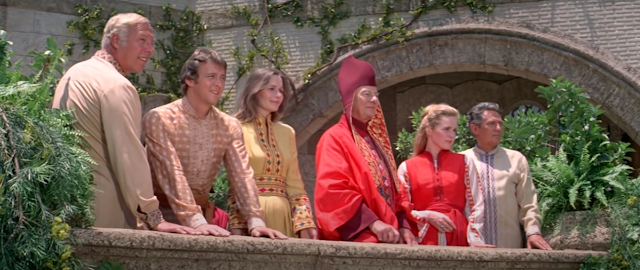
The cast of 1973's "Lost Horizon" enters Shangri-La in awe.


While most moviegoers forgotten the musical version of Lost Horizon, some film fans have not. They feel the ’73 Lost Horizon is a maligned masterpiece; I would not go that far, but in some respects, Horizon is still watchable.

The reason that Lost Horizon still intrigues is the story: world-weary westerners are kidnapped to an isolated paradise in the Himalayas. In temperate Shangri-La, inhabitants co-exist peacefully and enjoy extraordinarily youthful and long lives. Doesn’t that sound wonderful these days? There are a few catches…

The "Lost Horizon" cast, often posed as a group, gaze in wonder at Shangri-La!

Peter Finch is a UN peacemaker who is spirited to Shangri-La by plane. Along for the ride: Michael York as his reporter “kid” brother; Sally Kellerman is a suicidal news photographer; Bobby Van is a USO entertainer; and George Kennedy is an engineer—not a pilot, for once! Noted non-Asians John Gielgud, Olivia Hussey, and Charles Boyer are Shangri-La citizens. Norwegian Liv Ullmann’s teacher migrated there as a baby; Japanese actor James Shigeta is Gielgud’s wingman.

Some critics complained about the social standing order in Shangri-La. Yes, the book was written in the ‘30s by a white British male, so naturally the lead characters are white, living in luxury. And “natives” are content worker bees.

"Lost Horizon's" Shangri-La or Norma Desmond's manse in "Sunset Blvd.?"

James Hilton’s novel Lost Horizon never made an easy journey from the page to the screen or stage. The 1937 Frank Capra version has long been considered a classic. But when it was made and released, the film went far over budget and was initially just a modest hit, which caused a huge strain on then-small Columbia Studios. A 1956 Broadway musical was an expensive bomb. And this panned 1973 musical version cost a fortune, and made very little money.

Both film versions caused greater divisions than just cost versus profits. The making of the ’37 version was so fraught that it was the first crack in director Capra and screenwriter Robert Riskin’s friendship. And studio head Harry Cohn was so unhappy with Frank Capra’s handling of the runaway production that they got in a financial dispute that soon ended their famed association.

The Bacharach/David score and the dance numbers bring "Lost Horizon" to a halt.

The ’73 version created just as many rifts. Producer Ross Hunter chose Burt Bacharach and Hal David, fresh off the Broadway musical Promises, Promises, to write the songs for the movie musical Lost Horizon. Bacharach blamed the studio and Hunter for the weak versions of the subsequent tunes; Hunter later said that the musical duo were in the process of breaking up and gave him a “bum” score. Considering that Bacharach didn’t do all that much after Lost Horizon, until he met Carole Bayer Sager in the ‘80s, I’m thinking Hunter was closer to the truth.

As for Hunter, the self-publicizing producer sailed through over a decade of far more hits than misses, starting with ‘59’s blockbusters Pillow Talk and Imitation of Life. His run was bookended with 1970’s mega hit Airport. Feeling his oats, Hunter left long-time studio Universal and signed with Columbia. Hitchcock did this in 1960, when he signed with Universal and got carte blanche, after a string of huge hits in the ‘50s. After the costly but profitable The Birds, Hitch then started laying eggs with Marnie.

Ross Hunter gets in the spirit of Shangri-La.

Hunter didn’t even get that far. Like Lucille Ball the following year with Mame, Hunter went heavy on personal promotion, intoning to all that Lost Horizon was an uplifting film, a positive alternative to all those ‘70s sex and violence laden movies. Talk like this just put a big target on Ross’ rear. And like Lucy, when critics and audiences saw the old-fashioned, overblown results, everyone had a field day. Ross Hunter’s most personal project killed his film career faster than trying to flee Shangri-La. Hunter never produced another feature film.


Why does this cast photo look like the SS Poseidon should be behind them?!

I won’t parade the bad reviews, but my favorite quote was by Bette Midler: “I never miss a Liv Ullmann musical!” What’s fascinating is how the movie musical, a dying genre after the ‘50s, didn’t go down without a fight. In the early ‘60s, the film musicals made were usually Broadway adaptations. And post-studio system era, a box office name was deemed a must, whether they could sing or not. So, Natalie Wood was cast in West Side Story and Gypsy and Audrey Hepburn in My Fair Lady. The standard then was to have a strong ghost singer providing vocals—always so phony. Luckily, Julie Andrews came along and did her own singing, in hits like Mary Poppins and The Sound of Music. Her hits kept studios hoping there was more box-office gold to be mined, until Julie started making stinkers like Star! Then came Streisand with Funny Girl. Unfortunately, Babs followed up with expensive snoozers Hello, Dolly! and On a Clear Day You Can See Forever.

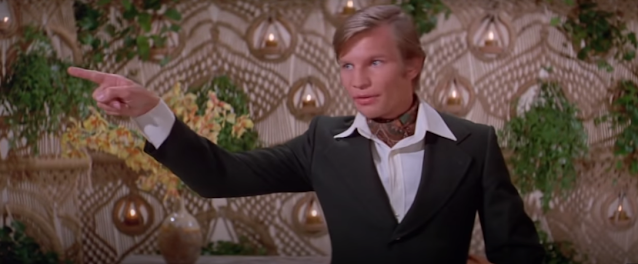
You can tell Michael York's reporter want's to split from Shangri-La because
he's back to his Lloyd Bochner "Dynasty" ensembles again!

Studios still cast with box office in mind, but now let non-singing actors start doing their own vocals. Audiences were then treated to Richard Harris, Peter O’ Toole, Clint Eastwood, Lee Marvin, Lucille Ball, Elizabeth Taylor and more, warbling in movie musicals in the late ‘60s and early ‘70s. You would think that mega-bombs like Doctor Dolittle, Sweet Charity, and Darling Lili killed off the genre. Oh, no! Perhaps musical dramas like Lady Sings the Blues and Cabaret kept movie moguls hopes alive.

"Have you ever seen my Julie Andrews impression?"


This brings us to the worst part of the ’73 edition of Lost Horizon: the singing and dancing. The only actors who sang were Sally Kellerman, Bobby Van, and James Shigeta! Peter Finch, Liv Ullmann, and Olivia Hussey were mostly or totally dubbed. But all the songs are all snooze-worthy elevator music. A couple of the musical numbers are such doozies that audiences and critics hooted them right off the screen.

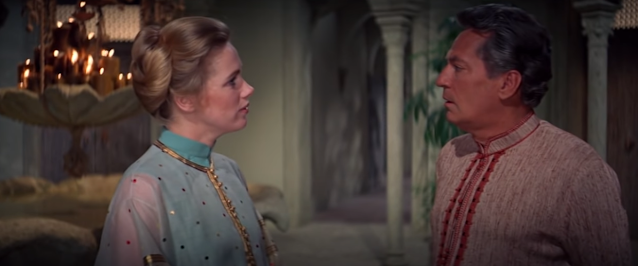
Liv Ullmann and Peter Finch are the subdued romantic leads of "Lost Horizon."

Though Charles Jarrott had directed Anne of a Thousand Days and Mary, Queen of Scots, this was Ross Hunter’s show all the way. Hunter put his passé philosophy forth in this early ‘70s movie, set in a fictional Asian land. Modern audiences were not wowed by Tibetan-type characters carrying on in Broadway via Hollywood showstopper style. This was all mixed with Bacharach/David numbers that sounded like they had just overdosed on Jonathan Livingston Seagull! While Hunter was a square, he was only 8 years younger than supposedly hip Bacharach, who was 45 when Lost Horizon was released. Their generational sensibilities clashed and showed on the resulting film.

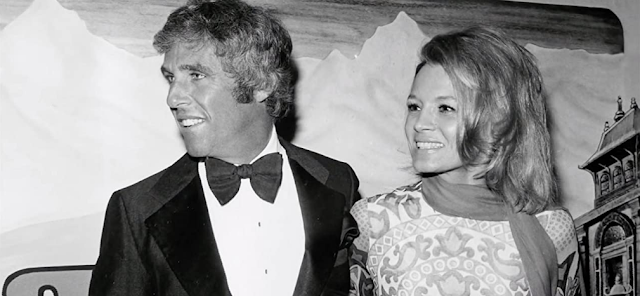
Burt Bacharach gets a police escort to an event for "Lost Horizon." W/ wife Angie D!

A lot of talent is involved in Lost Horizon that either gets wasted or was on the wane. The Bacharach/David team seemed tapped out of tunes. Famed choreographer Hermes Pan created the dances, but aside from some energetic native performing, the rest of the dancing is dramatic actors and children twirling in circles and flapping their arms. As someone who worked at public elementary schools, I’ve seen more enthusiastic dancing at recess!

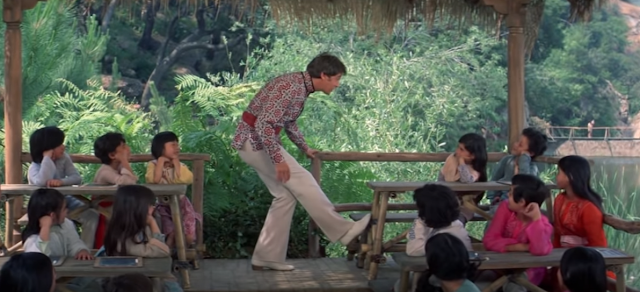
Bobby Van dazzles the kids with tap and baffles them with American history!

As for the stars’ singing and dancing, let’s just say it’s all bad. Sadly, the worst numbers are by two stars that could sing, Van and Kellerman. Their two solos are so inanely staged you can’t believe what you’re seeing. Bobby’s ditty is “Question Me an Answer,” with kids in an outdoor classroom, as they express hilarity at his every move. Van also power clashes with a Nehru top and white bell bottoms and dance shoes. All while he’s teaching the native kiddies a ditty about American history! 

Sally Kellerman wows George Kennedy with "rock" dance moves in "Lost Horizon."

Sally sings the upbeat tune “Reflections” to Kennedy while standing on a rock, waving her arms and offering a preview to Seinfeld’s Elaine Benes. Dishonorable mention: “The Things I Will Not Miss,” with Shangri-La’s own Hussey and woman of the world Kellerman, as they compare their lives, while climbing stairs, ladders, and seat spinning on countertops! What makes it even more hilarious is petite Olivia was pregnant and looked buxom and willowy Sally is 5’10”, so they make an incongruous pair in this aerobic song and dance routine.

The "Living Together, Growing Together" starts off like a live Disney spectacle...

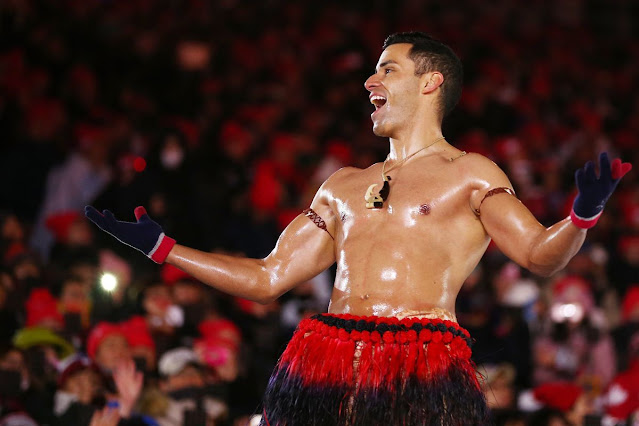
One number that was cut for decades was the infamous fertility dance toward the end of “Living Together, Growing Together.” The scantily clad males look like Chippendales in Shangri-la, but they provide the only really professional dancing in the entire film. Remember the “Hot Tongan” from the Olympics? Like that, times a dozen or two! Though we now live in an era where exploiting flesh is equal opportunity, audiences back then had been raised on Debra Paget leading a dance troupe in scantily clad routines. Shangri-la’s Solid Gold Dancers got laughed at so much in previews, the number was cut. But it’s back, baby, so enjoy! In this movie centerpiece, the young married couple and swaddled baby look like a live Disney show, when suddenly a bunch of buff, nearly in the buff dancers come running out of a cave to strut their stuff. Hey, it takes a village, people, to make Shangri-la a paradise!

...and finishes with the Shangri-La Solid Gold Dancers finale! 

How times have changed. When the buff dancing boys came out in "Lost Horizon,"
 they were laughed off the screen. In 2018, "Tongan Guy" was the hit of the Olympics!

"It twirled!" Shangri-La meets Las Vegas in 1973's "Lost Horizon!"


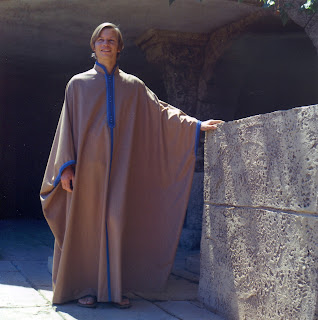
Robert Surtees does the best he can with the cinematography, but what can you do when paradise obviously looks like studio sets or matte murals? Critics commented that Shangri-La looked like a swanky spa. Some of Bob’s zoom shots, as when Liv Ullman runs into the camera boobs first, makes one relieved that Lost Horizon wasn’t filmed in 3-D. Jean Louis provides lavish costumes, while not innovative, are pleasing to the eye. I haven’t seen so many caftans since Elizabeth Taylor’s estate auction!

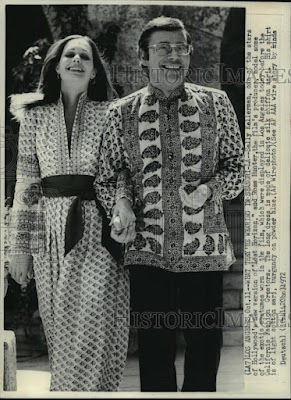
Who wore it best? York's caftan: Jean Louis.

ET's caftan: Empress of Iran Farah Diba.

In movie mega-bombs like these, the cast is always the one at the front lines for the grenades lobbed by critics and movie goers. Yet, with a few exceptions, the cast performs their dramatic scenes as well as the pedestrian script allows—written by firebrand gay activist/author Larry Kramer! Peter Finch, John Gielgud, and Charles Boyer are solid as the U.N. diplomat, the host Chang, and the High Lama. Liv Ullmann was obviously brought in for her creamy, blue-eyed blonde looks, hoping to recall Julie Andrews in The Sound of Music. A schoolteacher who was brought to Shangri-La as an orphaned infant, Liv’s sincere if somewhat ill at ease, like most of her American movies. Michael York is alright as Peter Finch’s impetuous younger brother—the quarter century age difference is right up there with Bradley Cooper and Sam Elliot in the recent A Star is Born. Olivia Hussey is lovely and enigmatic as the local lass. Sally Kellerman is the one star with a real ‘70s vibe and she’s quite empathetic as the jaded photographer.

George Kennedy gives me a "Shrek" vibe here! Sally Kellerman's acting is appealing.

The two actors I found unbearable were George Kennedy and Bobby Van. Kennedy, who was the same in every movie, always struck me as a backup for any part that Ernest Borgnine turned down. It's amusing that Lost Horizon begins with a plane crash, and here’s Airport’s Georgie boy, once again. He also has the hots for Sally Kellerman from the get-go. Can you imagine a more unlikely couple? As for Bobby Van, he’s sort of the Red Buttons of this movie. I’m highly allergic to the type of “look at me” comic/hoofer who seeks audience adoration, like Mickey Rooney, Gene Kelly, or Donald O’ Connor, at their worst. Like “adorable” Red Buttons in The Poseidon Adventure, I wished that Bobby Van would vanish every time he started mugging whenever the camera pointed at him.

Shangri-La would be nirvana if it wasn't for these two knuckleheads!

I don’t think any of the cast member’s careers were seriously harmed by appearing in Lost Horizon, though this was one more nail in Liv’s American film career coffin. The rest of the film actors kept working, George Kennedy kept making Airport movies, and Bobby Van went back to TV game shows.

Michael York & Olivia Hussy's characters about to leave their fairy tale world.

Since we live in the age of fast forward options, Lost Horizon can be best viewed as an old-fashioned early ‘60s movie that was unfortunately made a decade later. The 2 hour and 30 minute running time can be cut down to two hours by fast forwarding through all those uplifting musical numbers!

Love when Peter Finch returns to Shangri-La, he not only has grown a beard,
but apparently stopped for some 'Just For Men' along the way!

Here’s another Liv’s ill fated American movies, 40 Carats: https://ricksrealreel.blogspot.com/2021/09/40-carats-1973.html

FYI: I put all the movie overflow on my public FB  movie page. 

Check it out & join!  https://www.facebook.com/groups/178488909366865/

Farewell to one of the most distinctive actresses of the '70s, Sally Kellerman.