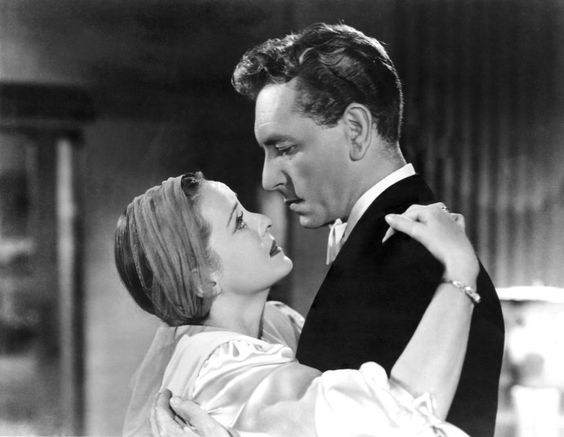
Showing posts with label Ernest Haller. Show all posts

Wednesday, April 4, 2018

Bette Davis: Twins Times Two!

Bette Davis does twins twice: 1946's 'A Stolen Life' and in 1964's 'Dead Ringer.'


Bette Davis not only started a favorite Hollywood casting stunt, playing twins, but Davis did the sister act twice: 1946’s A Stolen Life and 1964’s Dead Ringer.
Both pictures were made by Bette’s long-time studio, Warner Brothers. The ‘46 A Stolen Life was Davis’ career peak, Bette’s biggest hit at the studio. With the ’64 edition, Davis had made a huge comeback with 1962’s Whatever Happened to Baby Jane? WB only released but didn’t make the surprise hit. This time, Warners’ bit and produced Dead Ringer. Compared to A Stolen Life, Dead Ringer wasn’t a bell ringer. Still, both films are fun, especially for Bette fans.
1964's campy 'Dead Ringer' was playing directly to those 'Baby Jane' people!

A Stolen Life is a dreamy romantic triangle set on the scenic New Bedford, Massachusetts coast versus Dead Ringer’s harsh Los Angeles is a backdrop for wrangling over money, sex, and murder. Whereas A Stolen Life has gentle Freddie as the family counselor to the rich twin sisters, Dead Ringer’s Edie goes from her true blue cop boyfriend to a snake pit of cheaters and chiselers. 
A romantic melodrama, A Stolen Life has lighthouse keeper Bill (Glenn Ford) actually refer to artist Kate as an un-frosted cake! Soon he finds a more complete confection in her man-eater twin, Pat. Bette’s sympathetic Kate is really the star of A Stolen Life. Davis’ devious twin Pat is brought in to stir up trouble before she’s dispatched in a boating accident.
Davis enlisted Glenn Ford, just back from the war, as her leading man in 'A Stolen Life.' Here's Bette as Kate.

Glenn Ford, who was borrowed from Columbia, is quietly appealing, but I’m not sure why producer Bette insisted on casting him. After artsy Kate loses Bill to crafty Pat, she becomes close to rough and rugged artist, Karnock, played by Dane Clark, a typical WB alpha male. Aside from brutally critiquing her art, Karnock takes personal jabs at Pat, all about her not being “a real woman!” Ironically, Davis would soon marry a rough and tough artist in real life!
Dane Clark, with Davis, as the brooding artist whose specialty is making sexist remarks!

Bruce Bennett, Mildred Pierce’s Bert, shows up for just one scene, as Pat’s extramarital lover. Surely Bennett’s part got cut for running time and WB didn’t force him to appear for a scene anyone could have played?
Charles Ruggles offers some reality amidst the farfetched dual/dueling sisters plotting, as family retainer Freddie. Ruggles is sympathetic and no-nonsense, a warm screen presence. There are a typical slew of great characters, including scene stealer Walter Brennan, as a crusty light house keeper. Auntie Em herself, aka Clara Blandick, shows up as the stingy antique store owner.
Romantic and lush, the script attempts to be adult and sophisticated, which it may have been in the ‘40s. Now, some of the lines are cringe-worthy. The photography is lovely, especially the light house scenes. The boating accident, for the era, is also well-done.
Bette Davis as Kate and Pat Bosworth in 'A Stolen Life.' There's an excellent biographer named Patricia Bosworth!

Most notable is that Bette gives restrained performances as the rival twins. The differences are subtle between Kate and Pat, especially in their style. But in characterization, Kate is emotionally subdued and self-doubting, whereas Pat is flirtatious and self-assured. This is again proof that Bette Davis could be subtle when playing sympathetic, as in Now, Voyager or The Great Lie.
The bad sister wears black and the modest sister wears frumpy!

However, there is absolutely nothing subtle about Dead Ringer.
Bette as bar owner Edie, who resents her rich sister. Notice Davis with her own hair,  and willing to look dowdy.
This time out, the twin dramatics cuts to the chase. Modest Edie attends the funeral of long-lost love—lost to her flamboyant twin sister Margaret. The bad sister swept good sister’s beau Frank DeLorca off his feet, and claimed pregnancy to get him to marry her. The sisters reunite after the funeral and its fireworks rather than a lovefest. On the way home, Edie finds out from the chauffeur that there was no DeLorca child born, not even a pregnancy. This sets the long suffering sister off and she demands the conniving sibling to meet at her upstairs apartment. Edie plans to get even!
Here's Davis as devious sister Margaret DeLorca. Notice the subtle original title of 'Dead Ringer.'

Pay attention to the scene where Bette Davis, as Edie, combs out her baby fine hair to resemble her glamorous twin, Margaret. With a little bit of teasing, voila! Edie’s coif now looks just like her sister's lush page boy wig.
Catch the moment when Margaret is summoned by bar owner sis Edie. When the rich bitch looks around her sister’s modest little abode, Edie asks rhetorically, "A dump?" Unlike Bette's mild mutter of “What a dump!” in Beyond the Forest, here Davis gives it that Virginia Woolf over-emphasis!
Davis was directed in 'Dead Ringer' by Paul Henreid, one of Bette's favorite co-stars.

Neither movie makes any sense as to why the "good" sister would want to take the bad sister's place. In A Stolen Life, Kate could just wait and win Bill back, once Pat has accidentally drowned. Kate, who has survived, wakes up with her sister’s wedding ring. So, she decides to go for it—and finds out that her sexy sister wasn’t exactly good wife material. In Dead Ringer, Edie's cop beau adores her and wants to marry her, and start a chicken ranch. I guess the struggling bar owner wants to be rich more? And walking in her sister’s shoes is even more troublesome than in A Stolen Life.
Bette pleads her case in plaid in 'Dead Ringer.' Designer Donfeld's lucky The Fashion Police weren't around then!

Dead Ringer's costume designer, "Donfeld," whipped up designs for Davis in Ringer are baggy, boxy, and just plain bad.
Time magazine was acidic but accurate about Bette's latter day attempt at glamour: "Exuberantly uncorseted, Davis' torso looks like a gunnysack full of galoshes. Coarsely “cosmeticked,” her face looks like a U-2 map of Utah."
George Macready: "Bette, is that gown from the Helena Cassadine collection?"

Despite the strenuous efforts of Edith Head, favorite cinematographer Ernest Haller, and Gene Hibbs' embalming glamour makeup, Bette as a glamour girl looks like drag queen Charles Pierce. I never thought Hibbs' face lift tapes and "painting" makeup were flattering. However, if you see candid shots of stars like Davis, who lived hard, this was about the only solution at the time. Plastic surgery had come in to vogue, but Bette, like some other old-school stars, held out until much later, when such procedures became common place.
Sadly, Peter Lawford didn't get the Gene Hibbs "contouring" and skin tape treatment like Bette!
Then there was the age game. Davis' characters were young adults, who came to blows over the same man 18 years ago, near the end of WWII. This puts Edie and Maggie at 40ish in '63, the time of the filming. Also odd is the painting of Frank DeLorca, the stolen deceased husband. One might assume he'd be about the same age as Edie and Margaret. But the painting looks like an old man.
This sums up Bette's glamour regime in a nutshell: cigarette in one hand, lipstick in the other!

Davis was 55 during filming, pretending to be a woman just past 40. The big problem was Davis looked a decade older. I always thought it absurd when Bette claimed to be the perfect Martha for 1966’s Who’s Afraid of Virginia Woolf? Imagine Davis dirty dancing with George Segal. Or flinging her boobs in his face—first Bette would have to put on a bra—or they’d be hitting Segal’s kneecaps!
The last time Davis looked great on film: 'A Stolen Life.' After that, Bette seemed to age prematurely.

Interestingly, A Stolen Life is the last time Bette Davis looked great on film. In Bette’s next movie, Deception, 38-year-old Davis was pregnant, ill, and stressed out over her violent artist husband. And her looks never recovered. Davis seldom played younger, but when she did, as in Beyond the Forest and Dead Ringer, when she couldn't pull off a facsimile of youth. This wouldn’t have stopped Crawford, who still had the bone structure and trim figure to slightly suspend disbelief. The right age actress, Lana Turner, then in her early 40s, turned this down, who was riding high in Ross Hunter glamour soaps.
Karl Malden as Edie’s Jim is a rock of reality and his Columbo-esque doggedness is delightful to watch. You keep waiting for Bette to belt him one!
Peter Lawford was only 40 when he appeared in 'Dead Ringer,' and this is a flattering picture!

More eye-opening than Bette’s aged appearance is Peter Lawford’s as Maggie’s gigolo. The ‘40s teen heartthrob was more famous in the early ‘60s as a Kennedy brother-in-law. Shockingly, Lawford was only 40 when he played Tony. Puffy, paunchy, and jowly, his heavy drinking and smoking is sorely evident here. Two years later, in The Oscar, Peter played a washed up actor, reduced to working as a restaurant host.
Jean Hagen is a long way from Singin’ in the Rain as the caricature of a shallow society pal to Margaret. Hagen’s a whirling dervish of deviled ham here. And Estelle Winwood, Cyril Delevanti, George Macready, all offer solid support.
Caption this picture! Karl Malden is solid as true blue cop in 'Dead Ringer.'

Paul Henreid, one of Bette’s favorite co-stars, directed Davis with care, and Dead Ringer as a tight, entertaining melodrama. Davis drives Dead Ringer as a star vehicle and convincingly creates two distinct characters once again. Davis uses her old vocal trick of raising her voice to suggest youth and vanity as diva Margaret DeLorca. Unlike Joan Crawford or Lana Turner, Bette Davis was more concerned about characterization than looking glamorous. So it’s admirable that as Edie—while Bette has Hibbs-lite makeup—Davis wears her own hair, frumpy clothes, and lets it all hang out. That morgue shot with the dead sister is startling, as it presents Davis cosmetically au naturale.
You can't say Bette Davis didn't have guts, allowing herself to be seen this way, as the dead sister.

As underdog Edie, Davis actually makes you care, with a real performance. As Margaret, Bette gives the “big” performance that Davis felt fans wanted. Dead Ringer gives you the best of both Bettes—good and bad.
My blogger friend Poseidon has often penned pieces on the ‘80s and ‘90s many bad TV remakes of movie classics. Well, Dead Ringer is no classic, but compared to the ridiculous Ann Jillian remake Killer in the Mirror, it’s Oscar material! Which you can watch on YouTube, if you dare. Check out Poseidon's take on TV remakes:
https://neptsdepths.blogspot.com/2017/12/sorry-wrong-movie.html
What’s your best Bette for Davis as twins? Watch A Stolen Life for romance and Bette looking her best. And see Davis work the diva routine like nobody’s business in Dead Ringer.
Love this shot of Glenn and Bette, looking great on the set of 'A Stolen Life.'


Thursday, December 28, 2017

Deception 1946

1946 'Deception' recap: Bette with gun & shoulderpads, conductor Claude killed, & Paul Henreid as a jealous cellist!

I often watched 1946’s Deception, a twisted triangle set to classical music, on the afternoon movies while growing up. This Warner Brothers melodrama seemed very grownup to a ‘70s high school kid.
After not seeing Deception for decades, I re-watched the sudsy drama recently, and managed to make it half way through, before giving up in exasperation.
Claude Rains steals 'Deception' as the catty conductor, Alexander Hollenius.
Deception has a dazzling cast—Bette Davis, Paul Henreid, and especially Claude Rains—tangling with one another in a jealous triangle that leads to murder. The acting is fine, but the trio is done in by a premise that is patently unbelievable.

Bette Davis is Christine Radcliffe, a struggling pianist who lost her lover, cellist Karel Novak (Paul Henreid), in Europe five years ago to a concentration camp. Relocated in post-war NYC, Christine rediscovers Karel after the war, when she sees his name in a concert review. Speaking of names, Christine tells Karel that she took Radcliffe as her “professional name.” I guess Christine Sarah Lawrence sounded too pretentious!
Bette Davis and Paul Henreid as musical lovers reunited in post-war NYC.
Christine’s first line is as declarative as only Davis can be: “I thought you were dead!” Equally subtle is when Karel takes her hand, and Christine holds both up: “No rings.” Reunited, they return to her apartment. On the way up the stairs, Christine tells Karel that she struggles to make ends meet as a pianist, by giving lessons. Unfortunately, once they walk through the door, her apartment is actually a luxurious loft. Hanging up his jacket, Karel notices several fur coats in the closet. Looking around the loft, the cellist sees lots of lovely paintings and sculptures. Christine soft pedals all this obvious luxury. However, Karel is not just a cellist, but a jealous cellist! He attempts to choke her to stop her barrage of non-stop lies. 
After apologies, Henreid’s Karel decides the best thing for them to do is marry as quickly as possible. Bette turns her big eyes away from Henreid, and pops them for the camera…uh-oh.

The deadly...dull triangle that is 'Decption.'
You see, Bette’s been living large due to a beau, egomaniacal maestro Alexander Hollenius. And the maestro is mad as hell about getting dumped by Christine, on her impromptu wedding day, practically. Despite Karel telling her that it tortures him when he feels she’s not telling the truth, and with numerous opportunities to do so, Christine refuses to fess up.
What transpires is a prolonged cat and mouse game: Can Christine keep piling on lies to pacify jealous and insecure Karel? Can she keep equally jealous and self-centered Hollenius from spilling the beans? Can Christine keep the cellist and the conductor from killing each other as they collaborate? About half way through, I decided I didn’t care anymore and ditched Deception.
The most fascinating part of 'Deception' is the loft, that Bette's pianist tries to tell Henreid is paid for by giving lessons!
I’m pretty good at suspending disbelief and not imposing today’s social mores onto old movie conventions and morality. Here’s the big problem I have with Deception: the premise makes ZERO sense. This was also the critics’ problem with Deception over 70 years ago. Why should Christine try to hide a lover from Karel? They weren’t married when the war separated them. She thought he was dead—for five years! Was she supposed to become a nun? First off, Christine’s living situation is suspect. Also, all the people that she invited to her and Karel’s wedding know…because they were her and Hollenius’ friends! What’s to keep any of them from spilling? Plus, the maestro crashes the couple’s reception and acts absurdly jealous. Finally, Hollenius threatens to tell Karel from the get-go.
Paul's Karel is constantly jealous; Bette's Christine endlessly lies!
Most importantly, Bette’s character has NOTHING to feel guilty about, even by 1940s standards. Still, many film write-ups I’ve read about Deception refer to Christine as the conductor’s mistress. According to good old Merriam-Webster, a mistress is a woman who is having extra-marital relations, usually with a married man. Neither character was married during their affair. Yet Davis’ Christine lies her head off, just to keep two hot-headed men appeased. 
Specifically, I gave up after Deception’s famous “dinner scene.” Claude Rains as Hollenius has a field day here. The conductor treats the couple to dine at a fancy French restaurant and proceeds in taking great delight in showing off his talents as a gourmand. The maestro’s game becomes so protracted that Karel becomes unglued—perhaps he was just “hangry.” Though devilishly performed by Rains, and with increased agitation by Davis and Henreid, the whole scene feels as forced as the film’s premise. There’s no story to go forward, so Deception is just all snarky cocktail party chat.

Joan loved to talk about Bette's B.O.! 'Deception' was Davis' first 'disappointment'for WB, and the beginning of her box office slide.

If you can get past the major plot obstacles—there’s fun to be had. The three leads, who all worked together in far better films, do well with the rather unappealing characters they’re playing. The dialogue is sharp—especially the digs by the catty conductor. The sets that depict upscale NYC life are marvelous, especially Bette’s loft with a skylight that covers the entire living room. The classical music and film’s score, by Erich Wolfgang Korngold, set the mood.
Bette's character tries everything to soothe Claude's maestro...even grovelling!

Claude Rains does a delicious turn as Alexander Hollenius: childlike, sexy, jealous, devilish, sarcastic, egotistical, spiteful, and funny. Despite an intense performance by Paul Henreid, his character frequently comes off as peevish. Even with fits of violent jealousy, he ultimately just stews. In the original play, the Henreid’s character rises to the occasion and kills Hollenius. Wait just one minute! Since this a Bette Davis movie, where nobody is as good as Bette when she’s bad, Davis gets to do the dirty deed. Even so, Christine is a thankless character and Davis can’t do much more than to work herself up in a dither of denial.
Irving Rapper, who always seemed good with actors, does what he can with his collaborators, and gives Deception a smart visual style. The screenplay moves heaven and earth to compensate with occasional sharp dialogue to make up for the lack of story. My favorite credit for Deception is Jack Daniels listed as dialogue director—indeed!

Bette Davis as Christine, with a Rita Hayworth pompadour!

Bette Davis often played older and in period pictures. But when Bette essayed modern roles, she kept her look simple. Here, for the only time in her career, Davis sported shoulder pads, a hugely popular but short-lived trend. In fact, in the climactic scene, Bette sports a white fur over her shoulders, and I thought of Carol Burnett’s “curtain dress” take-off on Scarlett O’Hara. And through most of the movie, Bette sports a WWII-era pompadour, with an uncharacteristically lush mane that Rita Hayworth would have envied.
Bette Davis prays that Ernest Haller's noir-style lighting hides all that's going on off-camera!
Perhaps Bette overcompensated because she wasn’t looking her best. Davis’ character is amusingly described as a music student when she met the maestro four years earlier—struggling and taking “rich, untalented students” to get by…and pushing 40! Pregnant and ill during Deception, plus her new marriage was to jealous, violent artist William Grant Sherry—life imitating art? Davis’ favorite cinematographer, Ernest Haller, did what he could. Note that in certain scenes, especially evening shots, Bette’s face is totally surrounded by shadow. Bette admitted later that she wasn’t at her best here. Perhaps driving Davis was that Joan Crawford was following up her Mildred Pierce comeback in a romantic melodrama with a classical music backdrop, Humoresque. Neither films were smash hits, but Joan’s came off better and also turned a better profit, since Bette ran up her film’s budget by her pregnancy, plus emotional and health issues.

Deception isn’t a dud, just an exercise in style—great style, for sure—but no substance. 
The happy newlyweds are taken out for dinner by the maestro, not realizing they're the main course!


FYI: I put all the movie overflow on my public FB  movie page. 

Saturday, November 4, 2017

Mr. Skeffington 1944

Bette Davis' famed portrait as Fanny Skeffington, her society belle at age 20.
Bette Davis is definitely the belle of the ball in Mr. Skeffington, but Claude Rains in the title role is the heart of this 1944 film. Mr. Skeffington is remembered as one of Bette Davis’ big hits for Warner Brothers, but there were also telltale signs that Queen Bette’s rule at WB was beginning to wane.
Mr. Skeffington was one of those episodic bestsellers that Hollywood loved to turn into epic movies. The book was obliquely titled, because Mr. Skeffington never actually appears in the book, only recalled by his wife, Fanny Trellis Skeffington. Once Bette Davis got wind that WB optioned the novel and expressed her desire to play Fanny, I’m surprised the title wasn’t changed to MRS. Skeffington. 
Bette, nearly as painted up as the portrait, as Fanny at 20.
Never mind that Fanny was a beautiful belle of 20 at the book’s beginning—Davis was 36 and frankly, looked every year. While attractive, nobody ever considered Bette a great beauty, either. In fact, WB planned on borrowing MGM’s gorgeous Hedy Lamarr to play Fanny Skeffington. However, at early ‘40s WB, whatever Bette wanted, Bette got.

Another negating factor during Mr. Skeffington’s pre-production was that Bette Davis’ husband, businessman Arthur Farnsworth, collapsed on a L.A. sidewalk and died shortly after. Despite being extremely distraught, Davis insisted that the show must go on, with her. Amazingly, Bette came back to work a week later. 15 years later, when Elizabeth Taylor’s husband, Mike Todd, was killed in a plane crash, Taylor was back on the set of Cat on a Hot Tin Roof less than three weeks later. That’s how divas rolled back in Hollywood’s golden era!

Bette, in old-age makeup, putting out 
good vibes on 'The Mr. Skeffington' set.
Whereas Liz was vulnerable on Cat, Bette was venomous, and took out all her grief on the set of Mr. Skeffington. Davis herself admitted in her memoirs, The Lonely Life, that at that point, she was somebody “only a mother could love.” Between her age and Bette’s stressful life, Davis’ favorite makeup man and cinematographer, Perc Westmore and Ernest Haller, had their work cut out for them. First, these two long-time Davis collaborators had to make her look like the 20-ish toast of New York, circa 1914. Much has been made of the makeup Bette Davis wears when she plays 50-year-old Fanny. But Davis also looks heavily made up as the younger Fanny, especially in close-up. Davis once told a film writer, that on the set of Deception two years later, Bette cried when she saw Haller bring on the gauze covered lights for her. Well, Bette must have been butting in elsewhere on Mr. Skeffington, because Bette’s Fanny is swimming in a glowing soft haze that Barbara Walters would envy. That said, Davis was frank in her memoirs 15 years later, stating that she was no raving beauty, they used every trick in the book to convey the illusion, giving Bette the confidence to feel lovely as Fanny Skeffington. I agree, to a point. But buying Bette as the most beautiful woman in New York City is still a stretch, no matter how much makeup Perc painted on her and the gauzy haze that Haller employs.

Bette as Fanny, & Claude Rains, aptly named Job!
As Fanny Skeffington, Bette’s character is like Scarlett O’ Hara, but without brains: charming, vain, and shallow, but with no depth of character or survivor’s instinct. This must have been a difficult character to play, in terms of audience sympathy. Bette never worried about the audience adoring her, and like Vivien Leigh and later, Elizabeth Taylor, managed to create empathy for playing women dissatisfied with their men or lot in life.

Bette as flapper Fanny, & director Vincent Sherman.
Bette pulls out all the stops as Fanny, fluttering her long lashes and speaking in a high-pitched, girlish voice. It’s a trick Bette used play another flirty, younger character, in 1942’s In This Our Life. Later Davis used a similar tact, when she played another character that she was too old for, small-town sex bomb Rosa Moline in Beyond the Forest. Unfortunately, by mistake or design, Davis’ Fanny affects those mannerisms right up to her middle years.

What brings balance to Bette’s grand performance is the warm, wry performance by Claude Rains as the title character. Bette’s society belle is actually broke and marries the rich, Jewish Job Skeffington for his money. While Fanny is fond of him, she seeks fun elsewhere, with a succession of suitors—just like when she was single. Job goes gradually from indulgent to disappointed, and finally, fed up. Claude Rains was Bette’s favorite leading man, probably because he didn’t try to upstage her, but also because of his versatility. Here, as Job Skeffington, he is wounded by her hurtfulness, but not a wimp. Rains also worked well with Davis on Juarez, Deception, and especially, Now, Voyager. The Skeffingtons’ story spans three decades, starting just before World War l through the middle of WW ll.

Davis as Depression-era Fanny Skeffington.
Like many golden era movies, personal crises conveniently happen during the same time as historical moments. However, director Vincent Sherman keeps things moving at smooth clip and Mr. Skeffington never drags during its 2 ½ hour running time.
The script, by twins Julius and Philip Epstein, is clever and adult for its era. Mr. Skeffington manages to avoid the censorship trap that adulterous Fanny must pay for her sins. Near the end of the film, Fanny contracts diphtheria and loses her looks practically overnight. I guess this was considered punishment enough in during Hollywood’s glamour era!
Also noteworthy are costumes that Orry-Kelly, another Davis devotee, designed. They range from dramatically wow to drag queen wowza.
Backed by the studio system resources—lavish sets and costumes, a great cast, a skilled studio director and screenwriters—all help Mr. Skeffington richly recreate an era. Mr. Skeffington was a big success for Warner Bros., plus Bette Davis and Claude Rains rightly received Oscar nominations.

However, in retrospect, Mr. Skeffington shows the beginning of Bette’s decline. The film took forever to make, because of off-camera drama by Davis. It’s noteworthy that Bette never received another Academy Award nomination during her Warner years, especially for her subtle turn in The Corn is Green the next year. And it’s especially notable that the new gal at Warner Brothers, Joan Crawford, won the Oscar that year for Mildred Pierce. Don’t think that went unnoticed. Also, when Bette insisted on playing a young and beautiful character at 35, she may have prematurely planted the seed that Davis was swiftly becoming past her prime.

Fanny at 50, trying to hide the after-effects of illness.
Another huge debit was that both Jack Warner and director Vincent Sherman hated the old age makeup Bette insisted on as the withered Fanny. Since Bette’s character insists on trying to fool everybody by wearing heavy makeup to disguise illness, audiences are treated to Davis sporting gaudy glamour makeup on top of old age makeup. The look eerily predicts her look as Baby Jane Hudson. Also, Davis’ character loses most of her hair, so Bette sports a tightly curled wig. In short, Bette looks startling, especially surrounded by fellow cast members—even those in their old age makeup!

It’s a sign of how much power Davis wielded that tough studio head Warner deferred to her during this time. And while Sherman is a far more talented director than Hollywood historians give him credit for, he was no William Wyler. When Davis sported extreme makeup playing older in 1941’s The Little Foxes, Wyler and Davis came to such blows that they never worked together again. After Mr. Skeffington, Davis never worked with a strong director like Wyler again for the duration of her Warners’ contract.

Fanny at 40 looks like a young Baby Jane!
Bette insisted, saying her audience loved seeing her play roles that required “character” makeup. Hmmm, maybe… Still, nobody can accuse Bette of being afraid to go there, playing an unlikeable character, no matter how extreme. If the final result is somewhat indulgent, Bette Davis’ commitment to creating a full-bodied character and not just coasting on glamour is admirable. The fine supporting cast also balances out Davis’ diva performance.
For those Bette Davis critics who think she went too far, can you imagine if Hedy Lamarr had played Fanny Skeffington? Hedy was heavenly looking, but she seemed to mistake sedate for sedated. Lamarr was no actress, and I can’t even imagine her playing a 50ish ex-beauty.

Vivien Leigh, when 'Mr. Skeffington' was filmed.
Still, in my alternative casting universe, here’s my choice for the perfect Fanny Skeffington: Vivien Leigh. A great beauty and actress, playing a high-strung, vain vixen would have been right up Viv’s alley. Plus, Leigh was five years younger than Davis, and still gorgeous. In real life, Leigh and husband Laurence Olivier chose to tough it out in England during WW ll. Ironically, two years later, Vivien co-starred opposite Claude Rains in a British production of Caesar and Cleopatra. I can totally see Vivien as Fanny, coming down the top of those stairs, fending off suitors—and a brave enough actress to play her later, when Fanny’s looks have vanished. It was only six years later when Leigh played the ravaged Blanche DuBois in A Streetcar Named Desire—coincidentally, a role that Warners’ considered Bette for. Film history checks and balances have a way of working out, I guess.

Bill Kennedy, kissing Bette's hand, as one of Fanny's suitors.
P.S.—When I was a kid, I watched Bill Kennedy at the Movies on Detroit’s superstation, TV-50. Kennedy introduced me to all these great old movies and he was once an actor himself, at Warner Brothers. Bill appears in Mr. Skeffington as one of Fanny’s many beaus. Bill Kennedy looks very handsome in a Robert Taylor way, and every time Bill showed this or other movies that he appeared in, the TV camera guy would spotlight his scenes with a halo. Now, that’s lighting Bette Davis would envy!
Claude Rains, whose warm performance as Job Skeffington is the heart of 'Mr. Skeffington.'