Showing posts with label Henry Fonda. Show all posts

Wednesday, January 14, 2026

The Stars Shine ‘On Golden Pond’ 1981


Henry Fonda & Katharine Hepburn as Norman & Ethel Thayer, the devoted couple
 facing old age, in 1981's drama, "On Golden Pond." Fonda's hat belonged to
Spencer Tracy, a gift to Hank from Kate!

I have been revisiting movies of my youth that I haven't seen since their initial release, to see if they live up to my memory. I watched On Golden Pond for the first time since I saw it in a theater shortly after its Dec. 4, 1981 release. It was interesting to see On Golden Pond now, as a 66 year old, from when I was 22 years old. Talk about perspective!

I enjoyed On Golden Pond back in the day as a sentimental tale starring two Hollywood legends. Even as a '70s teen, I loved classic movies and older people. I watched all the older stars from Hollywood's heyday in their golden era glory on the afternoon movies, like Henry Fonda and Katharine Hepburn.

"On Golden Pond" was a modestly successful play that became a sleeper hit movie.

As an adult, I lived in Traverse City, MI for three decades. Eventually, I moved up on a hill in a neighborhood adjacent to the Traverse City Country Club. All the houses were built post-war and nearly of the original owners still lived up there. Most of the residents were retirees and I had just turned 30!

Most of those wonderful neighbors are gone now, but I have very fond memories of them. One of my favorites was Claire Nixon, who I always called "The Katharine Hepburn of Traverse City." I was her and husband Don's neighbor for many years. For those who find On Golden Pond phony, I beg to differ. Claire and Don were Traverse City's version of On Golden Pond. Claire was very much Kate's Ethel Thayer, full of energy and good-natured bossiness. She was also very outdoorsy, on Cedar Lake in the summer and downhill skiing around northern Michigan in the winter. Don was the guy who was always working on something, his garage as organized as an Ace Hardware store. Don could be a curmudgeon, but he was really a stand-up guy. As a neighbor, he was most helpful to this guy, who didn't know how to fix anything! Of the two, Claire outlived Don, until age 90. Like the Thayers, Claire and Don bickered, but were totally devoted.

Me at Claire Nixon's funeral in 2015. A favorite picture of Claire & Don, they were right out of "On Golden Pond!" Claire was the Kate Hepburn of Traverse City.


On Golden Pond is a very mainstream and simple story, but it's not simplistic. From Ernest Thompson’s play, the story focuses on a senior couple whose semi-estranged daughter comes to visit them at the family cottage at the title location. She brings her fiancee and his son. They leave the son with her parents for a month, while they go off to Europe to marry. Their interaction with the boy shines a light onto the family dynamic. When the daughter returns, the stage is set for reconciliation. 

Katharine Hepburn is Super Kate as Ethel Thayer in 1981's "On Golden Pond."

Jane Fonda as daughter Chelsea maybe be dysfunctional, but has a bod to die for,
in 1981's drama, "On Golden Pond."

I think all three of the stars' performances are well-done, but their individual persona presentation is telling. Katharine Hepburn is at her most Kate, while Jane's focused a bit much on looking fab at 40-something. On Golden Pond really gets much of its resonance from Henry Fonda's honest portrayal of a difficult man, not unlike himself. Fonda was the classic buttoned up man of his era, warm and charismatic on film, cool and taciturn off-camera. Though he has his share of grumpy old man humor, Fonda presents himself as he actually was at the time, old and frail. The scene where Henry looks at himself bemusedly in the mirror, next to a photo of his handsome young self, is wistfully touching. Fonda's scenes as cranky Norman baiting daughter Chelsea's boyfriend (Dabney Coleman) then getting called on the earnest dentist, is honestly played. The same later, where he's taking digs at the prodigal daughter. When she finally snaps back, he looks surprised. And there are several scenes where Norman's increasingly revealed frailty are brave choices for an actor long renowned as a tower of strength. There's no vanity or preservation of image from Henry Fonda here, unlike his female co-stars. His Oscar win, long overdue, was most deserved. 

Henry Fonda as Norman Thayer, looking at his current self with resignation,
in 1981's "On Golden Pond."

I like the fact that Henry Fonda or On Golden Pond’s story doesn't gloss over Norman's irascible nature. Though I found Jane Fonda presenting herself a bit too much as the fit movie star (next year she would launch herself as the workout queen), her performance as the perennially disappointed daughter rings true. The scenes of Jane’s Chelsea opening up to Fonda’s prickly father feel painfully real.

Kate Hepburn's Ethel is empathetic to Jane Fonda's Chelsea, but seems to place
all the blame for the bad blood with father Norman (Henry Fonda) on her.
From 1981's "On Golden Pond."

Katharine Hepburn's "get up and get over it" attitude rings true as Ethel Thayer, if not correctly. After all, why is it up to the daughter to make up with a less than wonderful father? Then again, this was the era when these issues were first being publicly discussed. Hepburn was famous for her both doting and dysfunctional relationship with alcoholic Spencer Tracy. Hepburn's devoted admiration toward Fonda's Norman is very similar to how she doted on Tracy in their movies, especially Guess Who's Coming to Dinner?

Katharine Hepburn as Ethel gives Henry Fonda's Norman the "you're my knight
in shining armor" pep talk, a lovely moment, from 1981's "On Golden Pond."

Hepburn does her hale and hearty bit, playing to the public perception of her as superhumanly indomitable. And when Kate's Ethel Thayer isn't hauling wood, manning a boat, or jumping in the water, she's imparting wisdom to her grumpy old husband and daughter with a chip on her buff shoulder. When the movie is at its most serious, Hepburn is direct and appealing, as when she's lifting her diminished husband up and cheering him on. Ethel Thayer was Kate’s best film role since The Lion in Winter, bringing star power and skills, and winning her a fourth Oscar.

Kate Hepburn's rendition of "Happy Birthday" is one you will never forget,
in 1981's "On Golden Pond."

It is interesting how age perception has changed. Kate was 74 and Fonda 76 when On Golden Pond was released. By today's standards they seem a decade older, in behavior and ailments. In the film Hank's character turns 80 and Kate is 70ish. Fonda died less than a year later, whereas Hepburn lived until 2003.

Hank Fonda & Kate Hepburn were in they're mid-70s when they made 1981's
"On Golden Pond." He died later the next year; she lived for 22 more years.

The music was by Dave Grusin, whose music has been the soundtrack to many baby boomers' entertainment lives, from The Graduate to The Goonies, from themes like The Name of the Game to Good Times. And Billy Williams beautiful and detailed photography is memorable (he's lensed everything from Women in Love to Ghandi). Mark Rydell, an actor himself, was a director great with actors, especially high-powered ones, from Steve McQueen to Bette Midler, and here On Golden Pond, the Fondas and Katharine Hepburn.

On Golden Pond may be a modest work, but it has genuine merit. The film version brings the story to another level because of what Henry and Jane Fonda’s willingness to convey in their father-daughter roles and Katharine Hepburn’s strength of character. That all makes this pond worth reflecting on.

Norman & Ethel Thayer bid farewell to the loons, in 1981's "On Golden Pond."

Kate Hepburn, "The Philadelphia Story."

Here's the role that redefined great Kate's image, Tracy Lord in The Philadelphia Story. After a near-decade of many duds mixed with a few gems, Kate came back to Hollywood, delightful in the film version, w/ Cary Grant, Oscar winners James Stewart & Ruth Hussey. My look at '40s screen Kate:   


https://ricksrealreel.blogspot.com/2025/06/kate-hepburns-signature-role-tracy-lord.html


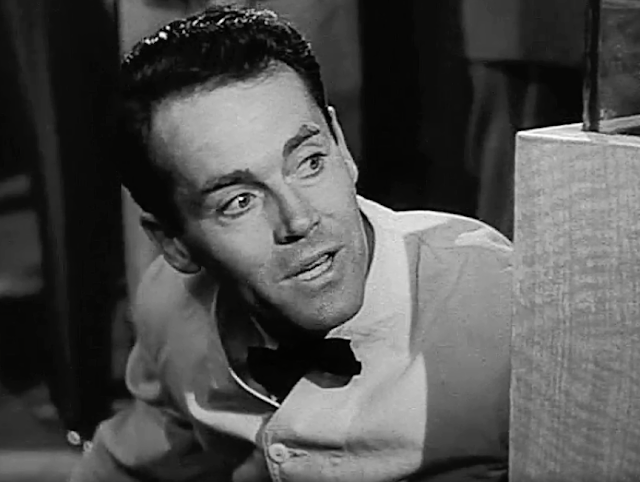
Henry Fonda in"The Big Street."

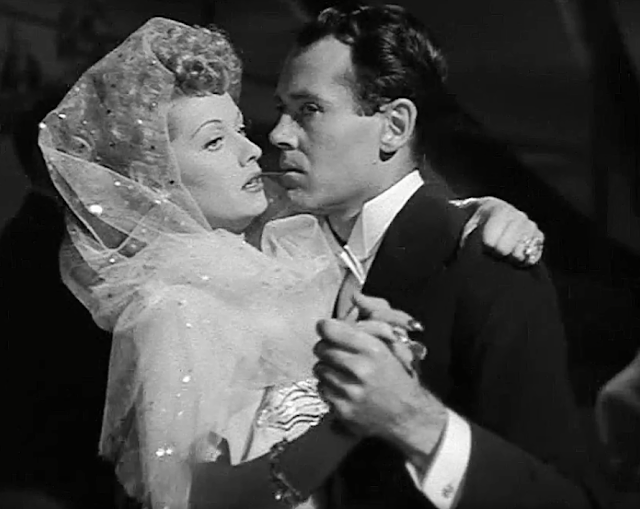
Here’s Lucille Ball and Henry Fonda, teamed for the first time in the Damon Runyon comedy-drama, 1942’s The Big Street. My take: 

https://ricksrealreel.blogspot.com/2022/04/lucille-ball-istic-in-big-street-1942.html


My toast to Claire Nixon!

Here’s my tribute to my late, great neighbor & pal, Claire Nixon, the Kate Hepburn of Traverse City!


Thursday, December 4, 2025

2 Icons Plus 18 Kids Equals Family Fun in ‘Yours, Mine and Ours” 1968


Henry Fonda & Lucille Ball make a very attractive couple as widowed military folk
 who marry and blend their already big families, in 1968's "Yours, Mine and Ours."


I'm a sucker for family comedies like Cheaper by the Dozen, and grew up on The Brady Bunch. I saw 1968's Yours, Mine and Ours once or twice on TV as a ‘70s kid. I liked it a lot, but never revisited the blended Beardsley family as an adult, because I thought it wouldn't live up to my childhood memories. Well, I was pleasantly surprised, while re-watching for this review. Despite some typical dated conventions, Yours, Mine and Ours is still warm and funny, and not too sappy.

I was amused that '68's "With Six You Get Eggroll"
used the same coloring crayon opening credits as "Yours, Mine and Ours."

For comparison, I tried watching the similar With Six You Get Eggroll. This too came out in ‘68 and starred America's other veteran sweetheart, Doris Day. It was painfully unfunny, despite Doris and a fun cast. It's plastic plot and humor was more akin to The Brady Bunch, which aired the year after. Yours, Mine and Ours is definitely not The Beardsley Bunch! The troubles and tribulations of blending two families run through the entire movie, though by the end, they are happier and settled. I appreciated that the kids looked like real kids, not Brady Bunch dolls, though a couple of the teen actors were hired for their attractiveness, no doubt.

Lucille Ball as Helen North and her gang of kids, in 1968's "Yours, Mine and Ours."

The humor in Yours, Mine and Ours comes from the reality of the fusing families and ensuing confusion, with 18 kids total, and two more together! Though this big screen sitcom is mostly fiction, the situation is based on real life. Widow/military dispensary nurse Helen North meets widower/ Navy officer Frank Beardsley. She has 8 children, he has 10. Despite the overwhelming prospect of raising these kids as one family, with objections from both sides of the siblings, Helen and Frank fall in love and marry.

Henry Fonda as Frank Beardsley & his crew, in 1968's "Yours, Mine and Ours."

Melville Shavelson directed Yours, Mine and Ours, who had a way with kids and family on film, in a commercial yet smart way. Houseboat with Cary Grant and Sophia Loren is a great example. He also directed one of Bob Hope’s best vehicles, which involved kids, The Seven Little Foys, not to mention Danny Kaye’s The Five Pennies. Shavelson had some serious kids cred! Despite the fact Lucy found this property and had her TV writers Bob Carroll, Jr. and Madelyn Davis work on the story, Shavelson didn’t let this film turn into The Lucy Show on the big screen.

Lucille Ball & Henry Fonda's rapport lights up 1968's "Yours, Mine and Ours."

While Lucy has a number of funny moments, Ball also gets to play a warm, sensible woman. Helen North Beardsley is easily Lucille Ball’s best latter day role. The scene where Lucy’s Helen deals with her problem child, who she thinks is just throwing a tantrum, but turns out to be afraid that he'll die young like his father. This early moment made me realize that Yours, Mine and Ours wasn’t just going to be a chuckle fest and Lucy's naturalistic reactions in the storytelling are wonderful.

Lucy's Helen North gets a jolt of reality when she finds out the cause of her
 young son's tantrum, in 1968's "Yours, Mine and Ours."

When Frank invites Helen to dinner, the Beardsley boys spike her “light” screwdriver, and it’s both hilarious and touching. Helen knows she’s making a disastrous first impression, but can’t control herself, alternately laughing and crying. Ball plays the comedy and pathos brilliantly.

Henry Fonda, whose natural acting and quiet strength were his hallmark, brings both dramatic believability and dry humor to the Navy guy trying to raise 10 kids after being gone on duty. Fonda has many warm moments as the dad doing the best he can, but when Henry’s Frank calls attention to his unruly crew, it reminded me that off-screen Fonda wasn’t always warm and cuddly.

Henry Fonda was 62 when he filmed "Yours, Mine and Ours."
I think Hank & Cary Grant were Hollywood's golden era actors who aged best.

Much has been made of how old Henry Fonda and Lucille Ball were as younger middle-aged parents. Lucy got the brunt of the criticism, since her character has a baby near the end of the film. There's no denying that they were indeed over-aged. The real Helen North was in her early 30s at the time, and Frank Beardsley in his mid-40s. Yours, Mine and Ours was filmed a year before its release, the spring/summer of '67. So, Lucy was 56 and Henry Fonda 62 at the time. I think audiences were more accepting, because in real life, Lucy was a late life mother with Lucie and Desi Jr., who were teens at the time.

By the end of "Yours, Mine and Ours," the Beardsleys have their first child together.

I'll say this much: Mature they may have been, but Hank and Lucy were a most attractive on-screen couple with a warm, believable rapport. I always thought Henry Fonda aged handsomely and naturally. And while Lucy had been receiving the star beauty treatment since her sitcom went color, Ball was a beautiful woman, and still looked quite stylish and slim. I find their natural faces much more pleasant to look at than many of today's mature stars, like Tom Cruise or Nicole Kidman, who are currently the ages that Fonda and Ball were in the making of this film. Actually, Nicole, who later played Lucy on film, was born the summer Yours, Mine and Ours was filmed!

Henry Fonda looks handsome in uniform & Lucille Ball is still lovely here,
in 1968's "Yours, Mine and Ours."

Some familiar TV child actor faces that some of you may remember: Eric Shea, delightful as Helen North’s younger boy and Mitch Vogel as her middle son. Tim Matheson plays Fonda’s oldest son, back when he was a charming teen star. Suzanne Cupito, who later became Morgan Brittany, and Tracey Nelson, daughter of Ricky, both play Beardsley’s daughters. Gary Goetzman, who later became a successful producer, played the freckled teen Beardsley boy. In 2021, some of Goetzman’s anecdotes about Yours, Mine and Ours made it to the big screen in director pal Paul Thomas Anderson’s Licorice Pizza. Unfortunately, Anderson’s caricature of Lucille Ball as Lucy Doolittle was crude and not particularly funny.

Teen heart throb Tim Matheson on tan display, in 1968's "Yours, Mine and Ours."

Also interesting is that for a frothy comedy, some of the topics that Yours, Mine and Ours lightly touches on were adult: Helen’s oldest girl getting pressured by boyfriend Ben Murphy for sex or the oldest Beardsley boy (Matheson) getting drafted for the Vietnam war.

Shopping for groceries--an old-fashioned word!--with the Beardsleys, in 1968's
"Yours, Mine and Ours."

The narration by the stars and the occasional asides to the audience by Henry Fonda and sarcastic military pal Van Johnson are unexpected and funny. Tom Bosley is amusing in an early role as the overwhelmed family doctor. There’s some location shooting in San Francisco and Alameda depicting the couple’s courtship and the Navy base, so that you don't feel trapped in a TV sitcom.

Lucy's old MGM pal Van Johnson plays the sarcastic matchmaker in 1968's
"Yours, Mine and Ours."

Yours, Mine and Ours still has plenty of laughs, plus a warm family story, that will both entertain and touch audiences even today.

"How about a chorus of 'We Need a Little Christmas?'" No, thanks, Lucy!
Lucille Ball as Helen North Beardsley in 1968's "Yours, Mine and Ours."
 
Lucy & Fonda in '42's
"The Big Street."

Here’s Lucille Ball and Henry Fonda a quarter of a century earlier, teamed for the first time in the Damon Runyon comedy-drama, The Big Street. My take: https://ricksrealreel.blogspot.com/2022/04/lucille-ball-istic-in-big-street-1942.html


My look back as a Lucy fan.

Here’s my clear-eyed memories as a Lucy fan as a ‘70s kid: https://ricksrealreel.blogspot.com/2021/12/id-rather-love-real-lucy.html


Tuesday, April 26, 2022

Lucille Ball-istic in ‘The Big Street’ 1942


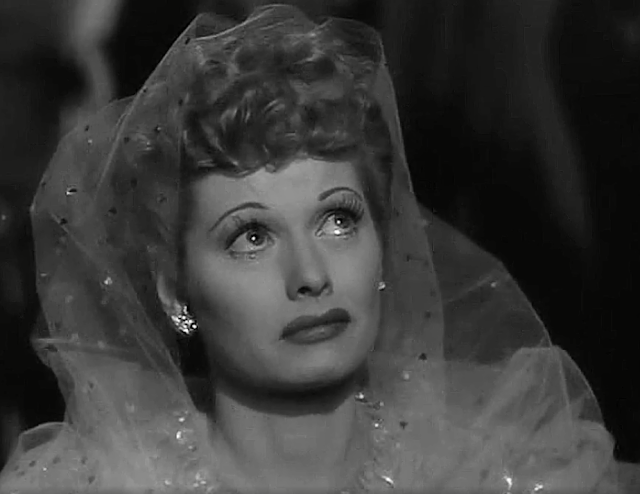
Lucille Ball was more than ready for a close-up in her last RKO film "The Big Street."


The word on The Big Street was that this film should have put Lucille Ball over as a star, after years as “Queen of the B’s.” Well, I was certainly surprised when I recently watched this ’42 RKO flick for the first time.

Ball bats it out of the park as Gloria Lyons, the tough as nails nightclub singer, brought low by her thug boyfriend. Lucy doesn’t hold back a bit as the unapologetic gold digger who’s determined to overcome personal obstacles and a land a rich husband. Woe to anyone who gets in Gloria’s way!

The look on Lucy's face as Gloria says it all as she elbows her way thru "The Big Street!"

The big problem with The Big Street is the way Lucy’s character is written. This otherwise sentimental Damon Runyon fairytale seems to have been hijacked by Of Human Bondage’s Mildred Rogers. To be specific, Lucy’s Gloria is reminiscent of Bette Davis’ shrewish Mildred. Ball perfectly plays the role as written and without any winking asides for audience sympathy, as Joan Crawford did in her bitch roles. But Ball’s singer bosses worshipful busboy Henry Fonda around like he's her rented mule.

Henry Fonda is endearing, even if his character is inexplicable, in "The Big Street."

Early on in The Big Street, Ball's songbird gets smacked by her gangster boyfriend, falls down a small flight of stairs, and is left paralyzed. Guess who picks up the pieces? Bitter about her plight, Gloria is not the least bit grateful. Busboy “Little Pinks” and his cronies try their damndest to lift her spirits, but all “Her Highness” gives is hurling abuse. The Big Street feels like two different movies: colorful Damon Runyon characters and long-suffering duo of wheelchair-bound witch Gloria and soft-spoken slave Little Pinks. Lucy's character and the rest of this movie just do not mesh. This would be the fault of the director and screenwriter, for not providing balance. One look at the daily rushes with Gloria barking insults at everyone should alerted them to do an emergency rewrite, stat.

Fonda's busboy brings Ball's wheelchair-bound singer home in "The Big Street."

So, I can absolutely see why The Big Street was not a hit or a breakthrough for Lucille Ball. I'm sure that when I Love Lucy was a smash a decade later, later audiences of The Big Street were probably shocked that this was not their Lucy.

Henry Fonda is terrific as Little Pinks, quiet and gentle. Hank still possesses his inherent strength here, but his character makes no sense, agog by this shrew. He’s just as lovesick Leslie Howard’s Phillip was in Of Human Bondage, and gets dished the same kind of treatment. There’s a scene when Gloria gets caught in her wheelchair by a flashy millionaire that she's trying to land. The smoothie is shocked to see her condition and Gloria takes it out on Little Pinks, belittling everything he has done for her. Ball lays into Fonda the way Bette Davis did to Leslie Howard in Bondage and does everything but wipe her mouth like Davis!

When Gloria gets caught in her wheelchair, she takes it out on her busboy admirer.

The two disparate sides are most apparent when everyone tries to help or weep over Ball’s tough cookie. Gloria’s maid Violet adores her, though she does nothing but snap insults at her. Louise Beavers almost makes Violet’s devotion believable. Little Pink’s friends keep trying to lift her spirits, but she's brusque at best. The scene where the busboy brings the crippled singer to his basement apartment for a homecoming party is brutal. It’s a big comedown for the glitzy showgirl, but Ball’s character shows not one iota of appreciation, given that she has nowhere else to go.

Louise Beavers brings warmth Violet, the maid who looks after Lucy's shrewish singer.


The rest of the cast is quirky fun and has a great time. Agnes Moorehead as Violette “with two t’s!” and Eugene Pallette as Nicely Nicely make an unusual and lovely couple; Ray Collins, so often serious or villainous, is a hoot as ringleader Professor B. These three actors are more often wonderful as baddies, so it’s fun to watch them play eccentric, good-hearted characters.

Agnes Moorehead & Eugene Pallette are a pair who love food and each other!

The final scene is where Lucy's Gloria Lyons shows some vulnerability, for what’s literally her last dance. Little Pinks finagles a big party in her honor, where she dies and gets carried up the staircase, a reverse fatal finale version of Lana Turner's showgirl in Ziegfeld Girl. But Ball’s Cinderella gets her final wish, even if she’s acted like one of the wicked stepsisters throughout The Big Street. And this final romantic scene is beautifully performed by both Ball and Fonda.

Lucille Ball's Gloria finally shows some humanity at the finale of "The Big Street."

To enjoy The Big Street, you must suspend ALL disbelief. And then perhaps you can enjoy the great supporting cast, and Ball and Fonda’s dramatic performances, too.

Here’s my personal look at the real Lucy, as a baby boomer who grew up with Lucille Ball :

https://ricksrealreel.blogspot.com/2021/12/id-rather-love-real-lucy.html

FYI: I put my movie overflow on my public FB movie page. Check it out!  

https://www.facebook.com/groups/178488909366865/

Lucille Ball & Henry Fonda make a damn handsome couple in "The Big Street!"


Monday, October 19, 2020

Fonda: ‘The Best Man’ & ‘Advise and Consent’

Henry Fonda played more U.S. Presidents on film than any other actor.


I re-watched 1962’s Advise and Consent and ‘64’s The Best Man for two reasons. One was to compare these ‘modern’ political dramas with our current day politics. The films focus on topics that are still timely: Advise and Consent details a contentious confirmation hearing and The Best Man covers two competing presidential candidates whose pasts come back to haunt them.

The other was to untangle the two movies in my mind. Both starred Henry Fonda as a politician whose integrity is the focus. In Advise and Consent, Fonda’s Robert Leffingwell seeks confirmation as Secretary of State. In The Best Man, Fonda’s William Russell already holds that title, and is running for President. (A book could be written on how many times Fonda played the President of United States, or other noble politicians and military men.) The two films feature all-star casts, scathing looks at political wheeling and dealing, and surprisingly for the era, both have a gay blackmail subplot.

In 'The Best Man,' Fonda is a candidate with a conscience, but also a past.

‘The Best Man’ is…

In both Advise and Consent and The Best Man, Henry Fonda’s politicians have flaws, but are essentially decent men. In Advise, he lies about his early dabbling in Communism, only to spare an equally guilty political friend. In The Best Man, Henry’s character has a history of adultery, which he doesn’t deny. Fonda has a more substantial role as Russell in The Best Man, and is a supporting character as Leffingwell in Advise and Consent. While he’s good in both, Fonda has more to work in The Best Man. In the latter, Henry looks like quite the lean machine as he takes his bath. At almost 60, Fonda was one of the better preserved leading men of his generation, fit and distinguished, with those piercing blue eyes.

'Advise and Consent' has a huge cast. Though Henry Fonda gets top billing,
his role is really a supporting one, unlike 'The Best Man.'

In Advise and Consent, Fonda’s adversary is Brigham Anderson, played by Don Murray. “Brig” wants to get to the bottom of Fonda’s liberal politician past. Henry’s opponent in The Best Man is Cliff Robertson, as Joe Cantwell. An eagle to Fonda’s dove, Cliff’s Cantwell’s really a vulture. He’ll stop at nothing to win, including revealing that Fonda’s character once suffered a nervous breakdown.

This question seems quaint by today's standards!

Author! Author!

Advise and Consent was based on Allen Drury’s Pulitizer Prize winne/ best seller. The Best Man was adapted from Gore Vidal’s 1960 Broadway play, which was nominated for six Tony Awards, with over 500 performances given in its original run. Both writers’ work often covered the political scene, and these works are two of their best.

Director Otto Preminger with star Gene Tierney. They made four films together.

Diverse directors

Otto Preminger was a controversial director by his own design, but I liked his dramas that were based on strong stories and characters like Anatomy of a Murder and Advise and Consent. They still feel adult, realistic, and unsentimental. Preminger loved location shooting and you get to see a lot Washington, D.C. in Advise. Otto also liked to cast real people of the milieu, which again, added to the authenticity. While a bit long, I found Advise most engrossing and stylish. As for Franklin J. Schaffner, he was an intelligent director who came up through live TV, won a slew of Emmy Awards, capped by directing the famed TV tour that Jackie Kennedy gave of the White House. His film of Gore Vidal’s The Best Man is also adult and concisely told. And yet another twist that makes these two movies a mind meld: Prior, Schaffner directed a Broadway version of Advise and Consent. While it wasn’t the smash of The Best Man, it was a modest success.

Dying Presidents, Soon Deceased Actors

In 'Advise and Consent,' the President (Franchot Tone) receives bad news.
At 57, Tone looks like bad news!

Another reason for my brain blur with these films is that both have presidents who are gravely ill as pivotal characters. In Advise and Consent, at 57, Franchot Tone was the same age as Henry Fonda, but is a ghost of his former self. The fine-featured actor with a twinkle in his eye was a heavy drinker and smoker, which took its toll. Note that Tone has a cigarette going in nearly every scene.  In The Best Man, Lee Tracy is wonderfully irascible as an old-school Truman type, former President Art Hockstader. Tracy, who got the film’s sole Oscar nod, was a mere seven years older than Fonda. He’s quite believable as someone at death's door, since Tracy had a drinking problem, which had hurt his screen career. Ironically, the actors died exactly a month apart, in the fall of '68. Speaking of badly aging actors, Charles Laughton died at age 63, shortly after Advise and Consent completed filming.

In 'The Best Man,' Lee Tracy also looks worse for wear as an ailing President.

Political Hotshots with a Homo Past

Another reason I can’t keep these films straight (pun intended) is because I always get genial Don Murray and Cliff Robertson mixed up. Here, they are both self-righteous young politicians whose pasts hide a wartime romance with fellow soldiers. Both get phone calls threatening to reveal their past. Murray’s senator in Advise and Consent commits suicide; in The Best Man, Robertson is unnerved but goes on the offensive. Preminger, who loved to push the prurient envelope, presents Murray's secret more explicitly, but sympathetically. In Advise and Consent, Robertson’s Cantwell browbeats ninny Shelley Berman into the ground.

'A&C' plays up the gay blackmail plot more than 'The Best Man,' in the trailer & print ads. 

Hostess with the Mostest?

In Advise and Consent, Gene Tierney plays a classy Washington hostess who knows her stuff. This was Tierney’s fourth film with Otto Preminger. In The Best Man, Ann Sothern plays a political gadfly like a Washington D.C. version of Virginia Graham. Totally apples and oranges, Gene and Ann are both fun to watch.

Political Plots and Puns

The Best Man has Gore Vidal's acidic wit, with many lines that are still painfully apt. The Best Man is also a half hour shorter than Preminger's more leisurely Advise and Consent. But both are great fun if you like political intrigue and good dialogue.

'A&C' senator Don Murray gets an unwelcome call about his gay past!

So does Cliff Robertson's politician in 'The Best Man.'
Glad to know that voters aren't the only one who get unwanted solicitation calls!

Hollywood Heavyweights as Washington Movers and Shakers

The stars of 'The Best Man,' with real life politician Mike Mansfield, center.

Both films boast an all-star cast of mostly veteran actors. Advise and Consent has the bigger cast, perhaps because it’s 2 hours and 18 minute running time allows for more characters. While Margaret Leighton’s performance is good in The Best Man, I found it odd that they didn’t cast an American star opposite Fonda. Either Lauren Bacall or Maureen O’ Hara would have made a great brittle, estranged political wife, or Dorothy McGuire, for her class and intelligence. In Advise, Charles Laughton gets to run the gamut without running amok as wily, but ultimately fair ‘Seab’ Cooley. Walter Pigeon, so often cast as noble, gets to show a more sophisticated side as Senate Majority Leader Bob Munson from Michigan. Burgess Meredith and Shelley Burman get to be annoying as the quirky squealers in Advise and The Best Man, respectively. The acting in both films is top notch.

Surprising Cast Members

Betty White as a senator Bessie Adams. I'd vote for this "Golden Girl" in 2020!

In Advise and Consent, Betty White is a brunette and a senator! In The Best Man, Mahalia Jackson appears as herself, singing gospel at a political dinner. If this seems incongruous, remember this is the same film that gives “the voice of Frank Sinatra” a cast credit!

Sinatra got a credit for his record playing on the jukebox in the gay bar scene!

Opening titles

While The Best Man opens with a series of classic presidential photographs, Preminger calls upon his favorite titles artist, Saul Bass, to create another eye catching opening titles sequence.

I could look at the art titles of Saul Bass all day.

The bottom line: The Best Man has a zingier script and a shorter running time, but Advise and Consent has the bigger story and cast. Both get my vote!

'The Best Man' candidate Henry Fonda tries to keep his reputation clean!

FYI: I put all the movie overflow on my public FB  movie page. 

Check it out & join!  https://www.facebook.com/groups/178488909366865/