Showing posts with label Robert Wagner. Show all posts

Wednesday, February 9, 2022

Robert Wagner’s Starry-Eyed Memoirs


No tell-all, but Robert Wagner shares some super star memories.


Robert Wagner turns 92 on Feb. 10, 2022. I recently read his 2008 memoirs, Pieces of My Heart, co-written with Hollywood biographer Scott Eyman. I had mixed feelings about reading RJ’s story, and it had nothing to do with Natalie Wood’s notorious last night. I wasn’t expecting much in that regard, anyway.

I did enjoy Wagner’s memories of old Hollywood, which he embraced as a young man, but also put him out of step with the new wave of stars. I admired Robert’s tribute to the showbiz legends that he considered friends and mentors. For an actor, RJ’s realistic about his place in the Hollywood constellation. However, I believe that he was considered for another Robert’s role, in Butch Cassidy and the Sundance Kid, about as much as Joan Collins’ claim that she was on stand-by for ailing Liz Taylor in Cleopatra. 

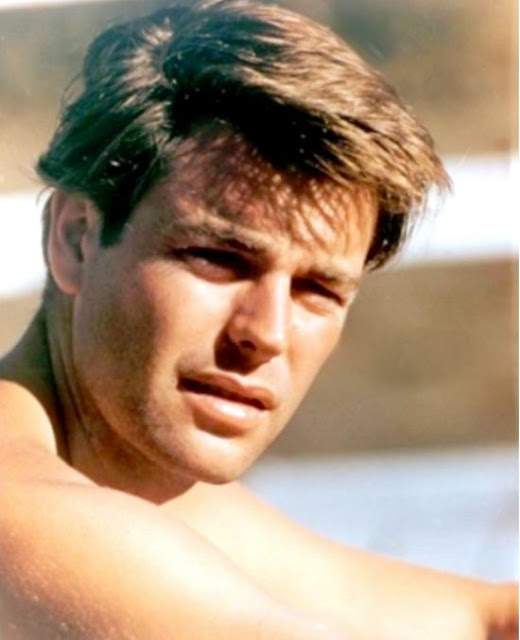
I had also forgotten that RJ was a major teen idol at Fox back in the ‘50s. And Robert was indeed a looker who had a smooth charm. You got to hand it to Wagner to have kept afloat in the ‘60s, when his style went out, much like George Hamilton. I thought RJ’s calling cards were his great looks, distinctive voice, and flair for light comedy. These gifts came in handy for a second career as a TV star.

Robert Wagner when he was a teen heart throb at 20th Century Fox.

What I didn’t care for in this memoir was the pettiness that creeps into his stories. It felt at times more like score-settling than honesty. Wagner makes a point to show what a ladies’ man he was, with most of recipients of these romantic “reveals” conveniently dead. RJ also makes a big point to mention all the times he’s been hit on by gay men in show biz. Why bring all this up, considering that Wagner’s been long rumored to be bisexual? Sometimes folks say more than they realize, even show biz folks!

As for what happened on Natalie’s last night alive, it’s going to go down in gossip history along with other famous folks’ mysterious demises. All I will say is that Wagner’s more forthcoming about Natalie’s personal flaws than his own—surprise! Yes, film fans will fight about that night for decades to come. The way I see it, either Robert Wagner is the most misunderstood person on earth or he’s right up there with O.J. Simpson as the King of Denial. Either way, somebody will write another book, give another “shocking” interview, or re-open the case yet again—only to further muddy the waters while cashing in. The truth, as Tennessee Williams once wrote, is at the bottom of a bottomless well.

Another Robert Wagner &
Scott Eyman collaboration.

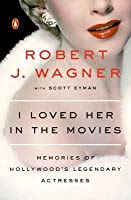
PS: Wagner wrote another book with Scott Eyman, called I Loved Her in the Movies: Memories of Hollywood’s Legendary Actresses. Film historian Eyman most likely did the research and writing and Wagner provided the remembering, though it’s all in RJ’s voice. Still, this is a fun look at what made certain movie divas great. Wagner focuses on the positives of the female film legends discussed, but is also clear-eyed. Whatever RJ’s contributions were, his history with Hollywood greats is amazing. This is because Wagner grew up well-to-do, around showbiz folk. He met Norma Shearer when he was a child, as he was school chums with Irving Thalberg, Jr.! RJ knew Gloria Swanson during his teens, when he dated her daughter. He was a stable boy where Greer Garson kept her horses. Wagner was Marilyn Monroe’s partner in her Fox screen test. And so on… his insights into famous film folks are fascinating, in that respect. I preferred reading Robert Wagner’s memories of other people, quite frankly.

My takes of Robert Wagner on film:

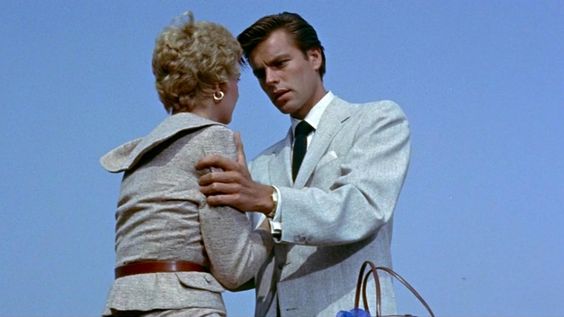
Joanne Woodward & Robert Wagner in "A Kiss Before Dying."

Here’s Robert Wagner as a murderous sociopath in an Ira Levin adaptation, A Kiss Before Dying:

https://ricksrealreel.blogspot.com/2019/07/robert-wagners-killer-charm-kiss-before.html

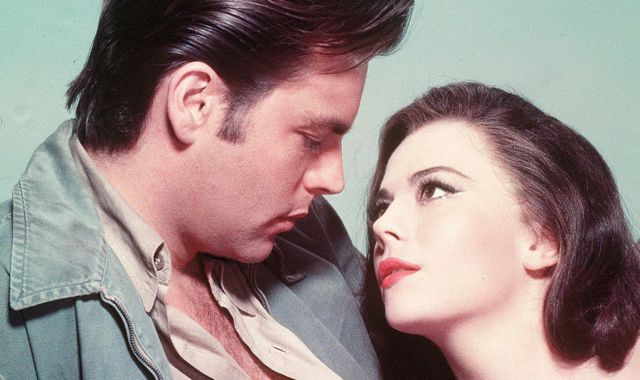
Robert Wagner & Natalie Wood in "All The Fine Young Cannibals."

Here’s the only time Robert Wagner & Natalie Wood teamed up for a feature film, in the camp soap opera, All The Fine Young Cannibals:

https://ricksrealreel.blogspot.com/2020/05/wood-wagner-wallow-in-all-fine-young.html


FYI: I put the movie overflow on my public FB movie page. Check it out!  

https://www.facebook.com/groups/178488909366865/


Monday, January 25, 2021

Paul Newman as 'Harper' 1966


Paul Newman as 'Harper,' private eye, posing by his shingle.


Opinions vary about the ’66 neo-film noir, Harper. A number of film fans and critics think it’s a latter day detective classic. Others, like me, just find it a slickly entertaining Paul Newman picture.

Paul Newman's gumshoe sure spends a lot of time in his car or on the phone.

In the ‘60s, genre films were increasingly made with a mod wink at old-time Hollywood—in this case, detective movies. Harper was the brainchild of agent turned producer Elliot Kastner, whose greatest talent was pairing great stars with their cheesiest vehicles. This was perhaps Kastner’s best effort: take Ross Macdonald’s first Lew Archer novel, 1949’s The Moving Target, and riff on the ‘40s film noir era. How he got Harper off the ground is beyond me, when his only previous producer credit was Bus Riley’s Back in Town. Here’s Kastner’s IMDB resume of mostly rubbish: https://www.imdb.com/name/nm0440990/?ref_=nmbio_bio_nm

Ironically, Harper now feels more dated than the original movies it tweaks. Harper’s trailer and poster paint him as modern and irresistible, but the promo material feel like they’re for an old Playboy magazine cover.

The promo copy for 'Harper' tries for cool, but today just seems coy.

There's plenty of elbowing the old gumshoe movies: Detective Lew Harper tells the barracuda wife of the missing millionaire that he's a “new type.” New, maybe—but not better. Newman led the way as the new breed of movie anti-hero, a trend I think didn’t age well, either. At 40, Paul as Harper often feels more like an over-aged frat boy, as opposed to the equally cynical, but more worldly-wise Philip Marlowe, Sam Spade or other past film detectives.

The first client visit for 'Harper' deliberately echoes Lauren Bacall's 'The Big Sleep,'
 with hubby Humphrey Bogart as Philip Marlowe.

William Goldman's script has a number of zingers. His take on mid-60s California dreaming is more like a noir nightmare. It’s funny at times, but they’re all easy targets: new age religion, druggie jazz singers, crooked lawyers and dumb cops, rich people trying to buy their way out of trouble, etc. There's not a relatable one in the bunch—least of all Harper, who is crude with suspects, and also a juvenile jerk to his lovely ex-wife, as well. I realize I’m looking at a ‘60s movie through modern eyes, but this movie is even less evolved than the movies it’s mimicking from 20 years prior.

Lauren Bacall is a catty client, whose snarky repartee is definitely not decaffeinated!

You could say the film has a sexist view toward women, as they are all mercilessly mocked for their shortcomings, but the men don't fare much better. The nearly all-star cast is mostly typecast: Lauren Bacall as the missing rich man's wife, is a snarky bitch; Shelley Winters as a former movie star gone blowzy is treated with particular contempt by Harper; Pamela Tiffin is the young rich chick on the make. However, Julie Harris is oddly cast as the junkie jazz singer who is also treated rottenly by Harper.

Shelley Winters played more latter-day blowsy broads than Joan Blondell! 

Bacall and Winters do their schtick very well. This is an era where Bacall's character is mocked as old and wrinkled at age 41, when Harper was filmed—and a whole year older than Paul Newman. Lauren looked quite timeless and chic as the rich super bitch, IMO. However, Shelley Winters is outrageous as the horny and drunk ex-star, and seems to be Harper’s walking punchline.

Pamela Tiffin, as the rich client's sexy stepdaughter, isn't exactly Ann-Margret!

Pamela Tiffin is all big hair and apple-cheeked, and dances quite badly on a pool board in a polka dot bikini. Tiffin mainly pouts and preens. Julie Harris sings a few bars of yet another Andre and Dore Previn movie theme about being lonely.

Julie Harris is the junkie jazz singer who's too high-strung for torture games.

As for the men, Robert Wagner plays his charming pretty boy bit for good-natured humor, his only real talent. At 35, RJ's on the edge of his beauty, which is what Newman calls him throughout. As the new age nutjob, Strother Martin has a field day, up in a mountain top home that looks like a low-rent version of Liz Taylor's pad in Boom! 

This was the last time Robert Wagner could get away w/playing the shallow pretty boy.

The two best performances are Arthur Hill as the family lawyer who is in love with Tiffin’s rich girl. His lovelorn lawyer gets to go through some changes and plays them skillfully, with a tinge of melancholy. Janet Leigh as Harper’s rightfully exasperated ex-wife makes her few scenes count.

Arthur Hill plays the most realistic character in 'Harper,' as Newman's old pal,
who is now the family lawyer for the kidnapped man.

Harper runs just over two hours, too long for this fast-paced genre, and it drags in spots. The subplot involving Harper and his ex-wife is supposed to show how he's unable to give up a thankless job that doesn't love him back. From today's standpoint, Harper’s interactions with his ex make him look a dick, and I don't mean a private one. The scenes that are supposed to be funny aren’t and the one where Harper barges in on her late at night for a booty call and sympathy, only to ditch her the next morning, doesn’t age well.

Newman's Harper lets his ex down not so easily after a late night visit. W/Janet Leigh.

For anybody who feels that I’m too hard on Harper, I was expecting to love this movie, as mystery/suspense is one of my favorite genres. I also love films that depict an era or locale. This movie feels very ‘60s, but not in a good way, just a mainstream, dated way. One example: the hip music that plays in any scenes with young people sounds like Herb Alpert-style elevator music. And the young folks dancing hip looks like the Peanuts characters when they dance for joy.

'Harper's' spoof of the cool kids is strictly Squares-ville!

What about Harper himself, Paul Newman? At this point, Paul had loosened up as an actor, from his sometimes stiff ‘50s stardom. In his quiet, serious moments, Newman is on his way to the stellar star character actor he later became. Yet, his anti-hero stardom here came with his sometimes heavy-handed sense of humor. A stronger director other than journeyman Jack Smight would have reigned in Paul’s smirking, eye-rolling, lip-pursing, voice-mimicking “humor.” 

Paul Newman as Harper cracks himself up constantly, with his amused contempt
for the crooked characters he encounters. It feels a bit sophomoric today.
 

William Goldman, considered one of the best screenwriters and go-to script doctor, scripted many crowd pleasers like this movie. He was a bit like Robert Towne in that regard. Yet, Towne wrote a modern film noir that actually had depth and resonates just as much today—1974’s Chinatown.

Harper’s finish was one of those mod freeze frame non-endings that made me want to throw something at the screen. Harper wasn’t new, but just a mixed bag.

Paul Newman was 40 when 'Harper' was filmed.

Check out my take on Paul Newman’s early forays into southern melodrama from 1958:

The Long, Hot Summer: https://ricksrealreel.blogspot.com/2017/08/the-long-hot-summer-long-but-not-so-hot.html

Cat on a Hot Tin Roof:  https://ricksrealreel.blogspot.com/2016/08/cat-on-hot-tin-roof-still-scorches-now.html

FYI: I put all the movie overflow on my public FB  movie page. 

Check it out & join!  https://www.facebook.com/groups/178488909366865/


"Harper" was going to be called "The Moving Target,"
from the original Ross Macdonald book, for a hot minute.


Sunday, May 3, 2020

Wood & Wagner Wallow in ‘All the Fine Young Cannibals’ 1960

Natalie Wood & Robert Wagner, together for the first time.


All the Fine Young Cannibal’s opening titles are the giveaway to this movie’s mindset. They look like the tawdry paperback novels my Mom used to read when I was a kid! Though Cannibals looks like a B-movie, all of MGM’s top talent was involved, plus its bright young cast. While it not a prestige picture, like Cat on a Hot Tin Roof, it was definitely an A-flick, but deserves a Z rating.
Wagner, George Hamilton, Wood, and Susan Kohner as 'young moderns' in an old soap!

The source novel, The Bixby Girls, was allegedly bought with Elvis Presley and Elizabeth Taylor in mind. While Elvis made MGM a fortune with Jailhouse Rock, his fate in “drive-in movies” was sealed early on. As for Elizabeth, she had already become permanently plump after Cat on a Hot Tin Roof. By 1960, it was more appropriate that ET appeared in BUtterfield 8 rather than All the Fine Young Cannibals. Natalie Wood, who got away with playing younger longer than she had a right to, was then 21. During the early shack scenes, Nat looks about 12. Still, I’d have loved to see ET feeding those no-neck siblings their dinner slop!
I can think of TWO good reasons Elizabeth Taylor would be miscast as an 18-year-old girl.
Natalie Wood, 21, was cast instead. Nat & ET around the time Cannibals was made.

The film version was influenced by melodrama hits of the time, like Written on the Wind and Cat on a Hot Tin Roof. The screenplay is by Robert Thom, who was a playwright, poet, and screenwriter. Thom’s big hit was the play Compulsion. Once in Hollywood, Thom wrote these “eclectic” gems: The Subterraneans; The Legend of Lylah Clare; Angel, Angel, Down We Go; Wild in the Streets; Bloody Mama AND Crazy Mama; and Death Race 2000.  Then there’s All the Fine Young Cannibals, which forces its cast to spout some of the most insane dialogue ever.
RJ's Chad Bixby & Nat's Salome start off as poor Texas trash.

At the movie’s opening, Robert Wagner’s Chad Bixby is the son of a preacher man, yes, he was… and he’s the only one who can ever teach Natalie Wood’s Sarah aka “Salome.” Chad’s daddy, who was hard on his wild child, has died. And Chad wants to party his pain away. “You shouldn’t be near any dancing!” gasps Salome. Sounds like a prequel to Footloose!
Well, they do, and from there they go to the black side of town. First, Chad makes Salome promise her one thing: she won’t leave his side until sunrise. No, he’s not a vampire. It’s because Chad’s afraid of the dark—seriously.
Chad and Salome go to Rose’s, a whorehouse and all round fun house. George Hamilton, as rich kid Tony McDowall, makes his entrance as a customer who mistakes Salome for a hooker. The screenplay is filled with purple proclamations of the characters’ passions and motivations that feel like a Carol Burnett Show parody. Proprietor Rose (Louise Beavers) introduces Chad's big talent: “He’s gonna tell us what he feels, then he’s gonna play us what he feels, just like he’s been doing down here since he was seven.”
Wagner's white boy is gonna 'say' the blues, then play them, for Rose and her patrons!

RJ as Chad, pouts and peers through his pompadour, like he’s gonna burst into an Elvis song. But no, the young man with a horn belches such hot air as, “You gotta be awful strong not to love anybody, because the world gets colder every year.” Then Bixby blows something brilliant on his trumpet on the spot! RJ’s hunched posture is supposed to look so James Dean, but really more like a monkey humping a football! Other gems that follow: “This is how strong my father was.” Womp! Womp! Wahhh! “And these are my tears!” Cue another horny wail. I’m no music expert, but the sounds are actually pretty cool, but are negated when performed by the hopelessly uncool Robert Wagner.
After Chad and Salome part ways, he wanders back to the roadhouse, looking for mother figure Rose. Instead, he finds her sister, Ruby Jones, played by Pearlie Mae Bailey herself. Their first exchange is a hoot.
Wagner asks her gruffly TWICE: “Do you think I’m a fool?”
Ruby’s response: “I think most men are fools, white boy!”
Pearl Bailey as morose Ruby Jones & RJ as the tragic trumpet player, with a bottle as a buffer.

They both commence to swill down huge tumblers of whiskey that people only drink in movies, probably because it’s actually ice tea. Ruby was once the biggest singer in NYC—and the South, too! But a man had gone done her wrong, spending all her money, and then leaving her for another woman. Now Ruby’s done, determined to drink herself to death. After a night together, they decide to establish Chad as a performer in NYC. He encourages her to sing again, but she’s not having it. Though implied that they are lovers, when he offers to at least care for her, Pearlie Mae growls: “I don’t carry on with no white boys!”
When George Hamilton's frat boy meets Nat's country girl the first time, he takes her for a prostitute!

In the early section of the movie, Hamilton’s Tony is a carefree college playboy. At one point, while arguing with his father about joining the family biz, Tony replies, “I love you, Daddy-O.” Then he proceeds to tell Pops that he loves oil money, too, but doesn’t have oil in his veins! Dig? Or in this case, drill.
When we first see Susan Kohner’s Catherine McDowall, she’s lolling on her brother Tony’s bed, acting like she wants him to join her. Kohner is a combination of Dorothy Malone’s rich bitch sister in Written on the Wind and Elizabeth Taylor’s crazy Catherine from Suddenly, Last Summer. “I like spoiling the fun!” You keep wishing somebody would clock her, and stop her declarative, fake southern baby talk, and posturing.
George Hamilton's Tony is taken with the poor girl he befriends on a train.
Wood's scenes here remind me a bit of her Alva, in This Property is Condemned.

Natalie’s Salome gets mixed up with this crew when she hops a train out of Hicksville and meets George’s Tony on the train. One evening with Salome and Tony’s entranced; he marries her and instantly becomes a dull, dutiful husband. Just as suddenly, Salome now has a gorgeous wardrobe. They barely make it his frat house door, when Catherine shows up. Also, Salome’s got a secret: she is pregnant from her last night of “dancing” with Chad. In true soap fashion, she keeps it secret, and marries another. This movie doesn’t drag, that’s for sure.
Natalie gets the MGM glam treatment & looks lovely in her Helen Rose costumes.

Natalie is radiant in Helen Rose’s MGM glam wardrobe, especially a red cocktail dress that beautifully brings out Wood’s dark coloring. This is offset by sister-in-law Catherine’s nonsensical bitchery. Nat’s Salome, despite a bitty baby bump, looks wafer thin. Hell, Nat’s Bambi false eyelashes probably weighed more than she did! Yet, Kohner’s Catherine cattily comments that she wouldn’t be caught dead in public in her condition. Why? “How can you dance that way?”
Nat's Salome getting pestered by Kohner's sister-in-law Catherine.

Another clinker from Catherine: “If I irritate you, you can image how I irritate myself. I’m what am known as spoiled.” You don’t say! Tony interrupts this scene, to tell his sister that he loves Salome, in a most unconvincing manner. Her response is zingier: “But she doesn’t love you.”
Meanwhile, Chad and Ruby are ensconced in a ruby red apartment suite, apparently in the black part of the city. As Ruby’s getting him fitted out for stardom, she abruptly asks, “You got underwear, white boy?” This made me laugh, since at times, RJ looks like his other instrument is swingin’ free!
They talk about money, and Ruby laments, “What do I need money for, when I’ve lost my mind?” Ruby Jones is just jonesin’ to end it all!
When we first see Chad perform in a polished performance, he’s got his tell and show down. Then he drags morose Ruby onstage to perform. It’s the classic cliché: No, no, no, I can’t! Then after a slight falter, Ruby wows with a mini-set! Absurd as the setup is, Pearlie Mae’s performing is the highlight of this movie, including a rendition of God Bless the Child.
Pearlie Mae sings the blues, with RJ as the young man with a horn.

Salome finds out about Chad’s success when she awakens one night, to find out Catherine is entertaining a fellow with Bixby’s latest disc as mood music! Salome awakens, goes downstairs, hair intact, full makeup, and in a lovely MGM nightgown that Wood could have worn to the Oscars. The scene is so hokey, but with the music playing, Nat’s silent, natural emoting, this is one of the film’s more effective scenes. But once she has to endure Catherine’s prattle, the spell is broken.
When Salome finds out that Chad’s a NYC sensation, she cajoles everyone to go see him perform. In keeping with the rest of the movie melodrama, she’s a jittery wreck, and then Chad spots her while performing. Natch, he improvises on the spot! And so does the wicked sister-in-law, who senses their connection, and decides to come between them, just for kicks.
Wagner's Chad & Kohner's Catherine enjoy some marital happiness.

When Catherine comes home from an all-nighter with Chad, Salome confronts her. Kohner has one of her most baroque moments, yawning ostentatiously and caps her insults by saying, “I’m bored. I’m bored with this conversation. I think you better go now, mother.”
The next day, Salome meets Chad and spills the beans, her baby is theirs. Chad huffs, “If I can’t have ya, then I wanna hurt you. And I will.”
This all comes to a head when now newlyweds Chad and Catherine have one of their biggest fights. She whips him with a riding crop, and he taunts her that his father’s scars cut deeper. She slips off to the bathroom and slashes her wrists. Her response: “Did I cut them deep enough, Chad? Did I?” Surprisingly, this scene is one of the more effective in the film.
Kohner's character redeems herself, RJ's Chad looks like he has heartburn. 

Cannibals’ saga all wraps up in an absurd about face. Salome realizes she isn’t crazy about Chad after all, and that maybe she loves Tony. Likewise, Chad considers that he hasn’t given neurotic Catherine a fair shake. Salome takes baby Pete back home. Natch, Hamilton’s Tony follows Nat’s Salome, almost makeup-free, and calling herself Sarah once again. Chad brings Catherine back to their apartment, reads the reply that she’s left to his lipstick written scrawl—How BUtterfield 8! Her response when she awakens: “I left the light burning every night.”
Nat's Salome goes back home & to being called Sarah again.
Wood's character has a few similarities to her next role, in Splendor in the Grass.

None of the four “young moderns” rise above the hilariously outdated script. At least Natalie, as the Sondheim tune I’m Still Here goes, “Still, someone said, “She’s sincere.” The next year, Wood would fare much better as another small town girl navigating romance with a rich boy who has a bitchy sister, in Splendor in the Grass.
That’s more than you can say for Susan Kohner, who is absurdly artificial and arch as the bitchy sister of the rich boy Wood marries. Much was made about how Natalie and Susan looked like each other. But once seen on screen together, you see that's not so true. Kohner looks more like a vulpine, imperfect version of Ava Gardner. Susan Kohner retired in 1964 to a happy personal life.
RJ's Chad not only pours out his feelings on the trumpet, but his wife's lipstick, too!

The two male leads are leaden: Robert Wagner and George Hamilton. Wagner got the build up by 20th Century Fox the prior decade and after his heartthrob status subsided, he flat lined as a leading man; Hamilton would soon travel the same trajectory. Neither were simply talented enough dramatic actors. Both fared much better later, on TV in light comedy/adventure or films that allowed them to spoof their classy personas.
All four of the fine young stars went on to better things, and All the Fine Young Cannibals is best enjoyed today as camp.
Susan Kohner tries to whip some life into Robert Wagner, but no luck!
FYI: I put all the movie overflow on my public FB  movie page. 


Friday, July 12, 2019

Robert Wagner’s Killer Charm: ‘A Kiss Before Dying’ 1956

Joanne Woodward falls for Robert Wagner in a BIG way in 'A Kiss Before Dying!'


Ira Levin’s first novel, A Kiss Before Dying, boldly had a charismatic but killer sociopath as its protagonist. Levin, author of Rosemary’s Baby and The Stepford Wives, got Kiss published in 1953, a year and half before The Talented Mr. Ripley, Patricia Highsmith’s classic charming villain. Boyishly handsome, clever, devious, and desperate in his desire to join ranks of the rich, Levin’s Bud Corliss and Highsmith’s Tom Ripley are practically twins.
Mom had A Kiss Before Dying recorded and we watched out of curiosity, because as a teen, she worked at Manistique’s Oak Theater when this 1956 version came out. This was the first time for me, plus I never saw the ’91 remake.
*A slew of spoilers ahead, needed to write about Kiss’ story and characters.
Love how Wagner's Bud comforts Woodward's pregnant Dorie with cigarettes!

Kiss gets right down to it: Wagner’s Bud consoles girl friend ‘Dorie,’ Dorothy Kingsmith, who just found out she’s pregnant. Bud seems solicitous, but unduly concerned as to who knows. The situation of the upwardly mobile boy and the hapless, pregnant girl is reminiscent of A Place in the Sun, which came out five years prior to Kiss. The difference here is that the girl is not poor, but from a wealthy family. Bud wants to marry into money, but knows that her stern father is all about propriety. Bud wants his entrée into the Kingsmith clan to be smooth.
Bud's reaction when he sees Dorie walk into class the next day, after giving her special 'vitamins' to take!

So, instead of offering to pay for an abortion, Bud decides to kill Dorie. First, Bud decides to poison her and goes to great lengths to procure the chemicals, and tries to pass it off as vitamins for the mother-to-be. Then, after tricking her into writing what could pass as a suicide note, he mails it—but Dorie decides not to take Bud’s little helper. Since he’s already sent the letter—he then proposes to her—when he sees that the municipal building is very tall, with a handy roof. Inspiration from desperation! Bud deliberately times their trip during the lunch hour, and then suggests they check out the view while they wait…
Bud wants Dorie to do her imitation of 'Cat on a Hot Tin Roof!" 

After Bud dispatches with Dorie, he moves on to her sister, Ellen. From here, the movie loses momentum, as it becomes a matter of Bud constantly trying to cover his tracks. Also, Joanne Woodward gives the film’s only performance as someone who resembles a real person. Otherwise, the film is a cast of cardboard cutouts: Jeffrey Hunter, as an assistant college professor who just happens to work part time for his chief of police uncle. You can tell that Hunter’s character is smart because he wears thick glasses and smokes a pipe! With his dark, slicked back hair and black horn rims, Hunter’s Gordon Grant reminds me of Clark Kent. And Hunter works the horn rims and pipe like a community theater newcomer clinging to his props. Fox starlet Virginia Leith gives a robotic ‘50s starlet performance as the second sister.
Doesn't Jeffrey Hunter look smart with his horn rims and pipe, solving murder mysteries?

George Macready, who will always be Gilda’s suavely sinister husband, has little to do except offer rote reactions. The same goes for Mary Astor as Bud’s working class, doting mother. Mary and Joanne’s characters sport two-fer poodle cuts, a trend Joan Crawford once noted only looked good on teenage girls and real poodles, but Mary’s hair has been dyed Lucy Ricardo red, to boot!
Mary Astor, as Robert Wagner's mother, refuses to open her eyes until her hair grows out!

The redeeming character is Dorie, played by Joanne Woodward. If you can get past her hideous curls, Joanne’s rich girl is gentle and almost child-like. Dorie seems far too trusting of Bud’s line of bull, but Woodward’s character is empathetic and likeable. Still, Dorie almost seems like a cartoon doormat, with Bud tricking her into all kinds of traps that seem obvious. One that he doesn’t plan is when she takes a header down the sports bleachers and comes up smiling! Joanne’s natural, modern acting style is a sign of cinema things to come, compared to Virginia Leith’s studio charm school of acting.
Joanne Woodward as Dorie, pregnant and with a poodle cut!

Joanne kept reminding me of "Christina Crawford!"

It’s also fascinating to watch Robert Wagner at his heartthrob peak, melding his smooth, slightly smarmy style with the play-acting psycho, Bud Corliss. Robert Wagner was one of those ‘50s actors who really didn’t progress beyond his heart throb build up. By the ‘60s, the feature film parts became few and far between. Like fellow film lightweights George Hamilton and Roger Moore, television saved the day, with TV series or appearances that allowed the former pretty boys to maintain their maturely handsome looks, while lightly spoofing their image. For Wagner, it was first with It Takes a Thief, and later Hart to Hart.
Joanne Woodward as the slightly air-headed heiress and Robert Wagner as the cool killer.

As Bud Corliss, Wagner’s shortcomings as an actor actually work in favor of his character. Bud oozes charm and always has a corny line for the woman in his life. Wagner’s cultivated voice always sounded slightly phony, mocked hilariously by RJ’s own mini-me, Rob Lowe, in the Austin Powers movies. RJ’s studio-taught mannerisms all make his sociopath pretender especially believable. While Kiss is a far-fetched noir drama, but compare Wagner’s Bud to Monty Clift’s climber in A Place in the Sun, and the difference in the talent level is obvious. Wagner was not an accomplished dramatic actor, but a studio star that got by on good looks and charm, for awhile—just like Bud Corliss. Lucky for Wagner that TV success was down the road.
Here's a candid of very young and handsome Robert Wagner, without the greasy kid's stuff.

Though Bud’s military service is noted, it’s a shame that the film version of A Kiss Before Dying doesn’t recreate the novel’s defining incident with a Japanese soldier, which shows Bud’s thrill of power over someone. This explained how Bud became a ruthless killer.
A Kiss Before Dying is truly a mixed bag of treats. On the goodies side, the use of Cinemascope, Lucien Ballard’s imaginative camera work, lots of Arizona location shooting, and an evocative look at mid-50s USA, all makes Kiss look like the perfect postcard of the past.
Robert Wagner's horseback riding apparel--love it or hate it?
Robert Wagner goes side saddle with the film's other sister, played lethally by Virginia Leith.

On the yucky Kiss side is the strange opening credits, with lots of illustrated magenta lips and baby blue font, accompanied by a peppy theme song. All fit for a romantic romp, but not a suspense flick about a cold-blooded murderer! The song is later played on the restaurant jukebox, and Wagner even hums the cheesy tune to himself several times. Plus, there are a number of amusingly odd moments: when Bud pitches Dorie off the business building roof and holds his arms out in a maestro pose just a bit too long; whenever Bud offers pregnant Dorie a puff of his cigarette when she doesn’t feel good; or RJ’s hipster horseback riding outfit and girly poses; and most especially, when a matronly woman in a see-through blouse and white bra saunters past Bud, and plops down in a chair, during an especially dramatic moment.
This nasty little film noir, in eye-popping color and Cinemascope, is worth a watch, especially since A Kiss Before Dying came out in the wholesome ‘50s.
Robert Wagner "photo-bombing" co-star Jeffery Hunter!