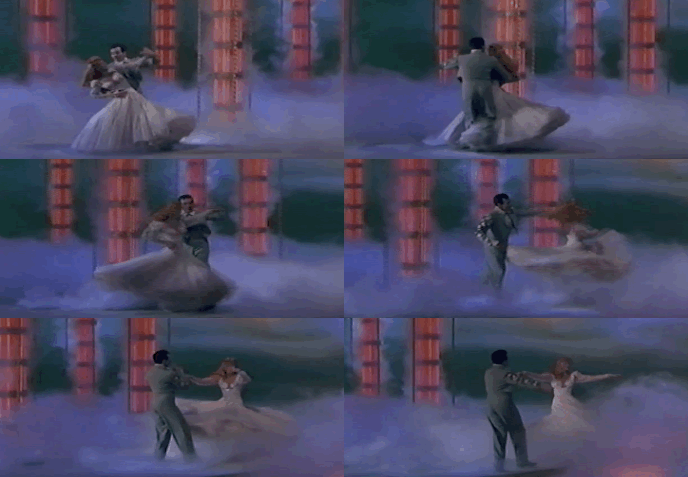
Showing posts with label Barry Sullivan. Show all posts

Saturday, October 1, 2022

Janet Leigh: Haunting in ‘House on Greenapple Road’ 1970

Janet Leigh is memorable as a desperate housewife in "House on Greenapple Road."


The two hour long ABC TV movie, House on Greenapple Road, aired January 11, 1970, and introduced audiences to Lt. Dan August. Here, the taciturn detective was played by Christopher George, who fit the role perfectly. The ratings were so good that it was turned into a weekly series, but George was unavailable, and the role went to Burt Reynolds.

Christopher George is well-cast as hard-nosed Lt. Dan August, but still able to show compassion toward the people mixed up in his case, in "House on Greenapple Road."

What's interesting about House on Greenapple Road was how adult the subject matter was for 1970 television. The film opens with a gory crime scene discovered by a child and the missing person/possible victim appears to have been an unhappy housewife who had a series of salaciously depicted affairs. Based on a bestselling book by Harold R. Daniels, the search for the missing person/victim is spliced with flashbacks of the seamy backstory, which reminded me of the 1965 feature film Sylvia, a shady lady who’s past is investigated. However, this TV movie is more hardnosed that the old-school theatrical melodrama starring Carroll Baker. This is interesting, considering the much stronger censorship on television versus film at the time.

Janet Leigh as a dissatisfied housewife, who looks for love in all the wrong places. Here, she hooks up with the country club life guard, in "House on Greenapple Road."

The mystery blonde here is played by Janet Leigh, in one of her best but lesser-known performances. Aired a decade after a career high in Psycho, Janet Leigh was 42 and struggling to keep her career afloat as a leading lady. The role of a woman who relied on her face and body for self-worth hit a bit close to the bone for Leigh. Her daughter revealed after her death that Janet had eating disorders and feared growing older, losing her looks and figure. It's ironic in House on Greenapple Road that Janet looks incredible and is very vulnerable, but is treated so casually by the male characters. There are some allusions to her famous role in Psycho. Here she is Marian Ord, in Psycho she was Marion Crane. In her various trysts, Janet sports a lovely figure in various undergarments, which also caused a stir in the Hitchcock classic. Her characters seek to opt out of their dull lives, only to find themselves in great danger. The film's ending is a clever nod to Psycho.

Janet Leigh was 42 when she filmed "House on Greenapple Road." Despite fine performances & looking great through the '60s, keeping stardom was an uphill battle.

House on Greenapple Road has a cast of veteran stars and then-newcomers. The story is intriguing, there's some nifty camera work, the story is unsentimental, and the acting is solid. The type of crime committed and the final revelation may have been a shocker back then, but it's very commonplace today in our current reality show mentality. So the story hardly feels dated by today’s standards.

"House on Greenapple Road" was one of those TV movies that haunted
my '70s childhood when re-run on the afternoon movies!

The premise of House on Greenapple Road is based on a true story. A house wife just disappeared one day in 1961 and was never heard from again. And her kitchen was left a literal bloody mess, like this movie. While there were all kinds of rumors, nothing was proven, but that's where the similarity ends.

Christopher George, Janet Leigh, and Tim O’ Connor offer standout performances as Dan August, and the couple in question, Marian and George Ord. 

(R) Christopher George's Dan August spars with (L) Peter Mark Richman's sleaze businessman in "House on Greenapple Road."

The actors who play the men in Marian's life are good in their sleazy roles. Burr DeBenning is a country club life guard, who’s a bit mature act so ageist toward Marian. Peter Mark Richman (Blake Carrington’s lawyer!) is Sal, a business man who gets off on treating the needy housewife like a hooker. Lawrence Dane is the new age preacher who wants to do more than enlighten Marian. There’s boozy and cynical William Windom as the country club president, who picks up where the life guard left off.

William Windom is the country club president who is one of houswife Marian's lovers in "House on Greenapple Road."

Great veteran actors like Walter Pidgeon, Keenan Wynn, and Barry Sullivan offer solid support. Julie Harris is typecast well as the uptight sister-in-law. Joanne Linville is righteously bitchy as the country club president’s rightly jealous wife.

Julie Harris brings her patented nervous edge to the role of the sister-in-law to
Janet Leigh's housewife in "House on Greenapple Road."

Pre-stardom Ed Asner plays a heavy-handed sheriff. Lynda Day is a pissy, pot-smoking secretary named Lillian Crane, a riff on Psycho’s Vera Miles as Lila Crane.  And Jan Brady herself, Eve Plumb, is the Ords’ young daughter, who discovers the blood-drenched crime scene.

Eve Plumb is the young daughter who finds a bloody crime scene in
"House on Greenapple Road."

Janet Leigh’s innately empathetic persona makes the audience want to understand her character. Marian is more than a promiscuous woman. She is looking for validation and her list of Mr. Wrongs reminds me of Looking for Mr. Goodbar, which was also based on a true story. Marian Ord’s husband always forgives her as she seeks to bolster her self-esteem regarding aging and losing her desirability. Among the wrong places she looks for love is with the country club life guard, a sleaze bag business man, a new age minister, and the country club president! Marion’s always disappointed, only to move on to the next man. Yet, in her naïve way, her intentions are sincere. Yet, she’s treated as a toy, when she’s looking for a teen dream version of true love. And Marian’s search doesn’t end well. Leigh’s naturalistic, strong acting make you believe in her character’s motivations, as messed up as they are. Leigh gave some terrific performances in the ‘60s and looked great doing so, but one can only assume it was her age that found her increasingly passed over by the ‘70s.

Janet Leigh as Marian, furious over feeling played, in "House on Greenapple Road."

Tim O’Connor, intense in his breakthrough role on Peyton Place as Elliot Carson, is equally filled with nervous energy here, as George Ord. The sad sack, mild husband loves his wife, but she is not satisfied with their middle-class life. Marian’s fear of losing her appeal is accelerated by the feeling that life is passing her by. The affairs at least jump-start her self-worth, but Marian’s also looking for a real love, and a way out. And O’Connor’s scenes admitting all this later are made genuinely moving by his strong performance.

Tim O' Connor as George Ord finally comes clean about his marriage to Marion.

Here’s the real life story that House on Greenapple Road uses as a premise for the fictional novel and movie, based on the 1961 disappearance of Massachusetts house wife Joan Risch: https://www.amazon.com/Kitchen-Painted-Blood-Unsolved-Disappearance/dp/1476681848

And here’s one of my favorite films, which starred Janet Leigh, my take on 1962’s The Manchurian Candidate: https://ricksrealreel.blogspot.com/2017/10/the-manchurian-candidate-1962.html

This look on Janet Leigh's face as Marian Ord touched me, when she begs her
latest lover not to laugh at her, in "House on Greenapple Road."


Tuesday, September 22, 2020

‘The Name of the Game: LA 2017’ 1971

Did young Steven Spielberg & sci-fi legend Philip Wylie predict where the world
was headed with this cult classic TV episode?


Spielberg was just 23 when he directed this episode.


L.A. magazine publisher Glenn Howard (Gene Barry) returns from an environmental conference. As he drives, Howard dictates notes to the President on a tape recorder that gives a dire warning about the planet’s future. Ironically, the media mogul is driving a huge gas hog from ‘71. As a smog report drones on the radio, Howard’s own drone becomes increasingly disoriented, and the car careens off the road. Rescued by two uniformed men and taken to a hospital, Glenn is told the year is 2017 and that Los Angeles is now underground. That’s just for starters.

***Spoiler alerts ahead***

Gene Barry as Glenn Howard, publisher & environmentalist.

Typical of the era were aging stars who tried to be cool like the young anti-hero studs of Hollywood. As with other show biz vets, instead of hip, Gene Barry’s Glenn Howard comes off smug, snide, and superior. His style is much like surly Charlton Heston in his sci-fi era. In fact, when Howard awakens in a futuristic hospital outfit, Barry looks like Heston’s arrogant astronaut in Planet of the Apes.

"Get your hands off me, you damn dirty shrink!"

LA 2017 consists of an underground community of 10,000 people. Chaos is rampant, with a chosen few in charge, and everyone else treated like cattle. Speaking of which, there is only one cow left, and its milk is treated like the finest champagne. There’s a 1984 vibe here, with a constant drone of warnings, platitudes, and declarations of opportunities that are most likely thankless.

Edgy psychiatrist/police officer Dr. Parker doesn’t take Glenn’s guff for very long.  The doc introduces him to a weapon that he calls a weapon cylinder that fires up to 25 feet. Cutting off Howard’s cynical laughter, Parker warns, “I can get anything I want out of you, electronically!”

Luckily, Howard is rescued from Parker’s clutches, and turned over to California’s vice-president, Dane Bigelow (Barry Sullivan). Seemingly genial, Bigelow gives Glenn the spiel on how LA’s survivors made a new world for themselves. A nice sales pitch, but Howard finds that there’s more beneath the surface than content underground dwellers.

Barry Sullivan as a big wig in underground L.A., with an even bigger tie!

Sullivan is the first to tell Howard how life above earth came to a standstill. Glenn guesses, “Nuclear war?” Nope. Dane brings the mogul up to speed as to how the planet stopped functioning after man’s abuse has taken its toll. “No one did anything about it?” asks Howard. Dane describes the domino effect of the environment reacting to the levels of pollution. “The scientists and government stood by while everything died.” Now, the Veep proclaims, they’ve adapted to a new way of life… some say better! Howard, of course, is not convinced.

Sharon Farrell had that Ann-Margret style and slight hysteria goin' on.

Some ‘70s style comes along in the form of Sharon Farrell as Sandrelle. Though now nearly 50 years later, Farrell sports her Ann-Margret-esque mane and mascara, plus groovy midi-skirts and boots. Sharon often played slightly hysterical characters like A-M, too. Yet, Farrell is quite touching here, in a similar role played by Leigh Taylor Young’s Shirl in Soylent Green.

Fun fact: LA 2017 aired January 15, 1971 and Soylent Green, set in NYC of 2022, was released April 19, 1973.

Farrell's female companion isn't "furniture" like "Soylent Green," but close!

Sharon’s Sherelle is a bit more high-functioning than Leigh’s female “furniture” role. Her job is to get Glenn to see the light about the brave new underground world, or at least report back what he’s thinking. She does neither, as she’s not a fan of the “new” world. Instead, she gives the publisher the scoop on what’s really going on. Sandrelle shows fragments of despair despite being desensitized. Some of Farrell’s reactions are deliberately blank and robotic, where other times her character answers with black humor bravado about the controlled environment: “We’re not supposed to knowwww!”

Got milk? Louise Latham is Barry Sullivan's dazed wife.

Glenn’s invite to the Bigelows for dinner feels like a ‘70s show, since Dane had his Bel Air home brought underground, “stick by stick.” There’s a stale sitcom feel to Dane’s banter with his kids, and his Stepford wife Helen seems like she needs a new battery. She’s played by Louise Latham, who had the market cornered on middle-aged neurotics once she played the mother of Marnie. With that southern tinge in her voice, she informs Dane that Billy died. A beloved goldfish, Dane owns one of four aquariums in the world, and poor Billy has died of old age. Smooth Bigelow is devastated and it’s an oddly touching moment. Helen then goes all Blanche DuBois on Howard: “Is Glenn spending the night? I’m lonely for Glenn.” Before she can depend on the kindness of this stranger, she is sent off to bed, without her milk.

Billy the goldfish goes bye bye in a surreal, sad moment.

Dane finally presents The Board’s plan to Glenn. They want him to re-boot Howard Publications underground. They figure there’s nostalgia value, plus Glenn’s got the skills to help create mass acceptance of the new reality, while playing on the comforting past. This will give them the edge over the rebellious counter group who resent the system stacking the deck over the peons.

One of the most haunting sequences is has Edmond O’Brien, as a scientist that Glenn once knew, then a bright young man. Now, John Bergman is locked in a strait jacket, seemingly babbling. Photographed from below, O’Brien’s pop bottle glasses hide his eyes, and his voice is a rumbling monotone. When Glenn identifies himself as a friend, Bergman replies “All my old friends are dead.”

When he gives a more detailed, unfiltered version of what happened, it’s utterly chilling, given what’s actually happening in the world of 2020. Bergman recalls “…everyone expected us—the scientists, the magicians—to turn the tide…masks to screen out the poisonous rain and air…”

Edmond O' Brien steals the show in his chilling scene as the scientist who tells what happened above ground on planet Eart.

Aside from the biosphere collapsing and the fallout, such as famine, then came the fight for survival, resulting in mass violence. Bergman describes coming home late from the lab one night, to find his family butchered.

Later, Glenn turns down Dane’s offer, and he confronts him with the information that he’s found out. What happens next is counter accusations from the men, one representing the past, and one the present. Bigelow asks the big shot publisher what he really did to help stop what was happening, aside from attending conferences and cocktail parties. Glenn retorts that Dane is just passing the buck, and Dane replies, “What should we do? Turn it all over to the bomb throwers?” Glenn replies he’s for turning it all over to the people.

Howard Publishing is a rubble in 2017, illuminated by the hazy LA sky.

When Bigelow tells the Chairman of the Board that Glenn wouldn’t go along, his fate looks the same as John Bergman. Sherelle is both silenced and punished when Dane gives her some filing to take down the hall, both knowing a bomb explosion awaits her. Some underground rebels whisk Glenn away to the surface and take him to the Glenn Howard offices, which look quite sad. The plan is to enlist Glenn in their mission, and join others at a mountain top locale not entirely polluted. However, they are followed by Dane and crew. Glenn finds out about Sherelle’s fate, and he blames one of the junior rebels, who replies, “We didn’t start the violence.”

Glenn escapes with Dane and the doc as hostage, then ditches them, and runs back to his car. Collapsing, Howard is awakened by the same two rescue workers, but this time he’s back in 1971. Exhaust leakage from his car is to blame. A final close up of a dead bird hangs from a branch, as Glenn listens to his notes, which ends with, “It may be the beginning of the end of Earth as we know it.”

When Howard is rescued & finds it was all a dream, here's a contrary tell-tale sign.

Although LA 2017 is a fave of both Spielberg and Name of the Game fans, there's a fair amount of snarking about this fledgling directorial effort. I think LA 2017 is impressive when taken into context. In itself, the episode is not a bonafide classic. Yet, considering that it was episodic TV—check out any typical TV "movie of the week" from that era—and the difference is obvious. Most significantly, Spielberg was 23 when he directed this. I wonder what those critics were doing at that age.

Some have complained that special effects were disappointing. Again, the answer is obvious. It was the era and it was episodic TV. Still, Spielberg was working with his biggest budget yet—$350,000—a huge TV show budget back then. This is also why Name didn't stay in the TV game much longer, as the show’s cost didn't translate to big ratings. 

A haunting Spielberg shot framing Glenn Howard's gas hog!

What I appreciate about Spielberg’s effort is that he depicts the destroyed world in economic but effective ways: desolate locations, camera filters and striking angles. The actual futuristic world is simply shown and so the show doesn’t seem too dated—for an almost 50 year old show.

Spielberg was in the middle of directing some of Universal's better TV shows; later that year he directed the acclaimed TV movie Duel, with Dennis Weaver. In 1974, Steven made his feature film debut with the critically acclaimed The Sugarland Express, and the next year he made his breakthrough, Jaws, and the rest is film history. That's a pretty swift and impressive career path in five years!

Spielberg used some extreme camera angles to heighten tension and mood.

Phillip Wylie wrote the script and novelization of LA 2017 simultaneously. Apparently, Wylie was not happy that his TV script was trimmed and simplified. I guess he forgot that the episode was 75 minutes and that there was only so much time for ecological debates. And some of his futuristic social mores, like children having sexual freedom, would not fly in 1971!

One legend surrounding LA 2017 is that Joan Crawford appeared in an unbilled cameo as a gesture to Steven Spielberg. Crawford had memorably worked with Steven in his first directing assignment, a Night Gallery episode titled Eyes. In LA 2017, she is supposed to be in the far background of Howard’s examination scene, with a clipboard in hand. The woman does possess a pile of hair that Joan sported during that era, but it’s hard to tell. My question is, if Steven cast Barry Sullivan in a major role in LA 2017, who also appeared in his Night Gallery segment, why wouldn’t do the same for Joan, like as Sullivan’s wife? This was also during a time when Crawford desperately wanted to work. So, this makes no sense, and my guess is that it’s a Hollywood myth.

Some fans think the woman with big hair & clipboard is Joan Crawford,
rumored to have done a cameo here for Spielberg. IMO, it's not JC. 

Watch The Name of the Game’s most famous episode, LA 2017, for the combined imagination of Steven Spielberg and the knowledge of Philip Wylie, for a look at the future that is mostly on-target—sadly.

FYI: I put all the movie overflow on my public FB  movie page. 

Check it out & join!  https://www.facebook.com/groups/178488909366865/


Friday, May 3, 2019

‘Lady in the Dark’: Over the Top Style Over Substance 1944


Ginger Rogers isn't turning green because she's singing 'South Pacific' tunes!
Ginger's 'Lady in the Dark' is about to go into a dream sequence is all.


Once groundbreaking, 1941’s Broadway dramatic musical, Lady in the Dark, was a critical and commercial smash for all involved. Lady was especially lucky for the careers of star Gertrude Lawrence, plus newcomers Danny Kaye and Victor Mature. Lady was a sophisticated mix of psychological drama, and music styles of several genres. Lady in the Dark was daring at the time, with analysis in vogue, and women at work in the war years. Yet, the fine points of these two topics soon became dated, leaving this Lady with a somewhat tarnished reputation.
Gertrude Lawrence had a mid-career triumph on Broadway with 'Lady in the Dark,'
 playing over 500 performances. But Hollywood was not going to star a 45 year old
 actress with no film track record in a big movie musical.

Paramount paid nearly $300 thousand dollars for the movie rights to Lady in the Dark. Perplexingly, the studio missed the boat—or specifically, ship—by eliminating what was most memorable about Lady, the instant classic score, including its most famous tune, “My Ship.”
The source material, with the book by Moss Hart, plus words and music by Ira Gershwin and Kurt Weill, dealt with two timely topics: psychoanalysis and career women. Then, Paramount’s film adaptation added its own interpretation. The Hollywood studio system was at its zenith as the entertainment choice of the mainstream public. Hollywood studio heads deemed themselves as the patriarchs of the American way of life. Of course, the bottom line was to appeal to the masses and keep those movie tickets selling! So, the psychiatry of Lady in the Dark was further simplified for filmgoers. More damning was Lady’s message that it was more important to be a “real woman” than a career woman, which was constantly drummed throughout Lady, and through decades of filmmaking, as well.
Ginger Rogers' Liza Elliot is called "boss lady" by her male co-worker & told by her shrink that she "cares little for feminine adornment!" Because, pinstripes?!

What the studio did keep was the story of Liza Elliot, editor of “Allure” fashion magazine. Liza (Ginger Rogers) is stricken with anxiety, depression, and disturbing dreams. Her professional and personal life only exacerbates Elliot’s issues. At work, advertising hot shot Charley Johnson (Ray Milland) has his eye on her job and badmouths her femininity. On the home front, Liza has a safe harbor relationship with a wealthy married man old enough to be her father (Warner Baxter.) Then movie heartthrob Randy Curtis (Jon Hall) arrives at “Allure” for a photo shoot. Randy is taken with Liza because she’s “not one of those glamour girls.” Gee, thanks, Randy! Then, there is also a hint of attraction amidst the hateful zingers from Charley. This dull lot is just Liza’s current personal baggage.
Ray Milland's good time Charley Johnson & Rogers 'boss lady' duke it out in pinstripes over a circus- versus Easter-themed fashion mag issue. Imagine the results when Liza has a dream sequence mixing both. Their looks sum it up!

I consider myself pretty clear-eyed while watching films from past eras, when dated conventions, situations, or dialogue come up. After all, it was the past. And as we seem to forget the past fairly quickly, I don’t think it hurts to be reminded of outdated past attitudes. But some movie material is beyond the pale, and Lady in the Dark comes pretty close. The barrage of sexist insults to Liza from Charley (him telling a co-worker that all Liza needs is a night out and a good…), or the patronizing, prehistoric advice from Liza’s shrink (that she needs a man to dominate her), had me wincing or rolling my eyes.  
Liza takes the advice from her doc that she needs a shrink as if she had a fatal disease!
 I never realized what big blue eyes Ginger Rogers had until I saw 'Lady in the Dark.'

As a talent, Ginger Rogers was always a game girl. She started off as a dancer, but always tried to broaden her range. At her best, Rogers was a graceful, energetic dancer, a decent singer, an engaging comic performer who was great with wisecracks, and a solid dramatic actress. And Ginger was all about glamour, which was worshiped in studio era Hollywood. However, biographer David Chierichetti wrote that director Mitchell Leisen said that Rogers could not relate to the psychiatric profession, which he felt hindered her performance in Lady in the Dark. This seems odd, since Ginger wanted to make this film. Also, Ginger’s doubt should have suited the role, as Liza takes the advice from her family doctor to seek therapy as if she was ordered to get a lobotomy.
Perhaps Liza Elliot is thinking about the size of her shrink bill after checking out the
 doc's stylish office digs! That's a very young Barry Sullivan as Dr. Brooks.

Wouldn’t it have been ironic if Paramount had borrowed Rosalind Russell from MGM to play Lady’s Liza Elliot? Russell made her career in comedies playing strong career women—who usually gave up work by the last reel! Roz was able to play brittle while retaining her likeability. I also couldn’t help but wonder what Joan Crawford might have brought to this role. Even in her heyday, everyone knew that Joan’s career was all to her, and Crawford could have given an intriguing portrayal.
Ray Milland is a shithead with a whip & Ginger Rogers a lady in a cage in the circus dream.

Though engaging performers, neither Ginger Rogers nor Ray Milland, as Liza the “boss lady” and her office adversary, Charley Johnson, come off well. This isn’t their fault, since their roles and especially the dialogue, are impossibly slanted. Rogers comes across as a peevish pill and Milland as a horse’s ass. One wonders what Cary Grant, who played a charming but needling jerk in Hitchcock’s Notorious, might have done as Charley. Cary’s comedic persona was infinitely more charismatic than Milland’s.
As often the case, movie posters finesse the facts. Ginger's Liza Elliot is more lost
than in love, and isn't that keen on any of the three rather dull leading men.

Rogers’ Liza receives constant criticism for not looking feminine enough. You see, she wears—gasp!—tailored dresses. But the work wear is always accessorized with towering hairdos, lacquered makeup, jungle red nails, high heels, and furs! This was classic Hollywood’s idea of austerity style—wearing pinstripes. Edith Head designed the modern clothes.  It’s amusing that the other characters chide Liza for her dress, because Edith’s streamlined clothes for Rogers’ character remain timeless and chic, while everything else looks like campy costumes.
Before there was Lady Gaga's "meat" dress, there was Ginger Rogers' "mink" dress!

Though Edith Head is generally given kudos for all the costumes, the film credits cite three designers, who created the garish glamour for Lady in the Dark. Raoul Pene Du Bois created designs for the dream sequences and Madame Barbara Karinska lent her skills to make the fur fly for the film’s much-publicized “mink dress.” Yes, before Lady Gaga’s “meat dress,” there was Ginger’s “mink dress!” The mink portions of the heavily sequined dress had to be redesigned, requiring Karinska’s services. The first attempt was so heavy, that Ginger couldn’t even walk, much less dance, in the gown. IMO, the debated mink gown sure looks like an Edith Head number, but I’m no costume expert. 
The mink reveals a gown with more sequins than Bob Mackie or Cher could ever imagine!

The dress was highly publicized as costing $35,000—for a fur gown to dance in—which truly symbolizes the wrongheaded approach by Paramount to Lady in the Dark. Frankly, some of the “wow” costumes remind me of the designs that Mae West wore in her final films (by Edith Head) or Lucille Ball’s heavy, clunky clothes from Mame.
The $35,000 mink gown opens to reveal sequins and Ginger's famous legs!

The dream sequences are something out of The Wizard of Oz—in fact, Liza’s work confidante refers to her shrink as such. Also, in Liza’s wedding dream sequence, Rogers is so laden down with a huge platinum pageboy wig, a towering bridal veil, and a kewpie doll painted face, that she looks like Billie Burke’s Glinda the Good Witch. There are so many singers, dancers, scenery, exaggerated costumes, and apparently every smoke machine that Paramount could muster, that Lady looks like Oz—or a mammoth, melting Technicolor cake. Paramount star Mae West once commented that too much of a good thing is wonderful, but I’d use these dream sequences as proof that it isn’t!
Here's Ginger looking like Glinda the Good Witch in one of 'Lady in the Dark's'
 demented dream sequences.

The one sequence where Ginger gets to show off some of her fabled spice is in “The Saga of Jenny” number. Rogers’ in great form here and gets to work that mink dress like nobody’s business.
There are subtle, delightful touches scattered throughout the film amongst the overkill. Lady’s opening titles are clever, mimicking “Allure” magazine. And the dream sequences’ segues are smoothly skillful. It’s a sad commentary that the scenes depicting Liza’s daily life are more visually pleasing than the near-nauseating fantasy dream sequences.
Interestingly, the introductions to the dream sequences are clever and creative.

Mitchell Leisen’s skills have been criticized by some film historians as style over substance. Or that Leisen lucked out in having Billy Wilder, Charles Brackett, and Preston Sturges work for him when they were screen writers. There is truth to this, but he had his gifts—with actors, comic material, and visual style. But with such tricky material as Lady in the Dark, perhaps a stronger director would have fought the unfortunate material cuts, the over the top taste level, and the negative emphasis on the leads’ characters. Leisen’s Lady in the Dark and Frenchman’s Creek, while big commercial successes in 1944, were expensive and problematic to make, badly reviewed, and ultimately, not well-remembered. Leisen’s work without such talented up and comers just didn’t compare.
A perfect example of how Paramount killed 'Lady' with overkill: Ginger & Don Loper
 dancing around what looks like neon candy canes & "fog" that looks like they're being exterminated!

Among the rest of the cast, there are some interesting performers. Young Barry Sullivan, whose voice sounds like it hadn’t changed yet, plays Liza’s shrink, Dr. Brooks. Mischa Auer has a field day as Russell, the flaming fashion photographer. Mary Gilbert is great fun as Rogers’ wise sidekick, Maggie. She was also Humphrey Bogart’s first wife! Gorgeous Gail Russell appears in an early role as Rogers’ high school love rival in a flashback. The difference here Gail was actually a teenager when this was filmed. And yes, we are treated once again to Ginger playing a pre-teen in a pinafore during the circus dream scene. At least Rogers doesn’t play little Liza in the flashbacks with her parents!
Yet another movie where 30 and over Ginger plays a juvenile in a pinafore.

There have been surprisingly few theatrical revivals or filmed versions of Lady in the Dark, due to the lavish story and its problematic take on women.
Interestingly, Judy Garland played in a one hour radio version of Lady in the Dark in 1953 that showcased the music and utilized just enough dialogue from the show’s book to frame the piece. It’s lovely to listen to. Ann Sothern did a 90 minute television version in 1954 that, judging from the audio clips, imbues Liza with more humor than Ginger and a surprisingly strong voice.
Julie Andrews as Helen Lawson, oops, Gertrude Lawrence performing 'The Saga of Jenny' in the bio flick 'Star!'
In 1968, Julie Andrews played Gertrude Lawrence in the biopic Star, recreating elements of Lady in the Dark. Andrews’ version of “The Saga of Jenny,” though well-sung, looks like a ‘60s TV special starring Valley of the Dolls’ Helen Lawson!

Coincidentally, while I was researching this essay, I saw that a one-weekend Master Voices’ staging of Lady in the Dark was performed at The New York Center April 25-27, 2019. The reviews I saw were fine, and interviews I read with the creators involved said that they addressed the dated scenes between the analyst and Liza. One way was by casting Amy Irving as Doctor Brooks, who performed in a more empathetic manner than past male counterparts. The lines from the shrink, who tells Liza where her emotional problems lie, are now spoken by Liza, giving her self-realization. And some of the more dated, inflammatory lines were just deleted altogether.
So, there just might be a brighter future for further productions of Lady in the Dark. As for the 1944 version, it’s all subjective, depending on why you watch older films. I found this Lady to be fascinating, as in “What were they thinking?”

Here's another fugly fashion overstatement from the wedding dream sequence.
At first glance, I thought this was Mae West, not Ginger Rogers!