Showing posts with label Lucille Ball. Show all posts

Monday, April 6, 2026

'Lucky Lady' & Other Cine-bombs of My '70s Youth


The most memorable thing about 1975's 'Lucky Lady'
starring Gene Hackman, Liza Minnelli, & Burt Reynolds
may be this beautiful Richard Amsel poster.


I discovered classic films during the early '70s, on TV afternoon movies. This coincided when Hollywood struck gold with modern cinematic gems that harkened to its studio era heyday: The Way We Were; The Sting; Chinatown; and That's Entertainment, to name the most notable.

Alas, there were an equal amount of much-hyped films that my '70s teen self couldn't wait to see, but which never made it to my local theater in Upper Michigan. And for good reason—most were flops!

One of the few film duds that did come to my hometown Manistique was 1974's The Great Gatsby. The 3rd version of F. Scott Fitzgerald's novel actually made money, but was a disappointment because of the enormous money spent making and promoting the lifeless movie. I was turned off because I already loved the book and couldn't imagine why anyone would pine after Mia Farrow for a decade. As for remote Robert Redford, he was not great as Gatsby. The supporting cast came off best in this fashion spread of a movie, which I never saw again.

My entertainment guru of the '70s was Rona Barrett, who really beat the
 drums for 1974's "The Great Gatsby." Note the Lucy headline at lower left!

I was also excited to see Lucille Ball as Mame in ’74. I watched all three of Lucy's series, which CBS was running: I Love Lucy and The Lucy Show in daytime reruns and Here's Lucy in prime time. The latest series should have been a warning. Canned comedy ensued whenever Lucy Carter met a celebrity and irritated them with her star struck antics or looked for an excuse to sing. On I Love Lucy, Ball's singing always caused intentional laughter. 

'Lucille Ball as Mame' was the hype mantra for this 1974 mammoth musical.

There were all kinds of promo for Mame. The gay geek that I was, I kept looking at the big spreads Rona Barrett's mags, marveling at how young Lucy looked. And there was the new fave, TV's Maude, Bea Arthur in a black Joan Crawford wig and ankle straps. I was awestruck —and so naive.

Love this headline for Rona Barrett's 1974 story on "Mame."
The short answer is NO!

Then the bad reviews for Mame came out… then there were stories about the reviews! I read one news story of Lucy at an event, dabbing tears away, distraught over the backlash. The news photo showed that she did not look young, despite Ball all dolled up like Mame. The film never shook the blues in my hometown! 

I saw Mame a couple times later on TV. My thought was that if the songs with Lucy's raspy singing were cut, Mame would have been much better. Only, then you would have Auntie Mame again. So why not just watch the 1958 Rosalind Russell as Mame Dennis?

Lucille Ball was a favorite veteran star for Rona Barrett magazines. 

Next, I was fascinated that my favorite star, Elizabeth Taylor, was heading an all-star musical remake of The Blue Bird, filmed in Russia. Directed by George Cukor, it was hyped as the ‘70s answer to The Wizard of Oz. I read gossip items on the troubled filming, but when I saw that Rona Barrett was promoting a big spread for the epic in her next issue, I was hopeful. Then the issue came out, and no sneak preview of Easter 1976’s The Blue Bird! I've only seen clips of the elusive epic on You Tube since and that was plenty. The Blue Bird looks like a chintzy costume party.

I was agog when I bought this People magazine with Elizabeth Taylor in
 costume in "The Blue Bird." I think I still have the Milton Greene cover shot.

A lovely poster for 1976's "The Blue Bird," a gawd-awful movie.

By 1976, I was becoming a jaded teen when it came to modern Hollywood cashing in on old-time Tinseltown. I loved the biography book, Gable and Lombard, which made me a new fan of Carole Lombard. When they cast Marcus Welby's James Brolin as Clark and newcomer Jill Clayburgh as Carole, I was appalled. When clips were previewed on TV talk shows, I knew once again that the onscreen Gable and Lombard was never coming to Upper Michigan. I finally watched Gable and Lombard during 2020's Covid lockdown, and found the film bio inaccurate at best, smutty and juvenile at worst.

I was hoping that 1976's "Gable and Lombard" wouldn't be as terrible
as it looked... sadly, it was!

And there was so much bad press about Barbra Streisand's ’76 remake of A Star is Born that I vowed not to go see it. In the '70s, people would flock to see Streisand sing from a phone book, so Star was a big hit. My female classmates loved it and when I sang the praises of Judy Garland's version over Babs', their sullen stares said, “Shut up, nerd!” I didn't see Streisand's Star until 2017, over 40 years later. It was indeed still awful, after all these years!

By the time 1976's "A Star is Born" came out, I never wanted to hear about this
 ego 
trip again. I finally watched Babs' version in 2017!

This brings me to 1975's Lucky Lady, which inspired all these movie memories. This was another event movie that I was all excited about back then: Cool Burt Reynolds! Judy Garland's daughter, Liza Minnelli! Gene Hackman, that guy from The Poseidon Adventure! And dreamboat Robby Benson, who sealed the deal! They were starring in a comedy caper like The Sting, which I loved. Once again, I pored over my bible, Rona Barrett’s magazines, trying to figure out what Lucky Lady was all about. Turns out, not much! The Christmas blockbuster was looked upon as a cinematic lump of coal and bad word of mouth trumped three superstars at the height of their appeal. This too didn't come to pass at my hometown's theater.

Just watched 1975's "Lucky Lady" for the 1st time in 2026! Better late than never?


I just saw a great copy of Lucky Lady for the first time on YouTube, in March 2026, over 50 years later. The disjointed story and style of Lucky Lady reflects its troubled filming. The plot of Lucky Lady was inspired by rum running stories on the western coast and classic buddy movies where the men fight over the sassy leading lady. What appeared onscreen was pretty thin, and no one knew how to end the movie. No one liked the original finale, where the men were killed, ala Butch Cassidy and the Sundance Kid. One version that was quickly discarded had the trio reunited in their senior years and looking decomposed, not aged. 

The "old age" ending for 1975's "Lucky Lady" was quickly scrapped,
for good reason. The stars look mummified!

Stanley Donen, a classic era director fave of mine, was past his prime and out of his depth. As the romantic triangle, Gene Hackman fares well enough, displaying an early comic touch. Liza Minnelli, the leading lady, just wrote in her memoirs that Gene was extremely rude to her throughout filming. Hackman could be a curmudgeon, I think because he was rarely cast as a romantic leading man. Or perhaps it was because Gene was appalled by Liza's obnoxious performance as Claire. If you looked up "over the top," in the dictionary, I'm sure Liza's picture is on that page. And Liza goes beyond the pale in Lucky Lady. Minnelli is all over the place—character, comically, and she caterwauls her dialogue and two songs, both Kander and Ebb on autopilot. My guess is director Donen turned Liza loose, hoping the results would be triple threat Judy all over again. She looks like a deranged Clara Bow and whines and wheezes in her harried moments like Shelley Winters! Burt Reynolds is the surprise here. As the handsome but dim rum runner, Burt doesn't fall on his mock macho shtick and is quite endearing. Reynolds was a natural comic actor and could be a strong dramatic one, too. A shame Burt didn't prioritize those qualities over stardom.

Liza Minnelli, Gene Hackman, & Burt Reynolds take over the "Tonight Show"
 to promote 1975's "Lucky Lady." Everyone seems jovial here.

Gene Hackman, Liza Minnelli,  & Burt Reynolds may be wondering how
they got stuck in 1975's "Lucky Lady" he
re.

It must be said while Gene, Liza, and Burt were at the top of their ‘70s stardom, independent modern day stars weren't any better at choosing scripts than the old studio star system. All three made some real clinkers during this time: Gene in Zandy's Bride and Bite the Bullet; Liza in A Matter of Time and New York, New York; Burt in W.W. and the Dixie Dance Kings, At Long Last Love, and Nickelodeon. None of which I have seen, nor plan to, ever!

Of the superstar menage a trois with Burt, Liza, & Gene? I'd take only one!
 1975's "Lucky Lady."

As for Lucky Lady, what began with anticipation became a boondoggle, with a final film that satisfied no one. Visually, it's lovely despite the excessive soft focus, filmed along the water in Mexico. Some beautiful architecture serves as backdrops. Despite the incoherent story and unfunny dialogue, Gene, Burt, and Robby Benson, do decent work. But you have to be a hardcore Liza fan to enjoy her performance—she's one unlucky lady here. 

A sweet snapshot of the "Lucky Lady" cast: Robby Benson, Burt Reynolds,
 Liza Minnelli, & Gene Hackman.

Up next for Minnelli was New York, New York, which was another troubled production that flopped on first release. A few years later, a director's cut was released, to better effect. While Liza won praise for New York, New York, it's almost an anti-musical, not a tribute. To revamp a quip that Bette Midler made about another '70s song-laden movie disaster, "I never miss a Martin Scorsese musical.”

Well actually, I did. I don’t even recall if New York, New York came to Manistique—a Minnelli miss to be remedied at a later date!

Another big movie everyone was excited about... until it was released!
Rona Barrett gives the big build-up for 1977's "New York, New York."

My deep dish on Barbra Streisand's diva version of A Star is Born: 

https://ricksrealreel.blogspot.com/2017/08/barbra-streisands-star-is-born-still.html


Thursday, December 4, 2025

2 Icons Plus 18 Kids Equals Family Fun in ‘Yours, Mine and Ours” 1968


Henry Fonda & Lucille Ball make a very attractive couple as widowed military folk
 who marry and blend their already big families, in 1968's "Yours, Mine and Ours."


I'm a sucker for family comedies like Cheaper by the Dozen, and grew up on The Brady Bunch. I saw 1968's Yours, Mine and Ours once or twice on TV as a ‘70s kid. I liked it a lot, but never revisited the blended Beardsley family as an adult, because I thought it wouldn't live up to my childhood memories. Well, I was pleasantly surprised, while re-watching for this review. Despite some typical dated conventions, Yours, Mine and Ours is still warm and funny, and not too sappy.

I was amused that '68's "With Six You Get Eggroll"
used the same coloring crayon opening credits as "Yours, Mine and Ours."

For comparison, I tried watching the similar With Six You Get Eggroll. This too came out in ‘68 and starred America's other veteran sweetheart, Doris Day. It was painfully unfunny, despite Doris and a fun cast. It's plastic plot and humor was more akin to The Brady Bunch, which aired the year after. Yours, Mine and Ours is definitely not The Beardsley Bunch! The troubles and tribulations of blending two families run through the entire movie, though by the end, they are happier and settled. I appreciated that the kids looked like real kids, not Brady Bunch dolls, though a couple of the teen actors were hired for their attractiveness, no doubt.

Lucille Ball as Helen North and her gang of kids, in 1968's "Yours, Mine and Ours."

The humor in Yours, Mine and Ours comes from the reality of the fusing families and ensuing confusion, with 18 kids total, and two more together! Though this big screen sitcom is mostly fiction, the situation is based on real life. Widow/military dispensary nurse Helen North meets widower/ Navy officer Frank Beardsley. She has 8 children, he has 10. Despite the overwhelming prospect of raising these kids as one family, with objections from both sides of the siblings, Helen and Frank fall in love and marry.

Henry Fonda as Frank Beardsley & his crew, in 1968's "Yours, Mine and Ours."

Melville Shavelson directed Yours, Mine and Ours, who had a way with kids and family on film, in a commercial yet smart way. Houseboat with Cary Grant and Sophia Loren is a great example. He also directed one of Bob Hope’s best vehicles, which involved kids, The Seven Little Foys, not to mention Danny Kaye’s The Five Pennies. Shavelson had some serious kids cred! Despite the fact Lucy found this property and had her TV writers Bob Carroll, Jr. and Madelyn Davis work on the story, Shavelson didn’t let this film turn into The Lucy Show on the big screen.

Lucille Ball & Henry Fonda's rapport lights up 1968's "Yours, Mine and Ours."

While Lucy has a number of funny moments, Ball also gets to play a warm, sensible woman. Helen North Beardsley is easily Lucille Ball’s best latter day role. The scene where Lucy’s Helen deals with her problem child, who she thinks is just throwing a tantrum, but turns out to be afraid that he'll die young like his father. This early moment made me realize that Yours, Mine and Ours wasn’t just going to be a chuckle fest and Lucy's naturalistic reactions in the storytelling are wonderful.

Lucy's Helen North gets a jolt of reality when she finds out the cause of her
 young son's tantrum, in 1968's "Yours, Mine and Ours."

When Frank invites Helen to dinner, the Beardsley boys spike her “light” screwdriver, and it’s both hilarious and touching. Helen knows she’s making a disastrous first impression, but can’t control herself, alternately laughing and crying. Ball plays the comedy and pathos brilliantly.

Henry Fonda, whose natural acting and quiet strength were his hallmark, brings both dramatic believability and dry humor to the Navy guy trying to raise 10 kids after being gone on duty. Fonda has many warm moments as the dad doing the best he can, but when Henry’s Frank calls attention to his unruly crew, it reminded me that off-screen Fonda wasn’t always warm and cuddly.

Henry Fonda was 62 when he filmed "Yours, Mine and Ours."
I think Hank & Cary Grant were Hollywood's golden era actors who aged best.

Much has been made of how old Henry Fonda and Lucille Ball were as younger middle-aged parents. Lucy got the brunt of the criticism, since her character has a baby near the end of the film. There's no denying that they were indeed over-aged. The real Helen North was in her early 30s at the time, and Frank Beardsley in his mid-40s. Yours, Mine and Ours was filmed a year before its release, the spring/summer of '67. So, Lucy was 56 and Henry Fonda 62 at the time. I think audiences were more accepting, because in real life, Lucy was a late life mother with Lucie and Desi Jr., who were teens at the time.

By the end of "Yours, Mine and Ours," the Beardsleys have their first child together.

I'll say this much: Mature they may have been, but Hank and Lucy were a most attractive on-screen couple with a warm, believable rapport. I always thought Henry Fonda aged handsomely and naturally. And while Lucy had been receiving the star beauty treatment since her sitcom went color, Ball was a beautiful woman, and still looked quite stylish and slim. I find their natural faces much more pleasant to look at than many of today's mature stars, like Tom Cruise or Nicole Kidman, who are currently the ages that Fonda and Ball were in the making of this film. Actually, Nicole, who later played Lucy on film, was born the summer Yours, Mine and Ours was filmed!

Henry Fonda looks handsome in uniform & Lucille Ball is still lovely here,
in 1968's "Yours, Mine and Ours."

Some familiar TV child actor faces that some of you may remember: Eric Shea, delightful as Helen North’s younger boy and Mitch Vogel as her middle son. Tim Matheson plays Fonda’s oldest son, back when he was a charming teen star. Suzanne Cupito, who later became Morgan Brittany, and Tracey Nelson, daughter of Ricky, both play Beardsley’s daughters. Gary Goetzman, who later became a successful producer, played the freckled teen Beardsley boy. In 2021, some of Goetzman’s anecdotes about Yours, Mine and Ours made it to the big screen in director pal Paul Thomas Anderson’s Licorice Pizza. Unfortunately, Anderson’s caricature of Lucille Ball as Lucy Doolittle was crude and not particularly funny.

Teen heart throb Tim Matheson on tan display, in 1968's "Yours, Mine and Ours."

Also interesting is that for a frothy comedy, some of the topics that Yours, Mine and Ours lightly touches on were adult: Helen’s oldest girl getting pressured by boyfriend Ben Murphy for sex or the oldest Beardsley boy (Matheson) getting drafted for the Vietnam war.

Shopping for groceries--an old-fashioned word!--with the Beardsleys, in 1968's
"Yours, Mine and Ours."

The narration by the stars and the occasional asides to the audience by Henry Fonda and sarcastic military pal Van Johnson are unexpected and funny. Tom Bosley is amusing in an early role as the overwhelmed family doctor. There’s some location shooting in San Francisco and Alameda depicting the couple’s courtship and the Navy base, so that you don't feel trapped in a TV sitcom.

Lucy's old MGM pal Van Johnson plays the sarcastic matchmaker in 1968's
"Yours, Mine and Ours."

Yours, Mine and Ours still has plenty of laughs, plus a warm family story, that will both entertain and touch audiences even today.

"How about a chorus of 'We Need a Little Christmas?'" No, thanks, Lucy!
Lucille Ball as Helen North Beardsley in 1968's "Yours, Mine and Ours."
 
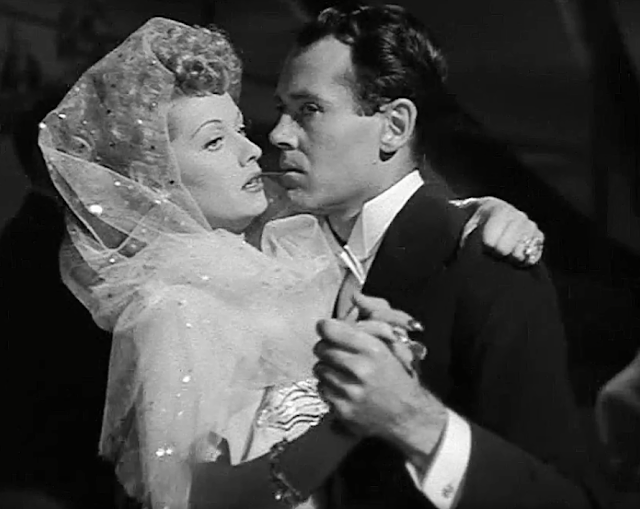
Lucy & Fonda in '42's
"The Big Street."

Here’s Lucille Ball and Henry Fonda a quarter of a century earlier, teamed for the first time in the Damon Runyon comedy-drama, The Big Street. My take: https://ricksrealreel.blogspot.com/2022/04/lucille-ball-istic-in-big-street-1942.html


My look back as a Lucy fan.

Here’s my clear-eyed memories as a Lucy fan as a ‘70s kid: https://ricksrealreel.blogspot.com/2021/12/id-rather-love-real-lucy.html


Tuesday, April 26, 2022

Lucille Ball-istic in ‘The Big Street’ 1942


Lucille Ball was more than ready for a close-up in her last RKO film "The Big Street."


The word on The Big Street was that this film should have put Lucille Ball over as a star, after years as “Queen of the B’s.” Well, I was certainly surprised when I recently watched this ’42 RKO flick for the first time.

Ball bats it out of the park as Gloria Lyons, the tough as nails nightclub singer, brought low by her thug boyfriend. Lucy doesn’t hold back a bit as the unapologetic gold digger who’s determined to overcome personal obstacles and a land a rich husband. Woe to anyone who gets in Gloria’s way!

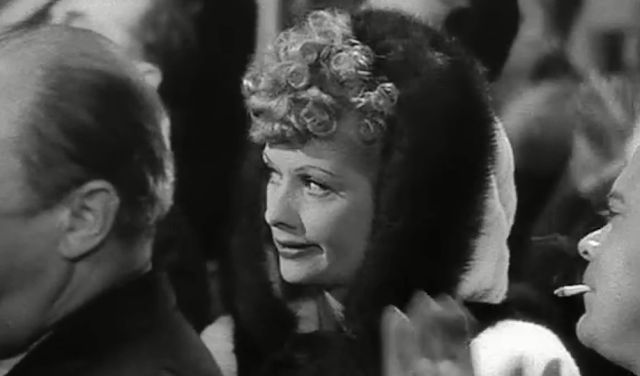
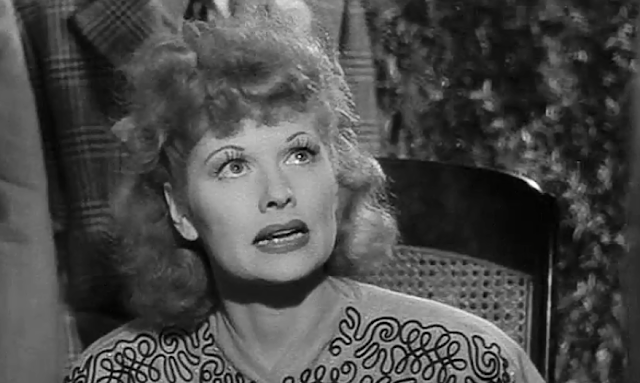
The look on Lucy's face as Gloria says it all as she elbows her way thru "The Big Street!"

The big problem with The Big Street is the way Lucy’s character is written. This otherwise sentimental Damon Runyon fairytale seems to have been hijacked by Of Human Bondage’s Mildred Rogers. To be specific, Lucy’s Gloria is reminiscent of Bette Davis’ shrewish Mildred. Ball perfectly plays the role as written and without any winking asides for audience sympathy, as Joan Crawford did in her bitch roles. But Ball’s singer bosses worshipful busboy Henry Fonda around like he's her rented mule.

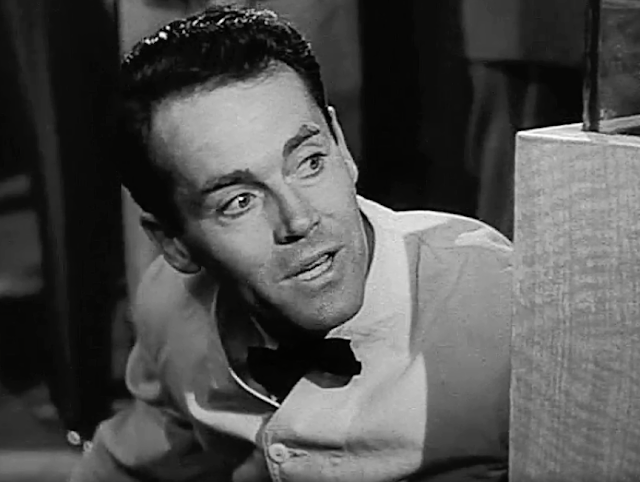
Henry Fonda is endearing, even if his character is inexplicable, in "The Big Street."

Early on in The Big Street, Ball's songbird gets smacked by her gangster boyfriend, falls down a small flight of stairs, and is left paralyzed. Guess who picks up the pieces? Bitter about her plight, Gloria is not the least bit grateful. Busboy “Little Pinks” and his cronies try their damndest to lift her spirits, but all “Her Highness” gives is hurling abuse. The Big Street feels like two different movies: colorful Damon Runyon characters and long-suffering duo of wheelchair-bound witch Gloria and soft-spoken slave Little Pinks. Lucy's character and the rest of this movie just do not mesh. This would be the fault of the director and screenwriter, for not providing balance. One look at the daily rushes with Gloria barking insults at everyone should alerted them to do an emergency rewrite, stat.

Fonda's busboy brings Ball's wheelchair-bound singer home in "The Big Street."

So, I can absolutely see why The Big Street was not a hit or a breakthrough for Lucille Ball. I'm sure that when I Love Lucy was a smash a decade later, later audiences of The Big Street were probably shocked that this was not their Lucy.

Henry Fonda is terrific as Little Pinks, quiet and gentle. Hank still possesses his inherent strength here, but his character makes no sense, agog by this shrew. He’s just as lovesick Leslie Howard’s Phillip was in Of Human Bondage, and gets dished the same kind of treatment. There’s a scene when Gloria gets caught in her wheelchair by a flashy millionaire that she's trying to land. The smoothie is shocked to see her condition and Gloria takes it out on Little Pinks, belittling everything he has done for her. Ball lays into Fonda the way Bette Davis did to Leslie Howard in Bondage and does everything but wipe her mouth like Davis!

When Gloria gets caught in her wheelchair, she takes it out on her busboy admirer.

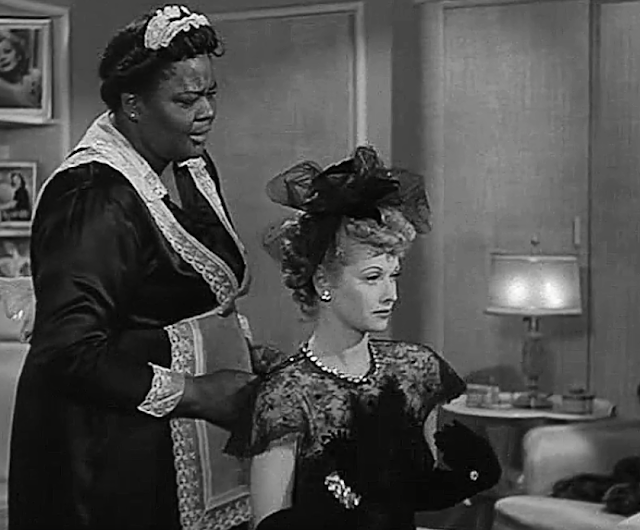
The two disparate sides are most apparent when everyone tries to help or weep over Ball’s tough cookie. Gloria’s maid Violet adores her, though she does nothing but snap insults at her. Louise Beavers almost makes Violet’s devotion believable. Little Pink’s friends keep trying to lift her spirits, but she's brusque at best. The scene where the busboy brings the crippled singer to his basement apartment for a homecoming party is brutal. It’s a big comedown for the glitzy showgirl, but Ball’s character shows not one iota of appreciation, given that she has nowhere else to go.

Louise Beavers brings warmth Violet, the maid who looks after Lucy's shrewish singer.


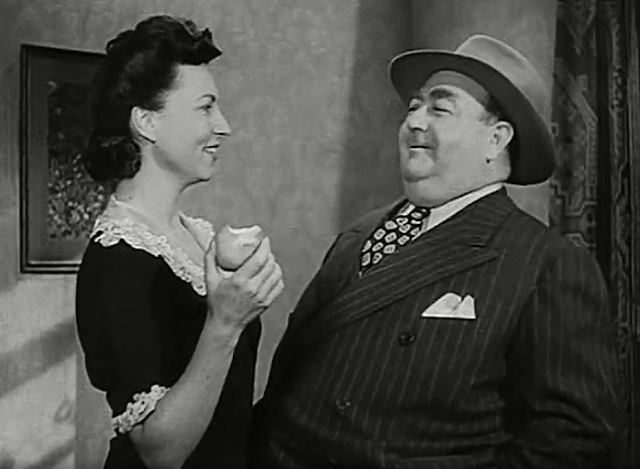
The rest of the cast is quirky fun and has a great time. Agnes Moorehead as Violette “with two t’s!” and Eugene Pallette as Nicely Nicely make an unusual and lovely couple; Ray Collins, so often serious or villainous, is a hoot as ringleader Professor B. These three actors are more often wonderful as baddies, so it’s fun to watch them play eccentric, good-hearted characters.

Agnes Moorehead & Eugene Pallette are a pair who love food and each other!

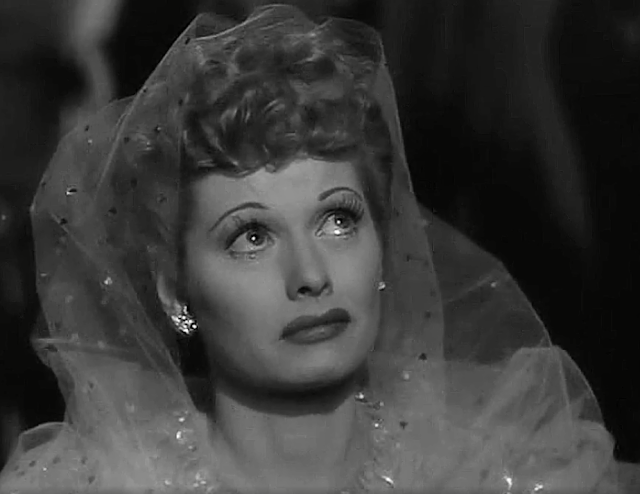
The final scene is where Lucy's Gloria Lyons shows some vulnerability, for what’s literally her last dance. Little Pinks finagles a big party in her honor, where she dies and gets carried up the staircase, a reverse fatal finale version of Lana Turner's showgirl in Ziegfeld Girl. But Ball’s Cinderella gets her final wish, even if she’s acted like one of the wicked stepsisters throughout The Big Street. And this final romantic scene is beautifully performed by both Ball and Fonda.

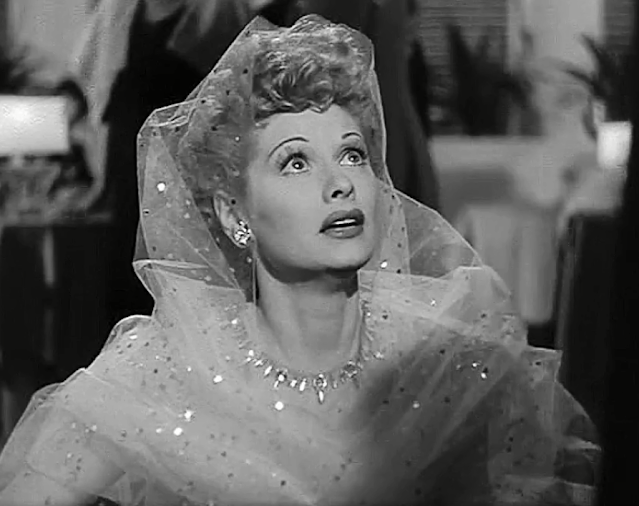
Lucille Ball's Gloria finally shows some humanity at the finale of "The Big Street."

To enjoy The Big Street, you must suspend ALL disbelief. And then perhaps you can enjoy the great supporting cast, and Ball and Fonda’s dramatic performances, too.

Here’s my personal look at the real Lucy, as a baby boomer who grew up with Lucille Ball :

https://ricksrealreel.blogspot.com/2021/12/id-rather-love-real-lucy.html

FYI: I put my movie overflow on my public FB movie page. Check it out!  

https://www.facebook.com/groups/178488909366865/

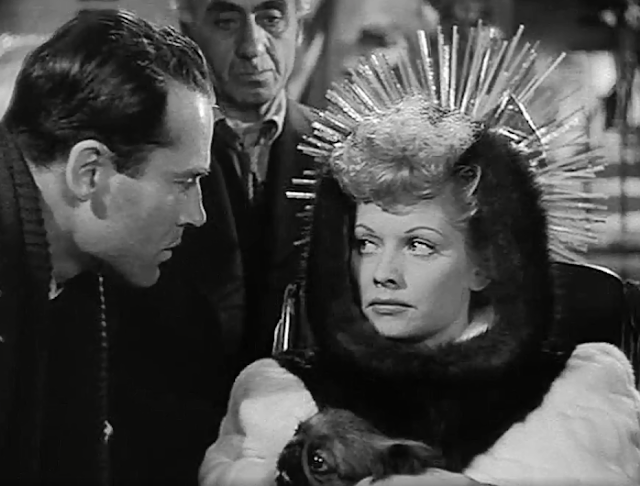
Lucille Ball & Henry Fonda make a damn handsome couple in "The Big Street!"