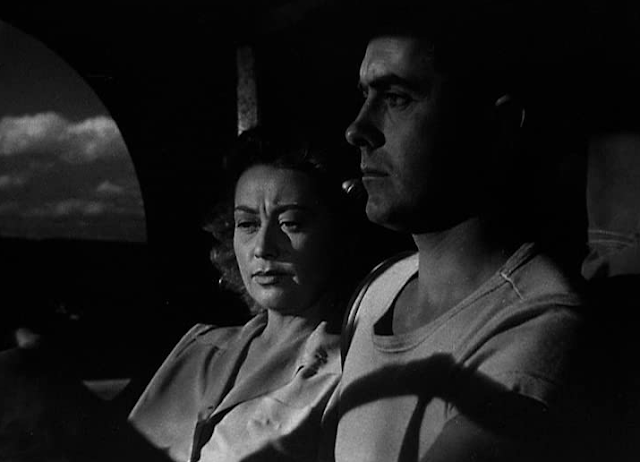
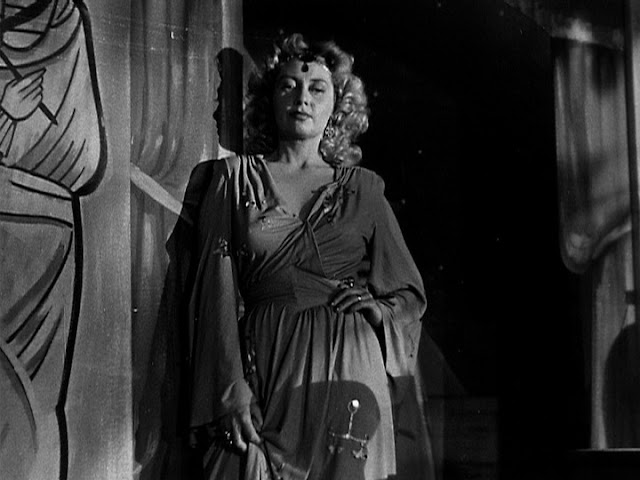
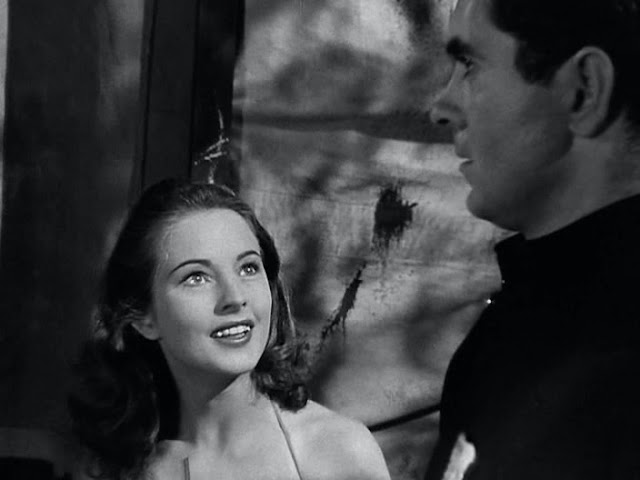
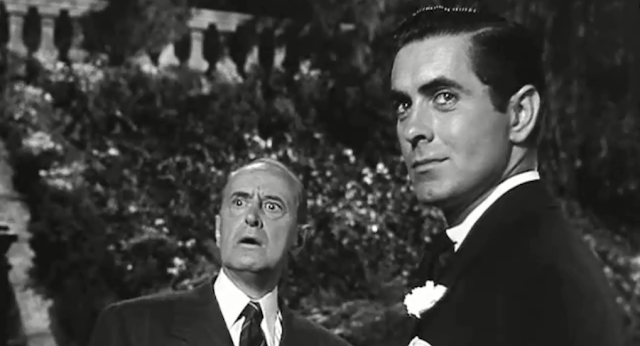
Showing posts with label Edmund Goulding. Show all posts

Thursday, May 4, 2023

Fox’s Faithful Rendition of ‘The Razor’s Edge’ 1946


Gene Tierney & Tyrone Power are the well-cast leads in the 1946 all-star version
of "The Razor's Edge."


The Razor’s Edge from 1946 is remarkably faithful to W. Somerset Maugham’s best-seller, with many key passages of dialogue lifted directly from the book. While movie adaptations still run roughshod over their source novels, back in the golden era, studios were even cavalier with movie versions. The smart movie makers knew to adhere to the story as much as possible, as David Selznick did with Gone with the Wind and Rebecca.

Studio head Darryl F. Zanuck personally oversaw the production of 1946's
"The Razor's Edge."

20th Century Fox head honcho Darryl F. Zanuck was intrigued by the public’s response to W. Somerset Maugham’s spiritual best-seller. The autobiographical novel’s hero is questioning life after WWI and no doubt mirrored many readers’ feelings after WWII. Star Tyrone Power, having just served in the war, felt a similar chord regarding this work.

Lovers Isabel & Larry can't reconcile their opposite worlds in "The Razor's Edge."

Reading the source novel of The Razor’s Edge, one can see how well Fox cast the film. Larry Darrell is described as dark, slim, with incredibly striking dark eyes. Rich girl Isabel, once she loses her youthful baby fat, is described as sleek and sensual with striking hazel eyes, like Gene Tierney. The stylish society snob, Elliot Templeton, is a great role for Clifton Webb. And tragic Sophie, who’s described as attractive but not beautiful, is fiercely played by young Anne Baxter. Her volatile character is played just as she’s described in the novel. Herbert Marshall makes a most urbane author as M. Somerset Maugham. The only dud is John Payne as Isabel’s “regular guy” husband, Gray. While pleasant enough in musicals and comedies, Payne’s out of his league here.

Tyrone Power's Larry Darrell, both fresh out of the service, in "The Razor's Edge."

The Razor’s Edge was filmed April through July of '46. Power went into the production right out of the service and turned 32 during filming on May 5. Tyrone is at the peak of his male beauty, charm and sensitivity, and with the gravity of having just served in the war. While Power’s seeking Larry Darrell is the mouth piece for the film’s spiritual philosophies, Tyrone is much more natural and convincing than when Gary Cooper looked most uncomfortable reciting Ayn Rand’s beliefs in 1949’s The Fountainhead. When one compares Power to MGM’s robotic Robert Taylor, Tyrone had a genuine quality that complemented his talents and great looks. Director Edmund Goulding also guided Ty through another challenging role, in 1947’s Nightmare Alley.

Tyrone Power as Larry Darrell, after he's sought spiritual enlightenment.


Gene Tierney was 25 during filming and Anne Baxter turned 23 just two days after Power's birthday. It is incredible how actresses back then seemed more womanly, while so young. Tierney is incredibly sophisticated as Isabel and Baxter looks older than her years as working class girl Sophie, who hits the skids after suffering great personal tragedy.

Gene Tierney & Anne Baxter as younger Isabel & Sophie, in "The Razor's Edge."

Gene Tierney was not a highly praised actress in her time. And Gene got some sharp critical jabs in The Razor’s Edge, but I think Tierney's terrific as Isabel. And it's a well-rounded character, not one-dimensional and softened. Gene plays the bright and charming, but self-centered rich girl pitch perfect.

Gene Tierney wows as Isabel, on her last night with Larry, in "The Razor's Edge."

Clifton Webb, while he gets to be the acerbic scene-stealer in a number of scenes, per usual, he also gets to be generous and good-humored. Webb’s deathbed scene surprised me in his touching emotionalism, as the social snob who sobbingly acknowledges that he’s been forgotten by his in-crowd. 

Clifton Webb is genuinely moving in his final scene from "The Razor's Edge."

Herbert Marshall is empathetic, but with dry humor, as author Maugham. Marshall had quite an association with screen works of W. Somerset Maugham, appearing in Garbo’s The Painted Veil, with Bette Davis in The Letter, and George Sanders in The Moon and Sixpence.

Herbert Marshall is W. Somerset Maugham, the author of "The Razor's Edge."


The Razor’s Edge is an intelligent, adult adaptation, though tweaked somewhat to be studio movie-friendly.  Zanuck and those involved in the production put great effort into this film. Edmund Goulding, who directed literate fare such as Grand Hotel, does a great job balancing movie style without letting it take over the film’s story. Since the movie was filmed immediately after WWII, location shooting was out of the question. The production offers a convincing depiction of Paris and other locales, without being obvious—like plunking a landscape of the Eiffel Tower outside of Larry’s apartment window!

Anne Baxter is startling as Sophie, who can't overcome tragedy in "The Razor's Edge."

It’s interesting to compare Power in The Razor's Edge with The Sun Also Rises, two literary Darryl F. Zanuck super productions just over a decade apart. But the difference between Power then and later is a shock. It's really a shame that they didn't film Sun right after Razor.

Gene Tierney's Isabel later looks at Anne Baxter's Sophie as an adversary in 1946's
 "The Razor's Edge."

The comparison to The Sun Also Rises is similar in their lead characters. Both male leads have suffered in WWI, leaving them at odds with the tantalizing women they love.

Also, there’s great similarity in characters between The Razor’s Edge and The Great Gatsby: lone wolfs Larry and Jay; society belles Isabel and Daisy; tragic Sophie and Myrtle; Gray as a nicer Tom Buchanan; and Maugham as the outsider observer, like Nick Carraway. They're variations of certain character archetypes. And wouldn't Tyrone and Gene have made a marvelous Jay and Daisy, as well? Finally, Tierney’s Isabel has a bit of Scarlett O’ Hara in her makeup, willing to be tough as a means to an end. And Power’s Larry is a bit of Rhett and Ashley!

Larry’s transformation is very detailed in the book version of The Razor’s Edge, but the movie does a skillful job of skimming his spiritual change. Both the novel and the ’46 adaptation of The Razor’s Edge are very worthwhile, indeed.

Tyrone Power at his peak, as Larry Darrell, in 1946's "The Razor's Edge."

Tyrone Power in his personal favorite role as a carny con man in the cult classic, 1947’s Nightmare Alley. My take here:

https://ricksrealreel.blogspot.com/2022/01/tyrone-powers-personal-best-nightmare.html

Here’s my look at Gene Tierney in her signature role, as 1944’s Laura:

https://ricksrealreel.blogspot.com/2018/04/laura-1944.html

20th Century Fox does justice to W. Somerset Maugham's "The Razor's Edge."


Friday, January 28, 2022

Tyrone Power’s Personal Best: 'Nightmare Alley' 1947

Tyrone Power as Stan Carlisle, charismatic con man, in 1947's "Nightmare Alley."


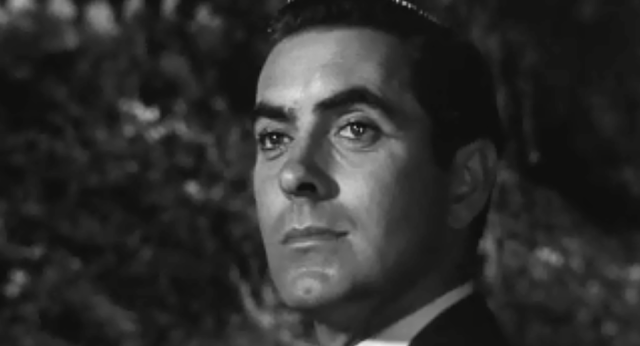
Tyrone Power became an instant star at 20th Century Fox in 1936, in Lloyd’s of London. Ty was their combination of Robert Taylor and Clark Gable. Studio head Darryl F. Zanuck considered him their golden boy, and Ty was still a top star over two decades later, when he died at 44 in 1958. At the peak of his stardom, Tyrone Power pushed to make the bleak film noir, 1947’s Nightmare Alley.

Legend has it that studio head Darryl F. Zanuck placated top star Tyrone Power
in making "Nightmare Alley," but basically dumped it upon release.

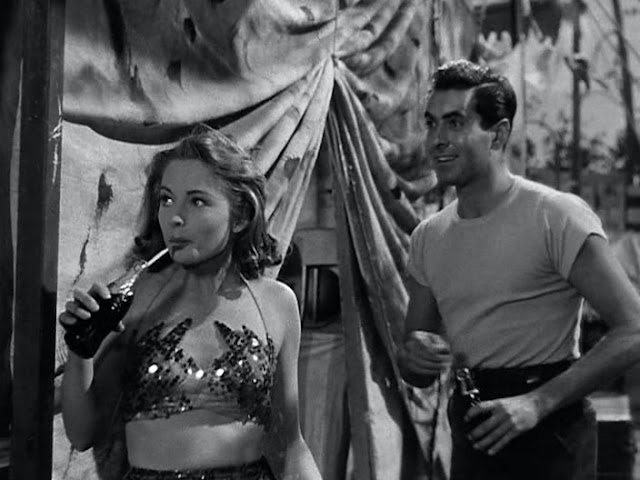
In Nightmare Alley’s opening carny scenes, Tyrone Power is slim and darkly handsome in his white tee shirts, reminiscent of another young hustler on the make, Montgomery Clift in 1951’s A Place in the Sun. Though Power was an intelligent and sensitive actor, I think Tyrone was closer to Rock Hudson in terms of image and talent. Clift played against his looks, until Monty lost them in his car accident; Power played the matinee idol, as Hudson later did.

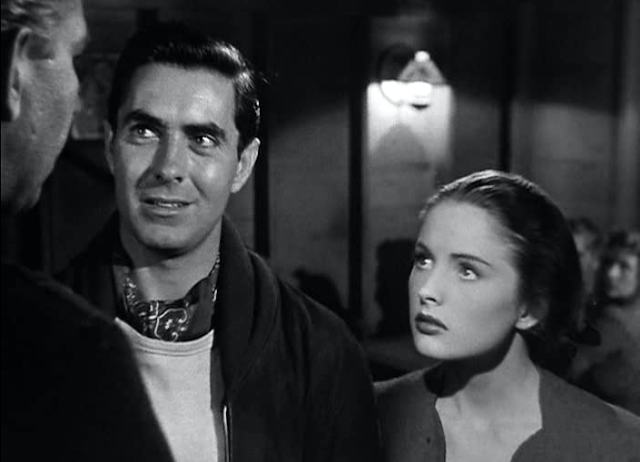
Tyrone Power's Stan Carlisle begins as a carny sucking up to the females in "Nightmare Alley."


Yet, Power and Hudson deserve credit for rising to the occasion in later, better roles. Fox studio head Darryl F. Zanuck initially opposed Tyrone’s plan to make 1947’s Nightmare Alley; nearly two decades later, Rock Hudson was also advised against playing a fatalistic role in 1966’s dark sci-fi drama, Seconds. Interestingly, their characters pretend to be something they’re not. Both films had downbeat endings; neither film was given a great release, despite some strong reviews, and both failed at the box office. Today, they are cult classics.

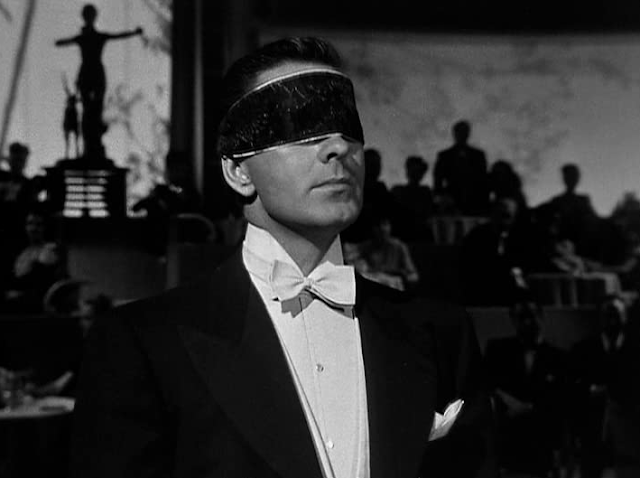
Tyrone Power's "The Great Stanton" has moved up to the nightclub circuit in "Nightmare Alley."

Power’s Stan Carlisle goes from hustling carny to nightclub trickster to faux spiritualist throughout the course of Nightmare Alley. Even Stan senses at some point he's going to trip himself up, yet this slick climber just can't help himself. 

Stan's natural good looks, charm, and gift of gab are both his meal ticket and his downfall. He’s coasted on these gifts, to get him through tough times. Stan has moments of clarity when he admits that he's no good or reveals his true intentions. Then the wall of self-belief goes back up. The moments when Stan truly reveals himself are tantalizing, as they’re like a cloud that passes over his forced sunny vision that what he's doing is just fine. Tyrone Power's charm is just as effortless, yet his subtle glances let you see that Stan’s wheels are turning. Ty’s warm eyes turn hard when things aren't going the hustler’s way, or Stan’s lofty speechifying—are all excellently done. 

A telltale moment when Tyrone Power's con man shares his real ambitions. 
Also, love it when Joan Blondell puts out her cigarette on the vehicle dashboard!


Ironically, director Edmund Goulding had just directed Tyrone Power in 1946’s The Razor's Edge, where Power plays a man genuinely seeking spiritual enlightenment. In Nightmare Alley, he plays a man faking spiritual powers throughout, though he's desperately seeking something. As Tyrone Power's Stan becomes all "spiritual," his proselytizing reminds me of Ronald Reagan's speechifying! 

Love this opening shot of Joan Blondell in "Nightmare Alley": Sexy and world weary.

Joan Blondell gives a strong, natural performance as Zeena, Stan's first mark in the film. Joan was 41 when she made Nightmare Alley and there’s no attempt made to hide the fact. Joan’s slightly blowsy looking broad is contrasted by her good heart and straightforward manner, which makes her very appealing in contrast to Powers’ smoothie Stan. Blondell is effortlessly believable; Nightmare Alley and A Tree Grows in Brooklyn should have led to better roles. Instead, the studio system just considered Blondell over the hill.

Coleen Gray as naive Molly, conflicted by Stan's charm & her own common sense.

Coleen Gray goes above and beyond the typical starlet acting turn. Gray is solid and sincere as Molly, the younger carny girl with whom Stan replaces Zeena. Gray's character is decent, if a bit naive. Despite her strong arguments with Stan, Molly just can't say no to him.

Ian Keith as Pete, Zeena’s alcoholic hubby, is both pathetic and chilling in his personal decline. Taylor Holmes gets to run the gamut as the skeptic millionaire, Ezra Grindle, who eventually falls for the psychic’s scam, leading to a powerful climactic scene. The entire supporting cast is strong, playing their roles with conviction.

Tyrone Power's Stan scams rich skeptic (Taylor Holmes), in "Nightmare Alley."
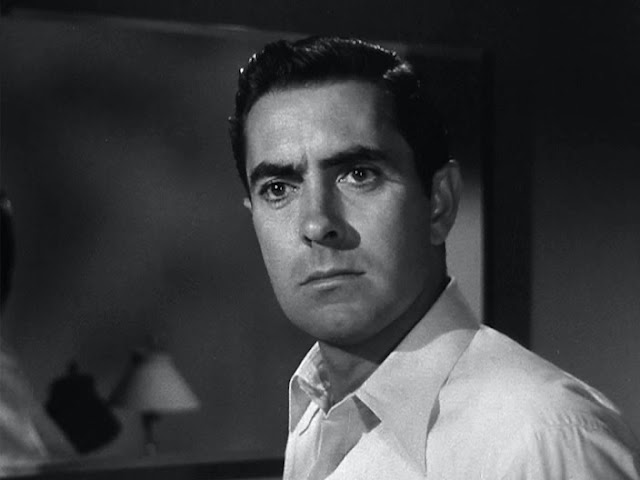
Note tell-tale signs of Power's aging; compare this shot to the telling close-up at the top.

Stan really slips when he gets mixed up with supercillious shrink Lilith Ritter, played with unnerving steel by Helen Walker. The doctor seems interested in him, but Stan keeps her at arm's length, which may be partly the reason she plays him for a fool. Though Stan sees her recording patients’ sessions, he still comes to her couch to unload. That’s hella hubris on his part to think she wouldn't turn the recording table on him, just because he’s good at charming and conning.

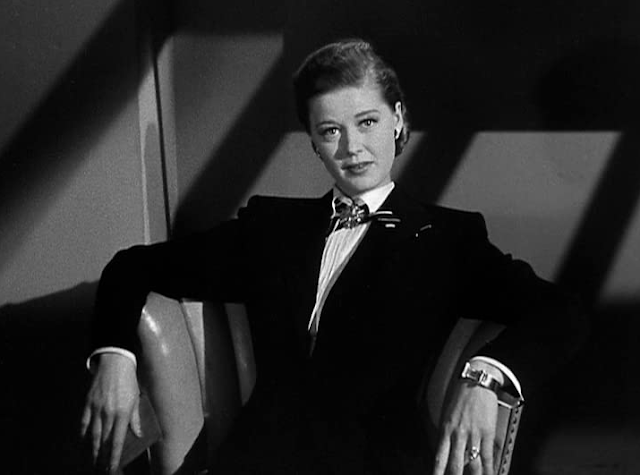
Helen Walker had a distinctive physical presence and should have been a bigger star.
But she was one of those Hollywood starlets who flamed out. Here as the tough shrink.

This is Tyrone Power's vehicle all the way, and he's excellent in his star performance as a charismatic heel. Tyrone was at the peak of his physical beauty here and his Stan looks boyish in the beginning, sophisticated in suits and tuxes in mid-film, and then hard living as his deeds catch up to him by the finale. It makes me think that Tyrone Power might have made a marvelous Dorian Gray.

Some Ty side-eye! Power's Stan assesses his latest jam, in "Nightmare Alley."

Edmund Goulding does a great job directing. The cinematography by Lee Garmes is striking, a beautiful example of a noir nightmare, with its takes on carnival life, city nights, etc. The movie is taut, fast-paced, and adult, in great part due to Jules Furthman’s screenplay. Considering William Lindsay Gresham’s novel is much more explicit, it's amazing what made it to the screen. The ending is a bit of a cop out, but that was imposed on the project by the studio.

One of film's most handsome men, Tyrone Power could have been a perfect Dorian Gray.


I’m not much of film noir fan, with all their improbable coincidences, but Nightmare Alley is a riveting character study of a flawed man going full circle, with only himself to blame for his downward spiral and fate.

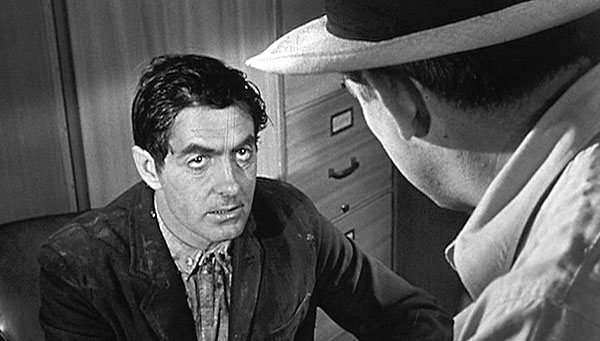
Tyrone Power's Stan at the bitter end of "Nightmare Alley."
Doesn't Ty look like George Clooney on a bender here?

Here’s my look at the other movie where Tyrone Power played a charming con man, 1957’s Witness for the Prosecution:

https://ricksrealreel.blogspot.com/2020/11/witness-for-prosecution-1957.html


All my movie overflow is on my public FB movie page. Check it out & join!  

https://www.facebook.com/groups/178488909366865/


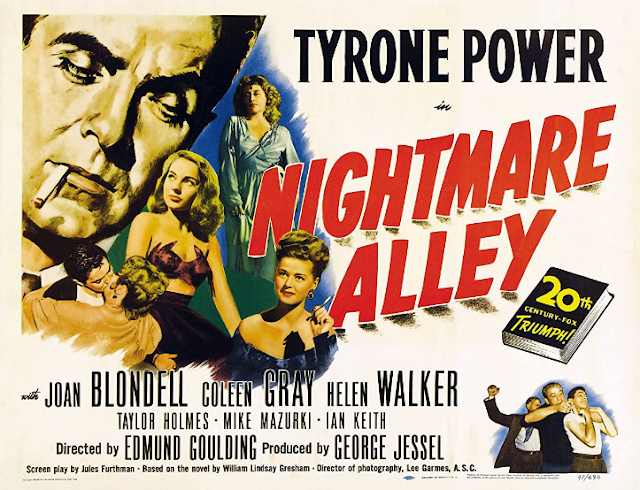
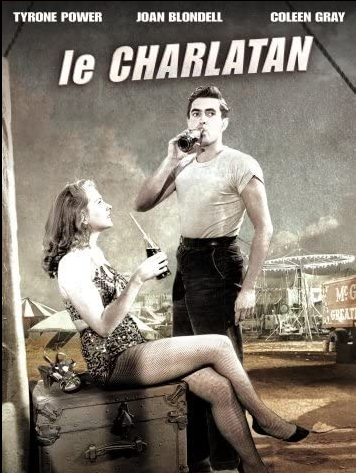
This poster for "Nightmare Alley" is much more to the point!