|
| Celeste Holm & Loretta Young are nuns on a mission in 1949's "Come to the Stable." |
2oth Century Fox's feel-good comedy-drama Come to the Stable makes a perfect
companion piece to star Loretta Young's 1947 Oscar-winning vehicle, The Farmer's Daughter. Young as an indomitable
nun pairs well with Loretta's plucky Swedish maid. Both films are pure
fairy tales, but smartly and sweetly done. Both movies mix humor,
sentiment, and light drama expertly. And Young’s characters achieve great goals,
against all odds.
 |
| Celeste Holm & Loretta Young both have plenty of warmth and charm to portray the nuns who ingratiate others to their cause, in 1949's "Come to the Stable." |
In 1949’s Come to the
Stable, Loretta Young and Celeste Holm play nuns, Sisters Margaret and Scholastica,
respectively. They have arrived from post-war France, where they worked in a hospital.
Young's sister is originally from Chicago and Holm's nun is French. Their dream
is to build a hospital in a small New England town of Bethlehem. They believe
divine providence has brought them, due to seeing the work of a local religious
painter, Miss Potts (Elsa Lanchester). Upon arrival, they share their plan and
ask for shelter. She agrees and so begins the sisters' journey in seeking land
and money to build a local hospital. Along their fundraising adventure, they
meet and win over many colorful characters.
 |
| Elsa Lanchester plays Miss Potts, the local artist who joins the visiting nuns on their arduous journey to build a hospital, in 1949's "Come to the Stable." |
What puts Come to the
Stable over is a well-told story, adapted from Claire Luce Boothe’s tale.
Famed for her acerbic play The Women,
Boothe was a recent convert to Catholicism when she wrote Come to the Stable, inspired by the true story of two nuns who
built an abbey in Bethlehem, Connecticut. The smooth screenplay was written by Oscar
Millard and Sally Benson. Henry Koster, one of Fox's long-time studio
directors, guides what could have been a cutesy or overly sentimental tale,
with a sure touch. The sisters' story is filled with their leaps of faith and
clearing the hurdles every time. Even with occasional setbacks, God has got
their backs! While the coincidences and characters' change of hearts is pure Hollywood
fairy tale, it is done with genuine intelligence and heart. You either suspend disbelief
or avoid such movies. If this type of film is done with smarts and heart, I
have no problem in going along for the movie ride!
 |
| Dooley Wilson as Anthony finds that the nuns portrayed by Celeste Holm & Loretta Young have many talents, in 1949's "Come to the Stable." |
Along with the imaginative storytelling, the stellar cast is
the other major component that causes Come
to the Stable to resonate with viewers. Loretta Young and Celeste Holm were
both Oscar-nominated for their whole-hearted performances. While you might eye
roll at two nuns in makeup, it's pretty subtle for a '40s movie. Young's unyielding
strength as the lead nun comes through—Loretta wasn't nicknamed "The Iron
Butterfly" for nothing. As one of Hollywood's most devout Catholics, this
role was tailor-made for Young. Loretta plays with sincerity and subtle humor.
Sister Margaret makes the most of each possible opportunity in her goal toward
getting a hospital built, and Young conveys that effortlessly. She handles the
serious moments naturally, to great effect. And Loretta has to be one of the
most beautiful women ever to be depicted as a nun. Wearing a habit throughout,
with only light makeup, and beautifully photographed, Young's face, with her
huge expressive eyes, big smile, and bone structure, is a miracle in itself.
 |
| Loretta Young as Sister Margaret in 1949's "Come to the Stable." Aside from Young's warmth and natural charm, I could stare at Loretta's natural beauty all day! |
Celeste Holm as the French nun has droll humor in her line
delivery as the ever-chipper Scholastica. One of her best bits is when she
gives St. Jude coins to the bookies that she and Margaret visit in their
mission in securing the perfect parcel of land. Later, when Scholastica
displays a hidden talent for tennis, it’s one of the light-hearted highlights
of the film. When she loses, despite her prowess, in trying to win funds, Holm's
simple declaration of "I lost" to Young is so touching.
 |
| Celeste Holm's line reading as Sister Scholastica, declaring that she lost the tennis game is so sweet. I noticed that Holm & Young went light on the makeup, except in their big closeups! "Come to the Stable," 1949. |
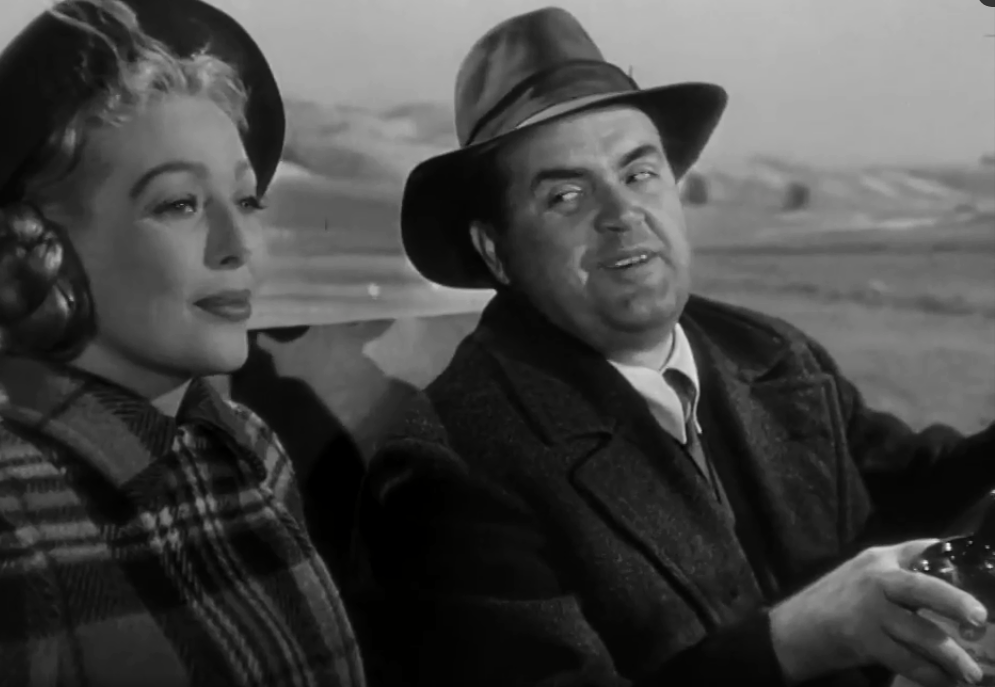
Hugh Marlowe plays a songwriter who lives across from the
nuns’ dream location for their hospital. Marlowe, whose voice was perfect for
radio, never became a top movie leading man. I first watched Hugh as ‘70s teen,
playing patriarch Jim Matthews on the NBC soap, Another World. In his tenure at Fox, Marlowe did appear in some
great movies, such as playwright Lloyd Richards in 1950’s All About Eve, where Holm played his supportive wife, Karen. Here,
as Bob Masen, Marlowe's songwriter is basically a good guy. But he's tested
when Masen finds out the hospital is to be built across the way from his dream
pad. And until he sees the light, Bob is put out and peevish, with an entitled
"not in my back yard" attitude. This is handled in a surprisingly
realistic way. Dooley Wilson, of Casablanca
fame, has a scene-stealing role as Bob's Man Friday, Anthony. Wilson also has
the best line in the movie. When his boss comes back from Hollywood, he asks
about a new nun milling about. Anthony replies, “Don’t know, boss. All the nuns
look alike to me!”
 |
| Hugh Marlowe as the songwriter who's at odds with nuns Celeste Holm & Loretta Young in 1949's "Come to the Stable." Hugh & Celeste later played husband & wife in 1950's classic, "All About Eve." |
Thomas Gomez as the bookie Luigi Rossi, a comic tough guy who
carries a heavy heartache, is marvelous to watch. Regis Toomey as the patient
Monsignor is well-written and played, and not condescending to the nun
characters. Elsa Lanchester gets a chance to shine in a more fully
dimensional version of her quirky screen persona, as the painter who becomes a
champion in the nuns' crusade. As often the case with a cast of classic
Hollywood contract players, everyone stands out right down to the bit players.
Louis Heydt is Jim’s amused musician pal ‘Al Newman,’ an in-joke to this film’s
music composer!
 |
| Thomas Gomez as bookie big dog Luigi Rossi is a standout in a great cast, in 1949's "Come to the Stable." |
The sets and photography of this wintery New England town
are stunning, and the music by Alfred Newman and Mack Gordon are really lovely—all
receiving Oscar nominations in their categories. The spiritual music that
permeates much of the movie is beautiful presented, as well.
 |
| Hugh Marlowe as songwriter Bob Masen sees the light that the nuns' mission for a hospital is more important than his "not in my backyard" entitlement, in 1949's "Come to the Stable." |
Come to the Stable is a top-notch spiritual tale or
fairy tale, take it as you like! The premise that faith—whatever kind you
believe in—can help you achieve your dreams is a worthy premise for a movie.
 |
| The nuns find shelter in Elsa Lanchester's stable turned artist's studio home. I love quaint abodes in old movies like 1949's "Come to the Stable." |
 |
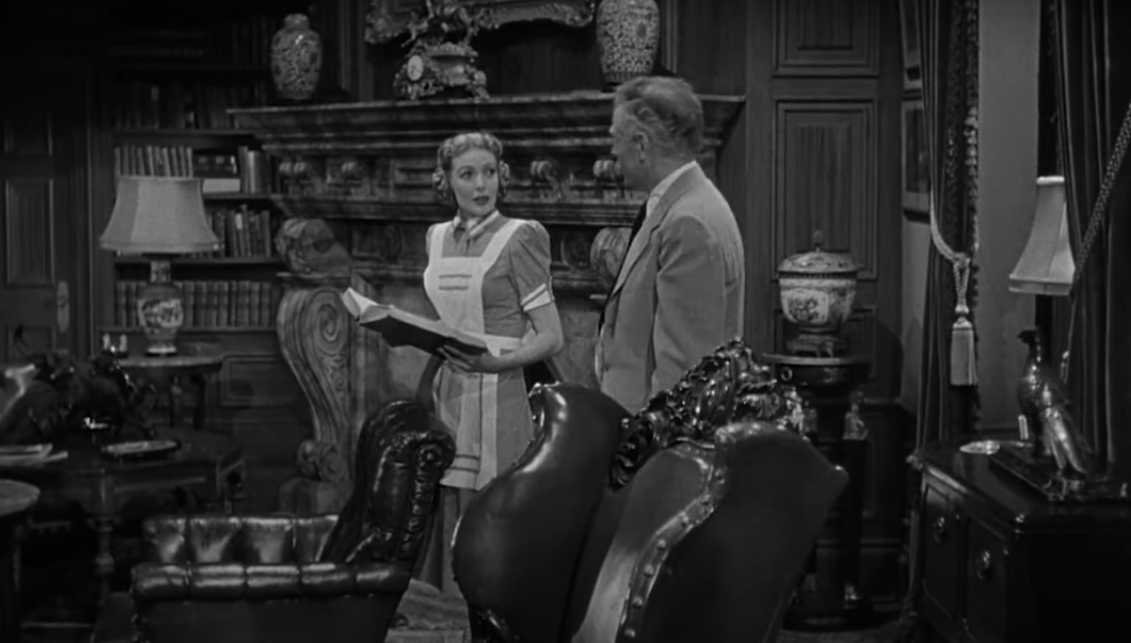
| Loretta Young is "The Farmer's Daughter." |
Here’s my look at The Farmer's Daughter, a Swedish Cinderella story. A surprisingly forward-thinking story as Young goes from farm girl to maid to political candidate. My take on this delightful "Daughter":
https://ricksrealreel.blogspot.com/2023/01/loretta-young-just-fine-as-farmers.html