Showing posts with label Frances Farmer. Show all posts

Tuesday, October 3, 2023

Fright “B” Flick Classic ‘Among the Living’ 1941

Albert Dekker, here as the crazy one of twin brothers, and starlet Susan Hayward,
in 1941's "Among the Living."


A Southern gothic “B” thriller, Paramount’s 1941 Among the Living is taut and tense, with a fascinating cast, for reasons both on-screen and off. This movie reminds me of a cross between Kings Row, the TV version of Peyton Place, and Dark Shadows. 

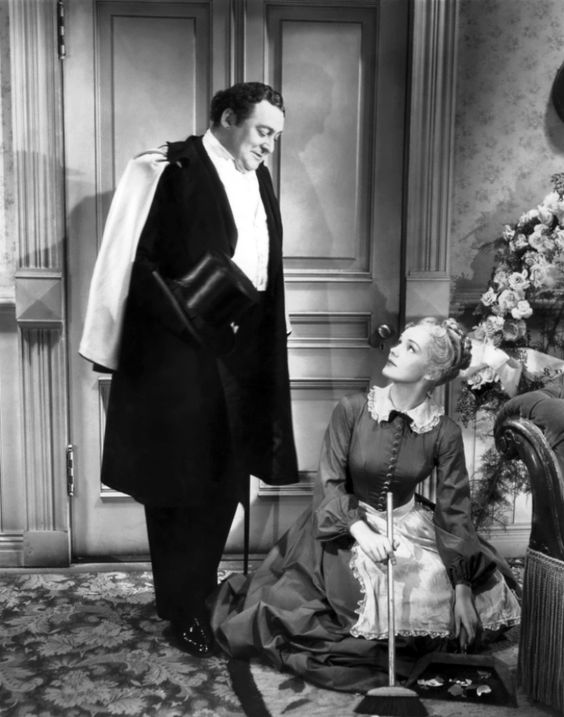
Albert Dekker as twins Paul & John Raden, one good and one bad, natch!
1941's "Among the Living," with Frances Farmer and Susan Hayward.

Stuart Heisler went on to direct gritty little gems like Smash-Up, Storm Warning and The Star, with Susan Hayward, Ginger Rogers, and Bette Davis, respectively. Among the Living was among Heisler’s first directorial efforts after editing over 30 films, dating back to the silent era.

Paramount's 1941 "Among the Living" has gained a cult following over the years,
for it's stylish "B" movie storytelling and the eclectic cast.

Albert Dekker is terrific in a dual role of John and Paul Raden, the former is the brother who comes home for his tycoon/tyrant father's funeral. The latter is a brother thought to be dead, but is deranged and kept prisoner in the decaying family manse. After the funeral, the insane brother escapes his keeper, set off by the thought of his vicious father buried next to his victim mother.

Albert Dekker as normal twin John Raden, with his wife, played by Frances Farmer
in 1941's "Among the Living." Here, they attend his father's funeral.

It's been noted that there is a bit of Frankenstein's monster story regarding insane brother Paul. He was traumatized at a young age by his late hateful, violent father, and now acts out under certain triggers, like a woman’s scream. Others have noted Of Mice and Men's Lenny in Paul’s child-like demeanor. Dekker gives both characters full-blooded portrayals and did not to resort to hamming as the deranged Paul, which makes the performance powerful. Ironically, Dekker played a head doc at a southern sanitarium, urging new hire Montgomery Clift to perform a lobotomy on Elizabeth Taylor’s character in Suddenly, Last Summer, with a huge donation dangled by her auntie, played by Katharine Hepburn. In Among the Living, Harry Carey is the doctor bought off with a new hospital, by the Paul Raden’s father, to fake his son’s death and keep his existence secret.

Albert Dekker as mentally unbalanced Paul Raden, in 1941's "Among the Living."


Off-screen, Dekker had some big ups and downs. He was successful in California politics, though his going up against Joe McCarthy may have slowed down his film career, with “greylisting.” He kept his foot in the door of Broadway to fill in the downtimes. Later, Dekker’s son accidentally shot himself as a teen. Dekker had some issues himself, with a kinky sex life that led him to being found dead of apparent auto asphyxiation. Let's just say what was found wasn't pretty. For more on Albert Dekker: https://en.wikipedia.org/wiki/Albert_Dekker

Frances Farmer as the concerned wife of Albert Dekker's John Raden,
in 1941's "Among the Living."


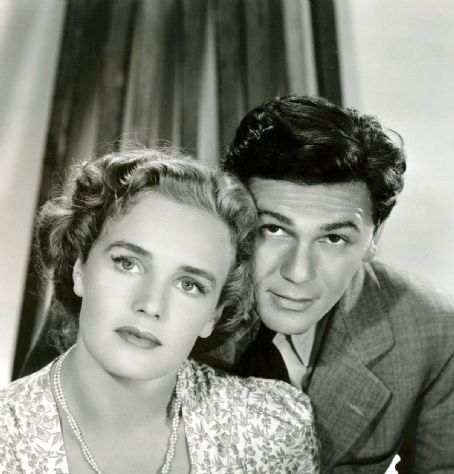
The vagaries of show biz are demonstrated in Among the Living with the two female stars, Frances Farmer and Susan Hayward. Only six years earlier, Frances Farmer was swiftly heralded as the next big thing in Hollywood. She made a commercial hit with Bing Crosby in Rhythm on the Range and a substantial dual role in Come and Get It had her poised for major stardom. But a reputation as "difficult" and Farmer’s increasing emotional problems swiftly reduced her roles to “B's” and less screen time. This was her last film for Paramount and she was fourth billed, with a handful of scenes as the wife of the sane brother. Frances looks lovely as always and is competent in the cardboard role.

Susan Hayward as Millie, small town girl on the make, in 1941's "Among the Living."

Susan Hayward, who had just arrived at Paramount two years prior, was on her way up. She plays Millie, the small town vixen who unknowingly gets mixed up with the insane brother. And while her character is a gold digger, she also seems to be relatable. And Susie plays her part with spark and surely got noticed by the studio and movie fans. Frances was just four years older than Susan and just about finished in Hollywood. Ironically, both women were heavy smokers and died of cancer prematurely, Frances in 1970 and Susan in 1975. Both were 57.

Watch for Jean Phillips, Ginger Rogers one-time stand-in, as the bar girl who runs afoul with Dekker’s deranged brother, Paul. The climax of their scene is vividly suspenseful.

Jean Phillips as an unfortunate victim of Albert Dekker's deranged Paul Raden,
in 1941's "Among the Living."

The action of this movie is very well-staged and that is likely due to Heisler. His scenes of the KKK in action with 1950’s Storm Warning are skillful, too.

If you accept the construct of the story in Among the Living within the “B” movie thriller, it actually goes above and beyond: flesh and blood characters, good acting, underlying class issues, and an atmospheric style that is haunting.

Albert Dekker's Raden brothers, at their mother's grave, in "Among the Living."

Here’s my look at the controversial life of Frances Farmer: https://ricksrealreel.blogspot.com/2018/02/finding-frances-farmer-fact-versus.html

And here’s my take on Susan Hayward, in one of her first substantial roles: https://ricksrealreel.blogspot.com/2020/08/house-of-strangers-1949.html


Saturday, September 12, 2020

‘The Toast of New York’ 1937

For Frances Farmer, this film turned out to be her last chance for movie stardom.


The Toast of New York has a timely topic, The Gilded Age, with its money men and their ill-gotten millions. While the real Jim Fisk pulled off some shady business shenanigans, I'm sure they weren't the slapstick moves as played here.
Edward Arnold as Jim Fisk & Cary Grant as "Nick Boyd," a composite character, team up.

The fault of this movie lies not in its stars but in the lies of a cartoonish script. At times, Edward Arnold’s Jim Fisk comes off like a portly Wile E. Coyote in the way he carries out his financial schemes. Movies back then played fast and loose with the facts. But I’ve never seen a film that begins with a disclaimer that only some of the names are true and the rest is fiction!
Edward Arnold played many powerful men in his career as star character actor.

The true interest of The Toast of New York is the three stars, at various stages of their careers. Edward Arnold was then a star character actor, but I doubt he was paid 10,000 dollars a week to make Toast, which has been repeated on the Internet. That’s what Clark Gable made at his career peak, for Gone with the Wind!
It’s appropriate that Edward Arnold played financial finagler Jim Fiske, as he would play another big spender, Diamond Jim Brady, twice. Then too, his character from Come and Get It was cut from the same larger than life cloth. Arnold often played powerful authority figures where he's all hearty exterior charm, but with a steely glint in his eyes.
A toast to the talent, intelligence, spirit, and beauty of Frances Farmer.

As for Frances Farmer, this was her last shot at big screen stardom. Unfortunately, as Josie Mansfield, all the interesting facets have been softened from this scheming beauty.  BTW, the real life Josie looked like John Belushi’s imitation of Elizabeth Taylor Warner while eating fried chicken.
What’s left is a typical ingĂ©nue who is unfairly thought of as a gold digger. This whitewash bothered Farmer, but she had no say. Frances does her best, looks gorgeous, and sings prettily, but that’s about it. The real life Josie and “Nick” attempted to blackmail Jim with his letters, who then sued them. And it was Nick who shot Jim, not some disgruntled man from an angry mob.
Frances Farmer as stage star Josie Mansfield.

As with “Aura Lee” in Come and Get It, Frances did her own singing again, in The Toast of New York. “The First Time I Saw You” is made intriguing by Farmer’s husky voice. Farmer always looked china doll lovely in period costumes. As stage star Josie Mansfield, she also gets to perform a montage of the deadly sins, in a variety of exotic getups. Yet, aside from a few spirited remarks that indicate her intelligence, she often just worriedly exclaims, "Oh, Jim!"
Edward Arnold as Jim Fisk meets future obsession, Frances Farmer's Josie Mansfield.

Arnold and Farmer basically repeat their roles from Come and Get It. Arnold plays grasping self-made men that want to possess Farmer’s unattainable women in both. Grant basically plays the Joel McCrea role here, as the young upstart who comes in between them.
Cary Grant, on the cusp of stardom.

Cary Grant appears here in one of his few period films, on the very brink of stardom. After working his way up for five years, 1937 would be Cary’s breakout year, with Topper and The Awful Truth. While Grant is solid as the one outright fictionalized character of the trio, “Nick Boyd,” Cary doesn’t rise above the stock character. That’s because, like Farmer’s Josie, Cary’s character has been cleaned up to the point of dullness. Boyd is a composite of Jay Gould, who teamed up with Fisk for a number of business schemes, and Edward ‘Ned’ Stokes, a later business associate who fell in love with Josie and then shot Fisk.
This opening disclaimer that only the names and general historical background are real!

The Toast of New York is lovely to look at and worth watching for the three stars. If you’re watching for any facts about these real life characters or even a deep drama, this movie doesn’t rate raising a glass.
FYI: I put all the movie overflow on my public FB  movie page. 
The real triangle that was 'Toast': Jim Fisk, Josie Mansfield, and 'Ned' Stokes


Friday, July 31, 2020

Frances Farmer Still Fascinates

Frances Farmer, whose myth and reality still compete 50 years after her death.


When I watch the real Frances Farmer on 1958’s This is Your Life versus Jessica Lange as a lobotomy-dazed Frances from 1982, it sums up for me the dichotomy between the real woman and the misery myth that’s been sold for five decades. Just type ‘Frances Farmer’ in a You Tube search and see what comes up. At least half the results are the most sensationalistic clips from the ’82 film bio or “tributes” that focus on the negative facts and fictions of Farmer’s life.
The infamous episode of 'This is Your Life.' At least Frances Farmer showed class & dignity!

Frances’ appearance on This is Your Life is composed, considering all that she had gone through, and then obliged to relive it in front of a TV audience. Frances Farmer comes across as articulate, thoughtful, and responsive—not the spooky zombie Jessica Lange portrays her as in the final scenes of Frances. And considering her rough ride in life thus far, Farmer looked lovely at 45.
Jessica Lange as a ghostly 'Frances,' after appearing on 'This Is Your Life.'

Frances Farmer died of esophageal cancer at age 57 in 1970. From then through 1982, Farmer’s life was the subject of a memoir that was completed by a friend, a later biography that made even more sensational claims, and finally, the nearly-total fiction film bio that launched Jessica Lange as a dramatic actress. The cherry on top of this showbiz soap opera sundae was when another misunderstood Washington-born artist, Kurt Cobain wrote the myth-inspired song, “Frances Farmer Will Have Her Revenge on Seattle.” An eerie coincidence is that the Frances film bio came out a year after another movie myth buster, Mommie Dearest—a film that also buried and cemented a movie star image for decades to come. And Joan Crawford’s “horror” myth also inspired a rock tune, Blue Oyster Cult’s “Joan Crawford Has Risen from the Grave.”
Paramount found Frances Farmer's "difficult" personality problematic.

For me, the big question regarding the career of Frances Farmer is this: Did she get written off merely because she was “difficult?” I’m not talking about when she hit bottom in the early ‘40s, I’m referring to the late’30s, after Come and Get It. Bette Davis and Katharine Hepburn faced similar battles with their respective studios—pushing back on foisted upon images, fighting for good roles and fending off bad ones, resisting inane publicity stunts, etc. During that same time, Davis sued Warner Brothers and Hepburn, labeled box office poison, fought to go back to Broadway, too. Yet, Bette and Kate persevered, and eventually prevailed. Frances often fought these battles, but didn’t emerge the ultimate victor because she didn’t have the stability or steel-willed self-confidence of Davis and Hepburn.
Frances Farmer, whose great beauty shown more when Paramount's
hair & makeup department work was subtle and not slathered on.

Frances Farmer certainly had all the gifts to be a great movie star. Frances had the similar beauty of fellow Paramount star Carole Lombard, the husky voice of a Dietrich, talent and intensity, and she could sing, to boot. And Farmer was very serious about her career as an actress. So what if she was “difficult” over her career and image? That didn’t stop a lot of other actors who went on to great careers. It seems strange to me one aspect of a Farmer negated all the good things about her. Perhaps the problem was like this quote made about Elizabeth Taylor, in terms of ET surviving stardom: A fighter when she had to be, a diplomat when it paid to be. With Farmer, it was certainly the latter that was problematic.
Frances Farmer in college, looked very contemporary & natural.

I remember a Hollywood anecdote, when news of Marilyn Monroe’s firing and subsequent death rocked the movie biz. If memory serves, it was Walter Wanger who recalled at Paramount, when B.P. Schulberg had fired fragile Clara Bow from a film, and never forgot studio boss Adolph Zukor’s reaction: “Our job is to make stars, not fire them.”
This led me to do some research on Paramount and Clara Bow. Paramount had just gone through great turmoil with Bow, one of their greatest female stars. Despite her huge audience, Clara’s emotional stability, dramas, and scandals came at a time when Paramount itself was in dire financial straits. The studio survived, Clara was fired and soon retired, but I wonder if studio head Zukor and the ‘suits’ just didn’t want to go through all that drama again with Frances Farmer.
Frances Farmer became a hit in her second movie, as leading lady
to Bing Crosby, in 1936's 'Rhythm on the Range.'

What’s interesting is that Farmer scored with flying colors as a lovely leading lady to Bing Crosby in Rhythm on the Range. Then Frances made a strong dramatic impression with Edna Ferber’s Come and Get It, in a dual role, as the tart with a heart mother and the good daughter. Howard Hawks adored working with Frances, but left the film in a dispute with Sam Goldwyn, and was replaced by William Wyler. Both were great directors, but whose styles were like night and day. Hawks worked fast and had a loose improvisational style, a bit like the later Robert Altman. Wyler on the other hand was painstaking and meticulous, like George Stevens. Willie was also inarticulate if he didn’t get what he wanted, calling for dozens of takes, to the frustration of his actors. Frances clashed with him, but so what? He wasn’t a Paramount director.
Frances in her breakout dual role, in 'Come and Get It.' Here she is, as the barroom mama.
And Farmer later, as the good daughter in 'Come and Get It,' with Joel McCrea.


With Cary Grant in 1937's 'The Toast of New York.'

After The Toast of New York with Cary Grant and Edward Arnold, why was Frances stuck in so many junky genre pictures? Some folks have pointed to the disappointment of costly Toast for Farmer’s career stalling. I don’t buy it, since co-star Grant had been kicking around in movies for five years, yet hadn’t broken out as a star, and nobody held it against him. Why didn’t Frances get to work with Paramount’s Mitchell Leisen or Preston Sturges or get scripts by Billy Wilder, like later Paramount girls Paulette Goddard and Veronica Lake? Both women had their charms and they had to do junk, too. But Paulette and Veronica got far better star-making material, and even together, they didn’t have half the star potential that Frances possessed.
With Fred MacMurray in 1937's 'Exclusive.'

Ironically, Frances and Veronica had very similar career trajectories. Though Veronica was a decade younger, she swiftly took off as Frances did, with Lake barely past 20, as well. Like Frances, initial solid film work, Lake got stuck in genre garbage, and in less than a decade, her career was quickly over. Veronica, too, experienced pretty messy emotional ups and downs, and a drinking problem. Farmer died in ’70 at 56 and Lake passed at 50 in ’73.
With Tyrone Power in 1942's 'Son of Fury.'
This was Frances Farmer's last major motion picture.

A book could be written about the “what ifs” of the life and career of Frances Farmer. What if Frances had the wherewithal and opportunity to freelance like Barbara Stanwyck did? Barbara signed short-term contracts at Paramount as well as Warner Brothers. Yet, Stanwyck also did much of her best work freelancing. Carole Lombard left Paramount in 1937 to pursue dramatic roles, so there seemed to be paucity in the dramatic department at Paramount.
I can think of many movies that Frances Farmer might have given fine performances in. Disclaimer: the movies and roles I’m about to mention is not a knock on the actors who actually played the roles, but offering as examples of what Frances was capable was as an actress. Don’t light up your Internet torches, please!
Frances Farmer with Luther Adler in 'Golden Boy.'
WHY didn't Paramount option this property for their star?
It would have been good business sense and created good will with their star.

For instance, after Frances fought to go back to the stage and appear in Golden Boy, which was a hit and she received good reviews. Why didn’t Paramount buy the property for her? Imagine if Zukor had bought the property and borrowed new WB star John Garfield, in the lead role he longed to play? Instead they got stuck doing Flowing Gold a few years later at WB.
John Garfield, who amazingly lost the role of 'Golden Boy' to Luther Adler,
would have been perfect with Farmer in a screen version.
Instead they got teamed in 'Flowing Gold!'

I think Frances might have played a number of Barbara Stanwyck roles quite well, such as Double Indemnity, or The Strange Love of Martha Ivers. Farmer, with her husky voice, would have made a fine film noir fatale, such as Joan Bennett’s roles in The Woman in the Window or Scarlet Street. How about Frances as a '40s Hitchcock blonde? Or how about Farmer in some of Dorothy McGuire’s more serious roles, like A Tree Grows in Brooklyn or Gentleman’s Agreement? Frances Farmer was just three years older than McGuire and had that intelligence and strength that Dorothy possessed.
Though Frances Farmer was heralded as major talent by the likes of
  Cecil B. DeMille and Howard Hawks, Paramount shackled Frances
to either glorified B-movies or merely decorative roles.

I can see Frances in the career women type roles that Rosalind Russell, Joan Crawford, and Katharine Hepburn played. Frances also had the rare quality of being physically beautiful but also intelligent and would have been quite believable as a professional or an artist type. And as Frances reached her 40’s in the ‘50s, Farmer could have played many roles in Tennessee Williams and William Inge film adaptations. And Frances, who preferred realism over glamour, could have fared quite well in the ‘60s and ‘70s as a character actress. I can totally see Frances working with Robert Altman, or like Kate Hepburn, going back to the stage while holding out for the occasionally good older woman roles in post-studio era Hollywood.
I was struck by this 1958 TV publicity photo of Frances Farmer. Despite decades
of hardships, 20 years later, Frances' strong beauty was still with her at 45.

As it stands, there are glimpses of what might have been in the brief list of Frances Farmer movies.  Frances is animated in Rhythm on the Range, versatile in Come and Get It, strong-willed in Flowing Gold, and gorgeous in The Toast of New York and Son of Fury. There are others, too, like Exclusive and Ebb Tide, and glimmers amidst the genre junk.
It's startling to see Frances, '40s-style, as most of her work was from the '30s.
What a great film noir fatale Farmer would have made.

Frances Farmer is almost always worth watching. Even in certain studio stills, Farmer’s eyes are alive with intelligence and intensity. As a person, like Monroe, Garland, and Clift, Frances Farmer struggled with emotional and substance issues in an era not yet empathetic or equipped to deal with them. As an actor, the great tragedy of Frances Farmer was that she was a modern star, trapped in Hollywood’s “golden” era.
The myths and what ifs of the life of Frances Farmer still intrigue movie lovers today.
FYI: I put all the movie overflow on my public FB  movie page. 


Thursday, February 15, 2018

Finding Frances Farmer: Fact VS Fiction

A natural beauty, Frances Farmer in a photo by the great Edward Steichen.

There are books, films, and even songs about actress Frances Farmer—always focusing on the most lurid legends of her life. About the most mind-blowing myths: Did you know there’s never been proof that Farmer was given a lobotomy during her institutionalization? Or never proven that Frances was raped by male orderlies and marauding soldiers? Or that there is proof Lillian Farmer was not a monstrous stage mother who had her daughter locked away for rejecting a movie comeback? Yet, this and much more, is accepted as fact by many people who think they know Frances’ story. And I was one of them.

Frances Farmer got her break in her first year in films, a dual role in '36's 'Come and Get It.'

I was a ‘70s teen who obsessed over old-time movie stars like Frances Farmer, while other kids were mega fans of Peter Frampton and Farrah Fawcett. I watched with morbid fascination when Detroit TV 50 played a few of Farmer’s films on Bill Kennedy at the Movies. The golden girl onscreen was impossible to reconcile with the off-screen Frances Farmer, whose career ended after a public breakdown, and who then spent nearly a decade in mental institutions.

Farmer & Bing Crosby: 'Rhythm on the Range.'
Frances Farmer became a popular starlet right from her 1936 start in films. Her third movie that year, Rhythm on the Range, opposite Bing Crosby, was a hit. Frances also starred in ’36 with Joel McCrea and Edward Arnold, in Come and Get It, with a showy dual role for Farmer as mother and daughter. Two of Hollywood’s leading alpha male directors, Cecil B. DeMille and Howard Hawks, publicly praised her star potential. Farmer went on to star opposite Ray Milland, Cary Grant, John Garfield, and Tyrone Power. Frances was lovely in the patrician way that movie makers then worshiped. She also radiated intelligence, intensity, authority, and possessed a strong, rather deep voice. Farmer should have been a shoo-in for major stardom.

However, Frances preferred the stage and seemingly disdained the conventions of movie making. Unlike fellow mavericks Katharine Hepburn and Bette Davis, Farmer’s fussing didn’t lead to better roles. All I can figure in reviewing her career is that Frances Farmer played the Hollywood fame game badly, which ended in disaster instead of diva-dom.
Frances with first husband Leif Ericson, a later star in 'High Chaparral.'

When I watched Bill Kennedy’s show, he read juicy excerpts from Frances Farmer’s posthumous memoir, Will There Really Be a Morning? Farmer had died in 1970 of cancer at age 56, and her story was finished by friend and companion, Jean Radcliffe. I ordered Farmer’s autobiography from my small town Upper MI bookstore and devoured The Snake Pit-like story. In 1978, Seattle film critic William Arnold wrote an even more bizarre version of Farmer’s life, Shadowland. I snapped that one up, too. Arnold wrote a damning story of her time in Washington’s state hospital, with tales of neighboring soldiers’ gang rapes, and the revelation that Farmer was given a transorbital lobotomy. A few years later, Jessica Lange played Frances Farmer in 1982’s Frances, cementing these sensational stories about the star in the eyes of the public forever, much like Mommie Dearest and Joan Crawford.
Frances Farmer with Ray Milland in 1937's 'Ebb Tide.'

Even at the time of Frances’ making, both books’ authenticity was questioned. Rumor had it that to help sell the near-forgotten Farmer’s story, Jean Radcliffe had heavily embellished Will There Really Be a Morning? And when Mel Brooks’ production company scooped Farmer’s story for a film, Shadowland author Arnold admitted in court that he made up the book’s most controversial claims. In recent years, both books have been essentially discredited as heavily fictionalized.

After Lange’s film debut in the lambasted ’76 King Kong remake, Jessica was striving to be taken seriously as an actress. Lange had a fair resemblance to Farmer, received mostly positive personal notices, and got her first Best Actress Oscar nomination. However, Frances received mixed-to-poor reviews for its rambling storytelling, fictionalized story, and bland male lead, Sam Shepard. Frances was not a financial success, either.


Jessica Lange as Frances Farmer in 1982's 'Frances.' 
Clint Eastwood offered his take on Jessica Lange as Frances Farmer: “The worst piece of ham acting I’ve seen in my life. I just see technical bullshit when I watch an actress like her.” Wonder what Clint thought of Jessica as Joan Crawford!

I was excited to see Frances, but was disappointed by the reviews and that the movie never made it to Traverse City, Michigan, where I lived as an adult. Ironically, Frances Farmer had performed at Traverse’s Cherry County Playhouse in the play, The Chalk Garden, back in the 1960s.
Famer's memoir, completed by a 'friend.'

When Frances was released, fellow Pacific Northwester Jeffery Michael Kauffman saw a double feature of the Lange film and Farmer’s Come and Get It. Kauffman was instantly intrigued by Frances Farmer. The writer/musician set off on a 20 year journey, first exploring her controversial life, and then setting the record straight on her. Kauffman befriended the Farmer family, got access to her personal and medical documents, tapes from late-life friends who had helped the star with her memoir, and much more. Kauffman deconstructs both Farmer’s memoir and Arnold’s Shadowland, exposing the inaccuracies in both, especially the obvious errors and wild accusations of Arnold’s book. Kauffman’s research on Farmer contradicts the common myths about the star. Despite his extensive ties and research regarding Farmer, Kauffman has never written his own Farmer book—the information is on his website for free. How admirable that he chose not to profit off Frances Farmer.


Here are Kauffman’s findings on Farmer:
And here is Kauffman, writing about how he first became fascinated by Frances: http://jeffreymichaelkauffman.com/the-frances-labyrinth/

This later bio was riddled with errors
and sensational claims.

Frances and Frances Farmer eventually faded from the forefront of my mind.  End of story, right?
I came across Frances recently and finally watched the film in January of 2018. My reaction? The critics were right. The highlight of Frances is the phenomenal pairing of Jessica Lange, coming into her own as Farmer, and a comeback by legendary method actress Kim Stanley, as her formidable mother, Lillian. Otherwise, the movie is wildly uneven in its pace and tone, and worthless as a biography. Also, the meandering second half causes the movie to run into overtime, at a whopping two hours and twenty minutes.

It’s fascinating that Frances came out a year after Mommie Dearest, based on another controversial life story of a Hollywood star. Frances seems diffused and drawn out, while Mommie Dearest feels like a frantic ‘sizzle reel’ of Joan Crawford’s greatest hits in misbehavior. However, both only offer the bare bones of the actual stars’ lives, with plenty of fictionalized soap opera or questionable ‘facts’ as filler. While not as cartoon-ish as the Crawford rendition, Frances’ stock clichĂ©s raises more red flags than it answers questions.
Frances Farmer & John Garfield got screwed over by the Group Theatre's production of 'Golden Boy.' 
She later lost her role to a rich actress, & they reneged on giving John the title role.

Unlike Mommie Dearest, with its composites or caricatures of real people, Frances features a fictional studio head, director, and worst of all, a life-long knight in shining armor for Farmer. The film’s doctors, lawyers, and studio figures are all villainous cartoon characters eager to take Frances down. Frances’ fictionalized version of husband Leif Ericson leaves over her affair with the totally fictitious Harry York. Playwright Clifford Odets, Farmer’s married lover, gets the blame for throwing Frances in an emotional tailspin, though their affair ended five years before her breakdown. Frances’ dramatic structure is a phony Hollywood house of cards.

Director Graeme Clifford said on the 2002 DVD commentary of Frances: “We didn’t want to nickel and dime people to death with facts.” Why, Ryan Murphy couldn’t have said it better! Recently, Murphy star Ricky Martin defended their TV series about the Versace murder, citing the show as “a painting, not a photograph.” This disingenuous Hollywood attitude is why I’ve given up on showbiz film bios. The recent Bette/Joan fan fiction that was Feud finished off any curiosity I have for seeing Hollywood history recreated—or more accurately, re-imagined.
Shepard's 'Harry York' takes Frances from the nuthouse to a roadhouse!

My biggest problem with Frances is Sam Shepard as activist/journalist “Harry York.” Shepard’s folksy, basic narration underlines the movie’s absurd storyline. And for a made-up character, next to Lange, Shepard has the movie’s biggest part! Harry is literally Johnny-on-the-spot for every one of Farmer’s crisis moments. At the film’s start, both rebels show up in movie newsreels back to back, for their activist antics. It doesn’t matter whether Farmer’s embroiled with movie moguls, lying theater types, a monster mama, or mental hospital bureaucrats—Harry is there. By the end of the movie, it feels like a running gag. After watching Frances humiliated on TV’s This is Your Life post-psychiatric hospital, Harry runs down to the TV studio to see her one last time. How did he know which studio Frances was at? Or whether the show was live or taped? The dramatic gesture is utterly ridiculous. At the movie’s finish, a post script appears that Frances Farmer died alone (not true) and that Frances and Harry never saw each other again. Now, that is true—because Harry didn’t exist! Shepard as Harry is onscreen strictly to provide Frances a love interest (well, at least Jessica got one in real life with Sam!) and to soften Farmer’s sad journey.
Frances plays Farmer as the noble victim, fighting her hypocritical hometown, phony Hollywood and Broadway, and dysfunctional family battles. All these situations are portrayed in clichéd ways that feel rote. The film never explores whether Farmer actually had psychological issues or if she was just sensitive and high-strung.

Lange & Kim Stanley in 'Frances,' 
whose performances are the film's greatest asset.

The production side of Frances provides a more convincing scene than the screenplay, through the atmospheric cinematography, set design, and John Barry score. Ultimately, the two female leads, Lange and Stanley, are who truly make Frances worth watching.  Unfortunately, their scenes hinge on the long-running myth that Lillian Farmer was determined to get Frances back into films, whereas she wanted to retire from the screen. Lillian decided her daughter must be crazy to give up stardom. Kauffman cites various interview quotes where Lillian Farmer and family demure as to whether Frances would ever be fit to resume her career. The one person quoted as expressing interest in getting back into film was Frances herself.
Frances Farmer with family and then-husband Leif Ericson. 
Contrary to myth, they didn't desert her when she broke down.

Contrary to the common story, Frances’ mother didn’t have her locked up as revenge. Frances went through a cycle of various institutions, homecomings, breakdowns or running away, before ending up at Washington’s Western State Hospital. Farmer’s parents and family visited her weekly. Also, ex-husband Leif Ericson kept in touch with Farmer and her family, and even appeared on Farmer’s movie hosting show in the 1960s.
Frances Farmer was a popular movie host and summer stock actress in the '60s,
making the claim that she was given a lobotomy highly unlikely.

It’s one thing to condense, recreate, and create composites in the name of dramatic license or coherent storytelling. Knowingly dramatizing a lie for entertainment or dramatic value is still a lie. Frances Farmer, the once-forgotten starlet is now one of Hollywood’s legendary cautionary tales. To heap further sleazy untruths upon the memory of Frances, of all people, is especially sad. It’s like the creeps who crawl out of the woodwork every few years with a “shocking” new book about Marilyn Monroe.

Frances Farmer at CBS, for 'The Ed Sullivan' show.
Some people feed on the misery myth of certain stars. They seem to get off on the sensationalized version of Frances Farmer, gone crazy, given shock treatment and a lobotomy. The same is true of movie “fans” who want to think Joan Crawford was a drunken, crazed shrew 24/7, or wallow in the Judy Garland “tragedy,” or that miserable Marilyn was murdered by the mob. I recall watching Phil Donahue’s show, when The National Enquirer’s editor, Mike Walker, was the guest. Phil asked him why the public reads scandal rags like the Enquirer. Walker’s answer was that people like to read that the rich and famous are unhappy, despite fame and fortune.

As I’ve grown older, I have learned that the truth usually falls in the middle, people deserve empathy, and that movie stars are not gods and goddesses, but all too human, too. And I think Frances Farmer deserves to be remembered for who she actually was.
Frances Farmer in 'Come and Get It,' before stardom slipped through her hands.
FYI: I put all the movie overflow on my public FB  movie page.