Showing posts with label Warner Brothers. Show all posts

Thursday, July 18, 2024

Ann Sheridan: New Biography Looks at Hollywood’s Classic Era Star

Annie gets her due--at last!--with the first Ann Sheridan biography.


It's noteworthy that Ann Sheridan, from Hollywood’s golden era, is getting her first biography some 57 years after her death in 1967. How fortunate that Sheridan has admirer Michael D. Rinella as her biographer. His book is a meticulous, empathetic, and honest account of the film actress. Ann Sheridan: The Life and Career of Hollywood’s Oomph Girl by Michael D. Rinella is out now.

Ann Sheridan in her Warner Brothers heyday.

Other ‘40s film sex symbols have gotten their star bios: Grable, Turner, Hayworth, etc. The big difference is that Ann Sheridan was a popular star in her time, but Ann’s career soon evaporated after she left Warner Brothers. While her personal life was lively, it was not as legendary as those of Crawford, Turner, or Hayworth. The most significant reason she faded in the public's mind was that she died at 51 in 1967. Biographer Rinella remedies all this with a book that thoroughly and engagingly shows where Clara Lou Sheridan came from (Texas) and her rise to Hollywood stardom at Warner Brothers.

One of Ann Sheridan's first good roles was in 1938's "Angels with Dirty Faces,"
with James Cagney and Pat O'Brien.

Thanks to the enduring magic of classic films and later TCM, Ann Sheridan began getting her due as a versatile, charismatic performer: Ann had a flair for comedy, was natural as a dramatic actress, and could also sing. She was also a natural redhead who looked like a cross between contemporaries Rita Hayworth and Lucille Ball. Sheridan’s natural pizzazz inspired WB’s publicity to dub her "The Oomph Girl."

Ann Sheridan mixed glamour with tongue in cheek humor.

What's beneficial to the reader is that author Rinella uses many quotes from interviews by Sheridan herself. Lucky for Rinella that Sheridan was plain-spoken, especially for the era. Sheridan reminded me of the late great Carole Lombard, also very candid. Ann was self-aware, with a self-deprecating sense of humor. 

Ann Sheridan finally got a lead where she could shine,
in 1940's "It All Came True."

Some stars are born with their first Hollywood film, like Greer Garson, Katharine Hepburn, or Lauren Bacall. For others, the ascent is arduous, as with Marilyn Monroe, Betty Grable, or Ann Sheridan. It doesn't always have to do with talent, but with studio promotion or just plain luck. It helps to have a studio head, producer, or director in an actor’s corner. With certain starlets, even if the public showed interest, sometimes the moguls or execs still looked down on them. L.B. Mayer much preferred his great ladies like Garbo, Shearer, etc. over brassy Jean Harlow, who Sheridan was compared to later. Monroe, Grable, and Sheridan were starlets for a long spell, before going on to another studio and achieving stardom.

Once Betty Grable hit at 20th Century Fox, she got the star treatment. Monroe and Sheridan were underpaid despite their popularity—Monroe with her second try at Fox, Sheridan from Paramount to WB. Both legally fought their respective moguls, Darryl Zanuck and Jack Warner. The difference was Sheridan had self-confidence, was pragmatic, and well-liked by studio folk; Monroe was often treated like the red-headed step-child at Fox, and it got under her skin.

This time, Ann Sheridan was front and center with Cagney & O'Brien
in 1940's "Torrid Zone."

Rinella does a fine job offering background info on significant people in Sheridan's life. It helps clarify Annie’s life and career decisions. As for her Ann herself, while Rinella is a Sheridan fan, he is clear-eyed in depicting shortcomings regarding personal and professional traits that hindered her career.
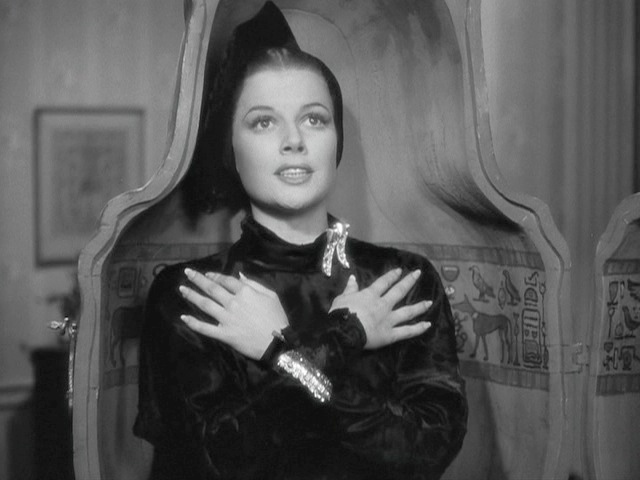
Forget "The Man Who Came to Dinner" himself, it was Ann Sheridan as vain star
 Lorraine Sheldon who stole the show!

Like most stars, while Ann wanted to demonstrate her talents, she also fell into the traps common among the era's stars. She turned down the role as The Strawberry Blonde, because while it was the title character, it was a secondary role. Yet, it was one that helped Rita Hayworth become a star. She was one of many who turned down Mildred Pierce, rightfully here, as she was only 30. Ann turned down To Have and Have Not, though she loved Bogie, perhaps because it was a lot like the role in Torrid Zone. Warner wanted her for a role in Caged, but Sheridan might have suggested herself for the warden role, played by Agnes Moorehead. But Annie didn't see herself in character roles. Thus, her Kings Row co-star Betty Field, who looked like a sourpuss version of Sheridan, ended up in juicy later roles in huge hits Picnic, Bus Stop, Peyton Place, and BUtterfield 8. Ann’s professional pride in maintaining her leading lady status was intact, but what good is being a star if you have no place to shine?

One of Ann Sheridan's first movies after WB was 1950's nifty noir, "Woman on the Run." Unfortunately, it was considered just another thriller then and Ann was already showing her age at just 35, due to her drinking and chain-smoking.

In Sheridan’s personal life—the night life, drinking, and chain-smoking—all took its toll on the star's good looks. This was not an unusual problem for both male and female stars of the golden era. The biggest stars that still drew audiences were given extra attention with their makeup, hair, and lighting. Lana Turner, Joan Crawford, and Lucille Ball come to mind. So do Rita, Ava, and later, Elizabeth Taylor. The stars who were no longer a draw, like Sheridan and Joan Blondell—not so much. 

Admirably, Sheridan did try to advance her own post-studio career, pushing independent film properties, trying television, and later the stage. This is where luck comes in, too. For aging stars, especially women, the 50's and 60's were pretty slim pickings as there were so many stars in the same boat.

Rinella gives great details of Ann's uphill battle to film stardom and how often she was unlucky or foolhardy in love. I always thought George Brent was an odd choice as a Sheridan spouse. Ann was so lively and George was such a dullard on film. Turns out Brent was moody and anti-social, also very un-Ann Sheridan! I asked the author why Sheridan never had children. While Rinella is an extremely thorough researcher, he could not come up with any definitive info on that subject, but I bet that it affected her personal outlook, too. 

Rinella writes a most touching look at Sheridan's last years, as she worked more in television and onstage, with varying results. Ann also had some cosmetic procedures that bolstered her last appearances, like the CBS western spoof, Pistols ‘n’ Petticoats. But sadly, it was then that Sheridan found out she had throat cancer. She declined rapidly and died January 21, 1967, exactly a month before her 52nd birthday. Fortunately, Sheridan had found happiness with actor Scott McKay, her last husband.

Ann Sheridan's last role was in CBS's western spoof,
"Pistols 'n' Petticoats." Cancer was already taking its toll.

While Ann's talents have become reassessed, it's still slow compared to some other actors who have been rediscovered. Ann Sheridan's gift for mixing comedy and drama reminds me a lot of Carole Lombard. Sheridan also had that brash side like Harlow when she became an able comic actor. And Annie's acerbic way with a one-liner was equal to the great Eve Arden. 

Ann Sheridan starred with Bogie& George Raft in 1940's "They Drive By Night."
Ida Lupino went big as the bad girl, but Ann held her own as a good-hearted waitress.

For those who want to watch more Ann Sheridan, she's good in urban melodramas Angels with Dirty Faces, City of Conquest, and They Drive by Night. Sheridan outshines the entire young cast with her warm performance as Randy Monaghan in Kings Row. Later, Sheridan did well in romantic noirs like Nora Prentiss, The Unfaithful, and Woman on the Run. And Annie was aces in comedies: It All Came True, Torrid Zone, The Man Who Came to Dinner, The Doughgirls, George Washington Slept Here, and I Was a Male War Bride. Not a bad legacy for Ann Sheridan, an actress not often given the star treatment. 

Ann Sheridan & Cary Grant were a hoot together in Howard Hawk's
1948 screwball comedy, "I Was a Male War Bride."
Annie should have worked with Hawks more!

Cher once described her own acting range as being great at playing "tarts with a heart." The same was true of Ann Sheridan, memorable as working class girls with a heart of gold. Sheridan had oomph, a phrase she hated, but also authenticity as an honest actress within her range.

Ann Sheridan played many of these kind of girls in her movie glory days!

Michael D. Rinella puts Ann Sheridan back in the limelight, with a most knowledgeable, readable, and thoughtful biography that depicts her life and career with honesty.

See the link below to find out more or
to order this new Ann Sheridan biography.

Here’s Amazon’s link to Ann Sheridan: The Life and Career of Hollywood’s Oomph Girl: https://www.amazon.com/Ann-Sheridan-Career-Hollywoods-Oomph/dp/1476694184

Ann Sheridan as "Nora Prentiss,"
the nicest film noir femme fatale ever!

My look at Ann Sheridan in her film noir phase, as Nora Prentiss: https://ricksrealreel.blogspot.com/2019/02/ann-sheridans-glamour-brightens-gloomy.html

Ann Sheridan in her best role,
as Randy in 1942's "Kings Row."

My take on Ann in her best film role, as Randy in 1942’s Kings Row: https://ricksrealreel.blogspot.com/2017/01/kings-row-is-much-more-than-reagans.html


Thursday, December 3, 2020

Roz's Signature Role: ‘Auntie Mame’ 1958

"I'm your Auntie Mame!" Rosalind Russell as the larger than life Mame Dennis.


Auntie Mame is the comic character instantly associated with Rosalind Russell, one of film’s classic comedic actresses.

First a comic “memoir” by Patrick Dennis,  free-thinking Auntie Mame was an anti-dote to the conformist ‘50s. And the timing was just right for that class act with a bit of brass, Roz Russell, to play her. Roz first won raves as the bon vivant diva on Broadway, for two years. Auntie Mame and Roz’s prior stage smash, Wonderful Town, provided a career bridge for Russell in the ‘50s, between her studio era heyday and her post-Auntie Mame ‘60s movies.

Mame's intro as Roz Russell as she romps down those stairs, and is off and running!

I grew up on the ’74 Lucille Ball musical version, Mame, and didn't see the ’58 Russell comedy, Auntie Mame, until years later. Watching Roz’s original for this review, I kept expecting the Mame songs to start. The Rosalind Russell version is so much more buoyant and lighthearted than the Lucy musical. When Russell comes running down those stairs for the first time in Auntie Mame, Roz's energetic and effervescent personality hits you like a tidal wave. During the party scene, as Mame mingles with the best of them, it's not just little nephew Patrick's head whose is spinning. 

Russell first played Auntie Mame on Broadway, to great acclaim.

Russell mixes Mame’s piss-elegant, imperious delivery with her slapstick, hoydenish side, so that Mame Dennis never becomes a one-note bore. And Roz's warmth helps offset Mame's more fanciful flaws, as well. This was reinforced after re-watching Lucy's Mame as a comparison. Lucille Ball was just as versatile as Rosalind Russell, with many of the same strengths. There was the age difference when they played Mame, though Roz was just five years older than Lucy: Russell was 50 when Auntie Mame was filmed, and Lucy was 62 and recovering from a broken leg. (Roz herself broke an ankle running down those stairs the first time.) 

Mame's motto: "Live! Life is a banquet and most poor suckers are starving to death!"

Yet, the difference in energy and good humor is surprising. Perhaps the difference was Russell was re-recreating her Tony-winning Broadway smash, and going into filming on a high. Whereas Lucy knew everyone was depending on her, nursing a healing leg, facing ill will for taking the role from Angela Lansbury, with all eyes on her. Her grim gumption and self-consciousness over her age and ability seeps onto the screen and dissipates nearly all the fun. In fact, Lucy’s Mame feels like one of those great lady star vehicles from the ‘40s that Ball never got to play. Her pal Ginger Rogers’ leaden Lady in the Dark comes to mind. Why Lucy felt the need to scratch that itch three decades after the fact is still a mystery.

Mame needs a little Christmas, right this very minute! Patrick gives her "almost-diamonds."

It’s interesting that Roz, who was a staunch Catholic and married just once, had the raucous humor to play her polar opposite, Mame Dennis, with such ease. Lucy—whose personal life had known more than a few late nights, men, cocktails, and smokes—comes off as uptight and tough, much like her later TV appearances.

Mame & bosom buddy Vera Charles. Coral Browne is elegant & acidic as the actress.

Another surprising difference about the two versions is that the original—with Hollywood censors having their last hurrah—is more risqué than the ‘70s Mame. The one-liners from Auntie Mame are quite sly, and some of the passing characters still raise an eyebrow. In the '74 musical, once Beauregard dies, Mame becomes far less funny, and overly serious. The '58 version deftly mixes drama and humor regarding adult Patrick's conformity and Auntie Mame's misgivings. Russell, while disapproving of her intended in-laws, is up to her tricks. The uppity Epsons get funny bits of business in the ’58 film, whereas in the '70s version, they're just annoying bigots. This is certainly due to Betty Comden and Adolph Green, old pros at musical comedy and smart enough to realize that the stage play had culled the essence of the Patrick Dennis novel. In the ‘70s version, serious playwright Paul Zindel was chosen to write Mame’s screenplay. What’s strange, the most hilarious lines or bits from Auntie Mame are gone in Mame!

Rosalind Russell brings her considerable talents to the role of the free-thinking Mame.

I used to be put off that Auntie Mame is presented like a play, but now I love it. It's very stylized, yet stylish, much like the characters and performances. As Mame, Rosalind Russell gets to show off her physical comedy finesse, her rapid-speed dialogue delivery, genuine warmth, intelligence, sparkling personality, and winking sense of humor. There are so many memorable moments, as Mame gamely raises her young nephew: Life of the party Mame trying to get herself together the morning after for Mr. Babcock’s visit; novice actress Mame when she tries to upstage pal Vera Charles; Mame as a working girl, the motor mouth switchboard operator; life coach Mame conspiring to give Agnes Gooch a makeover; and the classic fox hunt scene, where Mame hangs on for dear life.

Fred Clark as trustee Mr. Babcock makes a fine comic foil for Russell's Mame.

The supporting cast is delightful, with Connie Gilchrist as Nora Muldoon, a no-nonsense delight as the Irish maid who delivers Patrick to his eccentric aunt. Fred Clark, always the comic heavy, is Mr. Babcock, the perfect foil for Auntie Mame, each with their own agenda for Patrick’s upbringing. Coral Browne is hilariously acerbic as Vera Charles, and far more elegant than later Vera, Bea Arthur, already in Maude mode. Peggy Cass gives Shelley Winters a run for her money in the nasal whine department, but here it’s done to hilarious comic effect as frumpy Agnes Gooch.

The finish to the hilarious fox hunt, where Mame wins the real prize, Beauregard!

Jan Handzlik as Patrick the boy is quite pleasant, but Roger Smith as the adult edition is a bit Ken doll-ish for my taste. Roger later found the role of a lifetime as Ann-Margret’s one and only husband. Forrest Tucker is most amiable as Mame’s southern suitor, Beauregard Burnside, he of the beaucoup bucks. Willard Waterman is hilarious, with always-reliable Lee Patrick, as Claude and Doris Upson, Patrick’s prospective in-laws. Waterman also played Mr. Babcock later in the Broadway musical Mame. Joanna Barnes is slyly funny as Patrick’s fiancee, Gloria, with her pretentious, lockjaw delivery: “It was just ghaaa-stly!”

The uppity Upsons have no idea what's in store for them, as they enter Mame's home. 

The set décor must have been a field day for George James Hopkins, who did some of the most memorable film sets for decades. Malcolm C. Bert created the production and art design. Mame’s 3 Beekman Place pad gets redecorated nearly a dozen times!

The ever-changing decor of The House of Dennis!

The stylish clothes by Orry-Kelly were over the top only when the story called for it, unlike the drag queen parade of Lucy’s Mame. Surprisingly, Orry-Kelly got zero Oscar nominations during his WB studio heyday (Now, Voyager and Mr. Skeffington are surprising shutouts) but he started getting nods from the mid-50s on—but not for his Auntie Mame fashion extravaganza.

Rosalind Russell gets beautiful cinematography, hair & makeup, and costumes.
Add Roz's high spirits & energy, and you get a memorable Mame.

While much was made of Lucy’s attempts to look younger as Mame, Roz also had help to augment her face as Auntie Mame. Russell’s beautifully photographed by Harry Stradling, who later got fired from Who’s Afraid of Virginia Woolf? for making Elizabeth Taylor look too good as drunken Martha! Roz’s makeup man was Gene Hibbs, famed for his mini-face lift strings and tape combo, and stylized makeup. She first worked with him on ‘53’s Never Wave at a WAC. At the time, the Hibbs effect was considered miraculous, but it gave later drag queens something to work with! Roz looks more naturalistic than some of his other clients like Bette Davis circa Dead Ringer, Eva Gabor on Green Acres, etc. And Roz’s multiple wigs as Mame offered camouflage for his fine work. Hibbs worked on a number of episodes of Lucille Ball’s latter day series, and notably Ann Sothern and Judy Garland on their TV series. Roz used him again in Gypsy and Five Finger Exercise.

Mame gets in the Christmas spirit when her luck begins to change!

Morton LaCosta, more famous for stage direction than film, helmed Auntie Mame competently, though I wonder what a Cukor or Minnelli might have done. LaCosta got to direct his two huge hits, Auntie Mame and The Music Man for the screen, and critics and audiences applauded. Both made a bundle for Warner Brothers.

Ultimately, it’s the irreverent Patrick Dennis story and irresistible Roz Russell that truly makes Auntie Mame memorable.

FYI: I put all the movie overflow on my public FB  film page. 

Check it out & join!  https://www.facebook.com/groups/178488909366865/

"Auntie Mame" ends with her and an enchanted great-nephew, as they head off to new life adventures.


Tuesday, March 6, 2018

Dynamic Davis is 'Dangerous' 1935

Bette Davis works up a lather in this dull soap opera, with charming Franchot Tone.

I watched 1935’s Dangerous recently, which I haven’t seen since the afternoon movies of the ‘70s. Last year, I saw Bette Davis' career breakthrough in ‘34’s Of Human Bondage, for the very first time. Davis gives her all in both, but the difference is in the material she’s working with.
Even at the time, Davis acknowledged that her Oscar win for Dangerous was a consolation prize for when she was conspicuously passed over for Bondage. That's putting it mildly. As with Elizabeth Taylor's sympathy win for1960’s BUtterfield 8, Davis victory over strong competition like Katharine Hepburn in Alice Adams was all about compounding a previous cinematic slight. 
Bette Davis and Jack Warner with a 'Dangerous' Oscar. Not feeling the love!

At first, Davis turned down Dangerous, as it was a schlocky attempt to cash in Bette's turn as Mildred Rogers in Bondage. All very ironic, since studio boss Jack Warner told her to go hang herself for even wanting to play such a role. Davis starred in the Maugham classic on loan out and got rave reviews for her groundbreaking portrayal. Warner Bros gave her no support with the studio’s voting block, even they had no best actress nominee in the hopper. The next year, Jack Warner turned around and wanted Bette to basically repeat her Bondage performance in Dangerous, a cobbled together soap about a washed up actress. Warner was cashing in on Davis on the way up, whereas MGM cashed in on Elizabeth Taylor on her way out, in BUtterfield 8. Ironically, both actresses ultimately toiled at their home studios for 18 years. 
Bette Davis got star billing at last in 'Dangerous.'

Dangerous is an "original" script that played off the recently deceased stage legend Jeanne Eagels. An exciting talent, Eagels was a fiery talent who succumbed to alcohol and hard drugs, flamed out, dead at 35. Davis plays Joyce Heath, a once in a lifetime talent who is a jinx to every man she meets. Now a derelict alcoholic, Heath catches the eye of famed architect Don Bellows (Franchot Tone), who seeks to rehabilitate her for the noblest and most unbelievable of reasons—he adored her interpretation of Juliet. To this hogwash, scriptwriter Laird Doyle added several shrewish scenes, where Bette lashes out at her male co-stars, exactly as Davis did to Leslie Howard in Bondage. Of course, Davis and Tone’s characters fall in love. But bad girl Bette can’t have the hero, so just like BUtterfield 8 there’s a car crash that solves everything. That's the plot, in a nutshell.
Bette Davis was the first film actress who dared to look unglamorous. In 'Dangerous,' 
she was a drab, drunken actress.

Davis was not impressed, but intrigued by playing the Eagels-esque legend, as she admired the late actress. Davis also realized it was better than anything else Warner was offering.
Even BUtterfield 8 had the framework of John O’Hara’s novel to work off of. Dangerous scraps sewed together for a very flimsy vehicle for new star Davis. If it wasn't for Bette's dynamic new style of acting, Dangerous would be an instantly forgotten Warner Brothers’ “B” movie.
Franchot Tone and Margaret Lindsay as a happy couple...before Bette comes along!

As Bette’s embattled leading man, Franchot Tone is far more engaging than Leslie Howard, who apparently was bored by film acting. I’m not sure why the popular MGM leading man was loaned out to WB for this B+ movie, but Franchot is at the height of his appeal and attractiveness here. Tone’s warmth and charm is an audience buffer to Bette's shrewish drunk. 
Once again, an aristocratic brunette is (temporarily) thrown over by the leading man, who is ensnared by neurotic Bette. In Bondage, lovely Frances Dee waits for Leslie Howard to come to his senses. In Dangerous, that task goes to beautiful Margaret Lindsay, who played the dutiful second fiddle to Bette in other WB films, like Bordertown and Jezebel.
The great Alison Skipworth, as Tone’s housekeeper, heaves her mountainous bosom with disapproval at dipsomaniac Davis, and their scenes offer some comic relief.
Bad girl Bette redeems herself by reuniting with an ex-husband that she just tried to kill,   now that's love!

Bette's bad girl atonement means going back to a dopey ex-husband, who she just tried to kill in the prior scene. Talk about a tacked-on ending. Director Alfred E. Green, one of WB’s “studio” directors, who specialized in B+ pictures, does what he can in telling this thin tale. Screenwriter Laird Doyle, whose job it was to whip up this vehicle for Bette, was one of WB’s prolific screenwriters. Sadly, Doyle died at age 29 in 1937, while taking flying lessons.
There is no reason to watch Dangerous except to see Bette Davis in action when she finally got a star role at Warner Brothers. It took three years, two dozen mostly bad movies, and another studio for Warners’ to get a clue in what they had in Bette. A lawsuit by their star a year later, over the lack of good roles, proved that Bette Davis meant business.
Once Bette Davis won her first Oscar, she began to make hay in Hollywood.


Thursday, December 28, 2017

Deception 1946

1946 'Deception' recap: Bette with gun & shoulderpads, conductor Claude killed, & Paul Henreid as a jealous cellist!

I often watched 1946’s Deception, a twisted triangle set to classical music, on the afternoon movies while growing up. This Warner Brothers melodrama seemed very grownup to a ‘70s high school kid.
After not seeing Deception for decades, I re-watched the sudsy drama recently, and managed to make it half way through, before giving up in exasperation.
Claude Rains steals 'Deception' as the catty conductor, Alexander Hollenius.
Deception has a dazzling cast—Bette Davis, Paul Henreid, and especially Claude Rains—tangling with one another in a jealous triangle that leads to murder. The acting is fine, but the trio is done in by a premise that is patently unbelievable.

Bette Davis is Christine Radcliffe, a struggling pianist who lost her lover, cellist Karel Novak (Paul Henreid), in Europe five years ago to a concentration camp. Relocated in post-war NYC, Christine rediscovers Karel after the war, when she sees his name in a concert review. Speaking of names, Christine tells Karel that she took Radcliffe as her “professional name.” I guess Christine Sarah Lawrence sounded too pretentious!
Bette Davis and Paul Henreid as musical lovers reunited in post-war NYC.
Christine’s first line is as declarative as only Davis can be: “I thought you were dead!” Equally subtle is when Karel takes her hand, and Christine holds both up: “No rings.” Reunited, they return to her apartment. On the way up the stairs, Christine tells Karel that she struggles to make ends meet as a pianist, by giving lessons. Unfortunately, once they walk through the door, her apartment is actually a luxurious loft. Hanging up his jacket, Karel notices several fur coats in the closet. Looking around the loft, the cellist sees lots of lovely paintings and sculptures. Christine soft pedals all this obvious luxury. However, Karel is not just a cellist, but a jealous cellist! He attempts to choke her to stop her barrage of non-stop lies. 
After apologies, Henreid’s Karel decides the best thing for them to do is marry as quickly as possible. Bette turns her big eyes away from Henreid, and pops them for the camera…uh-oh.

The deadly...dull triangle that is 'Decption.'
You see, Bette’s been living large due to a beau, egomaniacal maestro Alexander Hollenius. And the maestro is mad as hell about getting dumped by Christine, on her impromptu wedding day, practically. Despite Karel telling her that it tortures him when he feels she’s not telling the truth, and with numerous opportunities to do so, Christine refuses to fess up.
What transpires is a prolonged cat and mouse game: Can Christine keep piling on lies to pacify jealous and insecure Karel? Can she keep equally jealous and self-centered Hollenius from spilling the beans? Can Christine keep the cellist and the conductor from killing each other as they collaborate? About half way through, I decided I didn’t care anymore and ditched Deception.
The most fascinating part of 'Deception' is the loft, that Bette's pianist tries to tell Henreid is paid for by giving lessons!
I’m pretty good at suspending disbelief and not imposing today’s social mores onto old movie conventions and morality. Here’s the big problem I have with Deception: the premise makes ZERO sense. This was also the critics’ problem with Deception over 70 years ago. Why should Christine try to hide a lover from Karel? They weren’t married when the war separated them. She thought he was dead—for five years! Was she supposed to become a nun? First off, Christine’s living situation is suspect. Also, all the people that she invited to her and Karel’s wedding know…because they were her and Hollenius’ friends! What’s to keep any of them from spilling? Plus, the maestro crashes the couple’s reception and acts absurdly jealous. Finally, Hollenius threatens to tell Karel from the get-go.
Paul's Karel is constantly jealous; Bette's Christine endlessly lies!
Most importantly, Bette’s character has NOTHING to feel guilty about, even by 1940s standards. Still, many film write-ups I’ve read about Deception refer to Christine as the conductor’s mistress. According to good old Merriam-Webster, a mistress is a woman who is having extra-marital relations, usually with a married man. Neither character was married during their affair. Yet Davis’ Christine lies her head off, just to keep two hot-headed men appeased. 
Specifically, I gave up after Deception’s famous “dinner scene.” Claude Rains as Hollenius has a field day here. The conductor treats the couple to dine at a fancy French restaurant and proceeds in taking great delight in showing off his talents as a gourmand. The maestro’s game becomes so protracted that Karel becomes unglued—perhaps he was just “hangry.” Though devilishly performed by Rains, and with increased agitation by Davis and Henreid, the whole scene feels as forced as the film’s premise. There’s no story to go forward, so Deception is just all snarky cocktail party chat.

Joan loved to talk about Bette's B.O.! 'Deception' was Davis' first 'disappointment'for WB, and the beginning of her box office slide.

If you can get past the major plot obstacles—there’s fun to be had. The three leads, who all worked together in far better films, do well with the rather unappealing characters they’re playing. The dialogue is sharp—especially the digs by the catty conductor. The sets that depict upscale NYC life are marvelous, especially Bette’s loft with a skylight that covers the entire living room. The classical music and film’s score, by Erich Wolfgang Korngold, set the mood.
Bette's character tries everything to soothe Claude's maestro...even grovelling!

Claude Rains does a delicious turn as Alexander Hollenius: childlike, sexy, jealous, devilish, sarcastic, egotistical, spiteful, and funny. Despite an intense performance by Paul Henreid, his character frequently comes off as peevish. Even with fits of violent jealousy, he ultimately just stews. In the original play, the Henreid’s character rises to the occasion and kills Hollenius. Wait just one minute! Since this a Bette Davis movie, where nobody is as good as Bette when she’s bad, Davis gets to do the dirty deed. Even so, Christine is a thankless character and Davis can’t do much more than to work herself up in a dither of denial.
Irving Rapper, who always seemed good with actors, does what he can with his collaborators, and gives Deception a smart visual style. The screenplay moves heaven and earth to compensate with occasional sharp dialogue to make up for the lack of story. My favorite credit for Deception is Jack Daniels listed as dialogue director—indeed!

Bette Davis as Christine, with a Rita Hayworth pompadour!

Bette Davis often played older and in period pictures. But when Bette essayed modern roles, she kept her look simple. Here, for the only time in her career, Davis sported shoulder pads, a hugely popular but short-lived trend. In fact, in the climactic scene, Bette sports a white fur over her shoulders, and I thought of Carol Burnett’s “curtain dress” take-off on Scarlett O’Hara. And through most of the movie, Bette sports a WWII-era pompadour, with an uncharacteristically lush mane that Rita Hayworth would have envied.
Bette Davis prays that Ernest Haller's noir-style lighting hides all that's going on off-camera!
Perhaps Bette overcompensated because she wasn’t looking her best. Davis’ character is amusingly described as a music student when she met the maestro four years earlier—struggling and taking “rich, untalented students” to get by…and pushing 40! Pregnant and ill during Deception, plus her new marriage was to jealous, violent artist William Grant Sherry—life imitating art? Davis’ favorite cinematographer, Ernest Haller, did what he could. Note that in certain scenes, especially evening shots, Bette’s face is totally surrounded by shadow. Bette admitted later that she wasn’t at her best here. Perhaps driving Davis was that Joan Crawford was following up her Mildred Pierce comeback in a romantic melodrama with a classical music backdrop, Humoresque. Neither films were smash hits, but Joan’s came off better and also turned a better profit, since Bette ran up her film’s budget by her pregnancy, plus emotional and health issues.

Deception isn’t a dud, just an exercise in style—great style, for sure—but no substance. 
The happy newlyweds are taken out for dinner by the maestro, not realizing they're the main course!


FYI: I put all the movie overflow on my public FB  movie page.