Showing posts with label Jessica Lange. Show all posts

Friday, July 31, 2020

Frances Farmer Still Fascinates

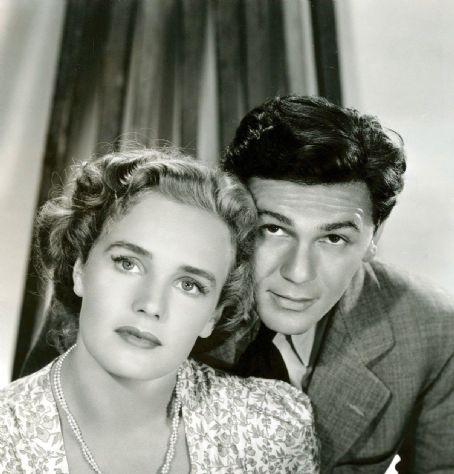
Frances Farmer, whose myth and reality still compete 50 years after her death.


When I watch the real Frances Farmer on 1958’s This is Your Life versus Jessica Lange as a lobotomy-dazed Frances from 1982, it sums up for me the dichotomy between the real woman and the misery myth that’s been sold for five decades. Just type ‘Frances Farmer’ in a You Tube search and see what comes up. At least half the results are the most sensationalistic clips from the ’82 film bio or “tributes” that focus on the negative facts and fictions of Farmer’s life.
The infamous episode of 'This is Your Life.' At least Frances Farmer showed class & dignity!

Frances’ appearance on This is Your Life is composed, considering all that she had gone through, and then obliged to relive it in front of a TV audience. Frances Farmer comes across as articulate, thoughtful, and responsive—not the spooky zombie Jessica Lange portrays her as in the final scenes of Frances. And considering her rough ride in life thus far, Farmer looked lovely at 45.
Jessica Lange as a ghostly 'Frances,' after appearing on 'This Is Your Life.'

Frances Farmer died of esophageal cancer at age 57 in 1970. From then through 1982, Farmer’s life was the subject of a memoir that was completed by a friend, a later biography that made even more sensational claims, and finally, the nearly-total fiction film bio that launched Jessica Lange as a dramatic actress. The cherry on top of this showbiz soap opera sundae was when another misunderstood Washington-born artist, Kurt Cobain wrote the myth-inspired song, “Frances Farmer Will Have Her Revenge on Seattle.” An eerie coincidence is that the Frances film bio came out a year after another movie myth buster, Mommie Dearest—a film that also buried and cemented a movie star image for decades to come. And Joan Crawford’s “horror” myth also inspired a rock tune, Blue Oyster Cult’s “Joan Crawford Has Risen from the Grave.”
Paramount found Frances Farmer's "difficult" personality problematic.

For me, the big question regarding the career of Frances Farmer is this: Did she get written off merely because she was “difficult?” I’m not talking about when she hit bottom in the early ‘40s, I’m referring to the late’30s, after Come and Get It. Bette Davis and Katharine Hepburn faced similar battles with their respective studios—pushing back on foisted upon images, fighting for good roles and fending off bad ones, resisting inane publicity stunts, etc. During that same time, Davis sued Warner Brothers and Hepburn, labeled box office poison, fought to go back to Broadway, too. Yet, Bette and Kate persevered, and eventually prevailed. Frances often fought these battles, but didn’t emerge the ultimate victor because she didn’t have the stability or steel-willed self-confidence of Davis and Hepburn.
Frances Farmer, whose great beauty shown more when Paramount's
hair & makeup department work was subtle and not slathered on.

Frances Farmer certainly had all the gifts to be a great movie star. Frances had the similar beauty of fellow Paramount star Carole Lombard, the husky voice of a Dietrich, talent and intensity, and she could sing, to boot. And Farmer was very serious about her career as an actress. So what if she was “difficult” over her career and image? That didn’t stop a lot of other actors who went on to great careers. It seems strange to me one aspect of a Farmer negated all the good things about her. Perhaps the problem was like this quote made about Elizabeth Taylor, in terms of ET surviving stardom: A fighter when she had to be, a diplomat when it paid to be. With Farmer, it was certainly the latter that was problematic.
Frances Farmer in college, looked very contemporary & natural.

I remember a Hollywood anecdote, when news of Marilyn Monroe’s firing and subsequent death rocked the movie biz. If memory serves, it was Walter Wanger who recalled at Paramount, when B.P. Schulberg had fired fragile Clara Bow from a film, and never forgot studio boss Adolph Zukor’s reaction: “Our job is to make stars, not fire them.”
This led me to do some research on Paramount and Clara Bow. Paramount had just gone through great turmoil with Bow, one of their greatest female stars. Despite her huge audience, Clara’s emotional stability, dramas, and scandals came at a time when Paramount itself was in dire financial straits. The studio survived, Clara was fired and soon retired, but I wonder if studio head Zukor and the ‘suits’ just didn’t want to go through all that drama again with Frances Farmer.
Frances Farmer became a hit in her second movie, as leading lady
to Bing Crosby, in 1936's 'Rhythm on the Range.'

What’s interesting is that Farmer scored with flying colors as a lovely leading lady to Bing Crosby in Rhythm on the Range. Then Frances made a strong dramatic impression with Edna Ferber’s Come and Get It, in a dual role, as the tart with a heart mother and the good daughter. Howard Hawks adored working with Frances, but left the film in a dispute with Sam Goldwyn, and was replaced by William Wyler. Both were great directors, but whose styles were like night and day. Hawks worked fast and had a loose improvisational style, a bit like the later Robert Altman. Wyler on the other hand was painstaking and meticulous, like George Stevens. Willie was also inarticulate if he didn’t get what he wanted, calling for dozens of takes, to the frustration of his actors. Frances clashed with him, but so what? He wasn’t a Paramount director.
Frances in her breakout dual role, in 'Come and Get It.' Here she is, as the barroom mama.
And Farmer later, as the good daughter in 'Come and Get It,' with Joel McCrea.


With Cary Grant in 1937's 'The Toast of New York.'

After The Toast of New York with Cary Grant and Edward Arnold, why was Frances stuck in so many junky genre pictures? Some folks have pointed to the disappointment of costly Toast for Farmer’s career stalling. I don’t buy it, since co-star Grant had been kicking around in movies for five years, yet hadn’t broken out as a star, and nobody held it against him. Why didn’t Frances get to work with Paramount’s Mitchell Leisen or Preston Sturges or get scripts by Billy Wilder, like later Paramount girls Paulette Goddard and Veronica Lake? Both women had their charms and they had to do junk, too. But Paulette and Veronica got far better star-making material, and even together, they didn’t have half the star potential that Frances possessed.
With Fred MacMurray in 1937's 'Exclusive.'

Ironically, Frances and Veronica had very similar career trajectories. Though Veronica was a decade younger, she swiftly took off as Frances did, with Lake barely past 20, as well. Like Frances, initial solid film work, Lake got stuck in genre garbage, and in less than a decade, her career was quickly over. Veronica, too, experienced pretty messy emotional ups and downs, and a drinking problem. Farmer died in ’70 at 56 and Lake passed at 50 in ’73.
With Tyrone Power in 1942's 'Son of Fury.'
This was Frances Farmer's last major motion picture.

A book could be written about the “what ifs” of the life and career of Frances Farmer. What if Frances had the wherewithal and opportunity to freelance like Barbara Stanwyck did? Barbara signed short-term contracts at Paramount as well as Warner Brothers. Yet, Stanwyck also did much of her best work freelancing. Carole Lombard left Paramount in 1937 to pursue dramatic roles, so there seemed to be paucity in the dramatic department at Paramount.
I can think of many movies that Frances Farmer might have given fine performances in. Disclaimer: the movies and roles I’m about to mention is not a knock on the actors who actually played the roles, but offering as examples of what Frances was capable was as an actress. Don’t light up your Internet torches, please!
Frances Farmer with Luther Adler in 'Golden Boy.'
WHY didn't Paramount option this property for their star?
It would have been good business sense and created good will with their star.

For instance, after Frances fought to go back to the stage and appear in Golden Boy, which was a hit and she received good reviews. Why didn’t Paramount buy the property for her? Imagine if Zukor had bought the property and borrowed new WB star John Garfield, in the lead role he longed to play? Instead they got stuck doing Flowing Gold a few years later at WB.
John Garfield, who amazingly lost the role of 'Golden Boy' to Luther Adler,
would have been perfect with Farmer in a screen version.
Instead they got teamed in 'Flowing Gold!'

I think Frances might have played a number of Barbara Stanwyck roles quite well, such as Double Indemnity, or The Strange Love of Martha Ivers. Farmer, with her husky voice, would have made a fine film noir fatale, such as Joan Bennett’s roles in The Woman in the Window or Scarlet Street. How about Frances as a '40s Hitchcock blonde? Or how about Farmer in some of Dorothy McGuire’s more serious roles, like A Tree Grows in Brooklyn or Gentleman’s Agreement? Frances Farmer was just three years older than McGuire and had that intelligence and strength that Dorothy possessed.
Though Frances Farmer was heralded as major talent by the likes of
  Cecil B. DeMille and Howard Hawks, Paramount shackled Frances
to either glorified B-movies or merely decorative roles.

I can see Frances in the career women type roles that Rosalind Russell, Joan Crawford, and Katharine Hepburn played. Frances also had the rare quality of being physically beautiful but also intelligent and would have been quite believable as a professional or an artist type. And as Frances reached her 40’s in the ‘50s, Farmer could have played many roles in Tennessee Williams and William Inge film adaptations. And Frances, who preferred realism over glamour, could have fared quite well in the ‘60s and ‘70s as a character actress. I can totally see Frances working with Robert Altman, or like Kate Hepburn, going back to the stage while holding out for the occasionally good older woman roles in post-studio era Hollywood.
I was struck by this 1958 TV publicity photo of Frances Farmer. Despite decades
of hardships, 20 years later, Frances' strong beauty was still with her at 45.

As it stands, there are glimpses of what might have been in the brief list of Frances Farmer movies.  Frances is animated in Rhythm on the Range, versatile in Come and Get It, strong-willed in Flowing Gold, and gorgeous in The Toast of New York and Son of Fury. There are others, too, like Exclusive and Ebb Tide, and glimmers amidst the genre junk.
It's startling to see Frances, '40s-style, as most of her work was from the '30s.
What a great film noir fatale Farmer would have made.

Frances Farmer is almost always worth watching. Even in certain studio stills, Farmer’s eyes are alive with intelligence and intensity. As a person, like Monroe, Garland, and Clift, Frances Farmer struggled with emotional and substance issues in an era not yet empathetic or equipped to deal with them. As an actor, the great tragedy of Frances Farmer was that she was a modern star, trapped in Hollywood’s “golden” era.
The myths and what ifs of the life of Frances Farmer still intrigue movie lovers today.
FYI: I put all the movie overflow on my public FB  movie page. 


Saturday, June 23, 2018

Tootsie 1982

'Tootsie' still has lots to say about sexism!

I just re-watched 1982’s Tootsie, not having seen it in some time. In the current era of the #metoo movement, some of the issues between the film’s male and female characters are especially relevant. Most importantly, Tootsie is still funny and fresh, over 35 years later.
The original poster for 'Tootsie' sums it all up...

Dustin Hoffman plays Michael Dorsey, a struggling actor well-known for being difficult. With no prospects, Michael auditions for a soap opera …as a woman. Surprisingly, he lands the role. Unsurprisingly, as Dorothy Michaels, he’s just as opinionated, rubbing the powers that be the wrong way. The biggest surprise of all is, playing an actress playing a hospital bigwig, Michael is a hit! And that’s just the beginning of this classic comedy with brains—and heart.
Michael becoming Dorothy Michaels...

I always assumed that Dustin won the Oscar for Tootsie. Not so, Ben Kingsley did, as Gandhi. Let’s just say that Tootsie’s Dorothy isn’t as big on passive resistance! Dustin Hoffman's take on a strong woman is wonderful. There are times when watching Tootsie that I forgot I was watching a man playing a woman. I just loved Dorothy and missed her when she wasn’t onscreen. Michael’s character was patterned after Dustin himself, though in recent years, Hoffman claims he never considered himself difficult. Oh, really? Have you ever heard of an actor who admitted that they were? Even Bette Davis made repeated pronouncements that she was not difficult to work with!
Jessica Lange as Julie and Dustin Hoffman as Dorothy Michaels, looking astonished at their soap plotlines!

Hoffman’s presence in this film is especially noteworthy because he too has been accused of sexually inappropriate behavior by the #metoo movement. Aside from clashing with directors and writers, Dustin’s been known to go a few rounds with co-stars—even Lord Olivier. With women, he at times has come across as sexist, as Meryl Streep recalled recently. This all clashes with his proclaiming to have seen the light regarding male chauvinism during Tootsie’s making. Yet Hoffman is hardly the first person on the planet to talk the talk, but not walk the walk, high heels or no.
That said, Hoffman gives a helluva performance as Michael Dorsey/Dorothy Michaels. As the 40-ish actor, Dustin’s energetic and funny, but also increasingly serious and sensitive to his alter ego. And as Dorothy, running roughshod over the clichéd soap scripts and sexist director, watching Hoffman’s creation come to life is a delight. The fact that everyone loves this unlikely soap star has you rooting for Dorothy to kick some more ass!
Jessica Lange in her Marilyn Monroe-like role as an unlucky in love soap star.

Jessica Lange, who plays it straight to the antics around her, gives a sweet, Marilyn Monroe-esque performance as the soap actress, Julie. I haven’t watched Tootsie in years, and seeing the softer side of Lange was a pleasant surprise from her latter day neurotics. Jessica as Julie is fascinating to watch, as her character grows from her friendship with firebrand Dorothy. Lange is a Billy Wilder/Marilyn Monroe fan, and her sweetly sad, soft-spoken, slightly tipsy character seems like a nod to Marilyn’s most famous role, as Sugar Kane in Wilder’s cross-dressing classic, Some Like It Hot.
Terri Garr as Sandy, the actress who is unlucky, period!

Terri Garr, in another era, would have been a classic supporting comic actress. As Sandy, the hapless struggling actress, Garr is a delight as the girl who is utterly confused by Tootsie’s proceedings. Frustrated by that “that cow” Dorothy Michaels, who got her role, to crossing the line with best friend Michael Dorsey, then feeling double crossed, Terri is hilariously hysterical, but also comes off as human, and not a cartoon. Garr’s career ran the gamut, from dancing in background of Elvis musicals, to guest shots on Star Trek, as a regular on The Sonny and Cher Comedy Hour, to her breakthrough in Mel Brooks’ Young Frankenstein, and in Tootsie, she hit her peak.
Dabney Coleman as Ron, the sexist director, explaining why HE'S the injured party regarding his playing around.

And who plays a sexist jerk better than Dabney Coleman? The character actor became synonymous with male chauvinist pig as the boss in 9 to 5. Coleman’s philandering, paternalistic director does a slow burn as he clashes with Hoffman’s Dorothy. Watching Coleman’s Ron in action gives Michael’s character something to ponder, regarding his own shortcomings as a man.
Charles Durning as Jessica's romantic dad, who has designs on Hoffman's Dorothy!

Like the rest of the cast, Charles Durning comes off as effortlessly real as Julie’s widower dad, Les. Durning is so likeable as the old-school guy with a romantic heart that I somehow wanted it all to work out between him and ‘Dorothy.’ Some of the best scenes are when Julie and Dorothy spend the holidays with Les. They’re lovely and generate genuine laughs from a crazy scenario: Les falls in love with Dorothy, Michael disguised as Dorothy, is in love with Julie. And Julie just wants her dad to be happy!
Bill Murray as Dustin's roommate, Jeff, has some of the best one-liners in 'Tootsie.'

I actually forgot that Bill Murray, not billed in the opening credits, was in Tootsie—and he’s such a great commentator on the action. Murray doesn’t resort to mugging, but relies on his best asset—his deadpan mug and dry humor—the perfect reaction to Tootsie’s antics.
Doris Belack is bitingly funny and real as Rita, the no-nonsense producer who gives Dorothy her big break. And George Gaynes is a hoot as John Van Horn, the ham soap star who fears improvising and going live equally. 
There’s also Geena Davis, in her first film role, as a starlet. Her moments are eye-catching, especially where she’s in her underwear, distracting Michael, as Dorothy. And look close for Golden Girls’ Estelle Getty as a fan of Dorothy’s, while she’s out dancing with Les.
Dustin as Dorothy: Who wore it better?
Jane does dowdy in '9 to 5.'

George Masters, makeup and hair guru, was famous for giving Marilyn Monroe her final 'white' look, is responsible for Dorothy Michael's look. Watching Tootsie this time, I realized that Dustin’s Dorothy and Jane Fonda’s 9 to 5’s frumpy secretary had the same look going!
Director Sydney Pollack as Dustin Hoffman's frazzled agent, was a natural comic actor.

In the documentary on Tootsie, Sydney Pollack claimed he didn’t want to do it, citing that he was a dramatic director, not a comedy director. True, but perhaps he should have directed more comedies, as this is easily his best film. Sydney Pollack's major strength as a director was that he was great with actors. Dramatically, he was a solid, but not inspired studio director. Hoffman freely admits that he badgered Pollack, a one-time actor, into playing his agent, mirroring their off-screen bickering. And Sydney’s hilarious!
From all that’s been written about the making of Tootsie, this film took a long time to evolve to the seamless and smart comedy that was a commercial and critical hit.
Both Murray Schisgal and Larry Gelbart got screenwriting credits, though Elaine May was called in to give it a rewrite for her smart outlook, humor, and a woman’s point of view. Hoffman clashed with Gelbart, who later commented, “Tootsie is my vision, despite Dustin Hoffman's lifelong mission to deprive anybody of any credit connected with that movie, except for his close friend, the writer and producer Murray Schisgal.”
Dustin's Michael Dorsey tells Jessica's Julie why he's a better man for having been a woman.

It is noteworthy that of the two, Larry Gelbart got an original story credit, and his writing career was far more stellar than Schigal’s. Gelbart also stated, “I do know that the central theme for Tootsie came from me…that Dustin's character, Michael Dorsey, would become a better man for having been a woman. That was the cornerstone of the film.”
Regardless of who wrote what, Tootsie is still one smart cookie of a comedy. Its look at how men view women, women in the workplace, women as friends—this was all still edgy for 1982.
The only thing that dates this movie is the sappy though catchy Stephen Bishop tune during that era’s inevitable montage scene. But I can handle that, as it shows everyone adoring Dorothy Michaels, as do I.
Who doesn't adore Dorothy in 'Tootsie?'


Thursday, February 15, 2018

Finding Frances Farmer: Fact VS Fiction

A natural beauty, Frances Farmer in a photo by the great Edward Steichen.

There are books, films, and even songs about actress Frances Farmer—always focusing on the most lurid legends of her life. About the most mind-blowing myths: Did you know there’s never been proof that Farmer was given a lobotomy during her institutionalization? Or never proven that Frances was raped by male orderlies and marauding soldiers? Or that there is proof Lillian Farmer was not a monstrous stage mother who had her daughter locked away for rejecting a movie comeback? Yet, this and much more, is accepted as fact by many people who think they know Frances’ story. And I was one of them.

Frances Farmer got her break in her first year in films, a dual role in '36's 'Come and Get It.'

I was a ‘70s teen who obsessed over old-time movie stars like Frances Farmer, while other kids were mega fans of Peter Frampton and Farrah Fawcett. I watched with morbid fascination when Detroit TV 50 played a few of Farmer’s films on Bill Kennedy at the Movies. The golden girl onscreen was impossible to reconcile with the off-screen Frances Farmer, whose career ended after a public breakdown, and who then spent nearly a decade in mental institutions.

Farmer & Bing Crosby: 'Rhythm on the Range.'
Frances Farmer became a popular starlet right from her 1936 start in films. Her third movie that year, Rhythm on the Range, opposite Bing Crosby, was a hit. Frances also starred in ’36 with Joel McCrea and Edward Arnold, in Come and Get It, with a showy dual role for Farmer as mother and daughter. Two of Hollywood’s leading alpha male directors, Cecil B. DeMille and Howard Hawks, publicly praised her star potential. Farmer went on to star opposite Ray Milland, Cary Grant, John Garfield, and Tyrone Power. Frances was lovely in the patrician way that movie makers then worshiped. She also radiated intelligence, intensity, authority, and possessed a strong, rather deep voice. Farmer should have been a shoo-in for major stardom.

However, Frances preferred the stage and seemingly disdained the conventions of movie making. Unlike fellow mavericks Katharine Hepburn and Bette Davis, Farmer’s fussing didn’t lead to better roles. All I can figure in reviewing her career is that Frances Farmer played the Hollywood fame game badly, which ended in disaster instead of diva-dom.
Frances with first husband Leif Ericson, a later star in 'High Chaparral.'

When I watched Bill Kennedy’s show, he read juicy excerpts from Frances Farmer’s posthumous memoir, Will There Really Be a Morning? Farmer had died in 1970 of cancer at age 56, and her story was finished by friend and companion, Jean Radcliffe. I ordered Farmer’s autobiography from my small town Upper MI bookstore and devoured The Snake Pit-like story. In 1978, Seattle film critic William Arnold wrote an even more bizarre version of Farmer’s life, Shadowland. I snapped that one up, too. Arnold wrote a damning story of her time in Washington’s state hospital, with tales of neighboring soldiers’ gang rapes, and the revelation that Farmer was given a transorbital lobotomy. A few years later, Jessica Lange played Frances Farmer in 1982’s Frances, cementing these sensational stories about the star in the eyes of the public forever, much like Mommie Dearest and Joan Crawford.
Frances Farmer with Ray Milland in 1937's 'Ebb Tide.'

Even at the time of Frances’ making, both books’ authenticity was questioned. Rumor had it that to help sell the near-forgotten Farmer’s story, Jean Radcliffe had heavily embellished Will There Really Be a Morning? And when Mel Brooks’ production company scooped Farmer’s story for a film, Shadowland author Arnold admitted in court that he made up the book’s most controversial claims. In recent years, both books have been essentially discredited as heavily fictionalized.

After Lange’s film debut in the lambasted ’76 King Kong remake, Jessica was striving to be taken seriously as an actress. Lange had a fair resemblance to Farmer, received mostly positive personal notices, and got her first Best Actress Oscar nomination. However, Frances received mixed-to-poor reviews for its rambling storytelling, fictionalized story, and bland male lead, Sam Shepard. Frances was not a financial success, either.


Jessica Lange as Frances Farmer in 1982's 'Frances.' 
Clint Eastwood offered his take on Jessica Lange as Frances Farmer: “The worst piece of ham acting I’ve seen in my life. I just see technical bullshit when I watch an actress like her.” Wonder what Clint thought of Jessica as Joan Crawford!

I was excited to see Frances, but was disappointed by the reviews and that the movie never made it to Traverse City, Michigan, where I lived as an adult. Ironically, Frances Farmer had performed at Traverse’s Cherry County Playhouse in the play, The Chalk Garden, back in the 1960s.
Famer's memoir, completed by a 'friend.'

When Frances was released, fellow Pacific Northwester Jeffery Michael Kauffman saw a double feature of the Lange film and Farmer’s Come and Get It. Kauffman was instantly intrigued by Frances Farmer. The writer/musician set off on a 20 year journey, first exploring her controversial life, and then setting the record straight on her. Kauffman befriended the Farmer family, got access to her personal and medical documents, tapes from late-life friends who had helped the star with her memoir, and much more. Kauffman deconstructs both Farmer’s memoir and Arnold’s Shadowland, exposing the inaccuracies in both, especially the obvious errors and wild accusations of Arnold’s book. Kauffman’s research on Farmer contradicts the common myths about the star. Despite his extensive ties and research regarding Farmer, Kauffman has never written his own Farmer book—the information is on his website for free. How admirable that he chose not to profit off Frances Farmer.


Here are Kauffman’s findings on Farmer:
And here is Kauffman, writing about how he first became fascinated by Frances: http://jeffreymichaelkauffman.com/the-frances-labyrinth/

This later bio was riddled with errors
and sensational claims.

Frances and Frances Farmer eventually faded from the forefront of my mind.  End of story, right?
I came across Frances recently and finally watched the film in January of 2018. My reaction? The critics were right. The highlight of Frances is the phenomenal pairing of Jessica Lange, coming into her own as Farmer, and a comeback by legendary method actress Kim Stanley, as her formidable mother, Lillian. Otherwise, the movie is wildly uneven in its pace and tone, and worthless as a biography. Also, the meandering second half causes the movie to run into overtime, at a whopping two hours and twenty minutes.

It’s fascinating that Frances came out a year after Mommie Dearest, based on another controversial life story of a Hollywood star. Frances seems diffused and drawn out, while Mommie Dearest feels like a frantic ‘sizzle reel’ of Joan Crawford’s greatest hits in misbehavior. However, both only offer the bare bones of the actual stars’ lives, with plenty of fictionalized soap opera or questionable ‘facts’ as filler. While not as cartoon-ish as the Crawford rendition, Frances’ stock clichés raises more red flags than it answers questions.
Frances Farmer & John Garfield got screwed over by the Group Theatre's production of 'Golden Boy.' 
She later lost her role to a rich actress, & they reneged on giving John the title role.

Unlike Mommie Dearest, with its composites or caricatures of real people, Frances features a fictional studio head, director, and worst of all, a life-long knight in shining armor for Farmer. The film’s doctors, lawyers, and studio figures are all villainous cartoon characters eager to take Frances down. Frances’ fictionalized version of husband Leif Ericson leaves over her affair with the totally fictitious Harry York. Playwright Clifford Odets, Farmer’s married lover, gets the blame for throwing Frances in an emotional tailspin, though their affair ended five years before her breakdown. Frances’ dramatic structure is a phony Hollywood house of cards.

Director Graeme Clifford said on the 2002 DVD commentary of Frances: “We didn’t want to nickel and dime people to death with facts.” Why, Ryan Murphy couldn’t have said it better! Recently, Murphy star Ricky Martin defended their TV series about the Versace murder, citing the show as “a painting, not a photograph.” This disingenuous Hollywood attitude is why I’ve given up on showbiz film bios. The recent Bette/Joan fan fiction that was Feud finished off any curiosity I have for seeing Hollywood history recreated—or more accurately, re-imagined.
Shepard's 'Harry York' takes Frances from the nuthouse to a roadhouse!

My biggest problem with Frances is Sam Shepard as activist/journalist “Harry York.” Shepard’s folksy, basic narration underlines the movie’s absurd storyline. And for a made-up character, next to Lange, Shepard has the movie’s biggest part! Harry is literally Johnny-on-the-spot for every one of Farmer’s crisis moments. At the film’s start, both rebels show up in movie newsreels back to back, for their activist antics. It doesn’t matter whether Farmer’s embroiled with movie moguls, lying theater types, a monster mama, or mental hospital bureaucrats—Harry is there. By the end of the movie, it feels like a running gag. After watching Frances humiliated on TV’s This is Your Life post-psychiatric hospital, Harry runs down to the TV studio to see her one last time. How did he know which studio Frances was at? Or whether the show was live or taped? The dramatic gesture is utterly ridiculous. At the movie’s finish, a post script appears that Frances Farmer died alone (not true) and that Frances and Harry never saw each other again. Now, that is true—because Harry didn’t exist! Shepard as Harry is onscreen strictly to provide Frances a love interest (well, at least Jessica got one in real life with Sam!) and to soften Farmer’s sad journey.
Frances plays Farmer as the noble victim, fighting her hypocritical hometown, phony Hollywood and Broadway, and dysfunctional family battles. All these situations are portrayed in clichéd ways that feel rote. The film never explores whether Farmer actually had psychological issues or if she was just sensitive and high-strung.

Lange & Kim Stanley in 'Frances,' 
whose performances are the film's greatest asset.

The production side of Frances provides a more convincing scene than the screenplay, through the atmospheric cinematography, set design, and John Barry score. Ultimately, the two female leads, Lange and Stanley, are who truly make Frances worth watching.  Unfortunately, their scenes hinge on the long-running myth that Lillian Farmer was determined to get Frances back into films, whereas she wanted to retire from the screen. Lillian decided her daughter must be crazy to give up stardom. Kauffman cites various interview quotes where Lillian Farmer and family demure as to whether Frances would ever be fit to resume her career. The one person quoted as expressing interest in getting back into film was Frances herself.
Frances Farmer with family and then-husband Leif Ericson. 
Contrary to myth, they didn't desert her when she broke down.

Contrary to the common story, Frances’ mother didn’t have her locked up as revenge. Frances went through a cycle of various institutions, homecomings, breakdowns or running away, before ending up at Washington’s Western State Hospital. Farmer’s parents and family visited her weekly. Also, ex-husband Leif Ericson kept in touch with Farmer and her family, and even appeared on Farmer’s movie hosting show in the 1960s.
Frances Farmer was a popular movie host and summer stock actress in the '60s,
making the claim that she was given a lobotomy highly unlikely.

It’s one thing to condense, recreate, and create composites in the name of dramatic license or coherent storytelling. Knowingly dramatizing a lie for entertainment or dramatic value is still a lie. Frances Farmer, the once-forgotten starlet is now one of Hollywood’s legendary cautionary tales. To heap further sleazy untruths upon the memory of Frances, of all people, is especially sad. It’s like the creeps who crawl out of the woodwork every few years with a “shocking” new book about Marilyn Monroe.

Frances Farmer at CBS, for 'The Ed Sullivan' show.
Some people feed on the misery myth of certain stars. They seem to get off on the sensationalized version of Frances Farmer, gone crazy, given shock treatment and a lobotomy. The same is true of movie “fans” who want to think Joan Crawford was a drunken, crazed shrew 24/7, or wallow in the Judy Garland “tragedy,” or that miserable Marilyn was murdered by the mob. I recall watching Phil Donahue’s show, when The National Enquirer’s editor, Mike Walker, was the guest. Phil asked him why the public reads scandal rags like the Enquirer. Walker’s answer was that people like to read that the rich and famous are unhappy, despite fame and fortune.

As I’ve grown older, I have learned that the truth usually falls in the middle, people deserve empathy, and that movie stars are not gods and goddesses, but all too human, too. And I think Frances Farmer deserves to be remembered for who she actually was.
Frances Farmer in 'Come and Get It,' before stardom slipped through her hands.
FYI: I put all the movie overflow on my public FB  movie page.