Showing posts with label Debbie Reynolds. Show all posts

Thursday, March 31, 2022

Singin’ in the Rain 1952

"Singin' in the Rain." Hollywood's greatest musical?


I've been watching classic movies since I was about12, over 50 years now. But I never saw Singin' in the Rain until my mid-40s. I thought the MGM classic was just another cute and corny musical. Mom had told me to watch, who said it was clever and funny—and she was right!

When you look at the passé musicals that other studios were putting out in the early ‘50s, Metro’s Singin’ in the Rain is far more imaginative, funny, smart, vivid, and exuberant, by far.
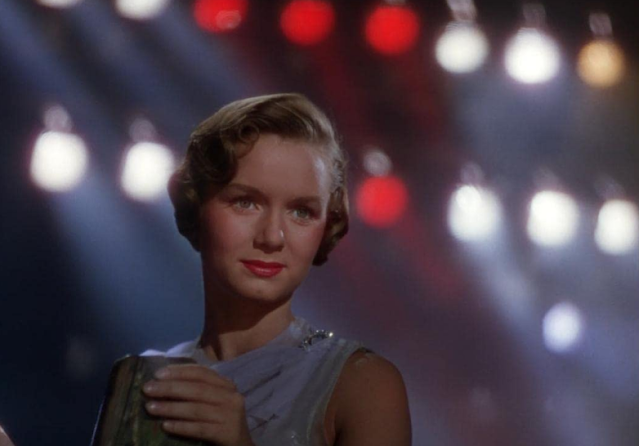
Debbie Reynolds became a star upon her 20th birthday with "Singin' in the Rain."


With Debbie Reynolds, a star was born in Singin’ in the Rain. Considering that she was then not a singer or dancer per se, Reynolds worked very hard to get up to speed. Co-director Stanley Donen had her two solos dubbed because Debbie sounded too Midwestern—typical MGM, home of the “mid-Atlantic” accent. You can find one of her solos on YouTube with her own vocals and she sounds just fine. While Reynolds wasn't a born dancer like those dervishes Gene Kelly and Donald O' Connor, Debbie keeps up with them in their group numbers. 
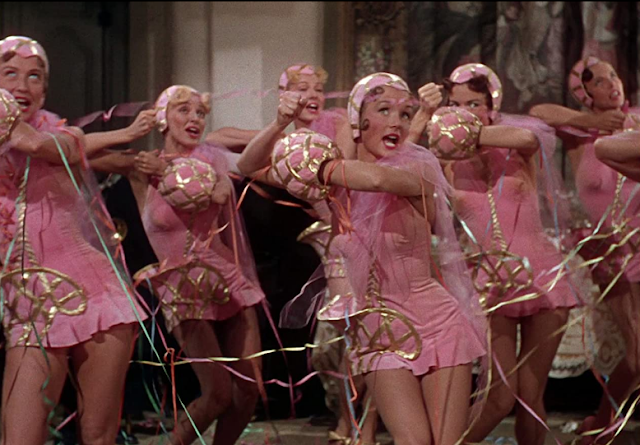
Debbie Reynolds shines as Kathy Selden in 1952's "Singin' in the Rain."

Debbie Reynolds was just 19 when Singin’ in the Rain filmed and the release was just days before her 20th birthday. Debbie was obviously working with superior talent and material in Rain. In lesser vehicles, Reynolds could come off as saccharine, like Doris Day; here Debbie is genuinely sweet and girlish. As Kathy Selden, her energy and natural clown personality are well-utilized. This film officially made her America's sweetheart, which came in handy during the downtimes of her career. I prefer Reynolds in her early stardom, when she was a honey blonde sweetie rather than the later bleached blonde dead set on wowing her audience. Debbie’s the girl next door and quite endearing. I won't dwell on co-director Gene Kelly's taskmaster reputation. If Gene had treated prior co-star and neophyte dancer Frank Sinatra the way he treated Debbie, Frankie probably would have knocked his teeth out. But Debbie was from a tough working class Texas family, and she survived.
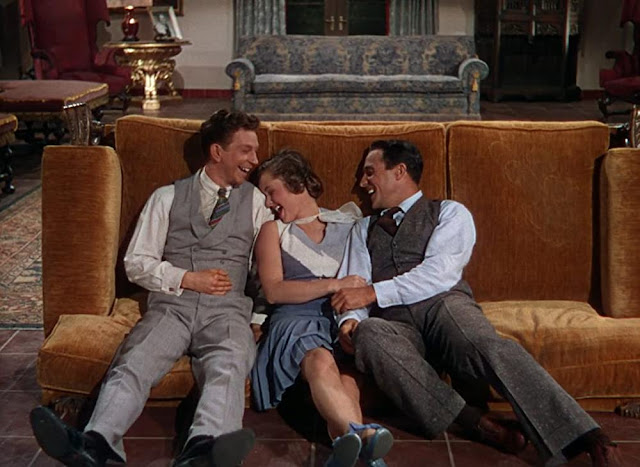
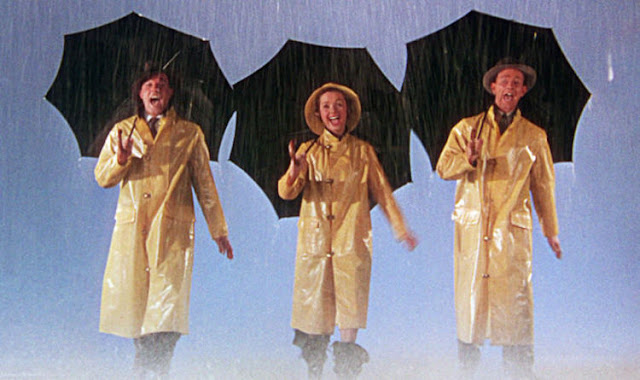
Donald O' Connor, Debbie Reynolds, & Gene Kelly are triple threats in "Singin' in the Rain."

Debbie, Donald O' Connor, and Gene Kelly were a trio who were triple threats at singing, dancing, and comedy. “Good Morning” is still an instant high, with its upbeat lyrics and joyful dancing. Kelly worked hard with them on the musical numbers and Stanley Donen's sophisticated touch shined on the rest.

Donald O' Connor's famed acrobatic number, "Make 'Em Laugh," from "Singin' in the Rain."

Everyone's on their game here. As Cosmo Brown, Donald O' Connor's impish and energetic, and his dancing is just as brilliant as Gene's. Donald was also a great clown, showcased in “Make 'Em Laugh,” though the song is a total rip off of Cole Porter’s “Be a Clown.” When Donald and Gene sing and dance to the imaginative “Moses Supposes,” the song is a tongue-twisting delight and their dancing is like watching an Olympic event. Gene as matinee idol Don Lockwood is pretty dang perfect. Kelly is at his most handsome and charismatic, and his dancing is superb. There's a great versatility in his showcased numbers, capped by his rain dance of the title tune. And I'm supposing that Stanley Donen, one of Hollywood's smartest directors, helped reign in the three stars tendency to mug. While they all get to clown, there's very little ham here.
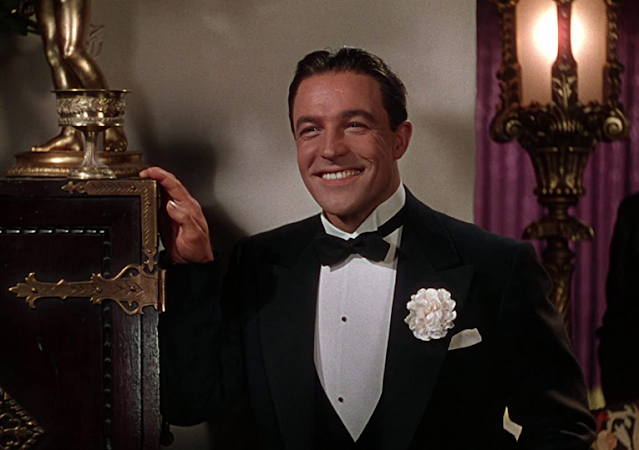
Aside from his many talents, Gene Kelly is well-cast as a matinee idol in "Singin' in the Rain."

Singin' in the Rain has that favorite movie myth attached that it wasn't a huge hit upon release, just a modest hit. Those who tell it usually compare Rain to Kelly's previous An American in Paris. Well, if you're talking about Oscars, yes. Paris got 8 Oscar noms and won 6; Rain got 2 noms, and won 0, which I find ridiculous. The only ones nominated were Jean Hagen for Best Supporting Actress and Lennie Hayton for Best Musical Score. Again, proof that Oscars are not a part of what ultimately makes movies memorable. As for the box office, both films cost about the same to produce and Paris made slightly more money. But which film is better remembered today? For my money, it's Singin’ in the Rain.
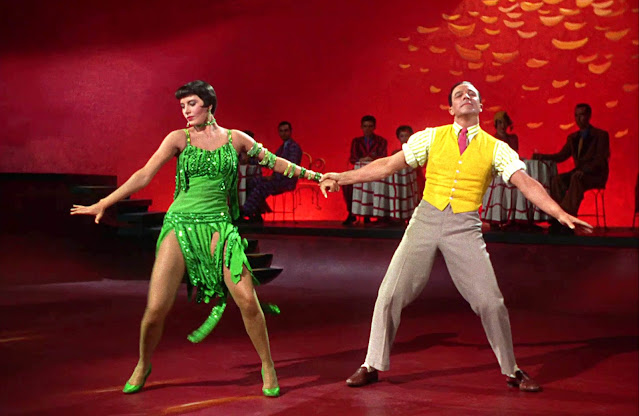
Cyd Charisse makes a guest appearance for "Singin' in the Rain's" "Broadway Melody."

One quibble: though the 13 minute “Broadway Melody” is presented as a "pitch" to the studio head in the movie, it feels very tacked-on. Superbly done in every respect, it also has zero to do with Singin' in the Rain or especially, the movie within a movie, The Dancing Caballero. It’s certainly superior to a similar showstopper, Judy Garland’s “Born in a Trunk” from ‘54’s A Star is Born. And Judy’s saga is twice as long! While I’ve read some smart comments in defense of “Broadway Melody,” it just feels like a Kelly showstopper, “All About Gene.”
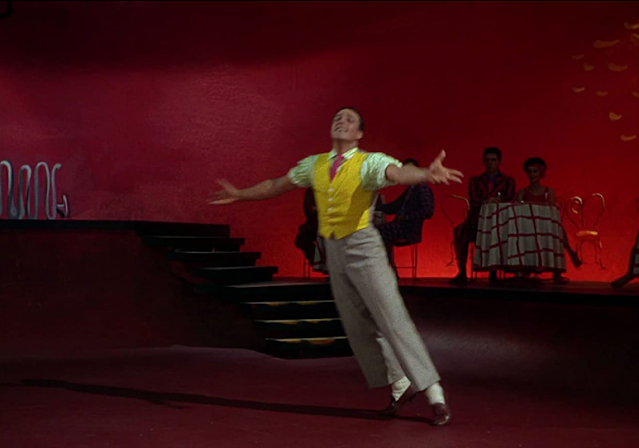
Gene Kelly was never shy about seeking audiences' adulation.

I'm also puzzled as to why Jean Hagen's hilarious Lina Lamont lost to Gloria Grahame that year. Was it because Hagen's shrill star sounded too much like Judy Holliday in Born Yesterday, for which Hagen was her understudy on Broadway? To me, Jean’s shtick is much easier to enjoy in small doses than Judy's shrieking at bellowing Broderick Crawford throughout the movie version of Born Yesterday. As for Grahame, she was the “It” bad girl of the early '50s, but her role as a flirty southern wife in MGM’s The Bad and the Beautiful was a mere nine minutes... and she even dies off-camera!
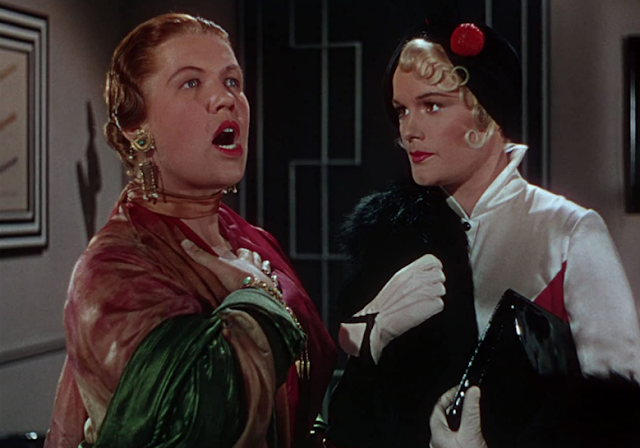
Jean Hagen, right, gives a hilarious performance as silent star Lina Lamont.
With an equally funny Kathleen Freeman, as Lina's poor diction coach!

With a couple of exceptions, the songs are all from MGM’s early decades, tied to the story of Hollywood's silent era ending and sound beginning. The satire is snappy, with some real life nods to casualties of the silent era. Funny bits abound, with a great cast down to the smallest parts, like hilarious Kathleen Freeman as Lina’s voice coach. Cyd Charisse is spectacular in the “Broadway Melody” number. Watch fast for Rita Moreno as starlet Zelda Zanders.
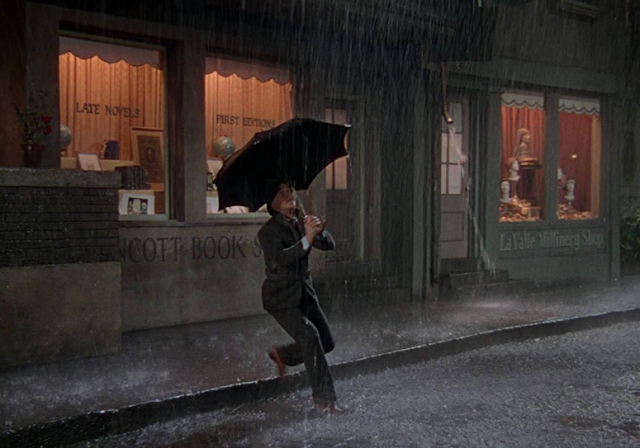
Perhaps the most famous song and dance number in movie history?
Gene Kelly is "Singin' in the Rain!"

Singin’ in the Rain is such a treat, with memorable song and dance numbers, gorgeous sets and costumes, great humor and performances. It all adds up to be MGM’s greatest musical. 

Here’s my tribute to Debbie Reynolds, when she passed away, on her life and very readable memoirs: https://ricksrealreel.blogspot.com/2017/01/debbie-reynolds-double-dose-of-memoirs.html
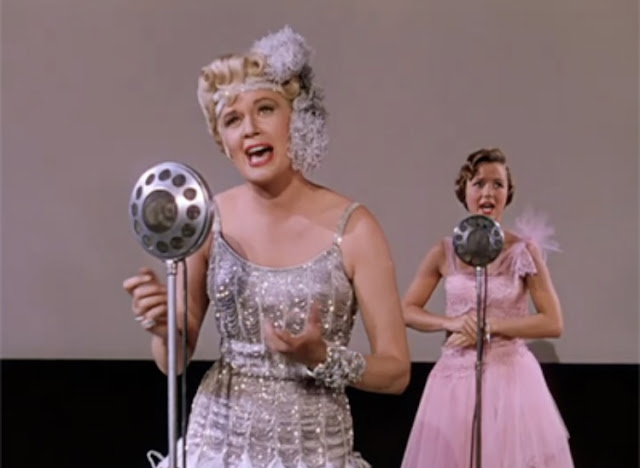
Debbie Reynolds was no longer in the movie background after "Singin' in the Rain!"

FYI: I put all the movie overflow on my public FB  movie page. 

Check it out & join!  https://www.facebook.com/groups/178488909366865/


Monday, August 31, 2020

Debbie & Tony in One-Gag ‘Goodbye Charlie’ 1964

Tony & Debbie: Two '50s stars turn a corner. Curtis faces 40 & Reynolds morphs into her Vegas persona.


For a one-gag premise, Goodbye Charlie is one of the most gaga sex comedies from the '60s. Some current critics have drooled over Charlie, viewing the gender bending as forward thinking. George Axelrod’s plays were certainly risqué in their era, like The Seven Year Itch, Will Success Spoil Rock Hunter, and Goodbye, Charlie. The fact that none of them have endured beyond their original shelf life, along with other Hollywood sex comedies of the era, indicates that they were aiming for prurient Playboy-era laughs than profound humor.  
And Charlie director Vincente Minnelli was not one to push the envelope, like a Billy Wilder. Minnelli craved both the security of his role as a studio director and hetero Hollywood husband, to risk going audacious auteur.
The French poster for 'Goodbye Charlie' is more to the point.

20th Century Fox bought this lesser George Axelrod play as a possible Marilyn Monroe movie, one of several properties earmarked for Marilyn before she went goodbye in the summer of ‘62. Fox offered the movie to Billy Wilder, who had directed MM in Axelrod’s The Seven Year Itch, but Billy turned it down to direct his own tasteless sex comedy, Kiss Me, Stupid.
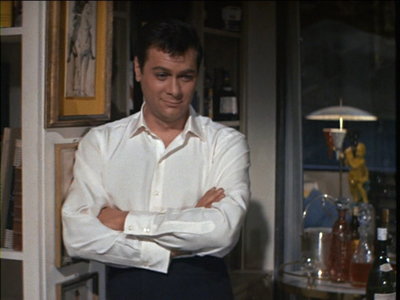
Tony Curtis as the late Charlie's pal, Richard, who's about to get a surprise!

The premise: an alpha male screenwriter gets shot aboard a wild yacht party, only to be reincarnated as a female, when alleged hilarity ensues. Debbie Reynolds is the new Charlie, found naked by a millionaire Mama's boy, dropped off at Charlie's pad, where his pal Richard is staying to settle his affairs.
Fox brought in a gaggle of MGM pros to help put this over, director Vincente Minnelli and star Debbie Reynolds, with backup from Metro’s Helen Rose for gowns and Sydney Guilaroff to design Debbie’s hair/wigs. Tony Curtis, who had starred with Debbie in The Rat Race, is cast as Richard.
Debbie Reynolds is game as Charlie, reincarnated as a woman. But is she good aping a guy? 

Reynolds tries to put over this one-note material, but is mostly one-speed. She first plays Charlie trance-like, as if she's under hypnosis. When she realizes who she was, but now in a woman's body, Debbie’s performance goes broad and butch. Debbie certainly had comedic talent, but is miscast, and overcompensates. Reynolds has some smaller, sly moments that demonstrate what might have been.
'Charlie' gets a makeover, while scheming to make his new situation work to his advantage.

Tony Curtis seems to be on autopilot, but his character isn’t given much to do. Tony is competent, but is stuck playing the straight man, when he was actually a Charlie type. Perhaps Tony should have donned Some Like it Hot drag again!
Tony's Richard with Ellen Burstyn's Frannie and her burstin' floral hat!

Walter Matthau has amusing moments, hamming outrageously as the horny Hungarian producer who shot Charlie. Joanna Barnes, the mean fiancée in 1961’s The Parent Trap, is amusingly snarky here as a Hollywood matron Janie. Pat Boone is smooth if smarmy as millionaire Bruce—not Wayne—who wants to marry Charlie.
Walter Matthau as the Hungarian film producer whose accent changes with each scene!

Also, look for Ellen Burstyn—billed as Ellen MacCrae—as one of the Beverly Hills wives Charlie dallied with. Interesting that Ellen is the same age as Debbie Reynolds and many of her contemporaries, yet Burstyn was just busting out at age 32 in movies, late by Hollywood standards. By the mid ‘70s Ellen was a "realistic" star, while old school stars like Debbie were considered passé in movies.
Debbie's Charlie is washed up on shore, now a woman, with white blonde hair and makeup.

Since this is a Vincente Minnelli movie, set in Hollywood to boot, you can bet the sets and women are highly over-decorated! The women are an array of “Color Me Beautiful” Helen Rose gowns. And whoever did Debbie’s makeup was “inspired” by MM’s last makeover, lots of white and beige costumes, pale blonde hair and nude eye makeup. The Monroe-esque makeup and hair job they gave Reynolds reminds me of all the other actresses of the era who took over parts for Marilyn or were supposed to be the next Monroe. Like Joanne Woodward in The Stripper or Carroll Baker, who looked more like MM than Harlow during this era.  Charlie's Malibu pad is a dress rehearsal for Elizabeth Taylor's Big Sur hippie "shack" in Minnelli's next movie, The Sandpiper. Both abodes looked like the ideal beach home for a tasteful, older director rather than a randy screenwriter or a free-spirited artist!
The animated opening credits gave 'Charlie' a sitcom feel, the Previns' title song didn't help.

The movie's opening, complete with a nutty theme song and animated credits, feels like a ‘60s sitcom—minus the smut. Dory and Andre Previn offered up more of their very on the nose ditties for Charlie, that feel like parody. Three years later, they took this to an art form with Valley of the Dolls.
The glossy production values, stage-bound feel, excess rear-projection shots, and the leering attitude, all made Charlie instantly dated upon release. Time hasn’t changed that. But if you’re in the mood for a time capsule rom-com romp, Goodbye Charlie might be for you.
This movie still sums up the problem with 'Goodbye Charlie.' Released at the end of '64,
it looks, sounds, and feels like a '50s film. 'Virginia Woolf' and 'Bonnie and Clyde' were just around the corner.
FYI: I put all the movie overflow on my public FB  movie page. 


Monday, March 30, 2020

Adorable Debbie in Dated ‘Susan Slept Here’ 1954

Debbie Reynolds was the most darling of starlets in her day.


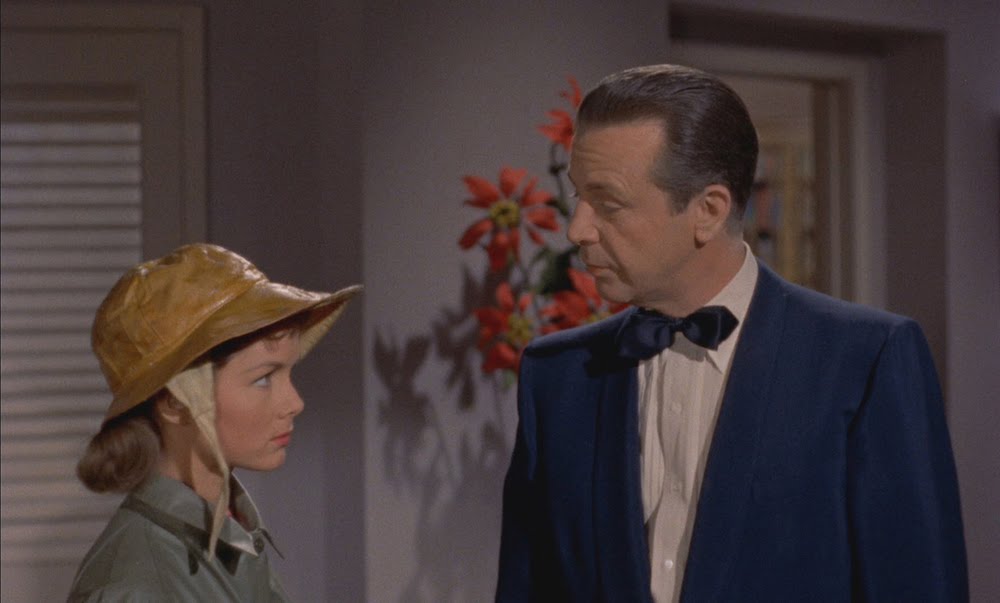
How’s this for a movie comedy plot? In Hollywood one Christmas Eve, two vice officers from the LAPD bring a 17-year-old female delinquent over to their screenwriter buddy’s bachelor pad that he shares with a Navy pal. The cops know that the comedy writer is looking for juicier material to inspire him. They figure that the girl can stay out of jail and with the writer, who can pump her for... umm… inside information. Of course, all kinds of wacky hee-larity ensue. I’m not overly PC, but can you imagine this story getting the green light today?
Vice squad giving middle-aged screenwriter underage delinquent Debbie as an Xmas present?

Even in 1954, Susan Slept Here was a bit dicey. But the year before, a controversial hit paved the way, The Moon is Blue. Starring William Holden and David Niven, their characters were both very interested in Maggie McNamara’s virginity. I bet that one holds up really well, too!
Howard Hughes, who owned RKO at the time, snapped up Susan. Hughes’ movie sensibilities were stuck in the late silent/early talkie era, his arrival in Hollywood, so is it any wonder this film feels like a time capsule?
Susan Slept Here sports a great cast, who try so hard to put over their unfunny lines and bits of business that Susan feels slightly surreal. Remember that scene in ‘59’s Imitation of Life, when “aspiring” actress Lana Turner tries out for a Broadway play? The audition is for a romantic farce, which isn’t funny, and she’s bombing. Well, that scene with Lana reminds me of this entire movie!
Debbie as delinquent, in gingham & jeans!

Bottom line: 22-year-old Debbie Reynolds in the title role is the best thing about Susan. Though Debbie always had a tendency to overplay, here it comes in handy. Even with just a few years in film under her belt, Reynolds is a pro, a game girl who is great at physical comedy, sly with a comic line, and appealing for the romantic scenes. Debbie also looks natural, still sporting light brown hair and subtle makeup. She’s petite, with a lovely figure, so it’s rather amusing that her Susan doubts her own appeal. But hey, she’s only “17.”
See Mark's PJ bottoms on Susan. When she borrows clothes from him, she swims in them.
Debbie was 5'2" & Dick 5'11", but his clothes on her look swiped from an NBA player!

Aside from Debbie, director Frank Tashlin’s trademark visuals and camera angles fleetingly entertain, but that’s not enough to carry this dull and dated comedy. At times, Susan feels like it’s filmed in 3-D, with actors and objects coming at the camera. Finally, fab fifties fans will admire the décor. Well, that’s about all Susan Slept Here has going for it!
Does this man look 29 to you? 35? Dick Powell at 50, started in films the year Debbie was born!
Apparently there was a shortage of 30-something comic actors in 1954.

Susan’s leading man is Dick Powell. As screenwriter Mark Christopher, he says he’s 35, but can pass for 29. Powell was 50 at the time, and frankly, looked it. While Dick was not as dissipated, in the tubby and/or toupee club, as fellow member Bing Crosby, but Dick had the same aging boyish face that now looked scowly and jowly. Ironically, Dick Powell made his movie debut in 1932, the same year Debbie Reynolds was born! Fittingly, Susan was Powell’s last feature film. While Dick is distinguished and possessed an authoritive speaking voice, these qualities aren’t very funny in a sex farce.
Anne Francis seems to be phoning in some early '50s Marilyn Monroe vibes here!

Anne Francis plays Powell’s fiancée Isabella, who is supposed to be more sophisticated than Susan—she’s all of 24. Francis shows a flair for bitchy comedy but is so glamorized that I didn’t recognize her at first. Still, this MGM starlet looks fetching, too. Francis is totally dolled up to look like the movies current “It” girl, Marilyn Monroe, ala Gentleman Prefer Blondes and How to Marry a Millionaire. Yet, Anne’s barely in the film, until the comedy comes to its climax.
Like How to Marry a Millionaire, putting glasses on a glamour puss gets laughs.

Alvy Moore, later Hank Kimble on Green Acres, plays Powell’s Navy buddy, Virgil. The only time I laughed out loud watching Susan was when Moore’s Virgil says he was Powell’s commanding officer—he was 17 years Powell’s junior! The age game in Susan fools no one, since it’s a plot point, and brought up repeatedly. Glenda Farrell, one-time WB star with sass, plays man-hungry screenwriter Maude, who likes booze almost as much. Farrell, the same age as former co-star Powell, is “comically” depicted as sexually desperate. This movie has more jokes about drinking and sex than your average Dean Martin Show. You know the movie’s in trouble when two reliable comic performers like Moore and Farrell can’t get laughs.
Glenda Farrell as Maude & Alvy Moore as Virgil, react differently to the Susan dilemma.

There are familiar faces that overreact wildly to the proceedings, including a bit by Ellen Corby—Grandma Walton herself—as a diner waitress. When Susan stops at a commissary café, she orders strawberries, pickles, and milk. Corby looks on disbelief, especially when Susan starts mixing them. Powell’s lawyer comes upon her and is aghast when he sees the girl eating the bizarre concoction. Their eye-popping has everything but thought bubbles popping over their heads that scream, “Pregnant!”
Strawberries, pickles, and milk...oh, my! Debbie must be pregnant!

Mark’s Oscar statue is cleverly turned into a character. Unfortunately, he is voiced by radio announcer Ken Carpenter, who loudly reads every line—just like everyone else in the movie. Producer Harriet Parsons’ mother was legendary gossip hobgoblin Louella, so she gets plenty of plugs, plus a chance to play herself, by phone. Finally, there’s a pointless surprise cameo by Red Skelton near the finale, as Maude’s first love.
This get up may be why Dick Powell retired from feature films after Susan Slept Here!

The “dream ballet” is a chintzy nightmare, with gaudy colors, simplistic fantasy, and little dancing. Dick Powell in a spangled version of his character’s Navy uniform makes him look like a missing member of The Village People. Anne Francis is done up like a sexy spider woman, and Debbie, in a shiny version of her gingham and denim outfit. It’s tacky, dreary, and feels like filler.
The two sides of Debbie: bride and tomboy. There's a LOT of pink and blue in this number!

The upsides to Susan Slept Here are the snappy presence of Debbie Reynolds and Frank Tashlin’s visual style. Beyond that, Susan Slept Here is a snooze fest.

FYI: I put all the movie overflow on my public FB  movie page. 
The title song, sung by an insanely cheerful chorus, sounds like a sitcom theme!


Sunday, January 15, 2017

'Bright Lights' Brings Back Personal Memories

At home with Debbie and daughter Carrie, with their dogs.

Bright Lights, the HBO documentary that provided a fitting farewell to showbiz mother/daughter icons Debbie Reynolds and Carrie Fisher, has received much comment and acclaim. As a fan of both stars, I was touched by this Hollywood “home movie.” And as a baby boomer who has watched aging family members and friends dim and fade away, watching Bright Lights brought back a lot of personal memories.

This photo of Debbie Reynolds, with those arched, penciled eyebrows and twinkle
in her eye, reminds me of my Grandma Leone so much.


Watching Debbie try to put on her best face, figuratively and literally, reminded me of my maternal grandmother Leone, who wanted to be independent and dignified to the end. Debbie’s “up” attitude, in spite of some lousy breaks in life—especially with men—recalled my upbeat pal, Alice Crosby. Watching Reynolds’ determination to do what she always did, even if required reinforcement from her children, made me think of my longtime neighbor, Claire Nixon. And the steel beneath Debbie’s El Paso magnolia made me think of my late partner’s mom, Sue Johnson. Like Debbie, fellow Texan Emma Sue could be the life of the party, but if she felt her wishes being ignored, look out! Aging was frustrating for all of these great women, though Claire did it best, in my opinion. Yet, as Bette Davis once warned, “Old age ain’t for sissies.” That fine line between keeping on and letting go is a tough call and hard on everybody involved.

Grandma Leone enjoying her middle years, makeup intact!
The scene where Debbie holds up a dry erase board and cheerily says she put notes if she doesn’t want visitors, made me laugh. My Grandma Leone was one of the most pleasant—yet private—people I have ever met. She preferred that you call first, no dropping in, please! And like Debbie refusing to be photographed without her platinum wig, Grandma Leone always “put her face on” before going to town, even if it was for a doctor’s appointment.

Debbie’s insisting on taking a few last gigs despite assuring her kids she was retired made me think of my buddy Claire. The climactic scene is Debbie’s fraught journey to receive a lifetime achievement award from the Screen Actors’ Guild. Debbie did it her way, but Reynolds wrangled her kids in to pull it off. 

My pal Claire Nixon's 90th birthday finale!
My old neighbor Claire Nixon, the Katharine Hepburn of Traverse City, had cancer the last two years of her life. Claire was certain that her 89th birthday would be her last, so she threw not one, but two parties! True diva style, Claire had a big one for all her many pals and acquaintances, and a smaller one for close friends and family. Here’s the kicker: Claire hung in so well, that she lived to have a 90th birthday bash! Claire, a control freak in the best sense of the word, did much of the cooking for these parties, as always—but enlisted her family to ensure everything was in order and on schedule.

Sue Johnson had as much personality & energy as fellow Texan Debbie!
And the scenes depicting Debbie’s frustration with her aging body reminded me of my late partner Jigger’s mother so much. Like Debbie, Sue Johnson was a bundle of energy most of her life and would charge into projects like her huge flower gardens and elaborate family gatherings like a Texas tornado. But after her stroke, Sue was often exasperated that her now-diminished body would not cooperate with her still-energetic mind. For Sue to delegate holiday meal tasks or down-size yard projects required tact and patience on both sides—with results that could be hilarious or sometimes heartbreaking.

My pal Alice Crosby, back when she was as cute as Debbie!
The segment where Debbie is finally forced to auction off the massive memorabilia that she collected for decades gets a dramatic boost—her kids find out she took a tumble in the bathroom the night before. The next scene is Debbie, matter-of-factly talking about the purple bruises on her face. This brought back memories of when my buddy Alice started taking falls in her home. I remember walking through her front door with dread many times, not knowing what to expect.

One last hurrah for Debbie, honored at the Screen Actors' Guild Awards.

When Grandma Leone, Alice, Claire, and Sue passed, I was beyond sad, knowing each time that an era had passed. In fact, Alice and Sue died a week a part in February of 2004—that was the most depressing Michigan winter ever, for me. While I’m relieved for their sakes the way Carrie Fisher and Debbie Reynolds passed, it still makes me melancholy to know these two life forces are gone. Yet I know, after time passes, I’ll think of them the same way that I think of these four great women in my life. Not as ill or aged, but as eternal bright lights.
Here's my take on Debbie Reynolds two memoirs!
https://ricksrealreel.blogspot.com/2017/01/debbie-reynolds-double-dose-of-memoirs.html

Saturday, January 7, 2017

Debbie Reynolds Double Dose of Memoirs

Debbie Reynolds and daughter Carrie.

Debbie Reynolds, showbiz’ ultimate sweetheart, lived a dramatic life and made an equally dramatic exit on December 28, 2016 a day after daughter Carrie Fisher died at age 60. After the initial avalanche of stories on Debbie and Carrie Fisher, I wanted to read about Debbie Reynolds’ glory days as a movie star. So, I borrowed her two memoirs from the library, My Life and Unsinkable.

I had passed on her first autobiography when came out almost two decades ago. For one, I was always on Team Liz. If you have to ask Liz who, you’re reading the wrong blog! Also, Debbie’s memoir was titled My Life, a classic cliché show biz bio title—code for no dirt. The super-retouched cover photo was another red flag for star-filter stories inside.

Debbie plugging Debbie!
“Don’t judge a book by its cover” turned out to be the case with Debbie’s tome. Reynolds’ soap opera life is told straightforwardly, with the help of ghostwriter David Patrick Columbia, blog maestro of the nifty New York Social Diary.

Is it a tell-all? Just as daughter Carrie Fisher characterizes Debbie’s second memoir, Unsinkable, as a “tell-some,” so is My Life. Reynolds is a woman and a star of her era. What she chooses to discuss is direct and the stuff that she leaves out falls under the category of none of your business. Debbie Reynolds was never a wallflower, nor a “wallower.”

Backstory: I liked Debbie better as I grew older than my growing up years. In the ‘70s & ‘80s, Reynolds was already that fizzy showbizzy personality in sequined slit gowns, platinum slathered frosting wigs, and kewpie doll makeup. Her youthful image didn’t endear me, either. Debbie Reynolds on the afternoon movies always meant nostalgic musicals, with Debbie hyper and sugary sweet. Why were Hollywood’s wholesome blondes perkiness personified, like Betty Hutton, Doris Day, Sandra Dee, Connie Stevens, and Debbie, I wondered. On talk shows, Reynolds was always “on,” and came off like a phony for the “good old days” of Hollywood.

Debbie loved to perform & had exes' debts to pay!
Though Reynolds had mixed feelings at the time, I thought Debbie was a good sport when daughter Carrie satirized their relationship in 1990’s fictionalized Postcards from the Edge. I liked Debbie when she tweaked her sweetheart image with tartness in Albert Brooks’ Mother. The ‘90s were the first time Debbie Reynolds seemed like a real person to me, and not an aging Chatty Cathy Doll. The more I read about her, I empathized with Reynolds endless rounds of tribulations and admired her for surviving with sass.

What’s amazing about Debbie’s My Life and Unsinkable is not great writing or storytelling, but the long-lasting career and cray-cray life. Reynolds grew up in El Paso, Texas, raised by tough parents, with an especially steely Mom. Once they moved to California, Reynolds’ star was quickly on the rise at MGM, just as the studio’s was beginning to dim. Ironically, Debbie became a bonafide movie star in Singin’ in the Rain at 19, the same age daughter Carrie became Princess Leia in Star Wars. When Reynolds married teen idol crooner Eddie Fisher, they became America’s sweethearts. After three years together and two children, Eddie famously left Debbie for her MGM pal and his idol Mike Todd’s widow, Elizabeth Taylor.

Aba Daba Honeymoon! If only Debbie's marriages were as cheery!

Debbie’s second marriage to shoe tycoon Harry Karl ended when she found out that he not only blew through his fortune, but hers, too. My Life ends on a happy note when Debbie marries rich businessman Richard Hamlett—revealed as a sociopathic con artist in her followup memoir, Unsinkable. In both books, Debbie seems to be a magnet for mismanagement and rip-offs, from asshole husbands to business associates. When Debbie’s marriage to Karl ended, there was a point where Reynolds was reduced to sleeping in her car!

Tammy was Debbie's #1 hit & Eddie Fisher was pissy about it!
Reynolds paid off his debts—that were unfortunately in both their names. A later Las Vegas hotel venture went belly-up, thanks to her crooked last husband. Debbie Reynolds worked like a rented mule from age 40 until she was nearly 70, paying off debts from two loser husbands. Reynolds’ dream of a Hollywood museum for her vast movie memorabilia faded, too…though its auction a few years ago finally brought her some millions back.

'The Singing Nun.' Bet there were times when Debbie wished it true!
In between all this, the pages fly by as Debbie dealt with her own issues: keeping Debbie Reynolds the performer relevant throughout the decades; aging parents and growing older herself; raising her kids in showbiz; and especially, daughter Carrie Fisher’s many emotional ups and downs.

How did Debbie survive all this? Reynolds credits her strict upbringing, strong faith, good humor and health, and children Carrie and Todd, for getting through all this, and most of all, putting one high-heeled foot in front of the other.

Despite fame and fortune, I found it fascinating that MGM girls Debbie Reynolds and Elizabeth Taylor were essentially women of their era. Debbie thought she’d be a movie star a few years and then get married, start a family, and become a gym teacher—seriously! Fellow starlet Elizabeth Taylor just wanted to quit movies and marry a “big, strong guy who paid all the bills.” Yes, this was the ‘50s, folks. Ultimately, both women worked well into their older years, and basically supported themselves—and more than a few husbands!

Carrie once suggested Debbie title her first memoir "Singin' in the Pain!"

Debbie’s marriage to Harry Karl became surreal, him living in a fantasy world as the walls came tumbling down around them because of his gambling and big-spending. When Debbie finds out that Karl’s barber, who visited the house daily, was also his pimp, and the manicurists were actually hookers, it’s beyond anything a screenwriter could make up. Then Debbie makes the same mistake again, going from a dysfunctional spendthrift to a predatory con man, and Reynolds wonders when Eddie Fisher started looking like the good husband!

Debbie Reynolds, at the peak of her movie stardom!
Reynolds’ tale of woe emphasizes the shark mentality of Hollywood, as when she reveals how the estate of her late pal Agnes Moorehead—Endora of Bewitched—was “left” to her lawyer! Or how MGM’s drama coach and life-long mentor Lillian Burns got dumped and duped, after 30 years of marriage, by her famous director husband—and his next wife. No wonder stars become tough, a criticism leveled at Debbie over the years, and one Reynolds acknowledges.

In both books, Debbie’s direct about people who’ve disappointed her, but her dislikes are not dwelled on. Reynolds freely admits Gene Kelly was tough to work with, but ultimately worth it. Other stars or directors who were unkind or disloyal are dealt with pithy humor. The only exception is first ex-hubby Eddie Fisher. After reading Debbie’s side of the story, it confirmed Fisher as one of a long line of Hollywood Peter Pans, oblivious to the damage they did their families, such as Tony Curtis or Ryan O’ Neal.

Oh, yeah...there was that little Liz/Eddie/Debbie scandal that made Angelina/Brad/Jen
 look like a nursery school tussle!


The Debbie/Eddie/Liz triangle was essentially the Jen/Brad/Angelina scandal of its time. While Debbie is honest in recounting her naiveté and Eddie’s immaturity, Reynolds gives mixed signals about the state of their marriage when Liz came into the picture. Frankly, Debbie and Eddie sounded more like a PR story than a love story. The fact that Reynolds repeats her tale of getting Fisher drunk to get pregnant so she can salvage their marriage says more than Debbie intended.

Unsinkable, written 15 years later, picks up where the first memoir leaves off. The ongoing Reynolds saga shows Debbie less invested in being Hollywood’s perennial good girl. Reynolds became bawdier and sharp-tongued over the years. Debbie also writes candidly of making up with Elizabeth, and coming to terms with problem child Carrie.

Read about Liz & Debbie's escape from NYC after 9/11!
Then there’s Debbie with the dish! Reynolds may not have been lucky in love, but Debbie’s lifelong career is fascinating—she’s got stories about everyone. Did you know that Liz helped Debbie escape the 9/11 aftermath by asking her ex, Senator Warner, to get them a plane out of NYC? Or that Michael Jackson practiced his dance moves for his Thriller album at her LA dance studio? Or that her first big romance was with Robert Wagner? Or that Debbie suggested herself for the movie star mom role in daughter Carrie’s Postcards from the Edge, only to have director Mike Nichols tell her she wasn’t right for the part! Or that Frank Sinatra tried to warn her off marrying Eddie Fisher, saying singers make terrible husbands? Or making Warren Beatty promise to be a gentleman when he cast daughter Carrie in her film debut, Shampoo?

Hollywood's most famous Girl Scout!
There’s tons of anecdotes in both books about Debbie Reynolds fabled and varied career. Personally, Debbie’s signature roles like Tammy and The Unsinkable Molly Brown are too sickly sweet for me. However, I think that Debbie Reynolds was the female Mickey Rooney: an energetic and charismatic performer who could sing, dance, plus play comedy and drama. Check out Debbie in lesser-known, but more substantial films like The Catered Affair with Bette Davis, The Rat Race with Tony Curtis, or What’s the Matter With Helen?, with Shelley Winters. Plus, there’s Reynolds’ latter day turns in Mother, In and Out, and Will and Grace.


My Life and Unsinkable are both highly entertaining reads about one of Hollywood’s true class acts. Debbie Reynolds is gone, but her story and screen performances live on.

Debbie Reynolds, the Unsinkable Star!

FYI: I put all the movie overflow on my public FB  movie page. 

Check it out & join!  https://www.facebook.com/groups/178488909366865/