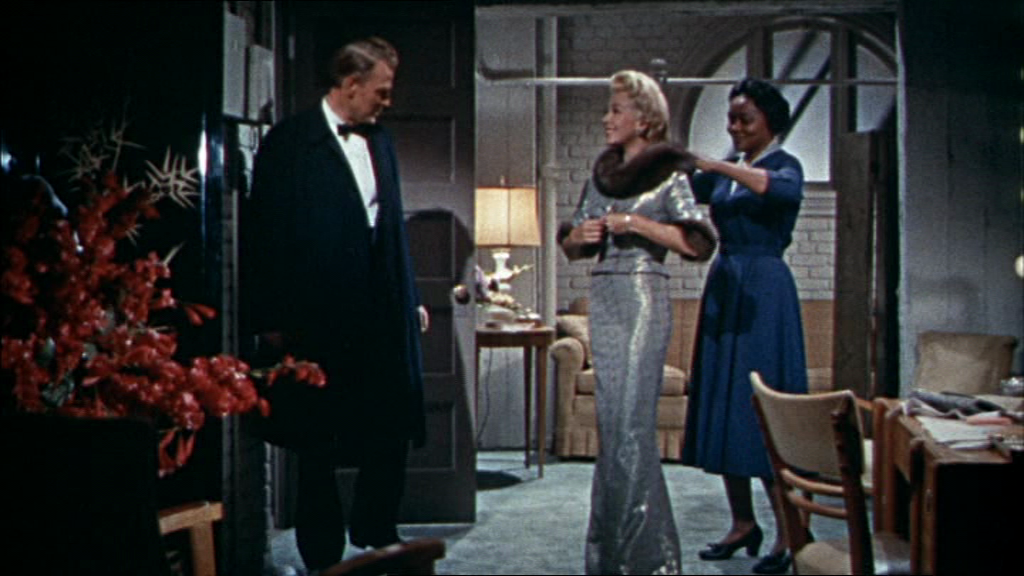
Showing posts with label Susan Kohner. Show all posts

Sunday, May 3, 2020

Wood & Wagner Wallow in ‘All the Fine Young Cannibals’ 1960

Natalie Wood & Robert Wagner, together for the first time.


All the Fine Young Cannibal’s opening titles are the giveaway to this movie’s mindset. They look like the tawdry paperback novels my Mom used to read when I was a kid! Though Cannibals looks like a B-movie, all of MGM’s top talent was involved, plus its bright young cast. While it not a prestige picture, like Cat on a Hot Tin Roof, it was definitely an A-flick, but deserves a Z rating.
Wagner, George Hamilton, Wood, and Susan Kohner as 'young moderns' in an old soap!

The source novel, The Bixby Girls, was allegedly bought with Elvis Presley and Elizabeth Taylor in mind. While Elvis made MGM a fortune with Jailhouse Rock, his fate in “drive-in movies” was sealed early on. As for Elizabeth, she had already become permanently plump after Cat on a Hot Tin Roof. By 1960, it was more appropriate that ET appeared in BUtterfield 8 rather than All the Fine Young Cannibals. Natalie Wood, who got away with playing younger longer than she had a right to, was then 21. During the early shack scenes, Nat looks about 12. Still, I’d have loved to see ET feeding those no-neck siblings their dinner slop!
I can think of TWO good reasons Elizabeth Taylor would be miscast as an 18-year-old girl.
Natalie Wood, 21, was cast instead. Nat & ET around the time Cannibals was made.

The film version was influenced by melodrama hits of the time, like Written on the Wind and Cat on a Hot Tin Roof. The screenplay is by Robert Thom, who was a playwright, poet, and screenwriter. Thom’s big hit was the play Compulsion. Once in Hollywood, Thom wrote these “eclectic” gems: The Subterraneans; The Legend of Lylah Clare; Angel, Angel, Down We Go; Wild in the Streets; Bloody Mama AND Crazy Mama; and Death Race 2000.  Then there’s All the Fine Young Cannibals, which forces its cast to spout some of the most insane dialogue ever.
RJ's Chad Bixby & Nat's Salome start off as poor Texas trash.

At the movie’s opening, Robert Wagner’s Chad Bixby is the son of a preacher man, yes, he was… and he’s the only one who can ever teach Natalie Wood’s Sarah aka “Salome.” Chad’s daddy, who was hard on his wild child, has died. And Chad wants to party his pain away. “You shouldn’t be near any dancing!” gasps Salome. Sounds like a prequel to Footloose!
Well, they do, and from there they go to the black side of town. First, Chad makes Salome promise her one thing: she won’t leave his side until sunrise. No, he’s not a vampire. It’s because Chad’s afraid of the dark—seriously.
Chad and Salome go to Rose’s, a whorehouse and all round fun house. George Hamilton, as rich kid Tony McDowall, makes his entrance as a customer who mistakes Salome for a hooker. The screenplay is filled with purple proclamations of the characters’ passions and motivations that feel like a Carol Burnett Show parody. Proprietor Rose (Louise Beavers) introduces Chad's big talent: “He’s gonna tell us what he feels, then he’s gonna play us what he feels, just like he’s been doing down here since he was seven.”
Wagner's white boy is gonna 'say' the blues, then play them, for Rose and her patrons!

RJ as Chad, pouts and peers through his pompadour, like he’s gonna burst into an Elvis song. But no, the young man with a horn belches such hot air as, “You gotta be awful strong not to love anybody, because the world gets colder every year.” Then Bixby blows something brilliant on his trumpet on the spot! RJ’s hunched posture is supposed to look so James Dean, but really more like a monkey humping a football! Other gems that follow: “This is how strong my father was.” Womp! Womp! Wahhh! “And these are my tears!” Cue another horny wail. I’m no music expert, but the sounds are actually pretty cool, but are negated when performed by the hopelessly uncool Robert Wagner.
After Chad and Salome part ways, he wanders back to the roadhouse, looking for mother figure Rose. Instead, he finds her sister, Ruby Jones, played by Pearlie Mae Bailey herself. Their first exchange is a hoot.
Wagner asks her gruffly TWICE: “Do you think I’m a fool?”
Ruby’s response: “I think most men are fools, white boy!”
Pearl Bailey as morose Ruby Jones & RJ as the tragic trumpet player, with a bottle as a buffer.

They both commence to swill down huge tumblers of whiskey that people only drink in movies, probably because it’s actually ice tea. Ruby was once the biggest singer in NYC—and the South, too! But a man had gone done her wrong, spending all her money, and then leaving her for another woman. Now Ruby’s done, determined to drink herself to death. After a night together, they decide to establish Chad as a performer in NYC. He encourages her to sing again, but she’s not having it. Though implied that they are lovers, when he offers to at least care for her, Pearlie Mae growls: “I don’t carry on with no white boys!”
When George Hamilton's frat boy meets Nat's country girl the first time, he takes her for a prostitute!

In the early section of the movie, Hamilton’s Tony is a carefree college playboy. At one point, while arguing with his father about joining the family biz, Tony replies, “I love you, Daddy-O.” Then he proceeds to tell Pops that he loves oil money, too, but doesn’t have oil in his veins! Dig? Or in this case, drill.
When we first see Susan Kohner’s Catherine McDowall, she’s lolling on her brother Tony’s bed, acting like she wants him to join her. Kohner is a combination of Dorothy Malone’s rich bitch sister in Written on the Wind and Elizabeth Taylor’s crazy Catherine from Suddenly, Last Summer. “I like spoiling the fun!” You keep wishing somebody would clock her, and stop her declarative, fake southern baby talk, and posturing.
George Hamilton's Tony is taken with the poor girl he befriends on a train.
Wood's scenes here remind me a bit of her Alva, in This Property is Condemned.

Natalie’s Salome gets mixed up with this crew when she hops a train out of Hicksville and meets George’s Tony on the train. One evening with Salome and Tony’s entranced; he marries her and instantly becomes a dull, dutiful husband. Just as suddenly, Salome now has a gorgeous wardrobe. They barely make it his frat house door, when Catherine shows up. Also, Salome’s got a secret: she is pregnant from her last night of “dancing” with Chad. In true soap fashion, she keeps it secret, and marries another. This movie doesn’t drag, that’s for sure.
Natalie gets the MGM glam treatment & looks lovely in her Helen Rose costumes.

Natalie is radiant in Helen Rose’s MGM glam wardrobe, especially a red cocktail dress that beautifully brings out Wood’s dark coloring. This is offset by sister-in-law Catherine’s nonsensical bitchery. Nat’s Salome, despite a bitty baby bump, looks wafer thin. Hell, Nat’s Bambi false eyelashes probably weighed more than she did! Yet, Kohner’s Catherine cattily comments that she wouldn’t be caught dead in public in her condition. Why? “How can you dance that way?”
Nat's Salome getting pestered by Kohner's sister-in-law Catherine.

Another clinker from Catherine: “If I irritate you, you can image how I irritate myself. I’m what am known as spoiled.” You don’t say! Tony interrupts this scene, to tell his sister that he loves Salome, in a most unconvincing manner. Her response is zingier: “But she doesn’t love you.”
Meanwhile, Chad and Ruby are ensconced in a ruby red apartment suite, apparently in the black part of the city. As Ruby’s getting him fitted out for stardom, she abruptly asks, “You got underwear, white boy?” This made me laugh, since at times, RJ looks like his other instrument is swingin’ free!
They talk about money, and Ruby laments, “What do I need money for, when I’ve lost my mind?” Ruby Jones is just jonesin’ to end it all!
When we first see Chad perform in a polished performance, he’s got his tell and show down. Then he drags morose Ruby onstage to perform. It’s the classic cliché: No, no, no, I can’t! Then after a slight falter, Ruby wows with a mini-set! Absurd as the setup is, Pearlie Mae’s performing is the highlight of this movie, including a rendition of God Bless the Child.
Pearlie Mae sings the blues, with RJ as the young man with a horn.

Salome finds out about Chad’s success when she awakens one night, to find out Catherine is entertaining a fellow with Bixby’s latest disc as mood music! Salome awakens, goes downstairs, hair intact, full makeup, and in a lovely MGM nightgown that Wood could have worn to the Oscars. The scene is so hokey, but with the music playing, Nat’s silent, natural emoting, this is one of the film’s more effective scenes. But once she has to endure Catherine’s prattle, the spell is broken.
When Salome finds out that Chad’s a NYC sensation, she cajoles everyone to go see him perform. In keeping with the rest of the movie melodrama, she’s a jittery wreck, and then Chad spots her while performing. Natch, he improvises on the spot! And so does the wicked sister-in-law, who senses their connection, and decides to come between them, just for kicks.
Wagner's Chad & Kohner's Catherine enjoy some marital happiness.

When Catherine comes home from an all-nighter with Chad, Salome confronts her. Kohner has one of her most baroque moments, yawning ostentatiously and caps her insults by saying, “I’m bored. I’m bored with this conversation. I think you better go now, mother.”
The next day, Salome meets Chad and spills the beans, her baby is theirs. Chad huffs, “If I can’t have ya, then I wanna hurt you. And I will.”
This all comes to a head when now newlyweds Chad and Catherine have one of their biggest fights. She whips him with a riding crop, and he taunts her that his father’s scars cut deeper. She slips off to the bathroom and slashes her wrists. Her response: “Did I cut them deep enough, Chad? Did I?” Surprisingly, this scene is one of the more effective in the film.
Kohner's character redeems herself, RJ's Chad looks like he has heartburn. 

Cannibals’ saga all wraps up in an absurd about face. Salome realizes she isn’t crazy about Chad after all, and that maybe she loves Tony. Likewise, Chad considers that he hasn’t given neurotic Catherine a fair shake. Salome takes baby Pete back home. Natch, Hamilton’s Tony follows Nat’s Salome, almost makeup-free, and calling herself Sarah once again. Chad brings Catherine back to their apartment, reads the reply that she’s left to his lipstick written scrawl—How BUtterfield 8! Her response when she awakens: “I left the light burning every night.”
Nat's Salome goes back home & to being called Sarah again.
Wood's character has a few similarities to her next role, in Splendor in the Grass.

None of the four “young moderns” rise above the hilariously outdated script. At least Natalie, as the Sondheim tune I’m Still Here goes, “Still, someone said, “She’s sincere.” The next year, Wood would fare much better as another small town girl navigating romance with a rich boy who has a bitchy sister, in Splendor in the Grass.
That’s more than you can say for Susan Kohner, who is absurdly artificial and arch as the bitchy sister of the rich boy Wood marries. Much was made about how Natalie and Susan looked like each other. But once seen on screen together, you see that's not so true. Kohner looks more like a vulpine, imperfect version of Ava Gardner. Susan Kohner retired in 1964 to a happy personal life.
RJ's Chad not only pours out his feelings on the trumpet, but his wife's lipstick, too!

The two male leads are leaden: Robert Wagner and George Hamilton. Wagner got the build up by 20th Century Fox the prior decade and after his heartthrob status subsided, he flat lined as a leading man; Hamilton would soon travel the same trajectory. Neither were simply talented enough dramatic actors. Both fared much better later, on TV in light comedy/adventure or films that allowed them to spoof their classy personas.
All four of the fine young stars went on to better things, and All the Fine Young Cannibals is best enjoyed today as camp.
Susan Kohner tries to whip some life into Robert Wagner, but no luck!
FYI: I put all the movie overflow on my public FB  movie page. 


Tuesday, December 19, 2017

Imitation of Life 1959

Lana Turner and Juanita Moore as two mothers who team up in "Imitation of Life."

To my movie fan mind, Imitation of Life is really Imitation of Lana.
The 1959 remake is a soap opera as grand opera: every emotion is emblazoned, every scene is elegant pageantry, and the leading lady is an eyeful. Lana Turner’s glamorous face and figure mightily sold Imitation of Life, but ultimately, Juanita Moore was the movie’s heart.

FYI: I put all the movie overflow on my public FB  movie page. 

Imitation of Life, once considered merely a slick soap opera, has been massively written about since its release. The movie has more facets than those diamonds in the opening credits: stylish soap opera; camp classic; early depiction of racism; tabloid take-off on Lana Turner; or director Douglas Sirk’s signature film.
Juanita Moore as Annie Johnson, the heart of 'Imitation of Life.'

The major focus on Life has been its look at racism, with reactions that range from praise for its subversiveness to scorn for its saccharine sentimentality. My take is that Imitation of Life is a product of its time. For 1959, a film about a young woman trying to pass as white was daring, especially in the guise of a soap opera. The dual storylines of Imitation of Life reminds me of that song from Mary Poppins: “Just a spoonful of sugar makes the medicine go down!” Producer Ross Hunter cannily knew that audiences would flock to see scandalous Lana as superstar eye candy, which would make the tragic tale of a black maid and her daughter easier to swallow.
Lora's the star, Annie is still taking care of her!

Annie Johnson to Lora Meredith: “I like taking care of pretty things.”
For me, the first half of Imitation of Life is best. When the two women bond as they struggle to keep body and soul together, these are the film’s warmest moments. When Lora gamely does the flea powder commercial with the slobbering dog, it shows Lana at her most playful. The scenes with their young girls give Lana a chance to be vulnerable, and Juanita to be warmly appealing. Some have said that changing the dynamic between the two women’s characters, with the pancake business cut from the original, leaves their relationship lopsided. Why would Annie stay with Lora for so long? Why would Lora treat her any different than a maid? My thought is that Lora took them off the street when she saw Annie’s dire situation, and was grateful by how giving Annie was. The two bonded and created a home for their girls. Yes, it’s corny and dated, by today’s standards. Their relationship is like a ‘50s marriage: Lora brings home the bacon, and Annie’s keeps the home fires burning.
Lana is material girl Lora Meredith!
  
Lora Meredith: "I'm going up and up and up, and nobody's going to pull me down!"
Lana’s film career in the 1950s was basically a series of bombs, punctuated by crucial comebacks. Her last big hit was 1948’s The Three Musketeers. Turner then stayed off-screen for several years while married to tippler millionaire Bob Topping. When Lana left him, she came back to MGM, only to be stuck in a series of lackluster musicals and melodramas. Turner made her first comeback in 1952, in Vincente Minnelli’s The Bad and the Beautiful. Just as MGM rewarded their stars Liz, Ava, and Grace for movie hits by sticking them into formula flops, Metro did the same with Turner, casting her in more costume potboilers. MGM and Lana Turner parted ways in ’56. This led to comeback #2 in Peyton Place, based on a bestseller as scandalous as Lana’s own life. With her biggest hit ever, Turner turned her career around, and scored Lana her only Oscar nomination.
Lana’s biggest scandal occurred on Good Friday, 1958. The Reader’s Digest version: Turner had taken up with gangster Johnny Stompanato, and was now trying to cut him loose. Their violent quarrels climaxed one evening in the star’s pink bedroom. Lana’s 14-year-old daughter Cheryl tried to intervene. When that didn’t work, the girl returned with a butcher knife and fatally stabbed the hoodlum. What ensued was one of Hollywood’ greatest scandals and Lana feared that she’d never work again.
Steve comes back into the picture, adored by Annie, Susie, and Miss Lora!

Shutterbug Steve Archer to Lora: "My camera could easily have a love affair with you."
Enter Ross Hunter, offering comeback #3. Hunter, a producer who adored golden era glamour girls, took a chance on Turner. For a reduced fee and a large cut of potential profits instead, Lana agreed to star in a remake of Imitation of Life. The ’34 original had Claudette Colbert and Louise Beavers pairing up, to parlay the black woman’s secret pancake recipe into riches. As the ‘50s civil rights movement was under way, Hunter realized that a grinning black woman flipping pancakes would not go over big in ‘59. Audiences would also not find Lana peddling pancake syrup riveting, either. So, Lana’s Life re-cast her as an aspiring actress and Juanita Moore as the black woman who now heads up the home front with their daughters.
The opening scenes of 'Imitation of Life,' when adversity brings the mothers
and their girls together.

While the soap is super slick, the most substantial story is the struggle of the black mother and daughter. Imagine Imitation of Life without Annie and Sarah Jane. Life would be just another light weight Lana Turner soap opera. By the same token, 1950s Hollywood would hardly make a movie just about a long-suffering black maid whose daughter tries to pass for white.
Some critics crow that Douglas Sirk tricked Lana, using Turner’s star power while undercutting her storyline, to emphasize the supporting characters’ more compelling story. I think Sirk was far classier than that. Douglas Sirk’s work always depicted the comparison of what should bring his film characters happiness, but never does. In Imitation of Life, Lana’s Lora becomes a huge star, but that doesn’t help with troubles at home. With Annie and Sarah Jane, homeless in the movie’s start, now living large with Lora, but they are as miserable as ever. Sirk’s ‘50s films always questioned the post-war American dream and conformity that was part of the package.
Lana as Lora, telling a predatory agent off. In real life, it wasn't so easy to say no
in Hollywood's 'golden era.' Or now!

Agent Allen Loomis to actress Lora: “I’m in a position to do something for you.”
Lana agreed to play the errant actress in Imitation of Life, but she thought it hit a bit close to home. Indeed, stories circulated that Cheryl had a crush on Turner’s lover, Stompanato. Life’s original storyline had a triangle between the mother, her lover, and daughter. So, Hunter softened this by casting squeaky clean Sandra Dee as Susie and good guy John Gavin as photographer Steve Archer.
More damning was the lack of Lora’s parental skills. In the film, Annie essentially raises Susie, while Lora’s conquering Broadway and cozies up with the prolific playwright. In real life, Lana turned daughter Cheryl over to her mother’s care. This and a platoon of servants ran Turner’s home, while Lana reigned in Hollywood and reveled in her love life. But after the Stompanato scandal, harsh scrutiny was cast on Lana’s fitness as a parent. Yet, she faced all this down on film, along with other comparisons to her personal life.
Lana’s Lora Meredith is a post-war widow at the film’s opening, getting a late start as an actress. This is a nod to the fact that Lana was pushing 40 here. When Robert Alda—Hawkeye’s dad!—as slimy agent Allen Loomis, takes Turner on as a client, he expects more than 10 percent from Lana.
Here’s Life’s hootiest line, agent Loomis to struggling actress Lora: "If the dramatist's club wants to eat and sleep with you, you'll eat and sleep with them. If some producer with a hand as cold as a toad wants to do a painting of you in the nude—you'll accommodate him—for a very small part."
Lana as Lora tells him off and throws back his mink from whence it came. I think Joan, Lana, and Ava could attest, with a couple of drinks under their belts, that it wasn’t always so easy fighting off the wolves at MGM!
When Lora comes home from the “business date” with the slime ball agent, she tries to put on a brave face, but collapses in tears, at Annie’s knee. Annie offers to make her a glass of hot milk! Somehow, I think Lana would have requested something stronger.
Later, Lora catches a break as a model for a flea powder ad. Amazingly, this leads to an audition for a pivotal part in a Broadway play. Sounds absurd? Maybe, but Lauren Bacall was spotted in a magazine ad for the Red Cross, by director Howard Hawks’ wife. From that came To Have and to Have Not, and Humphrey Bogart, too.
Lana Turner and Sandra Dee in a rare happy moment as 'Imitation of Life's'
mother and daughter Lora and Susie.

You can tell David Edwards is a playwright because he wears a cable knit turtleneck sweater. Lora’s audition is awful, made worse by her sparring over the playwright’s lines. But guess what? He likes her spunk, unlike Mary Tyler Moore’s Lou Grant! Lora not only gets the part, but wows audiences and critics alike. From there, a dozen years fly by, in one minute of montages, as Lora accepts bouquets and ovations. Thankfully, we are spared Lana Turner’s “acting” in plays that all seem to have the word “happy” in the titles. Lora becomes the playwright’s “protégé” in exchange for an empire, New York City. Still, like every movie character who’s ever desired fame and fortune, but once they climb Mount Everest… Hum a few bars of Dionne Warwick’s Dolls’ tune. That was never a problem for Lana Turner, who enjoyed every minute of being a superstar—minus the scandals, of course. Fortunately, Annie reminds Lora that she needs show business as much as it needs her.
Trouble in paradise. Sandra Dee's Susie is not the enthusiastic bartender
that Christina Crawford was for her Mommie!

Like the real life Lana, Lora is a spend thrift who wants to give her daughter “everything I missed.” Lora doesn’t exactly miss much in the luxury department, either. Once Lora is a star, Lana is gorgeous in her Jean Louis outfits, while draped in one million dollars worth of jewels, on loan for Life. And Lora’s country home is gaw-geous, too, even with that mural passing as the picture window’s scenic view.
Lora’s latest dilemma is that she now wants to be taken seriously as a dramatic actress. In real life, Turner had to be talked into the few game changer performances she gave. You think Lana asked to play a hard drinking, floozy actress in The Bad and the Beautiful? Producer Jerry Wald wooed Turner into playing the mother of a teenager in Peyton Place, reminding Lana what it did for Joan Crawford in Mildred Pierce. And Hunter the diva whisperer soothed Turner’s Life jitters. In Imitation, Lora decides it’s time to do a serious play. Her playwright lover scoffs, "It's drama. No clothes, no sex. No fun." That would have stopped Lana right in her tracks! Naturally, Lora’s a hit, and takes her bows with hair pulled back, sporting a black turtle neck, with a grey skirt—you know, the typical social worker uniform.
Lora wants to finally relax, but then that hot new Italian director, whose name sounds suspiciously like Fellini, wants her in his next film. Off to Italy, the heck with a hiatus.
"Don't you act for me!" Whoops, wrong movie!

"You've given me everything a mother could but the thing I wanted most...your love!"
Meanwhile, Annie’s raised the girls, who are now teenagers. Photographer Steve’s back in the picture, with a touch of gray in his temples. Lana as Lora looks glamorously laminated, with shellacked hair, heavy makeup in every situation, with soft lighting and artful shadows. Lana was only 38 at the time, but two decades of drinking, smoking, and tanning took their toll. Though Turner had cosmetic touch ups later, it’s a jolt seeing 40ish actresses from the golden era looking much older than the plumped up pusses of today’s actors of the same age.
Lana’s got her game face on here, all posturing star insincerity some scenes, surprisingly authentic in others. Lora offer to give up Steve for her daughter’s sake reminds me of Faye Dunaway’s cry of “I’m not acting!” when Uncle Greg leaves Mommie Dearest. Here, Dee’s Susie cries, "Oh, Mama, stop acting!"
 

Annie Johnson: “It’s a sin to be ashamed of what you are.”
I’ve never seen Shelley Winters in her best supporting actress turn in The Diary of Anne Frank. But I think Juanita Moore should have won the Oscar that year in Imitation of Life.
Near the end of the film, Annie Johnson talks about her tight-knit community, and Lora replies she never knew that she had outside friends. Annie softly, but evenly replies, “Why, Miss Lora, you never asked.” The camera goes back to Lora, a bit taken aback. Touché!
The scenes where Annie and Sara Jane are in constant conflict over the daughter’s struggle about her origins are the film’s dramatic high points. How can a viewer ever forget the scene when Annie brings her daughter’s red boots to school in a snowstorm, and the classroom is shocked to find out that she’s Sarah Jane’s mother? Or their final scene, where Annie flies across the country just to see her “baby” one more time? That scene, where Annie promises never to bother Sarah Jane again, is beautifully performed by Moore and Susan Kohner. Annie’s deathbed scene, with both Moore and Turner matching each other in emotion, is heartfelt. Juanita Moore’s character is the voice of reason and reality, as all the other characters are assuming roles or personas in their pursuit of happiness. Juanita Moore rises to the occasion to bring Annie to life.
'Imitation of Life's' infamous funeral finale...better have a box of tissues handy!

Young Sarah Jane Johnson: "Why do we always have to sleep in the back?"
Susan Kohner gives an intense portrayal as the adult Sarah Jane. She can pass for white, but if she stays home, she’s on the sidelines of mainstream white society. Kohner’s mother was Mexican actress Lupita Tovar and father was white, agent Paul Kohner. Kohner’s sultry appeal is knowing, especially when she escapes from home to find work in night clubs, as opposed to living under Turner’s antiseptic abode.
The film’s most startling scene is when Sarah Jane runs off to see her white boyfriend. Sirk stages it brilliantly: The two meet on a dark, rainy street corner. When Frankie, played by Troy Donahue, confronts her, Sarah Jane is seen in reflection on a store front window. When he asks about her mother, towering over her, Sarah Jane shrinks back. The two then share the screen. Frankie’s voice rises when he says, “Just tell me one thing. Is it true? Is your mother a _____? Tell me. Tell me!” As she screams in denial, he gives a beat down that is shocking for a ‘50s movie, especially this genre. The soundtrack goes wild, as Sarah Jane crumples onto the street, against a wall.
Susan Kohner, as Sarah Jane. Both Susan and Juanita Moore won Oscar nominations
 for their performances.

Sarah Jane Johnson: "I'm white. White! WHITE!"
Turner and Moore are backed by a strong supporting cast, but the two liabilities are John Gavin and Sandra Dee as Steve and Susie. For critics who think Rock Hudson was a wooden actor, try watching Gavin, a genuine block of wood. Hudson became a big star five years earlier in another Sirk film, Magnificent Obsession, with mature leading lady Jane Wyman.  Universal was obviously hoping the same would happen with Gavin in Lana’s Life. Rock, though not versatile, was a warm screen presence, and a huge fan of Lana’s. They would have had great screen chemistry, but Rock was now too big to appear alongside Lana. Another plus: Hudson was only four years younger than Turner, compared to Gavin’s 1l year difference.
 Imitation of Life was huge in Sandra Dee’s rise to stardom. I think Dee could be quite good. However, Dee’s persona, as dictated by Hollywood, was so dated and absurd that it makes Sandra very hard to take. Hyper, shrill, and at times, downright dippy—Sandra Dee was a cartoon of the American teenager. Sadly, she had a horrible personal life, suffered from drinking and eating disorders, and was cast aside by Hollywood when her brand of cute was out of date by the mid-60s.
A star's dilemma. Maybe a director's, too?

Lora: “Maybe I should see things as they really are… and not as I want them to be.”
I recently watched Torch Song and The Opposite Sex, two ‘50s MGM films with mature actresses. Re-watching Imitation of Life after these two was like a thunderbolt. Anyone who thinks that Douglas Sirk is overrated, watch some of these other stodgy films from the same era. The difference is obvious. Sirk had an artist’s eye, was a natural storyteller, and skilled at subtly weaving in his point of view, under the guise of a soap opera. Sirk is also sly at conveying what’s unsaid: Lora still does business with the agent who put the blatant make on her; or how Lora rationalizes her going relationship with playwright David; or Sara Jane’s forays into the “nightclub” world.

Sirk, a German who fled Nazi Europe with his Jewish wife and came to Hollywood, looked at American life with mixed feelings. He never fit in the Hollywood scene and his work was looked down upon at the time. Amazingly, after Imitation of Life, his biggest hit, Sirk left Hollywood and filmmaking, retiring to Switzerland. Douglas Sirk died in 1987, but lived long enough to enjoy a renaissance in his work, beginning in the late 1960s. Unlike most of its residents, Douglas Sirk left Hollywood on a high, and left behind a lovely legacy.
Juanita Moore, unlike Annie Johnson, lived a long happy life.
Moore died in 2014 on New Year's Day, at age 99.