Showing posts with label MGM. Show all posts

Monday, March 23, 2026

Gina Lollobrigida an Unhappy Hooker in ‘Go Naked in the World’ 1961


In 1961's "Go Naked in the World, " Gina Lollobrigida's working girl
can't even go to Acapulco without being recognized!


MGM's Go Naked in the World is one of those mid-century movie soap operas that have one foot in the fuddy-duddy '50s and the other in the sexy '60s. And the disparity shows in this schizophrenic story. The 1961 slick sudser stars Gina Lollobrigida as high class call girl Julie and Tony Franciosa as returning GI Nick Stratton, who's gaga for Lollo. Standing in the way is his overbearing father, Pete Stratton, overplayed to the hilt by Ernest Borgnine.

Sizzling romance, followed by gloomy guilt, is the wash, rinse, repeat formula
 of 1961's "Go Naked in the World." With Gina Lollobrigida & Tony Franciosa.

If this plot seems vaguely familiar, MGM had just released BUtterfield 8 the year before, with Elizabeth Taylor as a high class girl who has an ill-fated love affair with one of her admirers. Later in '61, Metro would also release Ada, starring Susan Hayward, as a working class hooker who propels her hubby to congress—doesn’t sound so absurd today, does it?! 

If classy MGM seemed preoccupied with prostitutes during this time, legend has it when Elizabeth Taylor was on the hook for one last film they offered her all three roles in succession to cash in on her then scandalous image. She grudgingly settled on BUtterfield 8, which became their highest grossing film of the year. The other movies were not hits. Frankly, all three are just entertaining trash, but Taylor was at her zenith, and the public flocked to see her sinner soap opera.

Gina Lollobrigida as a hot & haughty call girl, 1961's "Go Naked in the World."

Like Taylor's fiery call girl, Gina's Julie is similarly independent, and also brought low by love in Go Naked in the World. They both meet smooth-talking men, fall head over stiletto heels, yet feel tortured by their sinful lifestyles, all while slinking around in Helen Rose cocktail dresses. And yes, to pay for their sins, these ladies of the evening gowns pay the ultimate price. And the men who loved them get off the hook scot-free save for some noble tears.

Tony Franciosa & Gina Lollobrigida flirt/fight, 1961's "Go Naked in the World."

In the case of Go Naked in the World, the sinful set up seems silly from the get-go. Franciosa's returning soldier brags that he knows how to make love in 12 languages, yet doesn't recognize a call girl when he sees one. Tony is made out to be boyish and his Nick is constantly referred to as a "kid." From the same name novel, Nick’s 23, but Tony's 33 here, with Gina, who was 34. So his naiveté seems false. He first sees Julie, all dolled up at a cocktail bar with an older man, who suddenly must stand her up. Later, at her apartment, Nick comments that her phone is always ringing and that her apartment seems impersonal, with an empty fridge, save for champagne and olives. Clue, she's not a librarian! On Julie’s part, she knows that his father was one of her former clients, not to mention all his business pals! With Sonny Boy instantly falling in love, why even go there? Romance and regret ensue, natch.

Tony Franciosa's soldier thinks working girl Gina Lollobrigida's swanky pad
 is sterile in 1961's "Go Naked in the World. "

Aside from Tony being too old as the young swain, he's also only 10 years younger than Borgnine. As his pop, Ernie’s the Greek buffoon/tycoon, forever yelling that he's an old dying man. He clutches his hollering heart attack more than Fred Sanford!

Ernest Borgnine's Greek papa has more heart attacks than Fred Sanford,
in 1961's "Go Naked in the World."

The moment we see Ernie's Pete, he's waiting for Nick in his hotel room, irate he hasn't returned immediately to the family home. The minute Pete sees his son, he yells louder than Seinfeld's Frank Costanza! Bellowing, berating, belittling—all because he wants what’s best for son Nick. The fatherly demonstrations of love to his family have to be seen to be believed! Ernest's carrying on like an old man at 43 is especially absurd.

Tony Franciosa as prodigal son Nick is exhausted by his father's overbearing
 personality, in 1961's "Go Naked in the World."

Tony's Nick repeatedly proclaims that he wants to be his own man, but he's always hitting up his dad for dough, or sponging off Julie. The one truly good scene in this sleazy soap is when Ernie makes his son come out on a construction beam 20 stories high for his handout. 

Tony Franciosa's Nick has to work hard for his handout from father Pete
 (Ernest Borgnine) in 1961's "Go Naked in the World."

Tony is head over heels with Gina after one night—typical romantic movie scenario. He naively brings her to his parents' anniversary party, where she is all dolled up and sticking out like a sore thumb. Well, Pops and all his aging buddies recognize her! When Nick has his eyes opened, he goes through the typical wronged movie male tropes, capped by flinging money in Julie’s face. From then on, it's a cycle of recriminations, reconciling, and regret. Their affair becomes exhausting!

What's a sordid soap opera if the jealous lover doesn't throw money
in the face of his working girl, in 1961's "Go Naked in the World."

The cast are given thankless roles, with illogical plot turns, and truly absurd dialogue. While Ernest Borgnine is a great actor and has some touching scenes, he is encouraged to go big, and certainly does!

Ernest Borgnine goes full tilt as a Greek tycoon, in '61's "Go Naked in the World."

Tony Franciosa, while handsome and capable, played the weak charmer once too often and I think it hurt his film career. I always found him glib and affected, with his line delivery reminiscent of a smarmy Tony Curtis.

Tony Franciosa as the louche son, should put his "skills" to good use,
b
ut lives off his rich dad & working girl, in 1961's "Go Naked in the World."

Gina Lollobrigida comes off best here. While Gina never had Sophia Loren's natural fluid emotional quality, she does well here, for the most part. Like Elizabeth's call girl Gloria, Gina's Julie is the story's whipping post for the phony morality after wallowing in dirty soap suds. And like Gloria, Julie must pay for her sins by death.

An intense scene when Gina Lollobrigida's Julie instigates her lover's
 jealousy and a subsequent gang rape, in 1961's "Go Naked in the World." 

At the finale, Julie debases herself in a dive bar to drive Nick away, and on the way home from her walk of shame, takes a plain white dress she finds on a clothes line. Once home, with makeup and hairdo washed away, garbed in a white death shroud, Julie jumps to her death. Gina does a good job of giving Julie empathy.

Gina Lollobrigida's final scene, where she comes clean of her prostitute
 persona and commits suicide. 1961's "Go Naked in the World. "

This was one of screenwriter Ranald MacDougall's few directorial efforts. He is not in good form at either in this campy outing. The storytelling in plotting and dialogue are so bad that Go Naked in the World plays like a SCTV spoof. The film is adapted from a novel, by Tom T. Chamales, who also wrote Never So Few, which later starred Frank Sinatra and Gina. Milton R. Krasner's cinematography is lovely, the MGM glam squad makes Gina look like a million, and Lollo's in very fine form in Helen Rose's swanky creations. My guilty pleasure is Julie 's plush pad, complete with a portrait of Gina that looks like a Keane!

Working girl Gina Lollobrigida's phone number is busier than "BUtterfield 8."
 F
rom 1961's "Go Naked in the World  "

Go Naked in the World is fun if you're in the mood for camp. The dialogue must be heard to be believed. Maybe better to watch on mute!

Next on Jerry Springer!: "My Son's Dating a Prostitute and Brought Her
to Our Wedding Anniversary!" 1961's "Go Naked in the World."


Gina Lollobrigida was 40 & fab in the 1968 comedy Buona Sera, Mrs. Campbell. Gina's fiery, funny, & sexy as the mother of a daughter about to be married, & has 3 long ago flings who each think they are the girl's father. Sound familiar?! My look at Gina as Mrs. Campbell here: 

https://ricksrealreel.blogspot.com/2021/11/buoyant-buona-sera-mrs-campbell-1968.html

Mrs. Campbell!


Friday, May 30, 2025

Tracy & Hepburn Team in Rare Drama ‘Keeper of the Flame’ 1942


Spencer Tracy is a reporter & Katharine Hepburn is the widow of a wartime hero,
in MGM's 1942 suspense drama, "Keeper of the Flame."


MGM’s suspense story Keeper of the Flame is one of two straight-up dramas that Spencer Tracy and Katharine Hepburn made, from their nine films together. (The other was The Sea of Grass.) This film premiered at the end of 1942, with its political overtones, a year after the Pearl Harbor attack. FDR's administration strongly encouraged Hollywood to make movies that inspired patriotism.

MGM’s Big Daddy, L.B. Mayer, was also a big American flag waver, who had just made Mrs. Miniver, and who reportedly didn't like Keeper of the Flame. The story of a revered American hero who turns out to be a cultish fascist wasn’t exactly what FDR and Papa Mayer had in mind! I can see this dark political thriller given the green light at WB or RKO, where grittier movies were made.

Despite the MGM gloss and some diva posturing, the message of 1942's
"Keeper of the Flame" is as timely as ever. 

So, Metro’s resulting Keeper of the Flame seems a rather odd entry. The film was based on controversial I.A.R. Wylie’s novel, with a screenplay by Donald Ogden Stewart, who was unapologetically political, and later blacklisted. Stewart seems inspired by the then-recent Citizen Kane in the telling of the investigation behind the death of a larger than life public figure. Cinematographer William H. Daniels noir-like photography, the extensive use of sets instead of location or exterior shooting, lots of matte work to suggest opulent mansions and scenic properties, makes this all feel like a dark fairytale. 

Some say that Keeper of the Flame was also inspired by the life of William Randolph Hearst. Others have said Charles Lindbergh, which feels closer to the mark, IMO. There were certainly enough world figures with secret fascist leanings at the time. Lindbergh, who came from modest means, became a world-wide hero, then a political figure, preaching isolationist and anti-Semitic and racist theories. By the late 1930s his reputation was tarnished; by the early '40s, FDR had isolated Lindbergh! The timing makes him the likely inspiration for Keeper of the Flame.

Director George Cukor on the set of 1942;s "Keeper of the Flame," with stars
Spencer Tracy & Katharine Hepburn.

Despite the sometimes prosaic plotting, the story’s premise, strong cast, and intelligent direction by George Cukor, all make the film worth watching. Spencer Tracy is at his best, with his solid and restrained performance as reporter Stephen O’Malley, who is an admirer of the revered public figure Richard Bennett, who has died in a mysterious car accident. Tracy is objective as the man who is intent on getting at the truth, despite surrounding suspicion that he is just a muckraker looking for scandal. Spence's interacting with Hepburn, child actor Darryl Hickman, and the array of distinctive character actors, is fascinating. Spence was truly one of the first of the naturalistic film actors.

Spencer Tracy is a rock as the principled reporter determined to get at the truth,
 regarding a dead hero and his wife, in 1942's "The Keeper of the Flame."

Katharine Hepburn, in one of her last glam leading lady roles, has the showier role as the haunted widow of the hero. Under favorite director George Cukor, Hepburn is mostly restrained, though some of that Metro diva posturing seeps through. As her character is conflicted and motivations misunderstood, Kate's Christine Bennett allows for some dramatic moments. Hepburn is undercut a bit by the over-lavish MGM production values, with her widow wafting through the mammoth mansion in Adrian gowns.  Especially in the first scene, where Kate looks like a ghost in a white gown, carrying an arm full of lilies to place before the portrait of her dead husband. At least, Kate didn't reprise her calla lily speech from Stage Door!

Spencer Tracy's reporter first encounters Katharine Hepburn's widow as she wafts
 into the library in white, placing flowers at her late husband's portrait,
in 1942's "Keeper of the Flame."

I was struck that Kate's grieving character was a foreshadowing of Hepburn in one of her latter day triumphs, 1959's Suddenly, Last Summer. In both movies, Kate's characters are distracted over larger than life dead people and determined to protect their reputations, though for different reasons. In both Keeper and Suddenly, the loved one was in reality a sordid character. Both of Kate's characters are faced with a hero who is seeking to find out the truth. And some of Kate's speeches in Keeper are in keeping with Suddenly's Violet Venable.

Katharine Hepburn as another haunted mourner in white,
in 1959's "Suddenly, Last Summer."
,

The male secretary character, Richard Whorf’s Clive, slavishly offers reporters speeches and information over the late hero's works. Protective to the point of obsessive, Clive comes across like a male version of Rebecca's Mrs. Danvers, even to the point of starting a fire in the finale!

Spencer Tracy, as the straightforward reporter determined to write the truth of a
late hero, with the revered man's assistant looking on with distrust, played by
Richard Whorf. From 1942's wartime suspense drama, "Keeper of the Flame." 

Darryl Hickman as the child of the groundskeeper, who idolized Bennett, is a bit overwrought. This is mostly from the way his character is written, rather than performed. A young Howard da Silva is instantly recognizable by his voice as the boy’s protective father. 

Darryl Hickman plays one of the children who are devastated by their hero's death,
in 1942's political drama, "Keeper of the Flame."

Percy Kilbride is a hoot as the close-mouthed cabbie who doesn’t like snoops. Audrey Christie as the brash reporter with a crush on Tracy is such a stereotype that she comes off like a Glenda Ferrell clone. I found her performance immediately irritating. Stephen McNally has an early role as a competing reporter—he kept reminding me of Zachary Scott!

Margaret Wycherly has a field day as the hero's elderly, demented mother. Old Mrs. Bennett’s scenes give you an idea where her son got his ideas on class superiority. The mother goes off on how once she was a maid to the wealthy, and because of her son's success, SHE now lives in a big house, declaring, “Big people live in big houses!” Ironically, I had just viewed a clip of Mary Trump talking about her namesake grandmother, and how she had come from Scotland and was a maid to the Carnegie family. Later, Mrs. Trump lived in a huge home with husband Fred after he climbed up the ladder as a realtor/landlord.

Margaret Wycherly is riveting as the demented mother of the deceased "hero,"
in 1942's wartime suspense drama, "Keeper of the Flame."

On a lighter note, newcomer Forrest Tucker was borrowed by MGM to play Hepburn’s handsome cousin. Six foot, four inch Tucker was a big boy, and director Cukor was not above hiring young beefcake for more than their on-screen talent!

Forrest Tucker plays Katharine Hepburn's brooding young cousin in "Keeper of the Flame." That's Audrey Christie, annoying as the brash gal reporter!

The baroque music score is by Bronislaw Kaper—was he MGM’s answer to Bernard Herrmann? Kaper’s score is both bombastic and creepy. I always hated his intrusive score for the later BUtterfield 8, a cross between a Tom and Jerry cartoon and a horror movie!

The climactic scene, when Richard Bennett's real leanings are revealed by Hepburn’s Christine, is chilling. The speech on fascism is fascinating and how insidiously it occurs may seem familiar to some modern audiences. The widow of the “hero” speaks of people's group gullibility in worshipping false idols, for a movement that pits different groups of people against each one another, all the while seizing power. Christine tells the reporter, “Of course they didn’t call it fascism. They painted it red, white, and blue. They called it Americanism.” Today, it might be called Nationalism? Or perhaps Bennett’s plan would be Project 2025?  

Katharine Hepburn plays the keeper of the secret files,
as well as "The Keeper of the Flame!"

Cukor later said he found Keeper of the Flame artificial and he was right. Yet, there is a message that is still true, and fascinating that it was told at the height of the United States patriotic movement in finally supporting WWII.

Here’s my look at Katharine Hepburn in a similar later role where she’s grieving and glossing over the reputation of her late poet son, with Montgomery Clift as the doctor determined to get at the truth, in 1959’s Suddenly, Last Summer. My review:

 https://ricksrealreel.blogspot.com/2018/03/suddenly-last-summer-1959.html

"Keeper of the Flame" was Tracy & Hepburn's 2nd film pairing, after their classic
 debut in "Woman of the Year." Parker Posey at times reminds me of Kate Hepburn!


Thursday, March 2, 2023

Jean Harlow is a Hilarious ‘Bombshell’ 1933


Lee Tracy as a pugnacious PR man & Jean Harlow as the dervish movie diva,
in 1933's screwball comedy "Bombshell."


Bombshell was one of the first movies that Jean Harlow showed she had a flair for comedy, with Red-Headed Woman and Red Dust as the intro the year before. MGM’s Bombshell, from 1933, is a still-funny comedy, with Hollywood getting skewered even then.

Director Victor Fleming and screenwriters John Lee Mahin and Jules Furthman were inspired by the scandalous life and media frenzy surrounding “It” girl Clara Bow. Fleming was once engaged to Bow and familiar with her life story. But Bombshell also spoofs Jean Harlow's own life and career, from her own family of hangers-on, the sex bomb reputation versus the real Harlow, and some zingers even aimed at MGM. It's a smart, clever movie still and you realize how things don't really change all that much in showbiz. Look at today's stars who are more famous for their scandal ridden “personal” lives than any particular talent.

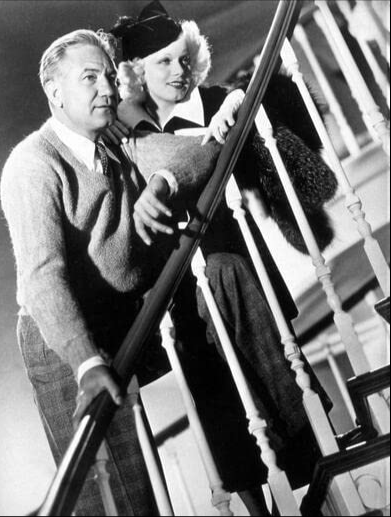
Jean Harlow as movie star Lola Burns & Lee Tracy as PR flack "Space" Hanlon
make a terrific team in MGM's "Bombshell."

Jean Harlow was a live wire in Bombshell, with a natural sense of humor, and a good-hearted screen persona. As Lola Burns, I love how her character puts on studio-trained ladylike airs, but in the next scene she's yowling at her ingrate family, scoundrel press agent, and problematic boyfriends. Yet, Jean never goes overboard, and keeps it real. Harlow was a working class Carole Lombard, once Jean got to lighten up her femme fatale image, and played the sex bomb and her scripts for laughs. The movie blurs the on-screen Lola Burns with real-life Jean Harlow by having Burns do re-takes for Red Dust and showing Harlow with Gable in Hold Your Man.

Jean Harlow as Lola Burns in MGM's Hollywood satire, 1933's "Bombshell."

Lee Tracy is personifies the fast-talking wise-cracker, studio PR hound “Space Hanlon.” Tracy practically trademarked this archetype when he became a Broadway smash as “Hildy” Johnson in the original The Front Page. He is hilarious, changing his tune on a dime, with a “Can you believe I’m getting away with this?” attitude. There's something very appealing about him. He’s impishly baby-faced, yet looks like he’s seen a few late nights, and not from colic. You totally believe Jean falling for him. One also forgets how handsome Pat O' Brien was in his young days, no-nonsense as always, as the director who is sweet on Lola. Oh so handsome Franchot Tone amusingly spoofs his cultivated gentleman image as the suitor who seemingly comes out of nowhere.

Lee Tracy reminds me a little of Michael Keaton in this photo. Tracy's a motor mouth
 riot as "Space" Hanlon to Jean Harlow's movie "Bombshell."

Frank Morgan's a hoot as Jean's irrepressible father, a lovable blowhard always in need of cash for booze and horses. Louise Beavers gets off some pre-code one-liners as Jean's good-hearted maid.

Frank Morgan's one of many scene-stealers to Jean Harlow's exasperated "Bombshell!"

There are some sly zingers about Hollywood and the whole dog and pony show of presenting stars to the press and gossip columnists in the best light, and hoping they don’t dig too deep beneath the shiny surface.

But this is ultimately a great vehicle for Jean Harlow, stylishly done in high spirits, right from the opening credits by MGM's top studio director Victor Fleming, to the stars still battling it out at the finale. 

FYI: I put all the movie overflow on my public FB  movie page. 

Check it out & join!  https://www.facebook.com/groups/178488909366865/

"Bombshell" director Victor Fleming with star Jean Harlow.


Tuesday, February 7, 2023

MGM Star Watching in ‘Weekend at the Waldorf’ 1945


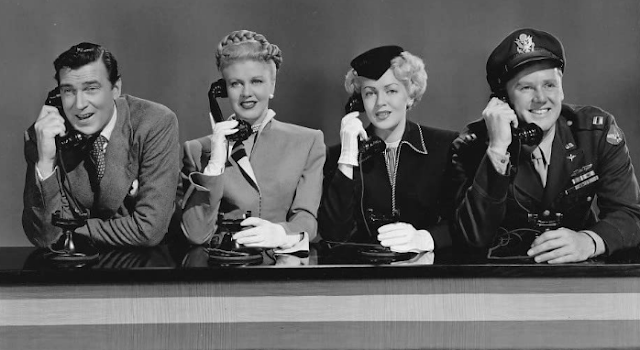
Van Johnson, Lana Turner, Ginger Rogers, and Walter Pidgeon head a cast of
MGM favorites in 1945's "Weekend at the Waldorf."


MGM’s all-star confection, Weekend at the Waldorf, was released the fall of 1945, at the end of WWII. But it was filmed nearly a year earlier, when the war was still raging. Weekend is MGM in full dream factory mode. Each storyline is a wish fulfillment for its characters, and by extension, the era’s film fans.

Moviegoers ate up Weekend at the Waldorf like an all you can eat buffet. The remake of 1932’s Grand Hotel was a smash and the biggest movie of Ginger Rogers’ career, and after Peyton Place, Lana Turner’s, too. Weekend was in the top ten grossing movies of 1945.

Metro's 1945 "Weekend at the Waldorf" was a box office smash.


As far as Vicki Baum’s original novel or the ’32 film classic is concerned, Weekend at the Waldorf bears little resemblance to either works. The ’45 remake is set in a luxury hotel and there’s some bare bones character equivalents. Greta Garbo’s ballerina is now a film star—tired, but not suicidal; Joan Crawford’s stenographer is still one, but far softer. The most notable thing is that the film no longer takes place in Germany, and is very Americanized for WWII audiences.

Ginger Rogers as a overworked movie star & Walter Pidgeon as a weary
war correspondent fall for each other in MGM's "Weekend at the Waldorf."


Ginger Rogers is Irene Malvern, an overworked movie star who has a Hepburn/Tracy-style romance with war correspondent Chip Collyer (Walter Pidgeon). This made me wonder why MGM just didn’t cast Metro stars Kate and Spence as the bickering duo—too fluffy for these fine thespians? Or why they borrowed Ginger when they could have re-teamed their top star Greer Garson with Pidgeon. Scheduling issues, I’m sure, as movie-making was hitting its peak.

Lana Turner is the hotel stenographer with a soft spot for soldier Van Johnson in MGM's "Weekend at the Waldorf."


Lana Turner is Bunny Smith, the stenographer who makes injured soldier Jim Hollis’ dreams come true. Though looking for a rich man, this Bunny seems more cuddly than calculating. This ’45 Weekend is sentimentally sanitized in this way throughout. Also, the soldier (Van Johnson) takes a dead soldier buddy’s song to Waldorf’s resident star attraction, Xavier Cugat, who instantly decides to perform it the next night on his radio show.

Phyllis Thaxter is the bride-to-be in Weekend at the Waldorf, who wonders if doctor fiancé Warner Anderson is still stuck on his childhood sweetheart, Ginger’s movie star. Of course not, film fans! But this leads to contrived misunderstandings that drive this movie—and is true of all of the subplots in Weekend.

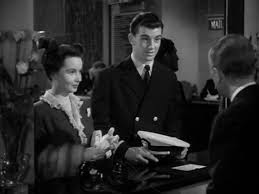
A young couple wants to honeymoon at the booked Waldorf, when a kindly millionaire who just happens to be at the check-in desk lets the soldier and bride take over his suite for the weekend. It’s that kind of MGM movie!

The honeymooners want a suite in MGM's "Weekend at the Waldorf."


Weekend at the Waldorf boasts a bit of location shooting from NYC, the rest was done deluxe style at MGM. Of course, Metro soon recycled the lavish sets for Hedy Lamarr's Her Highness and the Bellboy.

Ginger Rogers sports some elaborate 'dos in MGM's "Weekend at the Waldorf."
"Weekend at the Waldorf:" Leon Ames, reacting to Ginger Roger's lines or hair 'do?


Sydney Guilaroff and crew must have worked overtime on Ginger's locks and falls. All that hair for a Weekend at the Waldorf! Ginger's a bit grand as the movie star, but for Rogers, relatively restrained. Although Rogers’ overall look is a bit much, it’s toned down compared to what would soon come: blinding platinum blonde and an overdrawn makeup mask. Weekend would also be one of Rogers’ last mega hits. The next one came from MGM as well, taking over for Judy Garland in 1949’s The Barkleys of Broadway, and reuniting her with Fred Astaire.

The softer side of Lana Turner, as Bunny Smith in MGM's "Weekend at the Waldorf."


Lana's very sweet and warm as Bunny; Turner’s early roles like this show what made audiences originally fall in love with her. Aside from perfect hair and makeup, Lana’s simply dressed and performs simply and believably, as well. There’s a genuinely touching scene, where Van Johnson’s soldier comes to Bunny’s stenographer to help him write a will. Lana’s responses to Van’s subtly played soldier, who has few family or friends, are most affecting.

Lana Turner's stenographer helps soldier Van Johnson write his will in a
touching scene from MGM's "Weekend at the Waldorf."

Like Ginger, Lana's hair-do looks like it was constructed! The hair-don’t ages her overall look, as she was just 24 at the time. Thankfully, the bright, soft lighting tones the ‘do down a bit.

The young stars of "Weekend at the Waldorf" look more appealing in the film than this p.r. photo. Van Johnson's freckles have all been airbrushed. Lana Turner's
hair and makeup is so matronly here, she was only 24!


MGM had a history of pedaling Metro’s female stars backstories into their personas: Joan, Lana, and Judy on the working class side, and also their British lasses, Greer, Deborah, and Liz. Like Joan before her, Lana’s working class roots are blended into her character’s desire to move upwardly in life.

Lana Turner as Bunny Smith & Van Johnson as Jimmy Hollis in "Weekend at the Waldorf."


Van Johnson, as the soldier with both shrapnel and Lana close to his heart, is very appealing in his boyish youth—and I'm not even a Van fan. Johnson was one of Metro’s many all-round talented players: Van could sing and dance decently, had a flair for comedy, and could be a very natural dramatic actor. Here, as Jimmy Hollis, Van’s fatalistic soldier is sympathetic, not maudlin.

Walter Pidgeon, Ginger Rogers, a stellar view in 1945's "Weekend at the Waldorf."


Walter Pidgeon is livelier than usual, as a seen-it-all war journalist. Pidgeon has an amused rapport with Ginger’s brittle movie star. I didn't recognize Warner Anderson’s doc at first, but the minute I heard him speak—Matthew Swain from TV’s Peyton Place! Anderson is a solid screen presence, offering advice to childhood pal Ginger, offering a second opinion to soldier Van, and a steady Eddy to his insecure bride-to-be.

On the debit side were these following actors, just my personal tastes, folks. Edward Arnold plays the glad-handing villain once again, but never seems as threatening, just smarmy. Keenan Wynn always gives me the creeps, like he’s trying to hide that he’s crazy. When Wynn plays comedy, he’s very heavy-handed, as in his “drunk” scene in The Clock. Here, as the cub reporter, Wynn’s borderline obnoxious. Xavier Cugat is an acquired taste as well—if you enjoy bombastic, you’ll love him. And Robert Benchley's one of those great personalities of the era whose appeal I have never understood, much like Oscar Levant, Monty Woolley, or Hoagy Carmichael. Their charms are lost on me.

MGM's all-star cast aren't just phoning it in with MGM's "Weekend at the Waldorf."


If you are in the mood for great escapism and star watching, this is perhaps MGM's biggest and best example from the WWII era. There’s also nostalgia for New York City, the Waldorf Astoria, and the sense of a rapidly changing era. If any of these reasons appeal to you, Weekend at the Waldorf is a great place to check in.

Here’s my look at one of four 1941 movies that cemented the stardom of Lana Turner, Ziegfeld Girl:

https://ricksrealreel.blogspot.com/2021/02/ziegfeld-girl-1941.html

Here’s my take on a dramatic musical that was a huge wartime hit for Ginger Rogers, Lady in the Dark:

https://ricksrealreel.blogspot.com/2019/05/lady-in-dark-is-over-top-style-over.html

This gown's sash make Ginger Rogers look like Rapunzel in 1945's "Weekend at the Waldorf!"