Showing posts with label Rosalind Russell. Show all posts

Thursday, May 5, 2022

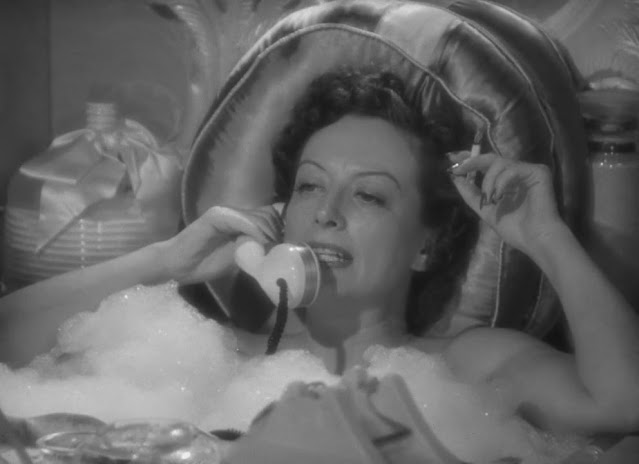
Joan Crawford Wows as One of ‘The Women’

Joan Crawford chose the supporting, unsympathetic part of Crystal Allen in
"The Women" to prove she was a serious actress and that she also wasn't washed up.


By 1939, Joan Crawford was already considered a film veteran. The film legend had swiftly risen to stardom after her start at MGM in January, 1925. Our Dancing Daughters made Joan a breakout star in ‘28. Crawford came in at the tail end of the silent era and soared into the talkies with flying colors. Movie goers loved Crawford in movies that mirrored her own rags to riches story. They adored Joan in films that teamed her with fellow working class movie hero, Clark Gable. Fans enjoyed this ultimate movie star wearing extravagant film fashions by Adrian.


Joan Crawford with MGM's L.B. "Papa" Mayer.

There were very few missteps in MGM’s plan for Crawford’s movie stardom. As a Brit in Today We Live and non-directed as overstated Sadie Thompson in Rain, Joan was outside her comfort zone. But what got Crawford rather unfairly labeled “box office poison” in ’39 was Metro’s casting Joan in roles that became too similar and overemphasized her Adrian costumes.

...as Crystal Allen in "The Women."

Joan Crawford deserves props for realizing that she was typecast as Metro’s favorite mannequin and actively sought out the juicy bad girl role of Crystal Allen in 1939’s The Women. Interestingly, playwright Clare Boothe Luce did not consider her creation of Crystal as unsympathetic. Actually, Crystal is a hardball version of Crawford’s working class girls.

Director George Cukor and the all-female cast of "The Women."

The Women was a big hit and boosted the career of all its stars: Norma Shearer played an accessible modern role after several heavy dramas; Rosalind Russell got a game changer role here as a raucous comedic bitch; Paulette Goddard was glam and down to earth funny; Joan Fontaine got her first substantial role; and Marjorie Main reprised her stage role which led to an MGM contract. And Mary Boland was perhaps the biggest scene stealer, as the much-married Countess. The Women also proved that Joan Crawford could be taken seriously as an actress. Yet, while Joan won some better roles at MGM, it was an uphill struggle and Crawford left MGM after 18 years in 1943.

Joan Crawford's feline body language as predatory Crystal Allen in "The Women."

As Crystal, Crawford shows a flair for bitchy quips and her body language as the predatory shop girl is alluring. I also enjoy how Joan’s mantrap goes from her usual cultivated “MGM English,” when on her best behavior, to Crawford’s natural Texas working-class tones when Crystal bares her fangs and snarls.

Crawford gets to comically spar with both Rosalind Russell’s nosy Sylvia Fowler and fellow shop girl Virginia Grey, and both verbal jousts are a hoot. In their big confrontation scene, Joan zings cutting comments at noble Norma Shearer, whom Crawford envied for her unofficial title as MGM’s queen. Norma’s Mary Haines is so insufferably pious that you actually root for Joan’s Crystal. These two opposing characters were certainly an inspiration to those latter day Dynasty wives, good Krystle and bad Alexis, I’m sure.

Two of MGM's great profiles, Crawford & Shearer, square off in "The Women."

What’s surprising is that Joan has only has four scenes in The Women. Crawford makes her entrance just past the 30 minute mark. But they are extended set pieces and she makes the most of them. The first is when Crawford’s Crystal offers acerbic customer service to Mary Haines’ “friends,” who are checking out the competition. All the while, Crystal spars with fellow shop girl Virginia Grey, while taking a call from married beau Stephen Haines.

Joan Crawford & Roz Russell make great frenemies in "The Women."
Off-screen, they were friends.

It is 20 minutes later with the salon dressing room stand-off, between scheming shop girl Crystal and naïve society wife Mary Haines. The second half of the film begins two years later, with Crystal as now unhappily married to Stephen Haines. Here, Roz Russell’s gossip and Crawford’s Crystal strike a fair-weather alliance. Then there’s the finale, when Crystal’s shenanigans are exposed and Crawford gets the classic kiss-off line. It’s a testament to Crawford’s vivid performance that Crystal Allen stays in audiences’ minds even when she’s not on-screen.

Nearly all of Joan's scenes were with fellow MGM stars Norma Shearer & Roz Russell.

Crawford plays the tough side straight with no winks to the audience as she did in some of her later bitch roles. Director George Cukor was on game here and both Crawford and Russell credit him with some sharp insights and bits of business for their characters. The only criticism I have is that fashion plate Crawford got a bit of a makeover for The Women and it’s not entirely flattering. While Joan sports a fine figure in Adrian’s flashy fashions as crass Crystal, Crawford sports a tight perm and penciled eyebrows. This change makes Crawford look hard and while it works for the character, I don’t think the result was intentional.

"My dear friend Elsa Lanchester recommended this perm!"

The Women was an all-star, all-women film and it’s a feast for witty dialogue, great performances, glamour, and star-watching. And Joan Crawford deserves applause for going out on a limb and playing Crystal Allen superbly no-holds barred. 
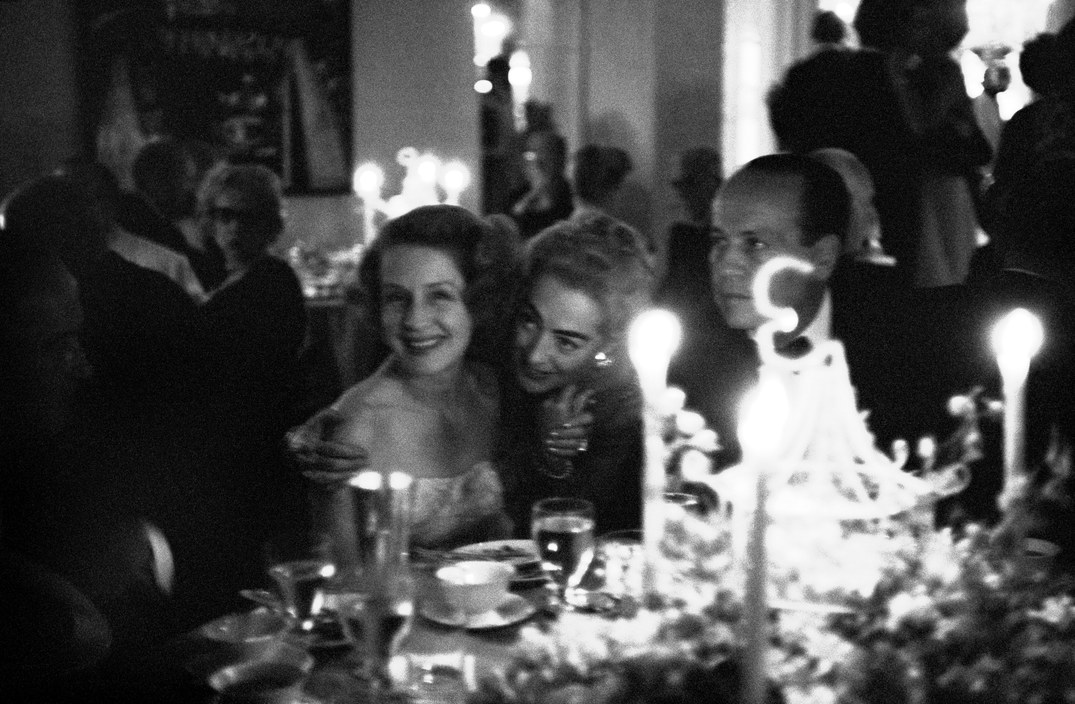
MGM rivals Norma Shearer and Joan Crawford make nice... decades later.

Here’s my personal take on Joan Crawford’s latter days: https://ricksrealreel.blogspot.com/2021/10/joan-crawford-wrote-it-her-way.html

FYI: I put all the movie overflow on my public FB  movie page. 

Check it out & join!  https://www.facebook.com/groups/178488909366865/
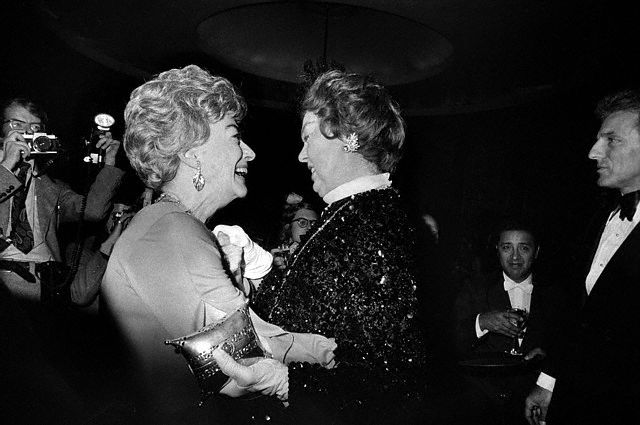
Joan Crawford made her last public appearance in 1974, w/ MGM pal Rosalind Russell.


Tuesday, August 31, 2021

‘Picnic’ 1955

William Holden & Kim Novak as the drifter & the beauty queen in 1955's "Picnic."


Picnic portrays the lives of quiet—or raucous, in the case of Roz Russell—desperation. Set in a small Kansas town during the 1950s, the story revolves around the effect that a charismatic young drifter has on the repressed townspeople one sizzling Labor Day.

Picnic is the Pulitzer Prize winning play by William Inge, at the height of his acclaim. The domestic drama was a huge Broadway hit that was brought to the screen by its stage director, Joshua Logan. Noteworthy about the stage version were some up-and-coming actors: Ralph Meeker as drifter Hal Carter; Paul Newman in his Broadway debut as rich kid Alan; Janice Rule as beauty queen Madge; and Kim Stanley at age 28, as kid sister Millie! Eileen Heckart portrayed Rosemary, the spinster teacher who spins out of control on Labor Day evening.

William Holden's "boyishness" act as Hal is as awkward as Kim Novak's acting. 

I’m sure Columbia Studios paid William Inge a pretty penny to bring his play to the big screen. Columbia head honcho Harry Cohn was giving Kim Novak a huge build up and decided this property would be perfect to launch her as a leading lady. Therefore, a “name” leading man was needed. Instead of going off the studio lot for a suitable male star to play the sexy young college dropout/drifter—say Brando?—Cohn chose studio homeboy William Holden to play Hal. And Harry didn’t have to pay a pretty penny for Bill, because it was the last film on Holden’s old studio contract. It’s a shame Marlon Brando did Guys and Dolls instead of Picnic. Brando was six years younger than Holden, far more boyishly charismatic.

William Holden was a fine actor, but too careworn & not carefree as Hal in "Picnic.

While Holden was an especially subtle male actor for the era, he was a decade too old for the part. What made this especially noticeable was that while Bill’s bod was still in fine form, Holden’s face was already showing signs of alcoholic dissipation at just 37. When Holden acts like an over-aged teenager, it’s especially awkward as he tries to impress Madge, played by 22-year-old Novak.

William Holden's form was fine, but his close-ups showed hard living in "Picnic."

Still, Bill had charisma, authority, and “rugged” sex appeal, so Holden as the young stud wasn’t a total dud. Hal Carter reminds me of Tennessee William’s later character, Chance Wayne, in Sweet Bird of Youth. They’re golden boys who come to a small town and stir things up, and both want to make off with the lovely ingénue. Both are Peter Pans, star athletes with aspirations of movie stardom, but neither have never amounted to anything. Ironically, Paul Newman was the same age as Holden in Picnic when he played Chance in ’62. While Newman liked his beers, it didn’t show, like the effects of whatever Holden hoisted.

Rosalind Russell lets rip on William Holden's shirt, as passions get heated in "Picnic."

An amused eye roll comes when Columbia cut the line from Picnic’s climactic dance scene: “I feel just like Rita Hayworth!” I guess they were more concerned with shining a spotlight on Columbia’s new love goddess, Kim Novak!

Cliff Robertson as the rich beau that Kim Novak's Madge "should" want, in "Picnic."

Kim as Madge is a contradiction, as often is the case with Novak’s acting. Kim’s shyness and uncertainty works for the character, and she was often cast thusly. I’m sure playing a girl who is valued mainly for her looks hit home for insecure Kim, who was treated like an object by Harry Cohn. Yet, Novak’s studio-trained mannerisms and dazed demeanor reminds me of another actress who often felt uncomfortable in front of the camera, Jennifer Jones, thrust into the spotlight by her Svengali, David O. Selznick. Kim’s Madge is an uneven performance, yet her vulnerability goes a long way, and she and Holden have a strong chemistry. Kudos to whoever decided that Novak temporarily drop her “lavender blonde” look. With her simple makeup and a long reddish brown wig, Kim looks pretty yet realistic as the local beauty queen.

Columbia Studios' blonde bombshell Kim Novak was toned down
for the small town drama "Picnic."

Rosalind Russell as Rosemary, the middle-aged teacher who boards at the Owens’ home, is another mixed blessing from the leads. Eileen Heckart was said to be a wow in the role on Broadway, though she was known to play big, too. While Roz bravely goes glamour-free and plays her age, unlike most of her contemporaries, Russell plays to the rafters far too often. It’s a tricky role, because Rosemary is an over the top character, which can be problematic when played by an actress who is often the same. As often the case with a “big” performance, Roz fares best in the smaller moments, when her Rosemary shares the fear of growing old alone. Russell is obviously a skilled actress and a smart one, but like the other lead actors in this film, she would have benefited from a more experienced film director, and not a theater director whose film work showed a heavy hand.

Rosalind Russell emotes as Rosemary, the desperate school teacher in "Picnic."

Arthur O’Connell is appealing and effortlessly believable as Howard, the store owner across the river, who sees Rosemary, but from a safe distance. Betty Field doesn’t play brassy for a change, as Madge and Millie’s mother. Field’s Flo has been deserted by her husband to raise the two girls the best she can. Betty is totally natural as a woman whose dreams are now for her daughters. Only in a ‘50s movie would Susan Strasberg be cast as the “plain” sister. Susan’s naturalistic as the brainy kid sister (with eyeglasses!). Strasberg’s as emotional as Novak is remote as the pretty sister, Millie’s outburst—“Madge is the pretty one!”—was the “Marcia, Marcia, Marcia” of the ‘50s!

Lovely Susan Strasberg is Millie, Kim Novak's "bookworm" kid sister in "Picnic."

Cliff Robertson does what he can with the role Alan, the rich, weak kid.

In the smaller supporting roles, Nick Adams is cockily amusing as Bomber, the brash neighborhood teen; Verna Felton is most endearing as the neighbor lady who’s the first to befriend Hal; and Reta Shaw is salty as a fellow teacher. The entire supporting cast is strong, but it’s the three leads that are a mixed bag.

The superb supporting cast of "Picnic" bring reality to this slice of life drama.

Others have noted that Inge, just as popular as Tennessee Williams in the ‘50s, with a string of hits, isn’t as well remembered. Well, Williams went through a period where he was considered passé, too. I’ve read that it’s perhaps that Inge’s dialogue wasn’t as poetic and quotable. Still, William Inge did write plays about real people and their problems, often small town people. Come Back, Little Sheba, Bus Stop, Picnic, The Dark at the Top of the Stairs were huge hits. On film, he wrote screenplays for Splendor in the Grass and All Fall Down. Not too shabby!

Playwright William Inge & Director Joshua Logan surely loved this opening title!

Director Joshua Logan had an incredible string of musical, comedy, and dramatic successes on Broadway. That’s probably why Logan was asked to recreate some of those stage hits on film, as well as other blockbuster productions. That said, most films I’ve seen directed by Joshua Logan all seem a bit off-kilter: Picnic, Sayonara, South Pacific, Camelot, and Paint Your Wagon. The man had mad stage credentials, but I don’t think Logan was in film making on a regular basis to learn its intricacies. In Picnic, that’s apparent with the uneven lead performances and the very intrusive music score.

Madge gets out of Dodge at the finale of 1955's "Picnic."

Picnic is one of those movies which are frequently labeled dated. Indeed a product of its time, the drama is a snapshot of the repressed ‘50s. However, how much has really changed in small towns since then? We are obviously less repressed and are able to communicate through the internet and social media. Still, how many people feel stuck and stifled in small towns, with dreams that don’t come true? As someone who lives in rural Upper MI, I see it all the time. In that sense, Picnic is timeless.

My look at Kim Novak, teamed with Sinatra, in The Man with the Golden Arm: https://ricksrealreel.blogspot.com/2018/07/the-man-with-golden-arm-1955.html

And here’s my take on Rosalind Russell, in her signature role as Auntie Mame: https://ricksrealreel.blogspot.com/2020/12/rozs-signature-role-auntie-mame-1958.html

FYI: I put all the movie overflow on my public FB  movie page. 

Check it out & join!  https://www.facebook.com/groups/178488909366865/


The poster of "Picnic" promises more than it delivers--typical of the era!


Thursday, December 3, 2020

Roz's Signature Role: ‘Auntie Mame’ 1958

"I'm your Auntie Mame!" Rosalind Russell as the larger than life Mame Dennis.


Auntie Mame is the comic character instantly associated with Rosalind Russell, one of film’s classic comedic actresses.

First a comic “memoir” by Patrick Dennis,  free-thinking Auntie Mame was an anti-dote to the conformist ‘50s. And the timing was just right for that class act with a bit of brass, Roz Russell, to play her. Roz first won raves as the bon vivant diva on Broadway, for two years. Auntie Mame and Roz’s prior stage smash, Wonderful Town, provided a career bridge for Russell in the ‘50s, between her studio era heyday and her post-Auntie Mame ‘60s movies.

Mame's intro as Roz Russell as she romps down those stairs, and is off and running!

I grew up on the ’74 Lucille Ball musical version, Mame, and didn't see the ’58 Russell comedy, Auntie Mame, until years later. Watching Roz’s original for this review, I kept expecting the Mame songs to start. The Rosalind Russell version is so much more buoyant and lighthearted than the Lucy musical. When Russell comes running down those stairs for the first time in Auntie Mame, Roz's energetic and effervescent personality hits you like a tidal wave. During the party scene, as Mame mingles with the best of them, it's not just little nephew Patrick's head whose is spinning. 

Russell first played Auntie Mame on Broadway, to great acclaim.

Russell mixes Mame’s piss-elegant, imperious delivery with her slapstick, hoydenish side, so that Mame Dennis never becomes a one-note bore. And Roz's warmth helps offset Mame's more fanciful flaws, as well. This was reinforced after re-watching Lucy's Mame as a comparison. Lucille Ball was just as versatile as Rosalind Russell, with many of the same strengths. There was the age difference when they played Mame, though Roz was just five years older than Lucy: Russell was 50 when Auntie Mame was filmed, and Lucy was 62 and recovering from a broken leg. (Roz herself broke an ankle running down those stairs the first time.) 

Mame's motto: "Live! Life is a banquet and most poor suckers are starving to death!"

Yet, the difference in energy and good humor is surprising. Perhaps the difference was Russell was re-recreating her Tony-winning Broadway smash, and going into filming on a high. Whereas Lucy knew everyone was depending on her, nursing a healing leg, facing ill will for taking the role from Angela Lansbury, with all eyes on her. Her grim gumption and self-consciousness over her age and ability seeps onto the screen and dissipates nearly all the fun. In fact, Lucy’s Mame feels like one of those great lady star vehicles from the ‘40s that Ball never got to play. Her pal Ginger Rogers’ leaden Lady in the Dark comes to mind. Why Lucy felt the need to scratch that itch three decades after the fact is still a mystery.

Mame needs a little Christmas, right this very minute! Patrick gives her "almost-diamonds."

It’s interesting that Roz, who was a staunch Catholic and married just once, had the raucous humor to play her polar opposite, Mame Dennis, with such ease. Lucy—whose personal life had known more than a few late nights, men, cocktails, and smokes—comes off as uptight and tough, much like her later TV appearances.

Mame & bosom buddy Vera Charles. Coral Browne is elegant & acidic as the actress.

Another surprising difference about the two versions is that the original—with Hollywood censors having their last hurrah—is more risqué than the ‘70s Mame. The one-liners from Auntie Mame are quite sly, and some of the passing characters still raise an eyebrow. In the '74 musical, once Beauregard dies, Mame becomes far less funny, and overly serious. The '58 version deftly mixes drama and humor regarding adult Patrick's conformity and Auntie Mame's misgivings. Russell, while disapproving of her intended in-laws, is up to her tricks. The uppity Epsons get funny bits of business in the ’58 film, whereas in the '70s version, they're just annoying bigots. This is certainly due to Betty Comden and Adolph Green, old pros at musical comedy and smart enough to realize that the stage play had culled the essence of the Patrick Dennis novel. In the ‘70s version, serious playwright Paul Zindel was chosen to write Mame’s screenplay. What’s strange, the most hilarious lines or bits from Auntie Mame are gone in Mame!

Rosalind Russell brings her considerable talents to the role of the free-thinking Mame.

I used to be put off that Auntie Mame is presented like a play, but now I love it. It's very stylized, yet stylish, much like the characters and performances. As Mame, Rosalind Russell gets to show off her physical comedy finesse, her rapid-speed dialogue delivery, genuine warmth, intelligence, sparkling personality, and winking sense of humor. There are so many memorable moments, as Mame gamely raises her young nephew: Life of the party Mame trying to get herself together the morning after for Mr. Babcock’s visit; novice actress Mame when she tries to upstage pal Vera Charles; Mame as a working girl, the motor mouth switchboard operator; life coach Mame conspiring to give Agnes Gooch a makeover; and the classic fox hunt scene, where Mame hangs on for dear life.

Fred Clark as trustee Mr. Babcock makes a fine comic foil for Russell's Mame.

The supporting cast is delightful, with Connie Gilchrist as Nora Muldoon, a no-nonsense delight as the Irish maid who delivers Patrick to his eccentric aunt. Fred Clark, always the comic heavy, is Mr. Babcock, the perfect foil for Auntie Mame, each with their own agenda for Patrick’s upbringing. Coral Browne is hilariously acerbic as Vera Charles, and far more elegant than later Vera, Bea Arthur, already in Maude mode. Peggy Cass gives Shelley Winters a run for her money in the nasal whine department, but here it’s done to hilarious comic effect as frumpy Agnes Gooch.

The finish to the hilarious fox hunt, where Mame wins the real prize, Beauregard!

Jan Handzlik as Patrick the boy is quite pleasant, but Roger Smith as the adult edition is a bit Ken doll-ish for my taste. Roger later found the role of a lifetime as Ann-Margret’s one and only husband. Forrest Tucker is most amiable as Mame’s southern suitor, Beauregard Burnside, he of the beaucoup bucks. Willard Waterman is hilarious, with always-reliable Lee Patrick, as Claude and Doris Upson, Patrick’s prospective in-laws. Waterman also played Mr. Babcock later in the Broadway musical Mame. Joanna Barnes is slyly funny as Patrick’s fiancee, Gloria, with her pretentious, lockjaw delivery: “It was just ghaaa-stly!”

The uppity Upsons have no idea what's in store for them, as they enter Mame's home. 

The set décor must have been a field day for George James Hopkins, who did some of the most memorable film sets for decades. Malcolm C. Bert created the production and art design. Mame’s 3 Beekman Place pad gets redecorated nearly a dozen times!

The ever-changing decor of The House of Dennis!

The stylish clothes by Orry-Kelly were over the top only when the story called for it, unlike the drag queen parade of Lucy’s Mame. Surprisingly, Orry-Kelly got zero Oscar nominations during his WB studio heyday (Now, Voyager and Mr. Skeffington are surprising shutouts) but he started getting nods from the mid-50s on—but not for his Auntie Mame fashion extravaganza.

Rosalind Russell gets beautiful cinematography, hair & makeup, and costumes.
Add Roz's high spirits & energy, and you get a memorable Mame.

While much was made of Lucy’s attempts to look younger as Mame, Roz also had help to augment her face as Auntie Mame. Russell’s beautifully photographed by Harry Stradling, who later got fired from Who’s Afraid of Virginia Woolf? for making Elizabeth Taylor look too good as drunken Martha! Roz’s makeup man was Gene Hibbs, famed for his mini-face lift strings and tape combo, and stylized makeup. She first worked with him on ‘53’s Never Wave at a WAC. At the time, the Hibbs effect was considered miraculous, but it gave later drag queens something to work with! Roz looks more naturalistic than some of his other clients like Bette Davis circa Dead Ringer, Eva Gabor on Green Acres, etc. And Roz’s multiple wigs as Mame offered camouflage for his fine work. Hibbs worked on a number of episodes of Lucille Ball’s latter day series, and notably Ann Sothern and Judy Garland on their TV series. Roz used him again in Gypsy and Five Finger Exercise.

Mame gets in the Christmas spirit when her luck begins to change!

Morton LaCosta, more famous for stage direction than film, helmed Auntie Mame competently, though I wonder what a Cukor or Minnelli might have done. LaCosta got to direct his two huge hits, Auntie Mame and The Music Man for the screen, and critics and audiences applauded. Both made a bundle for Warner Brothers.

Ultimately, it’s the irreverent Patrick Dennis story and irresistible Roz Russell that truly makes Auntie Mame memorable.

FYI: I put all the movie overflow on my public FB  film page. 

Check it out & join!  https://www.facebook.com/groups/178488909366865/

"Auntie Mame" ends with her and an enchanted great-nephew, as they head off to new life adventures.


Tuesday, July 5, 2016

My Own Auntie Mame!

A message to the youngins who’ve never seen 1958’s Auntie Mame: Watch this comedy classic on Netflix or Amazon or TCM ASAP. The story of a rich, free-thinking aunt who takes her orphaned nephew under her wing is a hoot with a heart.

Rosalind Russell was the definitive Mame--just ask Cher!
The irreverent Mame Dennis has enjoyed many incarnations. The Patrick Dennis best-seller from 1955 was a satirical shocker that still zings some sting. Though toned down for star Rosalind Russell, Roz still scored as Mame on both Broadway and film. In the ‘60s, Angela Lansbury triumphed in a Broadway musical Mame; the ‘70s Lucille Ball film version was so trashed that it was nicknamed Maimed. In recent years, stars from Whoopi to Goldie to Bette to Cher have been pitched for the inevitable remake. Cher, who knew both Roz and Lucy when she was starting out in show biz, said why bother, since Russell was the perfect Mame.  And she’s right.

However, I have a personal bias regarding Roz Russell as the most authentic Auntie Mame.
My “Auntie Mame” was my Aunt Audrey. Whenever I watch Rosalind Russell swanning through her greatest role, I think of my great aunt, Audrey Swan. I always get goose bumps when I hear Russell announce: “But darling! I’m your Auntie Mame!”

My Mom’s aunt was the total opposite of her own rather reserved family. Aunt Audrey was full of high spirits or full of something else, depending on who you talked to. Aunt Audrey was audacious, always rarin’ to go. She loved being surrounded by family, friends, and often, a fresh cocktail. Audrey Swan also loved being the center of attention.

Aunt Audrey certainly lived by Auntie Mame’s much-quoted motto: “Live, live, live. Life is a banquet and most poor suckers are starving to death!”

Aunt Audrey treated children like grownups and adults like they were children. Naturally, this delighted us kids and exasperated our parents.  Audrey asked opinions of children during an era when they were supposed to be seen and not heard. Aunt Audrey liked fussing over girls, like when she would wrap a scarf (one of my aunt’s favorite accessories) around my sister Robin and declare her “Mona Lisa!”

Childlike herself, Aunt Audrey named her pet poodle after the pet name she always called my mother—Coco Jean.

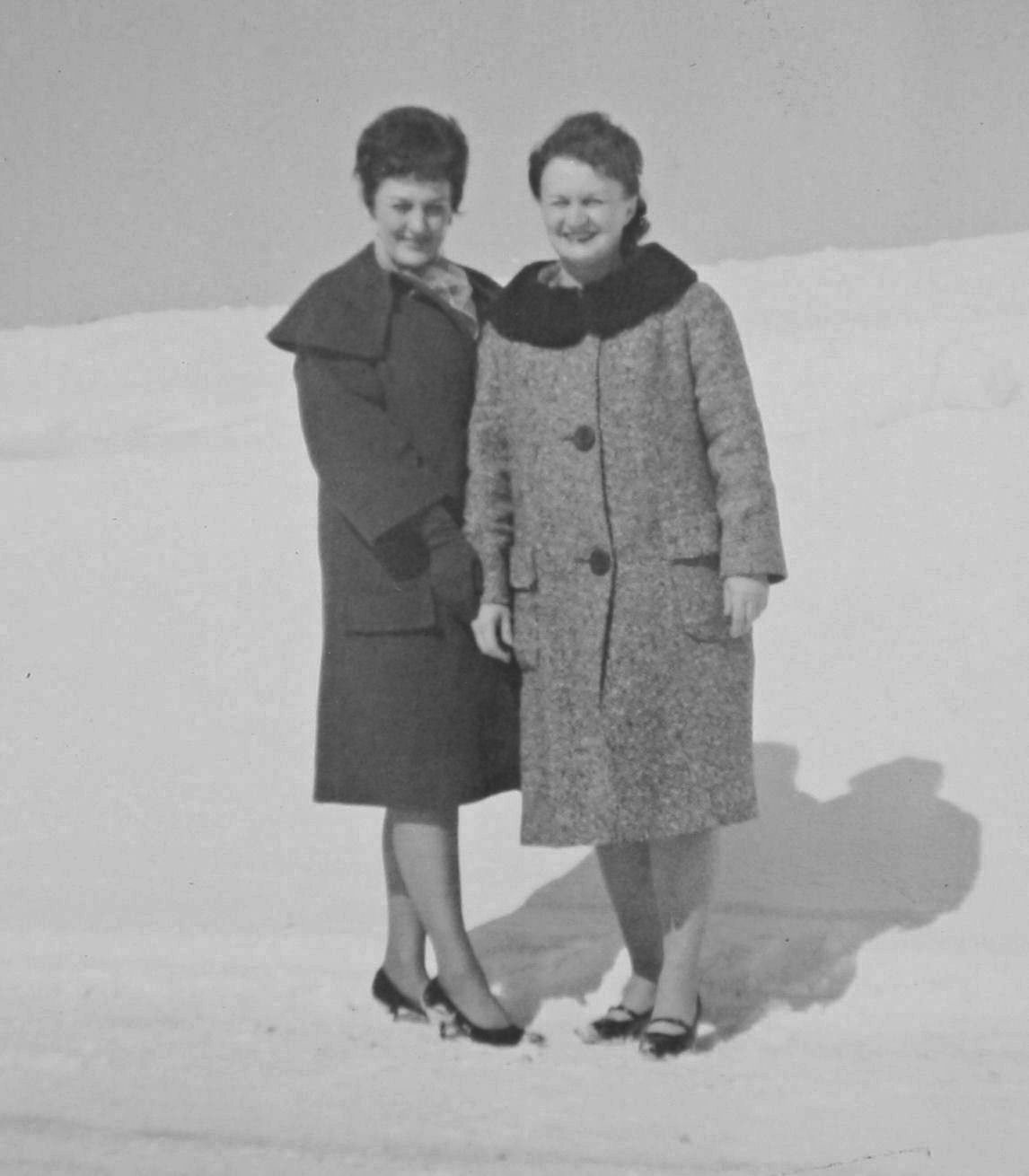
My Auntie Mame...Aunt Audrey, striking a pose, as usual!
There’s a hilarious family photograph of Aunt Audrey posing on a snowmobile, complete with snowsuit and white boots. I am willing to bet money she never rode that snow machine or the results would have been like Auntie Mame’s memorable attempt at horseback riding for a fox hunt on a dare!
Aunt Audrey was middle-aged when I was a kid and thought she was still striking, like an aging movie star. When I watch Russell as Auntie Mame, I am struck by their similar dark, sparkling eyes, and patrician airs. Roz Russell and Aunt Audrey both were masters of the arched brow, mock-dramatic intonation, and sailing into a room like a yacht. Bea Arthur worked those qualities, too. Bea became a hit in the sitcoms Maude and Golden Girls, and my family laughed as Arthur made her entrance, jutted chin and shoulders drawn back. Aunt Audrey was Roz’ and Bea’s equal in the dramatic entrance—and more than a few of the family thought Audrey Swan missed her career calling.

This is more like it! Aunt Audrey (left) in heels, with Grandma Leone.
Back in the late ‘60s, Aunt Audrey was visiting Manistique from Albion, MI. We had just moved back from Milwaukee, and she insisted on saying hello to Dad at his new job at the saw mill. When she asked to see him, Aunt Audrey introduced herself to his boss as “The Queen of the Lumberjacks!”

During the 1940s, ‘50s, and ‘60s, Aunt Audrey’s alpha female attitude wasn’t always appreciated. Some friends and family felt she was a bit much, and the term that fits Aunt Audrey best was drama queen, which didn’t exist back then!

But that didn’t stop Audrey Swan from carrying on, whether it was fussing over her charming husband Ed, or good-naturedly interfering with her children’s lives, whooping it up with friends, or looking for an excuse to celebrate. Like Auntie Mame, Aunt Audrey also enjoyed her cocktails, and could get “hung,” too.

When Uncle Ed died, this was a huge blow to Aunt Audrey. He adored her and was usually amused by her antics—the perfect husband for Auntie Audrey. And in her mind, he never left. Aunt Audrey believed in the afterlife and thought Uncle Ed’s spirit lived in her upstairs closet!

Latter day Aunt Audrey, right, with one of her "bosom buddies," Dickie Seymore.
Audrey and Ed had retired to Manistique in Upper Michigan, she adapted to her more modest personal and financial circumstances. Auntie Mame’s attempt at working class life might have been comical, but Audrey thrived on working around people, as when she was the guide at Manistique’s museum or later, when she became a janitor at the court house. I don’t know how spic and span her cleaning skills were, but she was probably the most charming janitor ever.

Audrey Swan was never afraid to try anything new, whether from necessity or curiosity. As a senior, my great aunt ended up moving to California, where two of her sons lived. She settled in an apartment complex where they worked and many college students lived. The kids loved this hip older lady, who loved hearing their stories, and they certainly got a kick out of hearing hers! Once again, there was a new audience for Audrey Swan.


Auntie Mame and Aunt Audrey, both the life of the party.
Aunt Audrey’s swan song finally came from cancer. She had a great life and was cared for by her beloved boys. Regrets were not Audrey Swan’s style—and she was a very stylish lady. Aunt Audrey and Auntie Mame both had lots of ups and downs, but they were always the life of the party.