Monday, September 20, 2021

“40 Carats” 1973


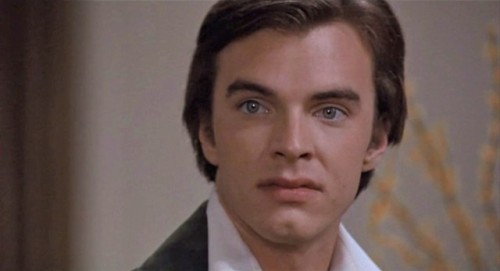
Liv Ullman & Edward Albert in the 1973 romantic comedy "40 Carats."


The frothy comedy 40 Carats is one of those ‘70s movies that strives for smart and progressive, but is uneasily mixed with romantic soap suds.

New Yorker Ann Stanley is on vacation in Greece when her car breaks down in the countryside. Young and handsome Peter Latham comes to her rescue on his motorcycle. He’s immediately attracted, she’s more inhibited. But the lovely Greece beach scenery, plus some Ouzo, allows them both to drop their defenses, along with their clothes. What happens in Greece stays in Greece, right? Back in NYC at her upscale realtor job, Ann instantly meets Peter again through her daughter, Trina. Ann is mortified, but Peter wants to pick up where they left off.

Lovely couple Liv Ullman & Edward Albert in a romantic moment, "40 Carats."

Not exactly hard-hitting stuff, but 40 Carats is lightly entertaining and surprisingly positive toward the May-December romance. And it’s still moderately entertaining despite one huge problem.

Norwegian Liv Ullman was Hollywood's "It" actress from 1972-74,
seemingly cast--and miscast--in everything, including "40 Carats."

It’s impossible for me to watch a film about romance where age is the title factor and not judge the stars’ respective ages. Norwegian star Liv Ullman wowed Hollywood with her foreign film work in the early '70s. So, the studios sought to mold her into a Nordic star in North America, along the lines of Garbo and Ingrid Bergman. There were so few roles for actresses at the time, that Hollywood shoe-horned Liv into everything, including the Broadway comedy adaptation of 40 Carats. With so many 40-ish actresses at the time for whom this role could have been perfect, they cast 34-year-old Liv as a woman of 40, who finds love with a 22-year-old man. What undercuts the premise, along with Liv Ullman's fresh-faced looks, is her heavy accent and total lack of comedic timing for this feather-weight romantic comedy. Further emphasizing Liv’s youth is casting Gene Kelly as her ex-husband. Gene was still an attractive, energetic guy, but standing in scene with Ullman, her soft looks against his 60- year-old self, with Kelly’s obvious toupee, will have viewers scratching their heads. At nearly 70, Binnie Barnes is an energetic hoot as Liv's mother. In the scene where Binnie and Gene disco dance, they look like a senior couple having a blast. 40-ish Billy Green Bush is the 42-year-old twangy tycoon who wants to marry 17-year-old daughter of Liv, played by then-20 Deborah Raffin. And Edward Albert followed up his success in Butterflies Are Free with 40 Carats. At 22, Edward is gorgeous and quite good in his role—as a 22-year-old. Imagine that!

Emphasizing Liv's youth was casting 60-year-old Gene Kelly as her ex, who looks like
the easy-chair loving dad on TV's "Frasier!"


Aside from Ullman’s Ann Stanley always hedging on her age, there are the throwaway lines to explain the various accents and ages. Unlike the play’s original Ann, the movie heroine left Norway at young age, where her father hailed from. Who then moved to America with his British bride, played by Brit Binnie Barnes. Got that? And Billy Green Bush’s Alabama drawl was utilized for his character. And there are some lines that hint that Gene Kelly’s Billy may be a bit older than Ullman’s Ann Stanley. Yes, like 26 years older!

Julie Harris got to go glam on Broadway & won a Tony for the smash "40 Carats!"

40 Carats was based on a smash Broadway play that ran for two years and won a Tony for leading lady Julie Harris, who got to be glamorous for a change. How could Hollywood mess up a no-brainer like this? A number of 40-ish Hollywood divas were considered, but apparently thought to be past their box-office prime: Audrey Hepburn was a pro at classy comedy; Joanne Woodward had the everywoman touch; Shirley MacLaine would have handled the comedic scenes with sass; Elizabeth Taylor played a much older woman who has plastic surgery in Ash Wednesday during this time and looked sensational. Best of all might have been Lee Remick at 38, who looked like a Hollywood version of Ullman with those big blue eyes. But Columbia thought they were playing it safe with Liv Ullman, miscast the movie, and the Broadway hit became a Hollywood flop.

Though their romance is at times on thin ice, the "40 Carats" romantic duo prevail.

Sadly for Ms. Ullman, Liv’s Hollywood bombs quickly torpedoed her US career. Casting Liv in a Broadway hit that tanked was bad enough, but Saint Joan, The Abdication, and Zandy’s Bride quickly sunk, too. All this paled in comparison to Ross Hunter’s hilariously tacky musical remake of Lost Horizon. This camp classic quickly joined other such career-enders as Mame, At Long Last Love and Can’t Stop the Music. Actually, Ross Hunter should have produced 40 Carats, this glossy and glam light comedy would have been right up his alley!

Edward Albert & Liv Ullman meet cute in Greece, in "40 Carats."


Not that Liv Ullman is horrible as Ann Stanley in 40 Carats—she's a naturally empathetic actress—but the foreign star of heavy dramas is just terribly uncomfortable and miscast. Gene Kelly as Billy Boylan, Liv’s “slightly” older ex is a bit much, but he knows this type of material like the back of his hand, as does Binnie Barnes as mother Maud, and Nancy Walker as Liv’s secretary, and Natalie Schaefer as the annoying client.

Deborah Raffin knew her way around a pool table and light comedy in "40 Carats."

Note how good Deborah Raffin was playing pool, and she brings some game to breezy comedy, too. Raffin and Barnes have a good comic rapport as Trina, the modern young New York daughter and her with-it grandmother. Binnie Barnes neither looks nor acts her age and practically steals the movie.

Binnie Barnes is one hip grannie in "40 Carats," w/Edward Albert & Deborah Raffin.

Edward Albert's character Peter comes on a bit strong, but that’s from the script’s clumsy attempt to make his character look like a “no hang-ups” young man. Albert’s natural sensitivity makes up for the occasionally overbearing script points. But all’s forgiven in the closing scene, where Albert pulls up on his motorcycle, and finds Ullman waiting for him. Peter scrutinizes Ann, scowling slightly and then breaks out in a smile that would melt an iceberg.

Edward Albert, adoring and adorable, at the finale of "40 Carats."

Don Porter and Rosemary Murphy play Albert’s wealthy parents. Both are skilled actors, but Porter in particular comes off absurd, as the heavy who keeps referring to Ullman’s Ann as of “their generation.” Porter was frankly 60 and and Murphy pushing 50, so this is one of many instances where Ullman’s actual age undermines her character and performance.

No, Liv Ullman isn't laughing because Don Porter as her young beau's father,
keeps referring to her character as of "their generation!" With Rosemary Murphy.

I know some of my friends and family think I know too much movie trivia, but this blew my mind: M.J. Frankovich, a big producer in ‘60s and ‘70s Hollywood, was the adopted son of Joe E. Lewis! AND he was also married to Binnie Barnes. I had no idea! I found Frankovich quite interesting as he produced many sexy comedies in the late ‘60s and early ‘70s: Bob & Carol & Ted & Alice; Cactus Flower, Butterflies are Free, There’s a Girl in My Soup; and 40 Carats.  The producer also made a couple unintentional comedies: The Love Machine and Doctors’ Wives.

"40 Carats" in a nutshell!

Jay Presson Allen wrote the American adaptation from the French play for the Broadway version of 40 Carats. Leonard Gershe, a long time sitcom comedy writer, who also wrote Butterflies are Free, wrote the screenplay for 40 Carats.

Milton Katselas, a Broadway, film, and TV director, started off as an acting coach. His first directing gig was Edward Albee’s off-Broadway sensation The Zoo Story. Milton also directed the Broadway and movie version of Butterflies are Free. He directed Bette Davis in her Emmy-winning comeback, Strangers: The Story of a Mother and Daughter. He later directed Burton and Taylor in their infamous Private Lives production.

Binnie Barnes & Gene Kelly boogie down and steal a scene in "40 Carats."


40 Carats is very 70s, but in a good way. The worst comes at the beginning, with a sappy ballad over the opening credits, by Michel Legrand and Marilyn Bergman. Luckily, they wrote a truly lovely ballad that year, The Way We Were, which won them an Oscar.

Jean Louis wardrobe designs/selections are chic and character appropriate. Except Liv’s engulfing fur hat—that comes off as very Lucy Ricardo-esque. The opening and closing Greece scenes are lovely and the early ‘70s N.Y.C. scenes are evocative of the era, too.

Liv's Ann doesn't fit in at her young boyfriend's party, and neither does her hat!

For a ‘70s film, where there’s some characters that are shocked by Ann and Peter’s 18 year age difference, an equal number of characters are okay with their romance. And Gene Kelly’s ex-hubby gives a nifty little monologue about why numbers don’t matter when it comes to love. And Ann gets her happy ending with Peter after all. That was pretty progressive, for early ‘70s mainstream Hollywood!

Sadly, the two young stars of 40 Carats, Edward Albert and Deborah Raffin, beautiful to look at and charmingly well-cast, died young. Edward died of lung cancer at age 55 on Sept. 22, 2006 and Deborah of leukemia at 59 in 2012. 

This photo is a giveaway that "40 Carats" came from a stage comedy.

Edward Albert died at 55 in 2006, just a year and a half after his 99-year-old father, Eddie Albert.

Here’s a tribute to Edward Albert, in his first starring role, Butterflies are Free: https://ricksrealreel.blogspot.com/2021/02/edward-albert-forever-young-in.html

FYI: I put all the movie overflow on my public FB  movie page. 

Check it out & join!  https://www.facebook.com/groups/178488909366865/


Wednesday, September 15, 2021

The Making & Aftermath: “Mommie Dearest” 1981


Faye Dunaway in her infamous performance as Joan Crawford in "Mommie Dearest."


 “Only God may ever know what passed between them. And in many ways, I think the relationship was the inevitable tragedy that comes from a child of want, which is what Crawford was, and a child of plenty, which is what the little blonde girl was.”—Faye Dunaway, on Joan & Christina Crawford, Inside the Actors Studio.

Contrary to film fans, whether pro-Joan or pro-Christina, Joan Crawford was neither saint nor sinner. Joan, like many great stars, possessed even greater contradictions. To say Crawford was ambitious, disciplined, and hard-working is a massive understatement. Yet, the film icon possessed self-defeating behavior that that eroded her reputation, even before Christina’s tell-all. Since Mommie Dearest, Christina has made a cottage industry out of cashing in on trashing her mother’s name. Is it any wonder that friends, family, fellow colleagues, and fans have so many differing opinions about Joan Crawford?

"Why must everything be a competition?" Constant mother & daughter
dress-alike photo ops might have fostered that adversarial feeling.

A favorite Tennessee Williams line of mine is “the truth is at the bottom of a bottomless well.” Arguing about who's telling the truth—Joan's defenders or Christina—may be entertaining, but it is ultimately pointless. I think that Christina's tales about Joan became ever more elevated over the decades, much like Tippi Hedren's accusations against Alfred Hitchcock, and for the same reason: to fan the media flames and to keep cashing in.

One of the few behind the scenes shots on "Mommie Dearest," as Faye Dunaway's favorite catch-phrase apparently was, "Clear the set!" With director Frank Perry.

Despite selling the tell-all Mommie Dearest to Paramount for a cool half million, Christina Crawford found out quickly how little control she would have in making the movie version. For anyone who isn’t one of her fans!!!, you can blame Mommie Dearest the book on Christina, but you can’t pin the movie’s script on daughter dearest, as she had little say. Later, Christina aptly described Mommie Dearest as a Joan Crawford movie. Mommie Dearest actually plays like a latter day Crawford movie, somewhere between Queen Bee and Straitjacket!

Don't remember this scene from "Mommie Dearest?" That's because this sympathetic scene between Joan & Christina was cut, which upset star Faye Dunaway.

Some critics and Crawford fans felt that Christina concocted Mommie Dearest as a mashup from those final Joan Crawford vehicles. I think the opposite is true. Hollywood often mimicked the lives of their most flamboyant stars' lives for movie material. Especially those MGM divas: Judy, Lana, Liz, and of course, Joan. Right from the start, MGM mirrored Joan Crawford's hard luck life story as a huge part of her film persona. So why wouldn't later movies, as Joan's behavior became more melodramatic and fraught, also become film fodder? Crawford’s roles at this time correspond with aspects of Joan’s professional and personal life in the ‘50s: Clean/control freak Harriet Craig; tough as nails star of Torch Song; the domestic dominatrix Queen Bee, half-crocked cougar in Female on the Beach, and the lonely lady boss of The Best of Everything.

Famed Joan Crawford photographer George Hurrell helped Faye Dunaway recreate some publicity stills for "Mommie Dearest." Faye had a striking resemblance to '30s Crawford. But Dunaway's fine-boned features were buried under '40s Crawford makeup for much of the film. 
"Mommie Dearest" star Faye Dunaway with photographer George Hurrell.

When you read stories about the turbulent production of Mommie Dearest, it seemed the emphasis then was on prestige drama, not camp theatrics. When a movie starts with a problematic script and shortened deadlines, then other elements spin out of control, it usually spells trouble. For example, Faye Dunaway mucked around with wigs from one-time Crawford hairdresser Peggy Shannon and costumes from Irene Sharaff. The designer was a seven-time Oscar winner who came out of retirement to do this film, with immediate regrets. Irene had worked with some major divas with quirks of their own: Judy, Liz, and Barbra. Sharaff said that she had never worked with anyone as unprofessional as Faye Dunaway.

Seems Joan Crawford wasn't the only one with substance "issues." There's been much speculation about Faye Dunaway's "problem" on "Mommie Dearest," for starters.

Over the years, nearly everything I’ve read reports that Faye ran roughshod over everyone in the making of Mommie Dearest. While Crawford had her issues, Joan was smart enough to treat the people who matter, the crew, director, the behind the scenes talent, etc. with the respect that they’re entitled to! At a gathering for 1976’s The Disappearance of Aimee, Bette Davis nodded across the room at her co-star, Faye Dunaway, and told a couple of guests, “Compared to that one, Crawford was an angel.”

This art work for "Mommie Dearest" is nearly as campy as the movie!


As a film bio, Mommie Dearest is basically useless. The ’81 film fits somewhere in the middle of Hollywood's attitude toward film facts. From The Jolson Story to Harlow, movie bios then were totally fictionalized. Even the more modern era movie bios, like Gable and Lombard and W.C. Fields and Me, were more visually accurate but still historically hogwash. And during the Mommie Dearest era, TV presented a rash of clichéd, sanitized bios of icons such as Grace Kelly, Jackie Kennedy, and Rita Hayworth, to name just a few. Even modern celebrity bios, like The Aviator or Feud, take questionable liberties.

For Mommie Dearest’s era, that there were even a few scenes with some truth was surprising: the “Christmas at the Crawfords” radio show is spot on; the opening scene with Joan Crawford’s day in a life as a movie star rings true; 60-plus Joan "filling in" for 20-something Christina on The Secret Storm makes the most sense.  Also, the “tear down that bitch of a bearing wall” scene, as Joan lectures Tina on self-reliance and later berates Alfred Steele for his criticism of her spending, seems fairly factual.

Faye as Joan subbing on "The Secret Storm" for her daughter in "Mommie Dearest."


The real Joan Crawford acting up a real "Storm!"

The infamous set pieces—the wire hanger/bathroom cleanser night raid, the rose garden meltdown, and the home from Chadwick smack down—are among those open for debate. I don’t doubt that regular physical punishment wasn’t a part of Crawford’s way of life with children, but who truly knows about the more baroque incidents? But you’d never know there was a happy childhood memory ever from watching Mommie Dearest. Still, I have no trouble believing Joan Crawford as a petty tyrant who rewarded and punished regarding gifts, clothes, thank you cards, and manners, which have been commented on by those who knew Joan. For those who say that’s the way life was, I realize it was a different era. But I can’t recall any kid who had to “earn” their birthday and Christmas presents or was expected to write hundreds of thank you cards, either.

Seriously? What early teen doesn't love to do this?


Despite Dunaway's occasional self-sabotage with the Crawford hair, makeup, and clothes, she blends her own voice with Joan's grand, MGM English and taut facial expressions, and ramrod straight posture. I saw Faye Dunaway when she toured in Master Class, playing another diva, Maria Callas. Again not ideally cast, yet Faye's incredible physical grace, posture, and demeanor were astounding. Steven Spielberg, who worked with Crawford at the end of her career, said while Joan was only 5'3", onscreen she looked six feet tall. Dunaway, who is 5'7", also looked larger than life as an actress. 

Aside from great legs & cheekbones, like Joan Crawford, Faye Dunaway is a STAR.

In Dunaway's more in-depth interviews, it's obvious she has great empathy and admiration for Crawford. Faye seems quite sincere and moved by Joan's struggle, accomplishments, and problems. For contrast, when Jessica Lange was interviewed for her Feud performance as Joan, Jessica said more than once that she initially “knew absolutely nothing about Joan.” To which I call bullshit. Lange was a struggling young actress when Mommie Dearest came out, and also a classic movie fan—yet she knew nada about Crawford? Feud tried to offer empathy for Crawford's excesses, true enough. But it also played into the Mommie Dearest myth, and gave spin to some further questionable gossip.

Betty Barker.

Jessica Lange looks more like Joan Crawford's secretary,
Betty Barker, than the star herself!


At the time, Pauline Kael was one of a handful of critics who gave Faye raves, describing her performance as operatic. Ironically, when the acerbic Kael was lured out to Hollywood by Paramount for a year, she suggested a young actress named Sigourney Weaver for Joan Crawford. With her elegant voice and strong features, Weaver would have been an ideal choice. And I felt the same about Weaver playing the older Joan, decades later, in Feud, instead of Ryan Murphy's pet muse, Jessica Lange.


Faye's caricature as Joan syncs up well with Crawford's later looks.

Faye's tendency for caricature plays in her favor for Joan's middle and later years as the Pepsi Queen. She's got Joan's ‘60s look down perfectly when she visits Tina as a struggling actress. Dunaway is no dead ringer for Joan Crawford, but she does have Joan's great cheek bones and legs. Faye finesses Joan far better than Jessica Lange’s blowsy sad sack that was allegedly Joan Crawford in Feud

Joan Crawford, '60s style.

Faye got Joan's later look down pat...


Faye has aptly commented that she always relied on a strong director and Frank Perry wasn't the man for the job. Dunaway's reputation on sets could be quite fraught, but remember that she worked with great actors’ directors like Sidney Lumet in Network and Sydney Pollack in Three Days of the Condor, with no fuss. Mommie Dearest started with serious intentions, but when it went off the rails, in true Hollywood style, the power players involved blamed each other. The film result was a greatest hits version of Crawford's alleged misdeeds as a mother. As for Faye, she took the brunt, as the star often does... remember Elizabeth Taylor's drubbing as Cleopatra

The closest Rutanya Alda got to a requested photo with Faye Dunaway. Alda is long-suffering Carol Ann, a composite of several Crawford staff, in "Mommie Dearest."

The acting in Mommie Dearest is as uneven as everything else in this film: Rutanya Alda does her best as long-suffering Carol Ann, and she has written about her frazzling work experience with Faye, who wasn't exactly a team player. Mara Hobel as little Christina is a worthy acting adversary for Dunaway. Yet, Diana Scarwid as adult Christina sounds so whiny and twangy, that you wonder how far Joan travelled to adopt her—and why she even brought her back! Jocelyn Brando has a nifty cameo as "Barbara Bennett from Redbook!" She and the scene are very sly as the puff piece writer who gets plenty of bonus material from Joan at home.

Mara Hobel as cool customer Christina.

Diana Scarwid as whiny adult Christina.


Otherwise, the movie’s short-hand for Hollywood types turns into caricatures: Howard de Silva as Metro’s L.B. Mayer looks and acts like Ed Wynn; Steve Forrest looks great, but is a cardboard cutout as "Uncle Greg," a bore compared to the real-life rascal Greg Bautzer.

"Uncle" Greg! Steven Forrest as fictionalized version of Greg Bautzer, showbiz lawyer.
Forrest was also the brother of Dana Andrews, Joan's "Daisy Kenyon" co-star.

What's to be taken from Mommie Dearest 40 years later? Not the totally true story of Joan and Christina Crawford, that’s for sure.

Those who were close to Joan and claim that Crawford was never out of control include Betty Barker, the younger daughters, and some of her most loyal friends. That absolute denial raises red flags to me. There’s a long string of names I could list, of respectable and reliable show biz folk who have seen Joan in action, in regards to bad behavior. But there are just as many who can recall actions from Crawford that demonstrated her deep and genuine need to be liked and loved.

The last word? Hardly. Books, movies, and fans will argue about Joan VS Christina
like they do about Marilyn Monroes's death, until end the end of time.

Many books have been written about Crawford, but they are just clip-and-paste jobs, with some “new” gossip to goose sales. There has yet to be an authoritative, comprehensive, and balanced Joan Crawford biography. This is a shame, since so many of her friends and colleagues have passed on. In her day, Joan certainly issued the “official” Crawford story for five decades. And Christina has certainly had her say for the last five! Though the sympathy sword has cut both ways, from Christina’s back to Joan’s side, now it’s time for the whole truth—somewhere in the middle, most likely.

Faye Dunaway once described Joan as “the great American movie star.”  I will go even further. In her time, Joan Crawford was the great American success story, played out on movie screens and in print, for 50 years. Hers is a story worth telling, in its entirety.

When will there be the great Joan Crawford biography or documentary?

I have empathy for Joan Crawford and Faye Dunaway, who both had difficulty later in their lives and careers.  Less acting offers and more gossip were ills that plagued them both. Though Joan’s reputation was torpedoed by both the book and film Mommie Dearest, interest in Joan Crawford films never waned. Faye Dunaway’s stature was seriously damaged by portraying Mommie Dearest, and with her continual career kerfuffle, her current star power seems low-wattage. Someday, perhaps Faye will be judged like Joan, just for her best film work.

Whether you loved or hated Faye Dunaway as Joan Crawford, nobody can say
she just skated by on star quality as "Mommie Dearest."

My take on Joan’s journey to play Mildred Pierce: https://ricksrealreel.blogspot.com/2020/03/how-joan-crawford-became-mildred-pierce.html

My comparison of the 1962 memoirs of Joan Crawford & Bette Davis: https://ricksrealreel.blogspot.com/2017/02/bette-davis-and-joan-crawfords-1962.html

My take on the great teaming of Joan Crawford & Bette Davis, in Whatever Happened to Baby Jane?: https://ricksrealreel.blogspot.com/2016/10/bette-and-joans-acting-duel-whatever.html

I’ve written posts about Joan Crawford 17 times & counting!  Check out my blog: https://ricksrealreel.blogspot.com/


FYI: I put all the movie overflow on my public FB  movie page. 

Check it out & join!  https://www.facebook.com/groups/178488909366865/


Even Christina's book has more happier moments with Joan Crawford than the movie
"Mommie Dearest!"